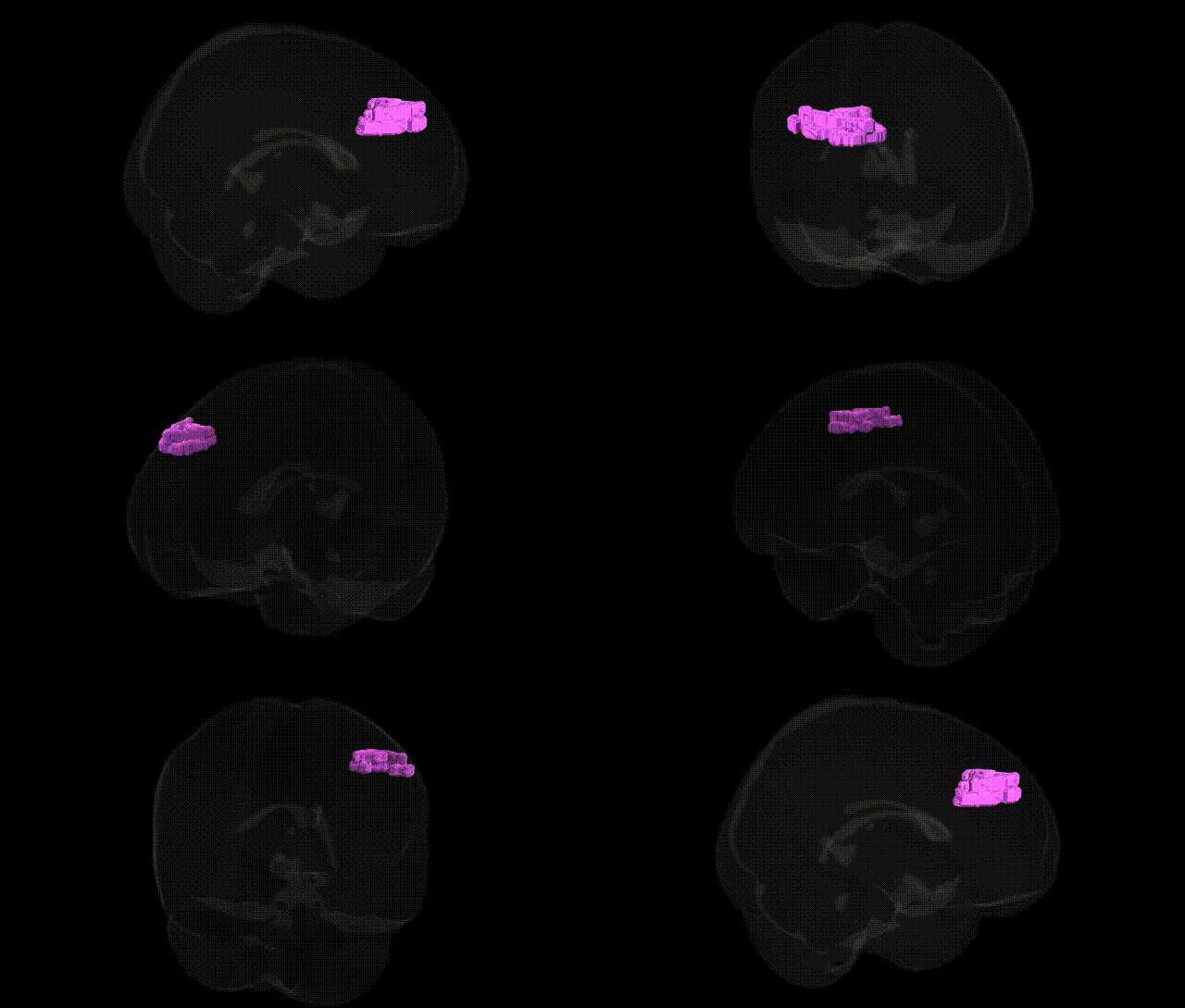
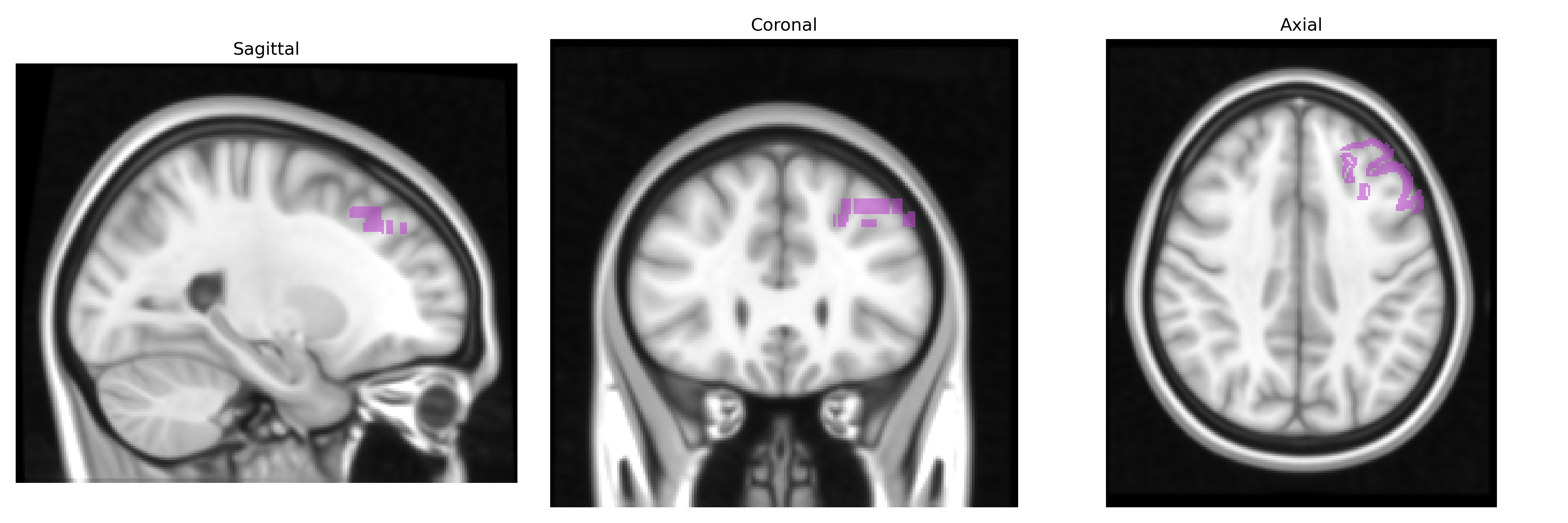
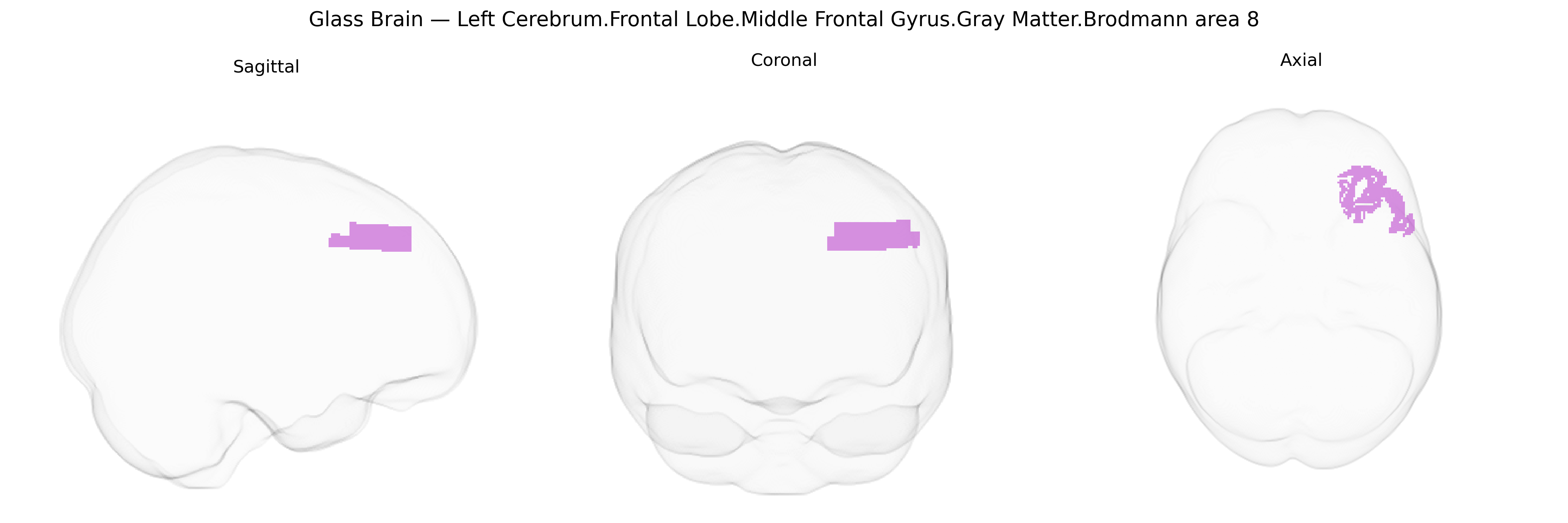
Brodmann area 8 in the bilateral left cerebrum frontal lobe middle frontal gyrus gray matter is a dorsal prefrontal cortical region classically associated with the frontal eye fields and higher-order motor control of saccadic eye movements, as well as aspects of executive function, attention, and planning. Situated rostral to the premotor cortex and caudal to more anterior prefrontal regions, it integrates visual, spatial, and goal-related information to guide voluntary gaze shifts and contributes to the regulation of action selection and cognitive control. Neuronal populations in this area show preparatory activity related to intended movements and are interconnected with parietal visuospatial areas, subcortical oculomotor structures, and other prefrontal territories supporting working memory and decision-making. There is no direct link for “Left Cerebrum.Frontal Lobe.Middle Frontal Gyrus.Gray Matter.Brodmann area 8”; a closely related structure is Brodmann area 8.
The bilateral left middle frontal gyrus (Brodmann area 8) has been implicated in genetic studies primarily through imaging genetics and GWAS that link common variants to cortical thickness, surface area, and functional activation in this region, often in the context of cognitive and psychiatric phenotypes. Large-scale GWAS of brain MRI measures (e.g., ENIGMA, UK Biobank) have identified loci in genes such as HMGA2, IGF1, and others associated broadly with frontal lobe structure, including middle frontal regions, with these structural variants correlating with general cognitive ability, educational attainment, and intelligence-related polygenic scores. Functional imaging genetics has shown that risk alleles for psychiatric disorders—such as those in CACNA1C, ZNF804A, and variants contributing to schizophrenia and bipolar disorder polygenic risk—are associated with altered activation and connectivity in dorsolateral prefrontal territories encompassing BA8 during working memory and executive control tasks. BA8/middle frontal regions have also been linked to attention-deficit/hyperactivity disorder, depression, and anxiety through polygenic risk and endophenotype studies, where genetic liability manifests as differences in prefrontal activation and gray matter volume. Additionally, GWAS of traits like risk-taking, impulsivity, and neuroticism indicate that frontal cortical measures in areas overlapping BA8 mediate part of the relationship between common genetic variants and complex behavior, though associations are typically distributed and polygenic rather than specific to a single Brodmann area. Overall, genetic influences on BA8 appear as part of widely distributed cortical and frontoparietal networks, with variants affecting neurodevelopmental and synaptic pathways that jointly modulate executive functions, cognitive control, and vulnerability to psychiatric disorders.
Overview generated by GPT-4o (2026).
Region ID: 1025
Hemisphere: bilateral
Atlas: Talairach labels 1mm
Full Quality Version: Download MP4
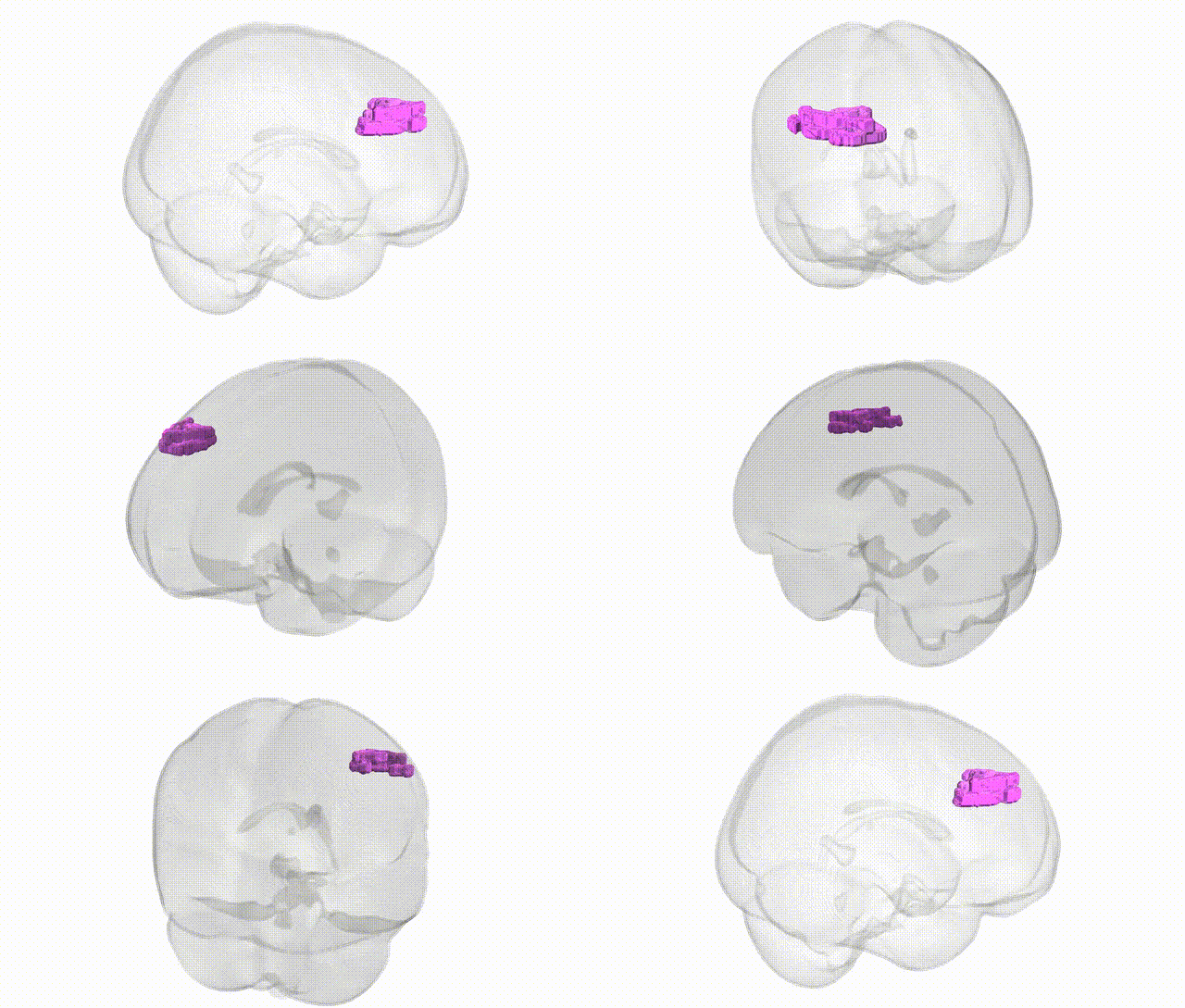
Full Quality Version: Download MP4
Wali Sidiqyar*, Gaurav Rudravaram*, Elyssa M. McMaster, Trent M. Schwartz, Adam M. Saunders, Kurt G. Schilling, Bennett A. Landman "Introducing SPINS: A Shared Public Visualization Library of Neuroanatomical Structures." Medical Imaging with Deep Learning- short paper
This resource is licensed under CC0 1.0 Universal (Public Domain).