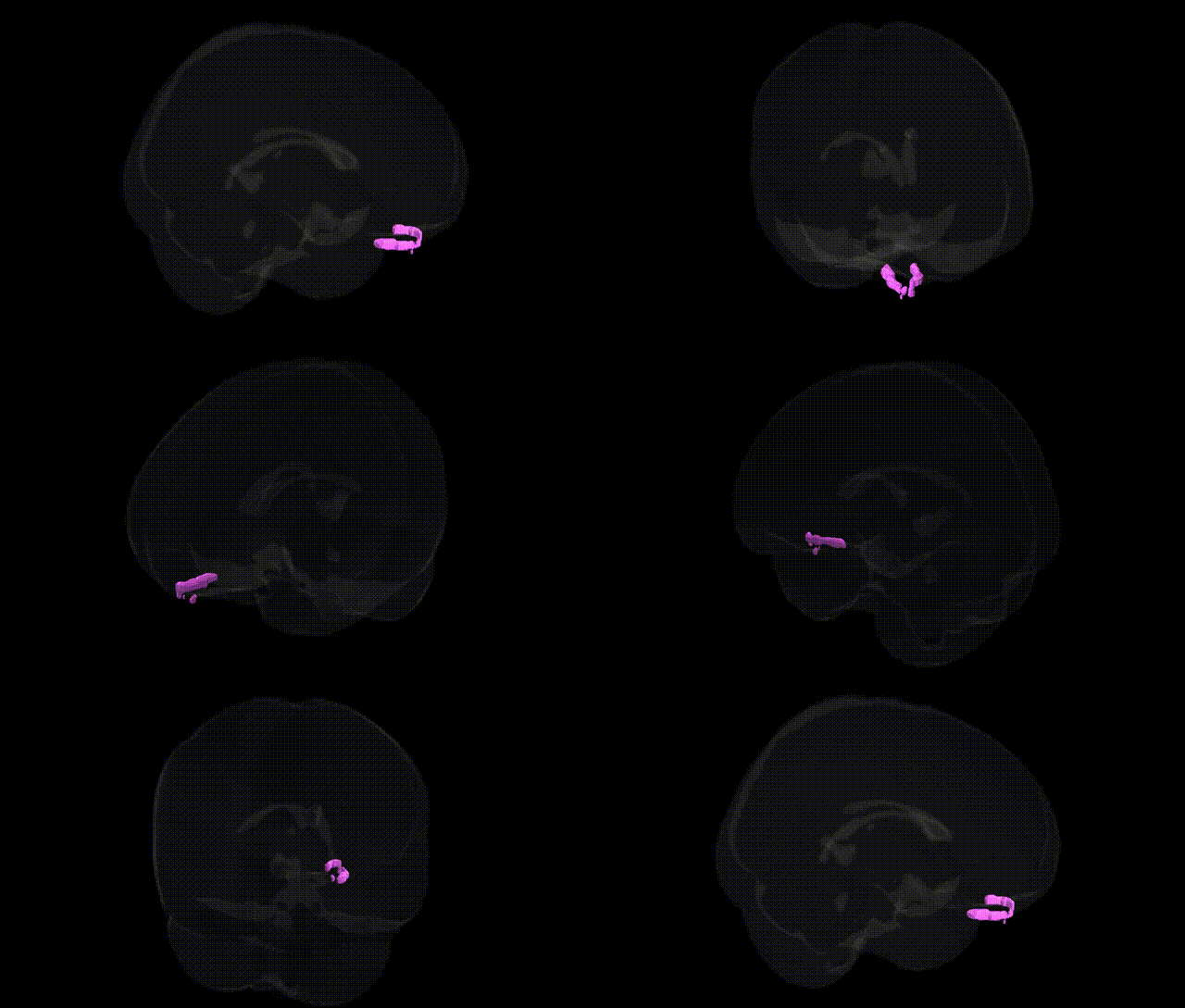
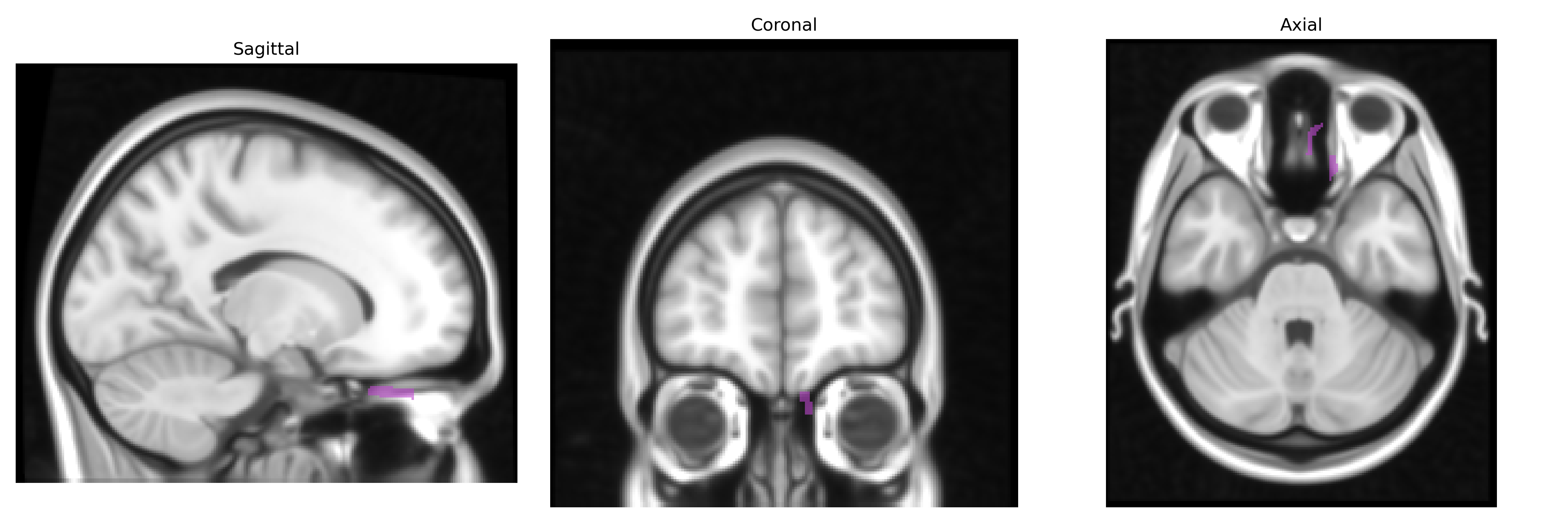
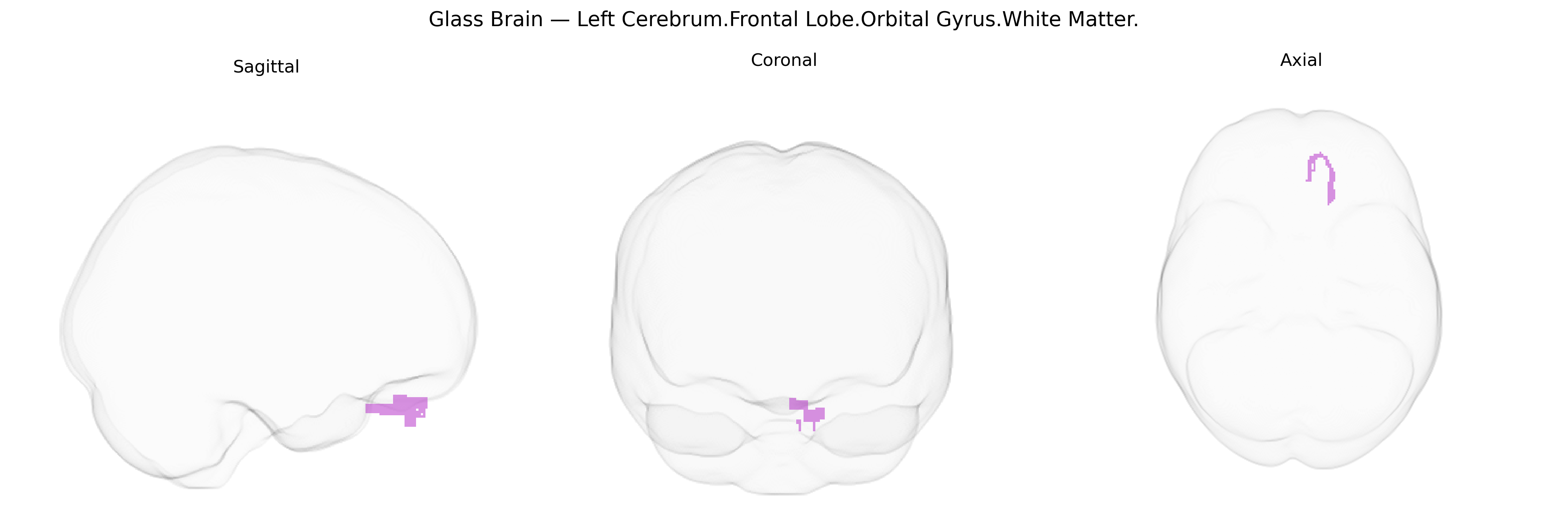
The bilateral Left Cerebrum.Frontal Lobe.Orbital Gyrus.White Matter corresponds to the subcortical fiber pathways underlying the orbital gyrus of the frontal lobe, located on the ventral surface of the frontal cortex above the orbits. This white matter region contains association and projection fibers interconnecting orbitofrontal cortex with other frontal areas, limbic structures (such as the amygdala and cingulate cortex), and subcortical nuclei involved in emotion, reward processing, and decision-making. Functionally, it supports the transmission of information critical for evaluating the emotional and motivational significance of stimuli, regulating social behavior, and integrating sensory and visceral inputs into goal-directed actions. There is no direct link for this specific white matter label; a closely related cortical region is the Orbitofrontal cortex.
Genetic associations involving white matter in the orbital portions of the frontal lobe (including medial and lateral orbitofrontal regions that correspond approximately to the Talairach Left Cerebrum.Frontal Lobe.Orbital Gyrus.White Matter label) have emerged primarily from large-scale imaging–genetics and GWAS studies of white matter microstructure and cortical connectivity, rather than from region-specific candidate-gene work. Variants in genes involved in axon guidance, myelination, and synaptic development—such as those in the neuregulin/ERBB pathway, CNTN4/CNTNAP2, MAG, and other oligodendrocyte-related genes—have been associated with diffusion MRI measures (e.g., fractional anisotropy and mean diffusivity) in orbitofrontal and adjacent prefrontal white matter tracts, including parts of the uncinate fasciculus and fronto-striatal pathways that traverse or border orbital frontal white matter. Large consortia (ENIGMA, UK Biobank) report polygenic influences on orbitofrontal white matter integrity, with genome-wide significant loci enriched for neurodevelopmental and immune-related pathways; many of these loci overlap with those implicated in psychiatric and behavioral traits, including major depressive disorder, bipolar disorder, schizophrenia, autism spectrum disorder, attention-deficit/hyperactivity disorder, and traits such as risk-taking, neuroticism, and cognitive performance. Genetic risk scores for these disorders often predict altered structure or connectivity in orbitofrontal and neighboring frontal white matter, consistent with the role of this region in reward processing, emotion regulation, and decision-making, although associations are distributed and not specific to a single Talairach-defined white matter parcel.
Overview generated by GPT-4o (2026).
Region ID: 112
Hemisphere: bilateral
Atlas: Talairach labels 1mm
Full Quality Version: Download MP4
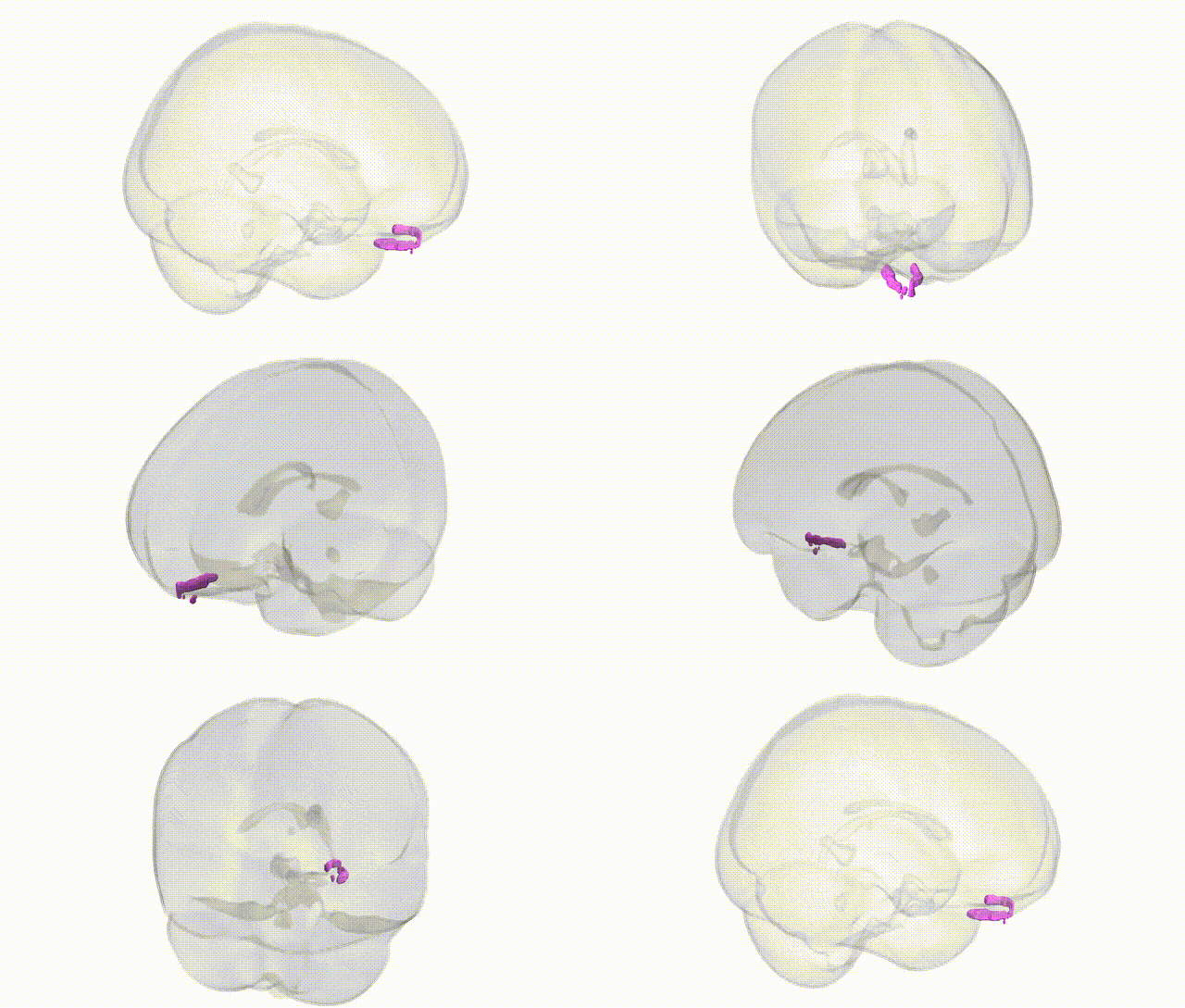
Full Quality Version: Download MP4
Wali Sidiqyar*, Gaurav Rudravaram*, Elyssa M. McMaster, Trent M. Schwartz, Adam M. Saunders, Kurt G. Schilling, Bennett A. Landman "Introducing SPINS: A Shared Public Visualization Library of Neuroanatomical Structures." Medical Imaging with Deep Learning- short paper
This resource is licensed under CC0 1.0 Universal (Public Domain).