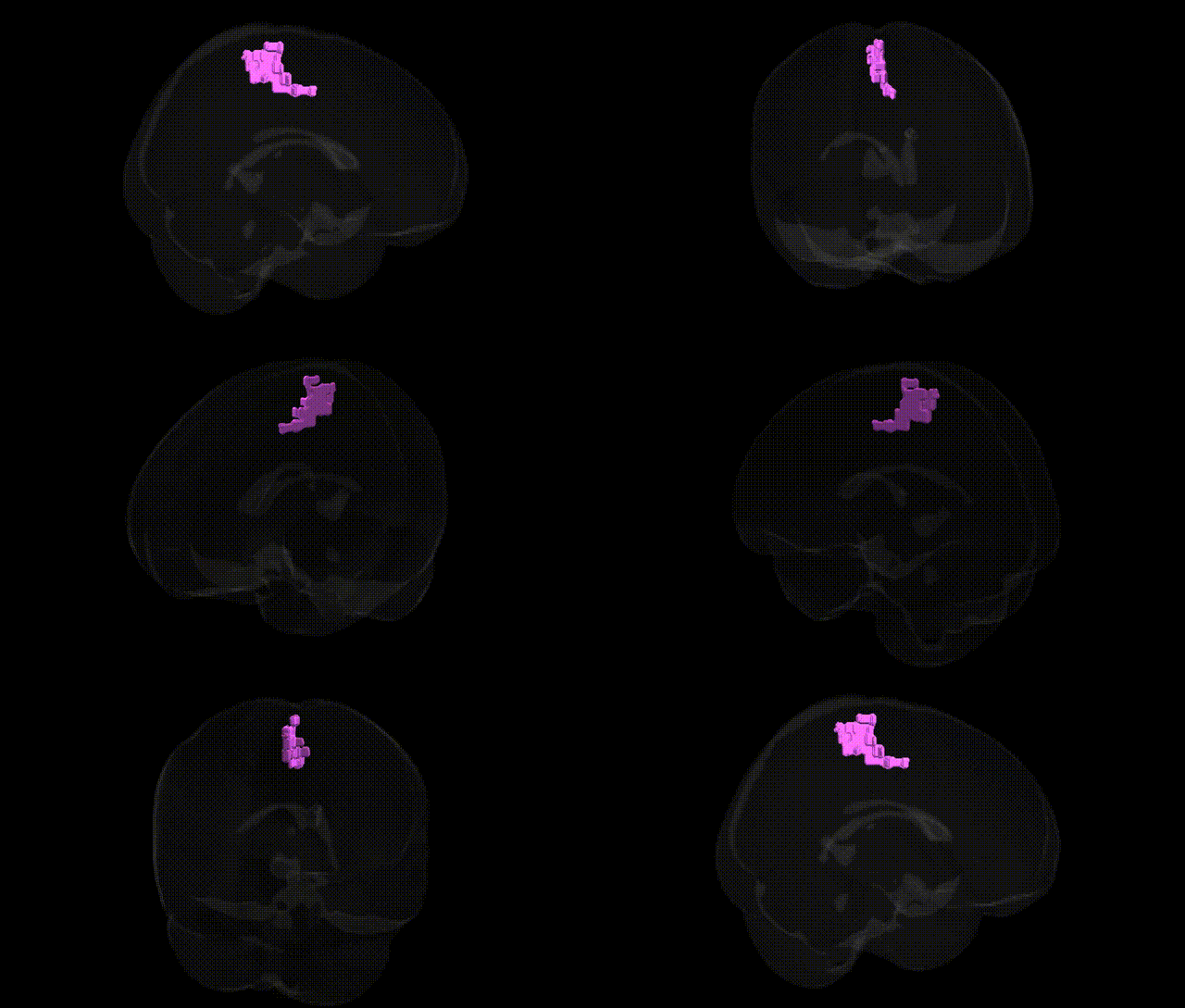
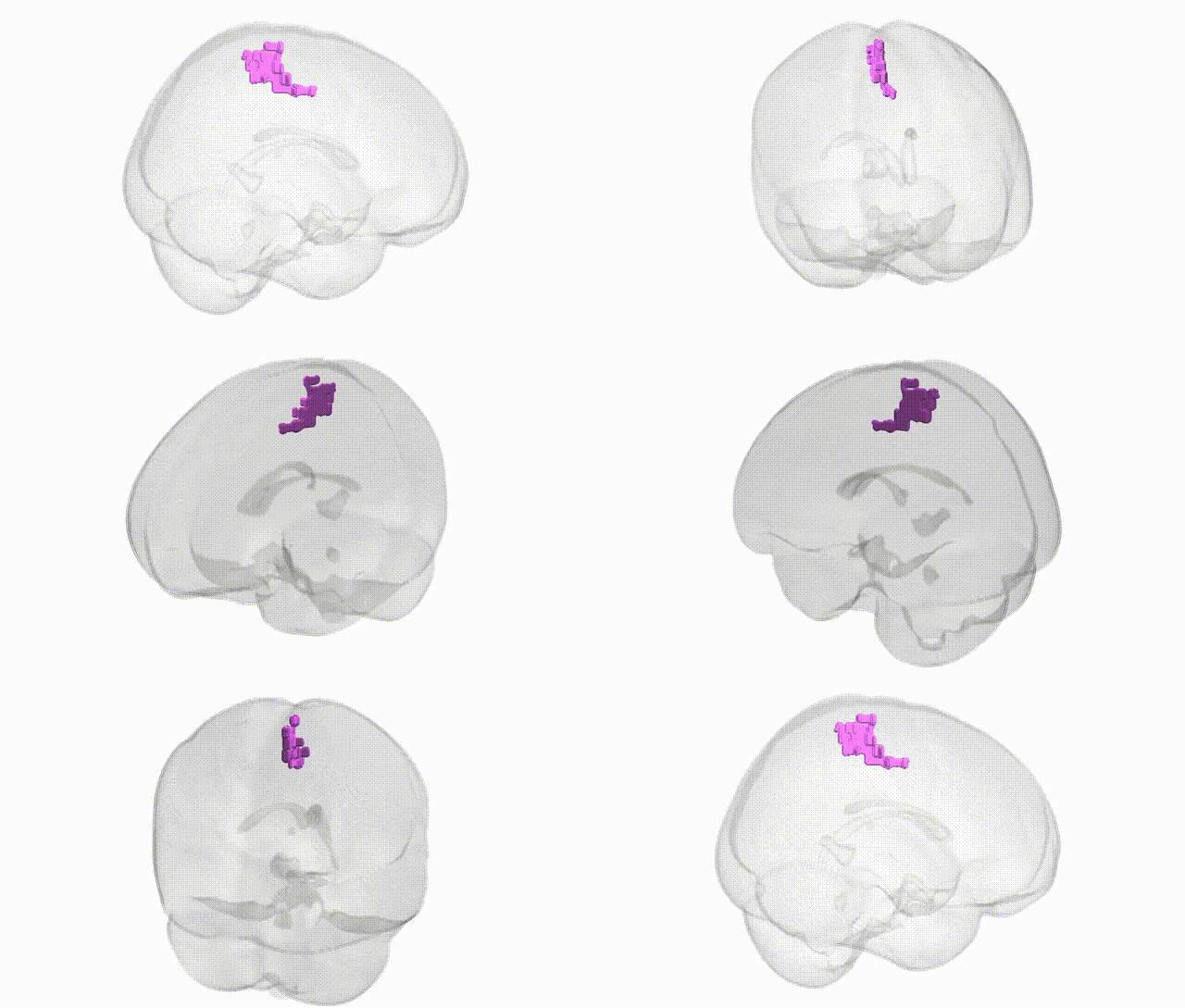
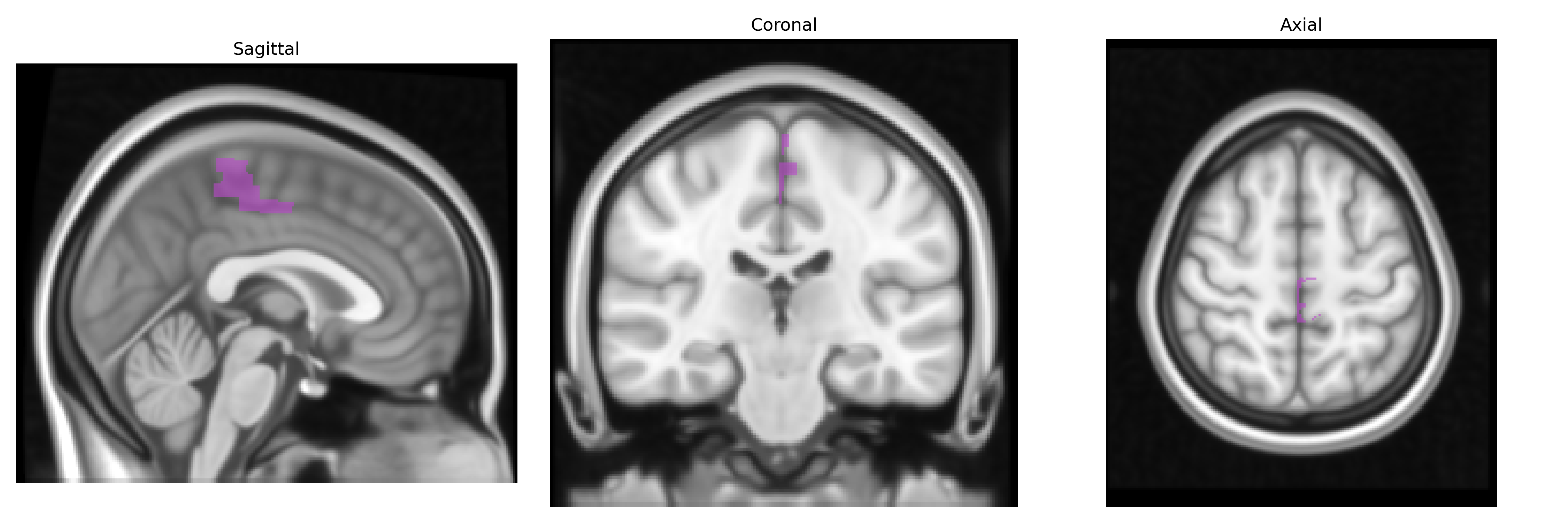
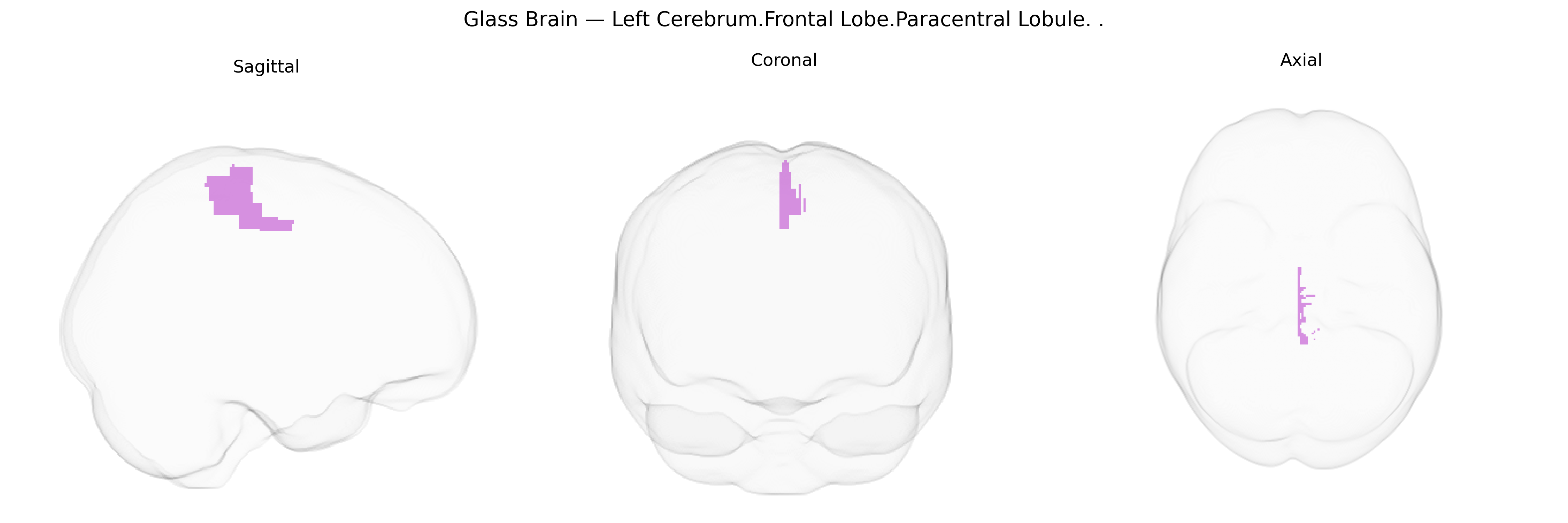
The bilateral Left Cerebrum.Frontal Lobe.Paracentral Lobule corresponds to the medial continuation of the precentral and postcentral gyri around the central sulcus on the medial surface of the hemisphere, forming part of the sensorimotor cortex that primarily represents the lower limb and perineal regions. Functionally, this lobule integrates motor planning and execution for leg and foot movements with somatosensory processing from the same body regions, and participates in control of posture, gait, and sphincter function. It lies within the frontal lobe (anteriorly) and extends into the parietal lobe (posteriorly), overlying portions of the supplementary motor area and adjacent primary motor and somatosensory cortices. A closely related Wikipedia entry is Paracentral lobule.
The bilateral left paracentral lobule (medial frontal/paracentral region) has been implicated in several genetic and GWAS findings, largely through studies of cortical thickness, surface area, and functional connectivity. Neuroimaging–genetics consortia such as ENIGMA and UK Biobank have identified associations between common variants in genes involved in neuronal development and synaptic function (e.g., MIR137, MAPT region, and loci near genes implicated in axon guidance and myelination) and structural measures of the medial frontal/paracentral cortex, including its thickness and surface area. Polygenic risk scores for schizophrenia, bipolar disorder, major depressive disorder, and autism spectrum disorder have been linked to altered morphology or activity in this region, consistent with its role in motor control and higher-order cognition. GWAS of motor function, gait, and sensorimotor traits have also highlighted paracentral/medial frontal areas, tying variants in genes affecting corticospinal tract development and motor circuitry (for example, loci near ROBO and other axon guidance genes) to inter-individual variability in paracentral lobule structure and function. Additionally, genetic risk for neurodegenerative conditions such as amyotrophic lateral sclerosis and certain forms of hereditary spastic paraplegia has been associated with structural or functional changes in medial motor regions including the paracentral lobule, reflecting its central role in motor output and corticospinal pathways.
Overview generated by GPT-4o (2026).
Region ID: 1046
Hemisphere: bilateral
Atlas: Talairach labels 1mm
Full Quality Version: Download MP4
Full Quality Version: Download MP4
Wali Sidiqyar*, Gaurav Rudravaram*, Elyssa M. McMaster, Trent M. Schwartz, Adam M. Saunders, Kurt G. Schilling, Bennett A. Landman "Introducing SPINS: A Shared Public Visualization Library of Neuroanatomical Structures." Medical Imaging with Deep Learning- short paper
This resource is licensed under CC0 1.0 Universal (Public Domain).