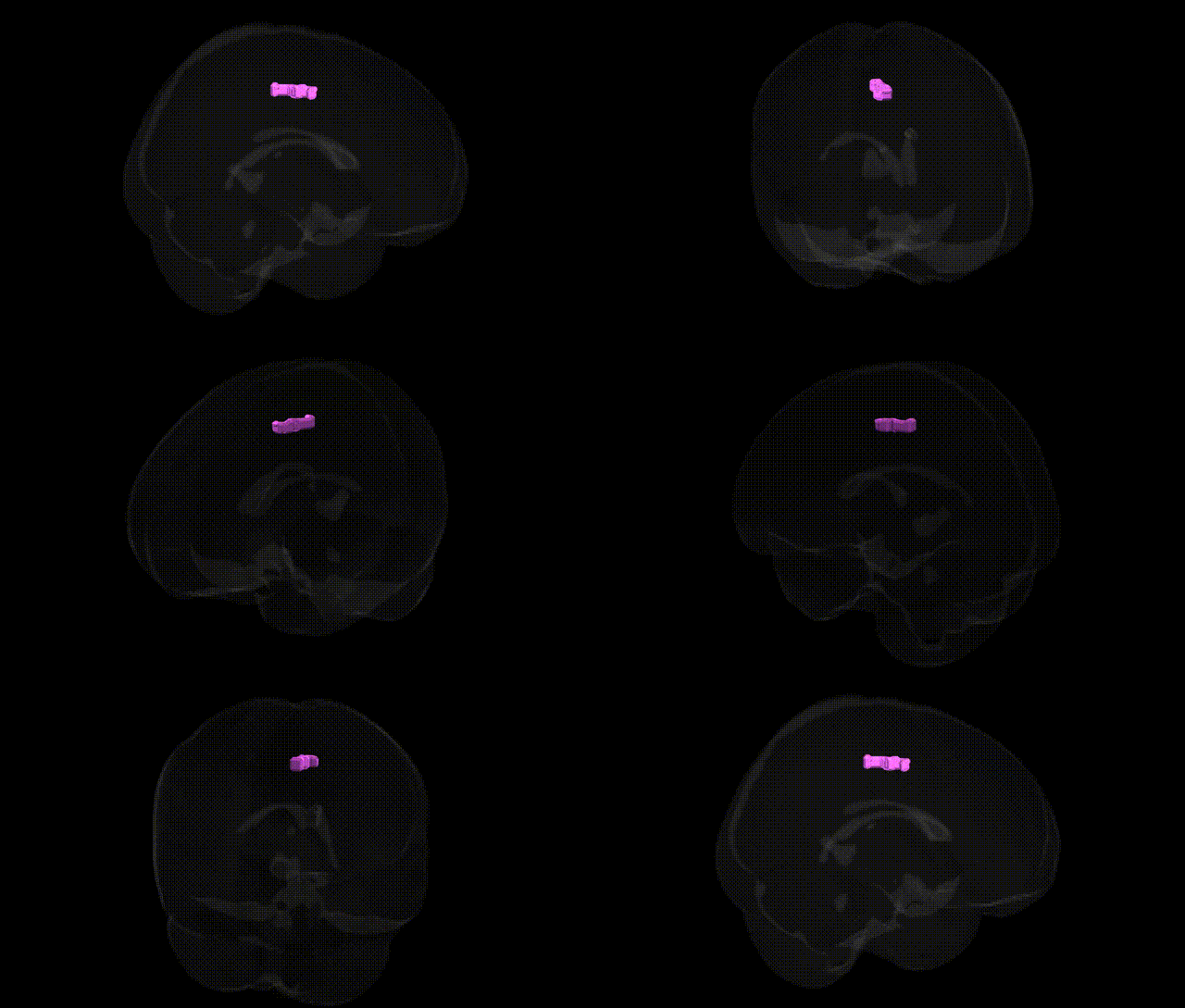
The bilateral Left Cerebrum.Frontal Lobe.Paracentral Lobule.Gray Matter.Brodmann area 31, as labeled in the Talairach 1 mm atlas, corresponds to gray matter within Brodmann area 31, a cytoarchitectonic region of the posterior medial cortex most prominently involving the posterior cingulate and adjacent medial parietal regions rather than the frontal lobe proper; its “paracentral lobule” designation reflects atlas-based parceling along the medial hemispheric surface rather than strict Brodmann boundaries. Brodmann area 31 is commonly associated with the posterior cingulate cortex and forms part of the default mode network, contributing to internally directed cognition, autobiographical memory, and aspects of visuospatial and emotional processing. There is no dedicated Wikipedia article specifically for “Brodmann area 31” in the paracentral lobule; a closely related structure with detailed coverage is the Posterior cingulate cortex.
The bilateral left frontal paracentral lobule gray matter in the vicinity of Brodmann area 31 (as labeled in the Talairach 1 mm atlas, though BA31 is classically posterior cingulate/precuneus) has been implicated indirectly in multiple genetic and GWAS-based findings through traits that map functionally or structurally to this region and adjacent medial sensorimotor and posterior cingulate networks rather than through a single, region-specific locus. Large neuroimaging–genetics consortia (e.g., ENIGMA, UK Biobank) have reported SNP-based heritability and polygenic influences on cortical thickness and surface area in medial frontal and paracentral regions, with contributions from genes involved in neuronal development, synaptic signaling, and myelination (such as variants near or within MAPT, CNTNAP2, and GRIN2B in some cortical-structure GWAS), though attribution to BA31 specifically remains coarse due to parcellation differences. GWAS of motor traits, gait parameters, and resting-state networks that include the supplementary motor and paracentral regions suggest polygenic influences distributed across many loci rather than single strong-effect mutations. Psychiatric and neurodegenerative GWAS—particularly for major depressive disorder, schizophrenia, bipolar disorder, ADHD, autism spectrum disorder, and Alzheimer’s disease—have identified polygenic risk scores that correlate with altered medial frontal/posterior cingulate morphology and connectivity, which often encompass the Talairach-defined BA31/medial parietal–frontal transition zone, but no single gene has been uniquely or consistently tied to this specific bilateral left paracentral BA31 label across studies.
Overview generated by GPT-4o (2026).
Region ID: 1045
Hemisphere: bilateral
Atlas: Talairach labels 1mm
Full Quality Version: Download MP4
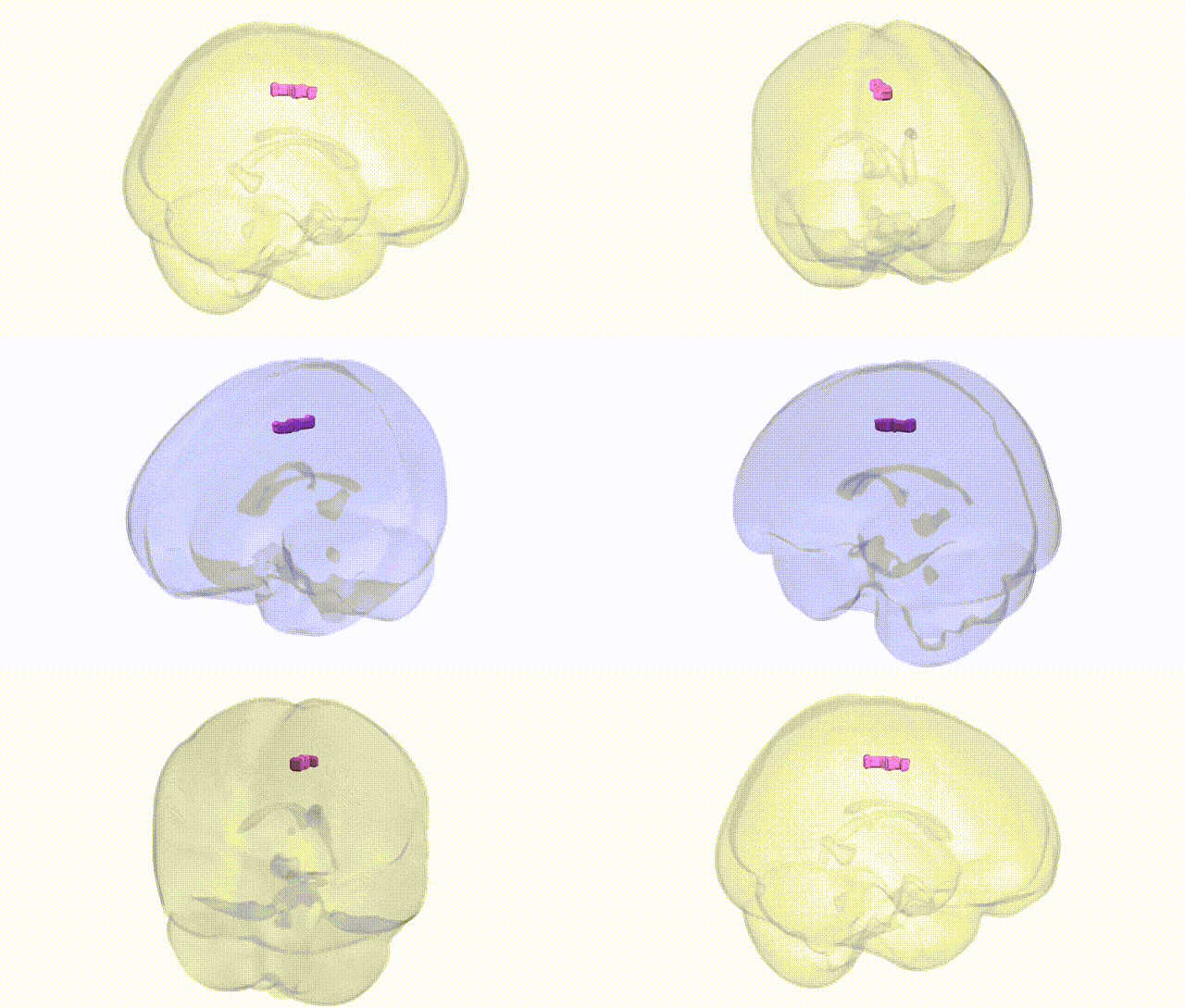
Full Quality Version: Download MP4
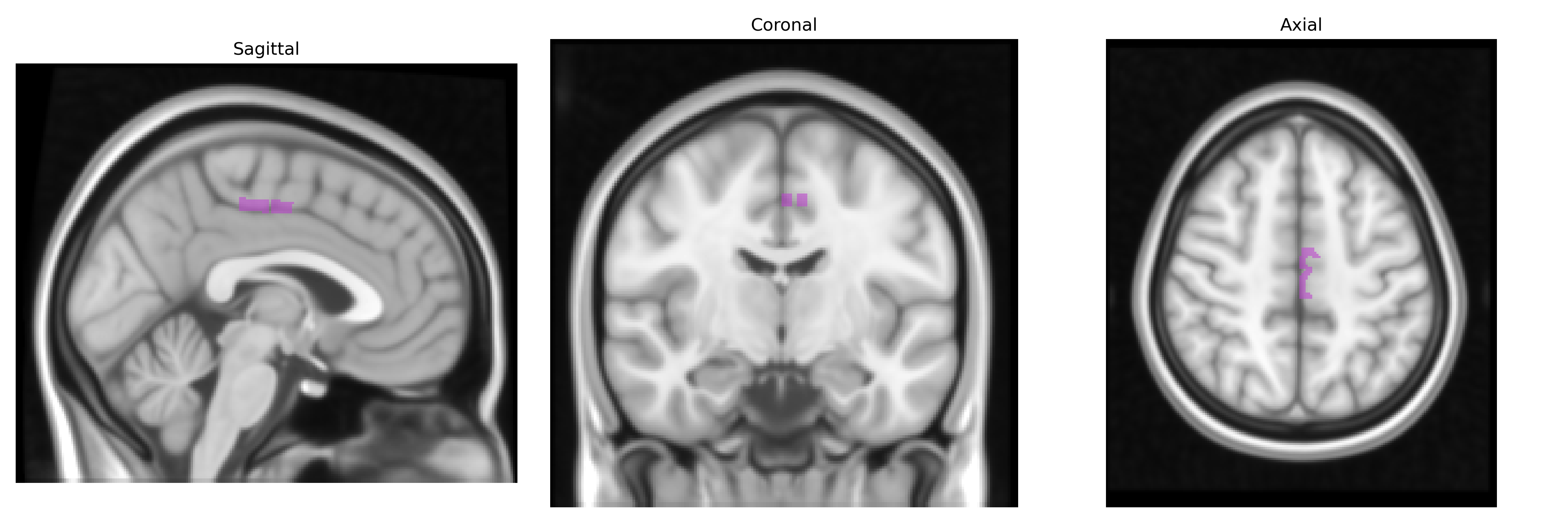
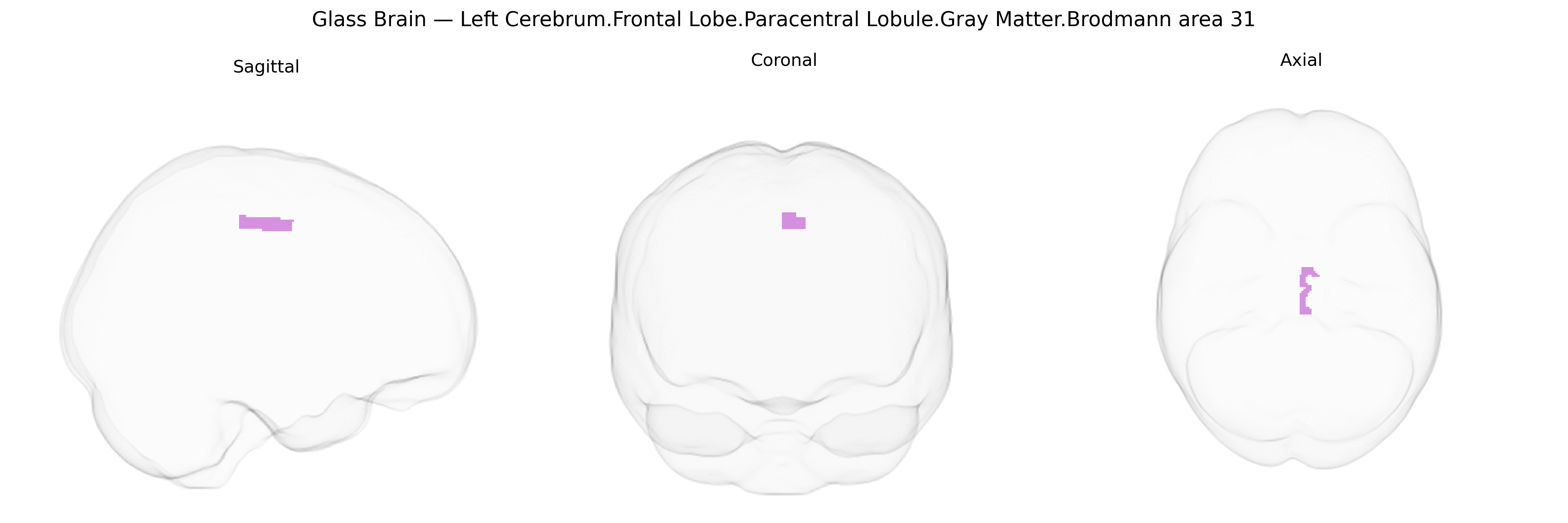
Wali Sidiqyar*, Gaurav Rudravaram*, Elyssa M. McMaster, Trent M. Schwartz, Adam M. Saunders, Kurt G. Schilling, Bennett A. Landman "Introducing SPINS: A Shared Public Visualization Library of Neuroanatomical Structures." Medical Imaging with Deep Learning- short paper
This resource is licensed under CC0 1.0 Universal (Public Domain).