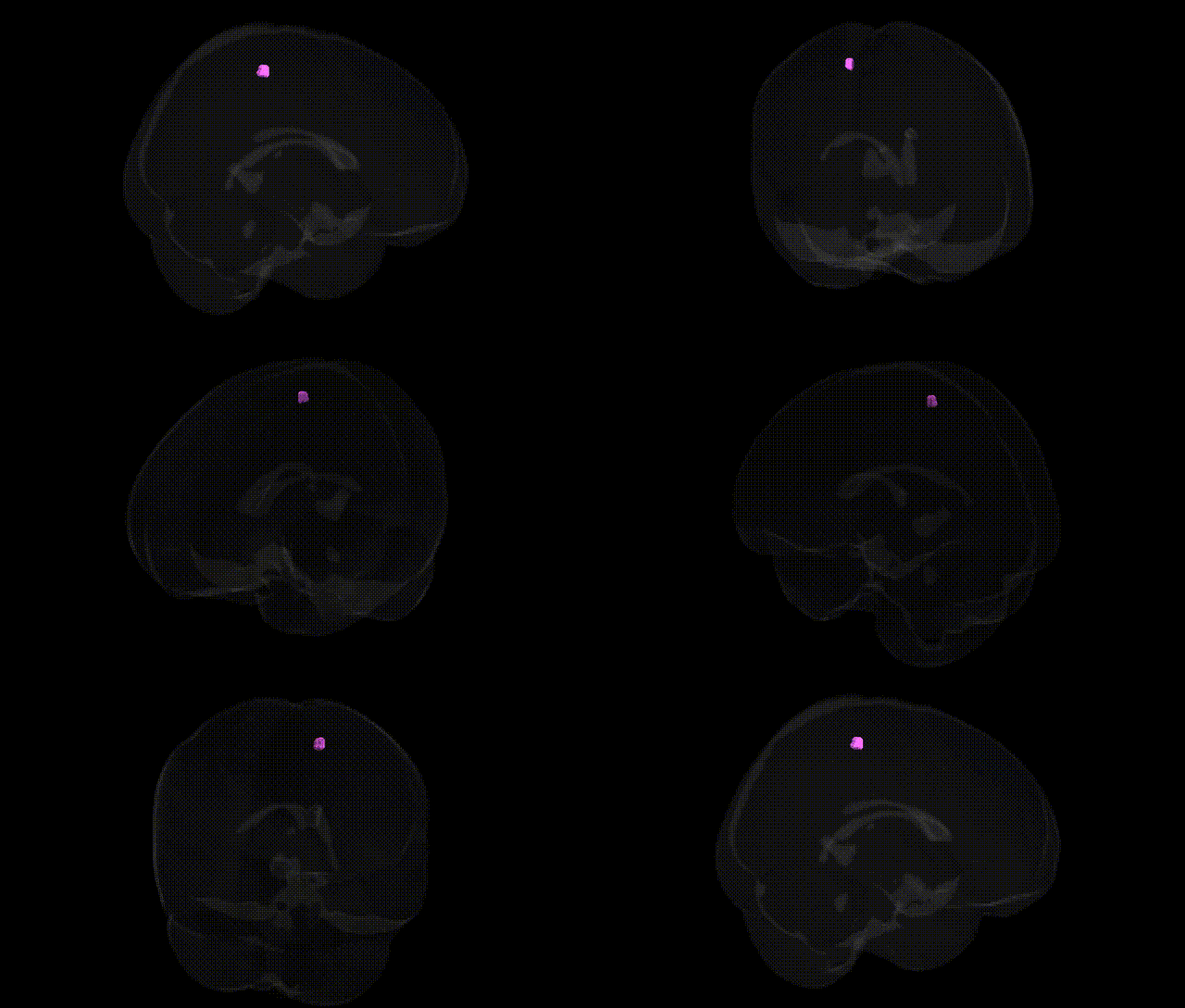
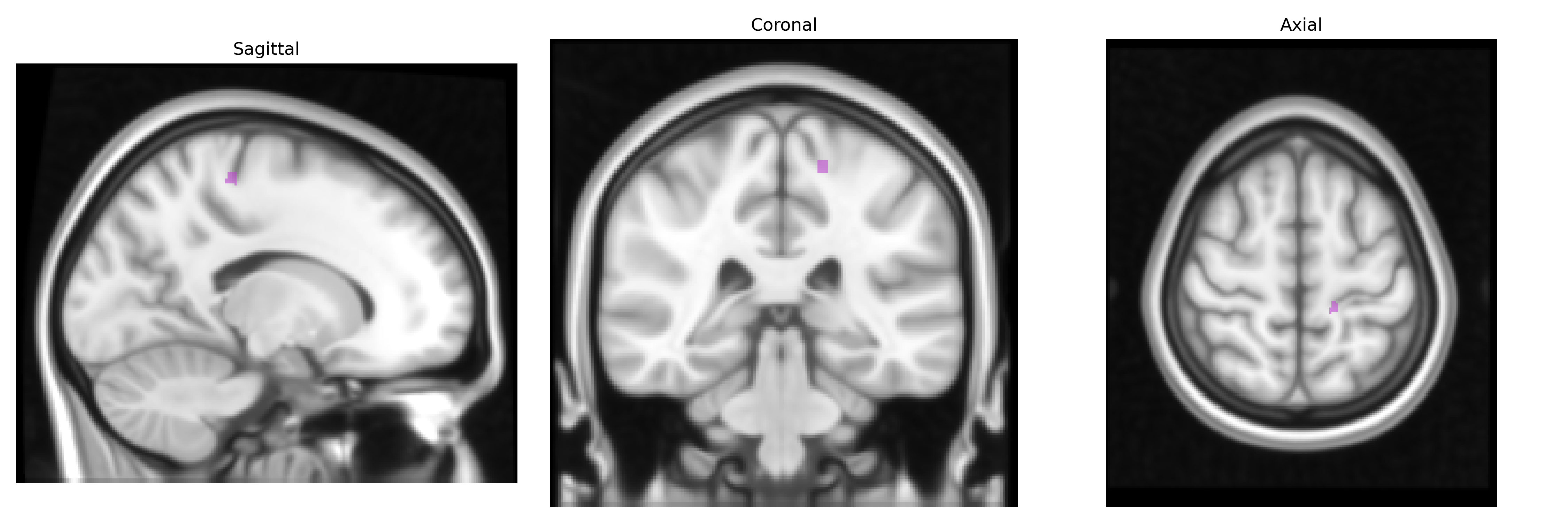
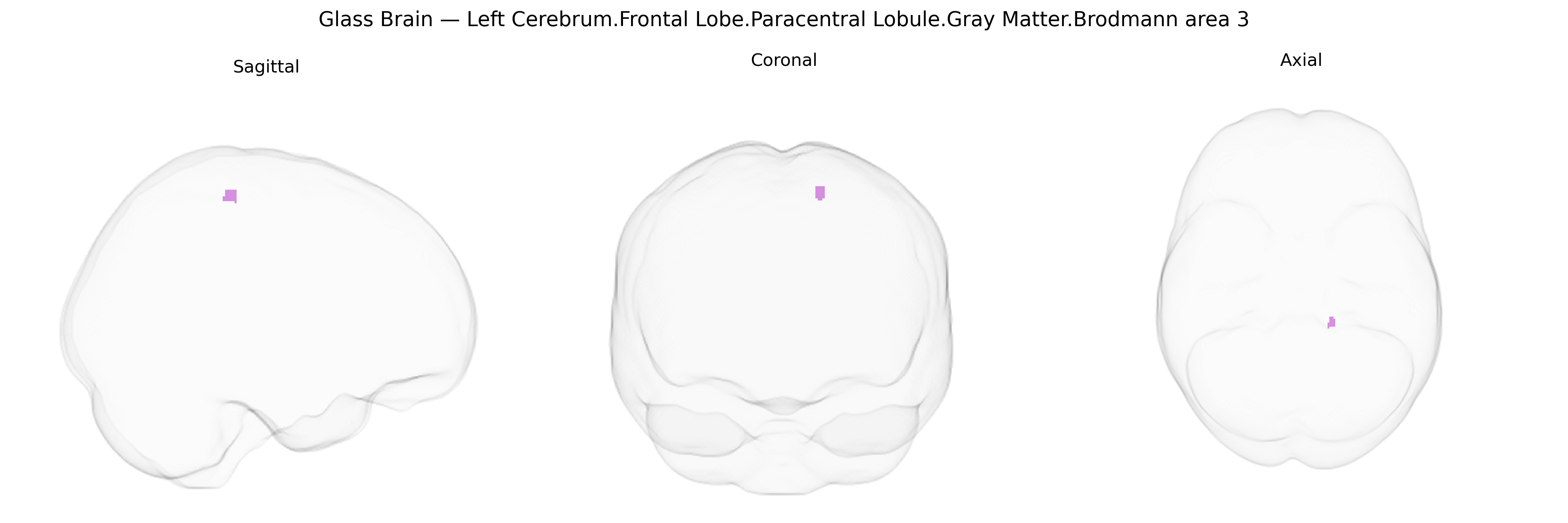
The bilateral Left Cerebrum.Frontal Lobe.Paracentral Lobule.Gray Matter.Brodmann area 3 corresponds to a primary somatosensory cortical field (part of SI) located along the posterior portion of the paracentral lobule near the midline, immediately anterior to the central sulcus and continuous with the dorsal extension of the postcentral gyrus. In the Talairach 1 mm atlas, this region is classified within the frontal lobe due to its position around the central sulcus, though functionally it is associated with primary somatosensory processing. Neurons in Brodmann area 3 receive dense thalamocortical input from the ventral posterior nucleus of the thalamus and are critically involved in high-resolution tactile and proprioceptive representation of the contralateral body, especially the lower limb and perineal regions represented medially in the homunculus. This area contributes to the initial cortical processing of cutaneous and deep sensory information, serving as a major input stage that relays to other somatosensory areas (e.g., BA1 and BA2) for further integration and perception. There is no direct Wikipedia article for this exact Talairach-defined region; see the related structure: Brodmann area 3.
The bilateral left paracentral lobule gray matter in Brodmann area 3 (primary somatosensory cortex, medial frontal/paracentral region) has been implicated in multiple genetic and GWAS-based associations related to somatosensory, motor, and neuropsychiatric traits, although few studies target this subregion exclusively. Large-scale imaging genetics consortia (e.g., ENIGMA, UK Biobank) have identified common variants influencing cortical thickness and surface area in medial sensorimotor/frontal regions encompassing the paracentral lobule, often mapping to genes involved in neurodevelopment and synaptic function (such as variants near MIR137, HMGA2, and genes regulating cortical patterning). Structural and functional alterations in this region have been reported in GWAS or polygenic score analyses of disorders including schizophrenia, major depressive disorder, attention-deficit/hyperactivity disorder, and autism spectrum disorder, where risk alleles and higher polygenic risk are associated with differences in cortical morphology or activation within primary sensorimotor networks that include BA3. Paracentral lobule involvement also emerges in genetic studies of motor and sensory traits, such as gait, balance, and chronic pain (e.g., polygenic overlap between pain-related GWAS and somatosensory cortex measures), as well as in neurodegenerative and demyelinating conditions (e.g., multiple sclerosis, amyotrophic lateral sclerosis) where risk loci modulate atrophy or microstructural change in medial sensorimotor cortex. Overall, the genetic architecture linked to this region appears highly polygenic and shared across cognitive, psychiatric, and sensorimotor phenotypes, with many loci exerting small effects on global and regional cortical organization rather than acting specifically on the left paracentral lobule BA3.
Overview generated by GPT-4o (2026).
Region ID: 1088
Hemisphere: bilateral
Atlas: Talairach labels 1mm
Full Quality Version: Download MP4
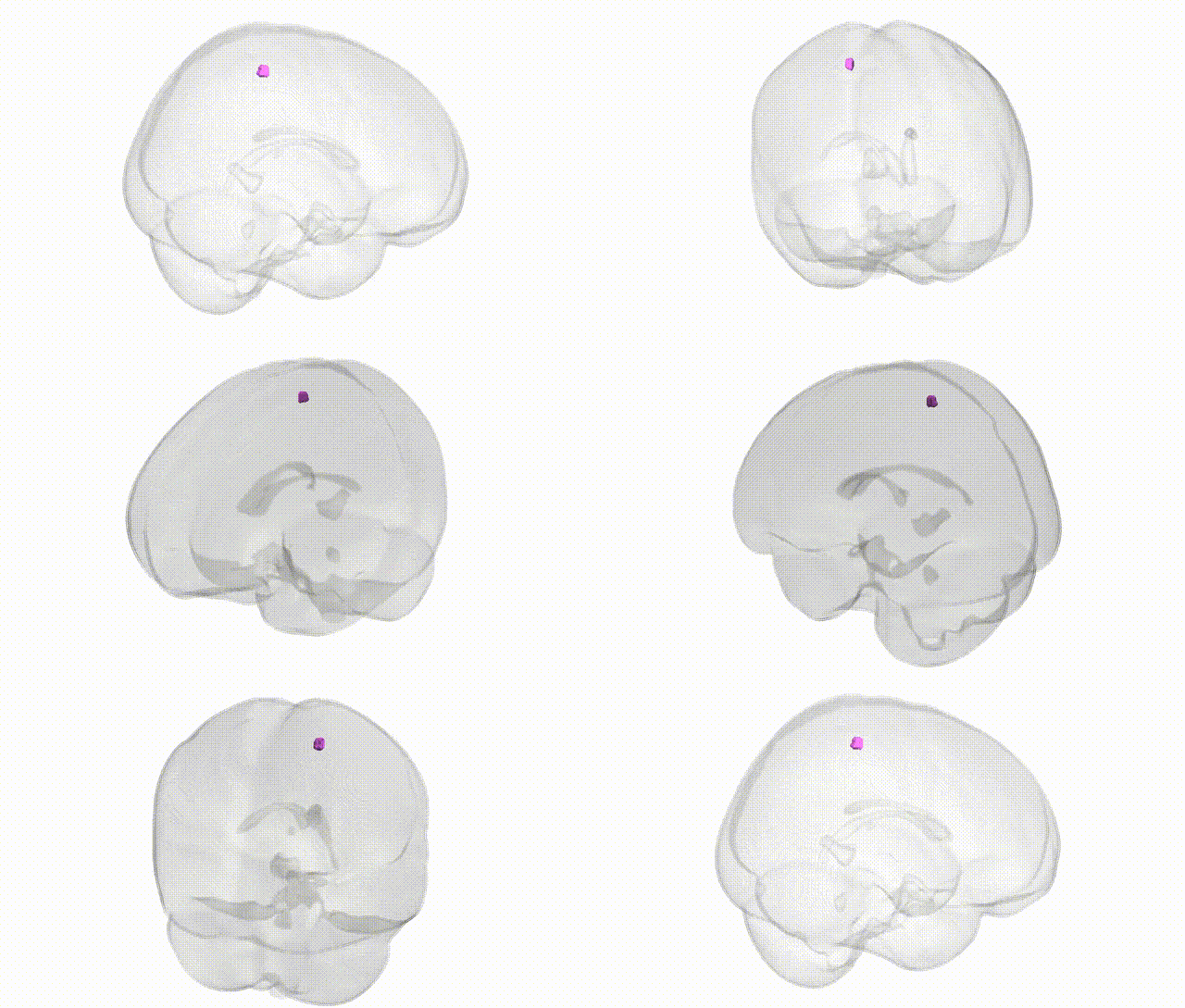
Full Quality Version: Download MP4
Wali Sidiqyar*, Gaurav Rudravaram*, Elyssa M. McMaster, Trent M. Schwartz, Adam M. Saunders, Kurt G. Schilling, Bennett A. Landman "Introducing SPINS: A Shared Public Visualization Library of Neuroanatomical Structures." Medical Imaging with Deep Learning- short paper
This resource is licensed under CC0 1.0 Universal (Public Domain).