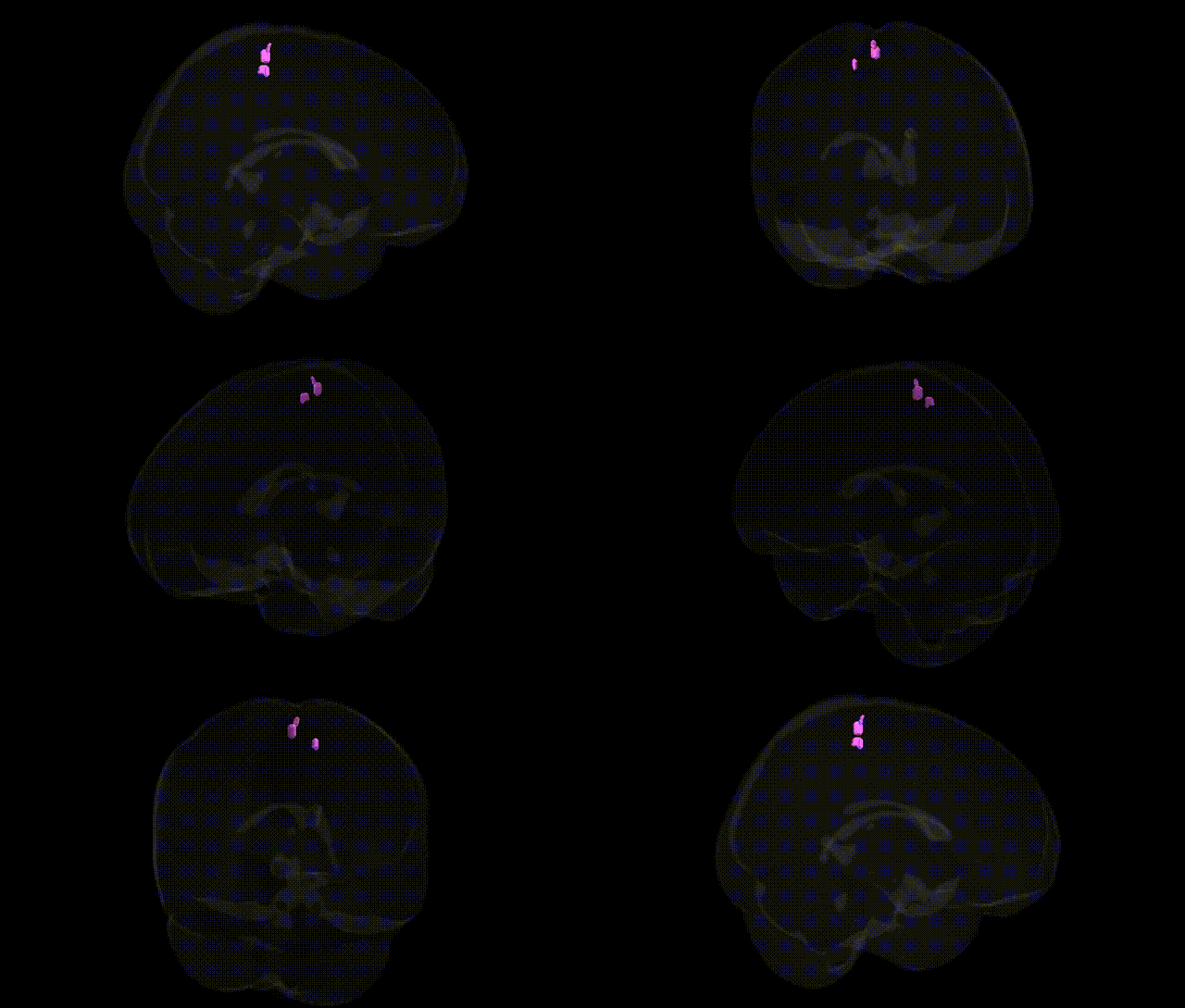
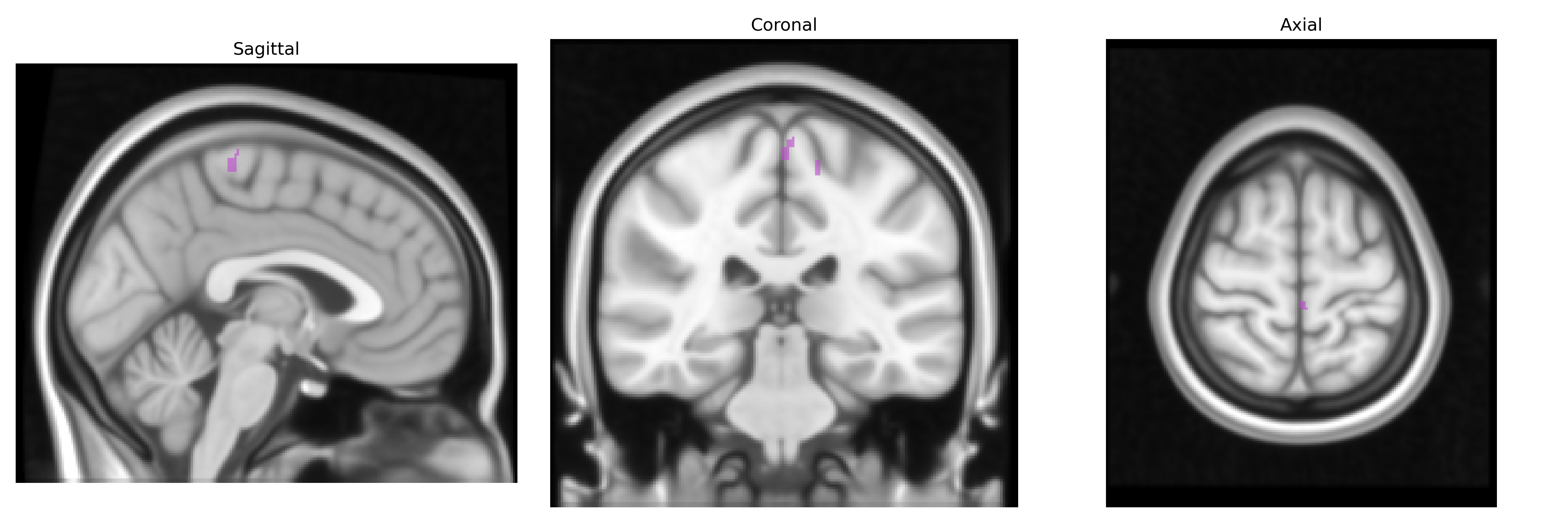
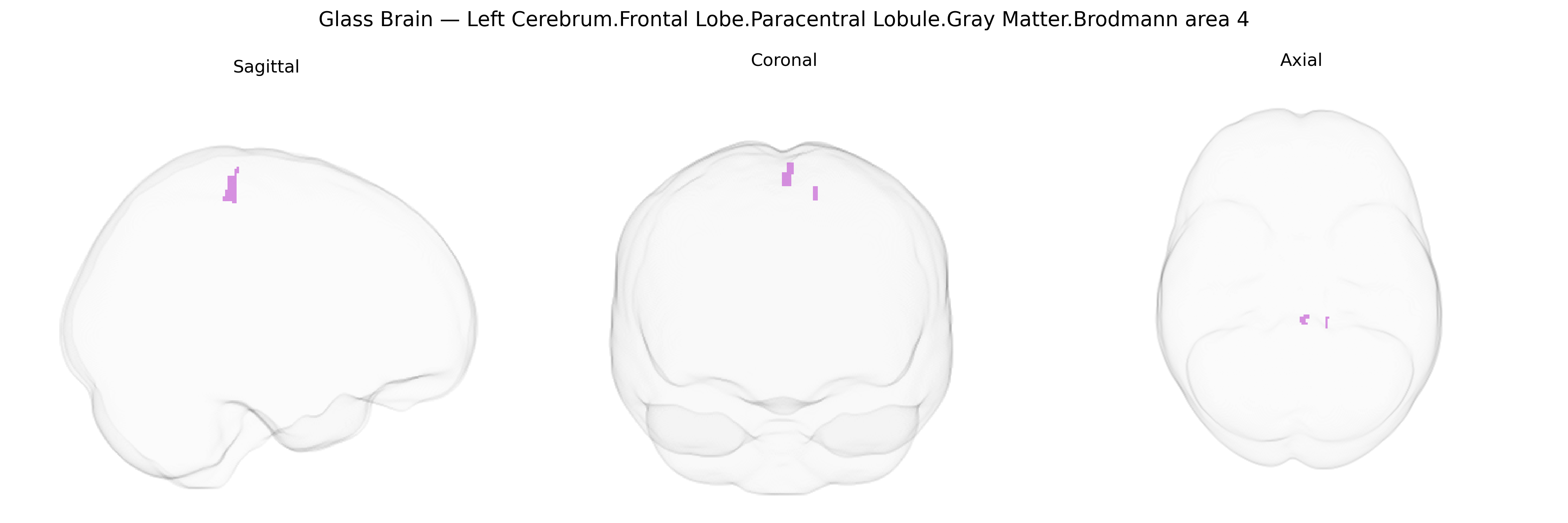
The bilateral Left Cerebrum.Frontal Lobe.Paracentral Lobule.Gray Matter.Brodmann area 4 corresponds to the primary motor cortex localized within the paracentral lobule on the medial surface of the frontal lobe, extending across the midline around the central sulcus. This region contains large pyramidal neurons (including Betz cells) in layer V that give rise to corticospinal and corticobulbar tracts, mediating voluntary motor control, particularly of the lower limb and pelvic musculature represented somatotopically in the medial motor homunculus. Functionally, it is essential for initiation and execution of conscious movements, modulation of muscle tone, and fine control of contralateral motor activity. Cytoarchitectonically defined as Brodmann area 4, it is also encompassed within the broader Paracentral lobule region of the medial frontal cortex.
The bilateral left frontal paracentral lobule gray matter in Brodmann area 4 (primary motor cortex) has been implicated in several genetic and GWAS-based associations, primarily via imaging–genetics and large-scale neuroimaging consortia rather than single-gene studies. ENIGMA and UK Biobank cortical thickness and surface area GWAS have identified multiple loci (e.g., near genes such as HMGA2, KIAA0586, and CUX1) associated with structural variation in primary motor regions, including the paracentral lobule, though effects are generally small and polygenic. Polygenic risk for neurodevelopmental and psychiatric disorders—particularly schizophrenia, bipolar disorder, ADHD, and autism spectrum disorder—has been associated with altered morphology or activation in motor and premotor cortices, including the paracentral lobule, consistent with motor impairments and soft neurological signs in these conditions. ALS and other motor neuron disease genetics (e.g., C9orf72, SOD1, TARDBP, FUS) indirectly implicate this region via degeneration of corticospinal neurons whose cell bodies reside in BA4, and neuroimaging–genetic correlation work sometimes localizes structural and functional changes to paracentral motor areas. GWAS of motor and gait traits (e.g., grip strength, reaction time, gait speed) have also shown distributed polygenic influences on primary motor cortex thickness and activation, linking common variants to interindividual differences in motor output likely subserved in part by BA4 paracentral lobule. Overall, genetic influences on this region appear highly polygenic and pleiotropic, overlapping with broader networks involved in motor control, neurodevelopment, and psychiatric vulnerability rather than being driven by region-specific single genes.
Overview generated by GPT-4o (2026).
Region ID: 1089
Hemisphere: bilateral
Atlas: Talairach labels 1mm
Full Quality Version: Download MP4
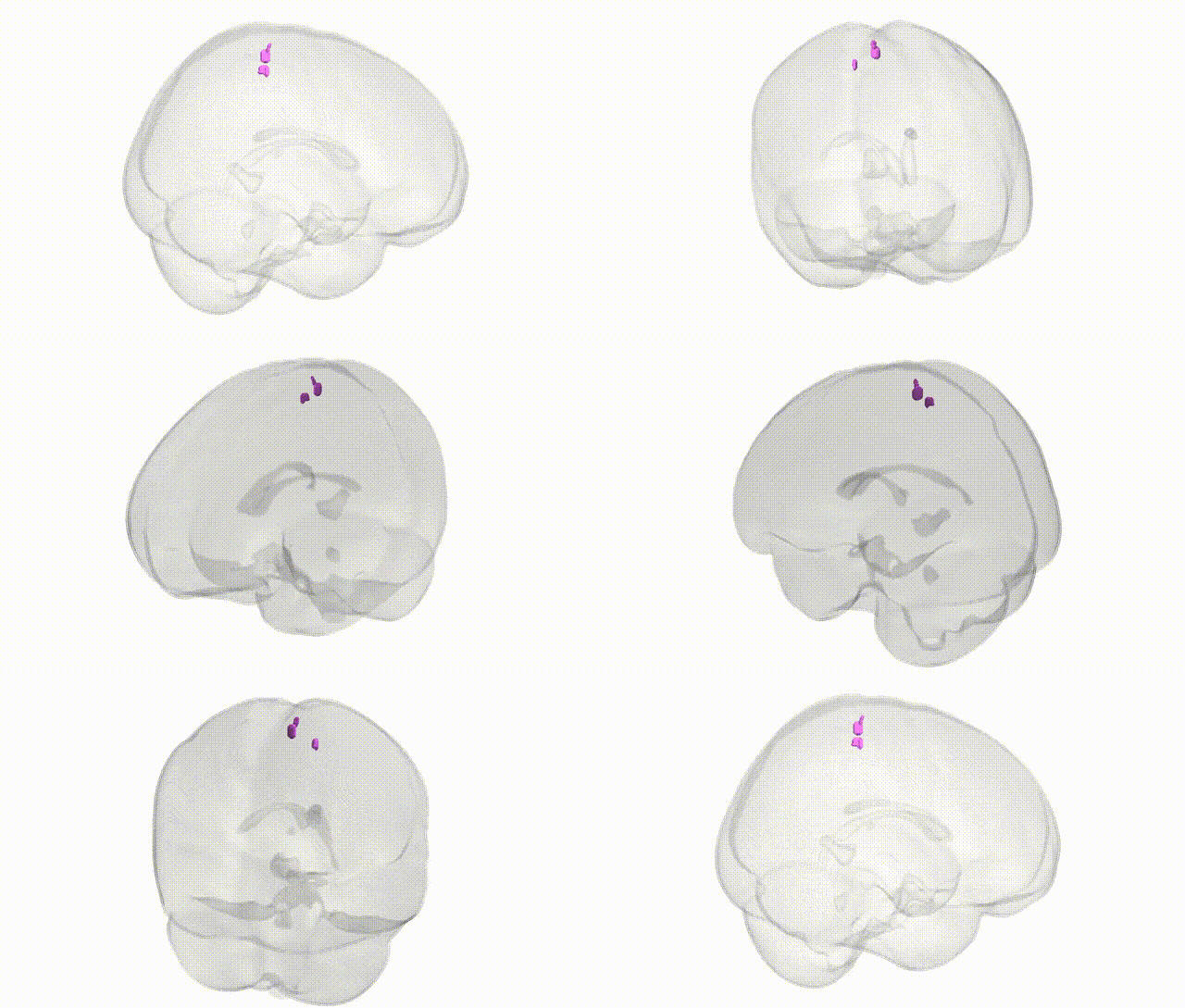
Full Quality Version: Download MP4
Wali Sidiqyar*, Gaurav Rudravaram*, Elyssa M. McMaster, Trent M. Schwartz, Adam M. Saunders, Kurt G. Schilling, Bennett A. Landman "Introducing SPINS: A Shared Public Visualization Library of Neuroanatomical Structures." Medical Imaging with Deep Learning- short paper
This resource is licensed under CC0 1.0 Universal (Public Domain).