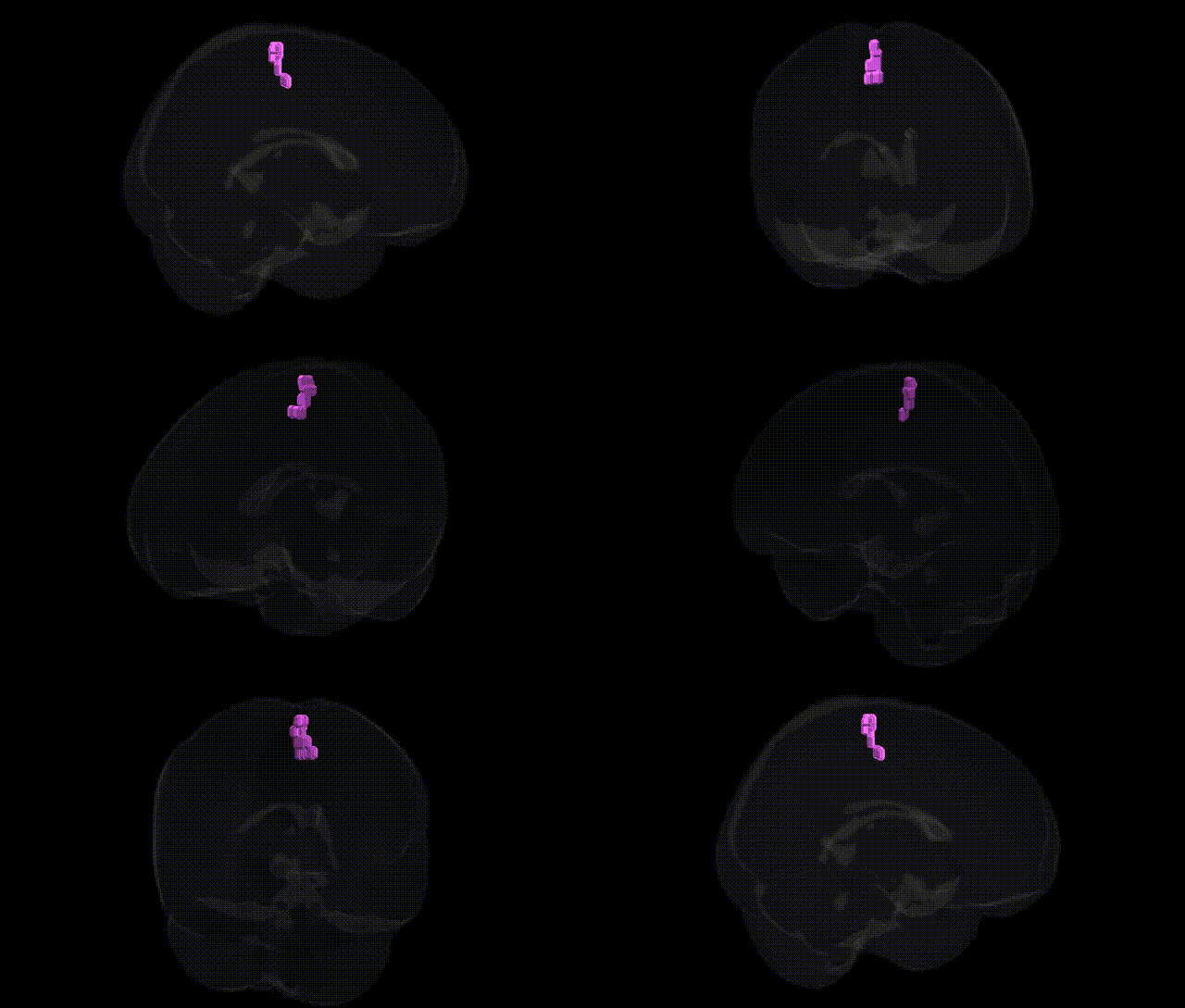
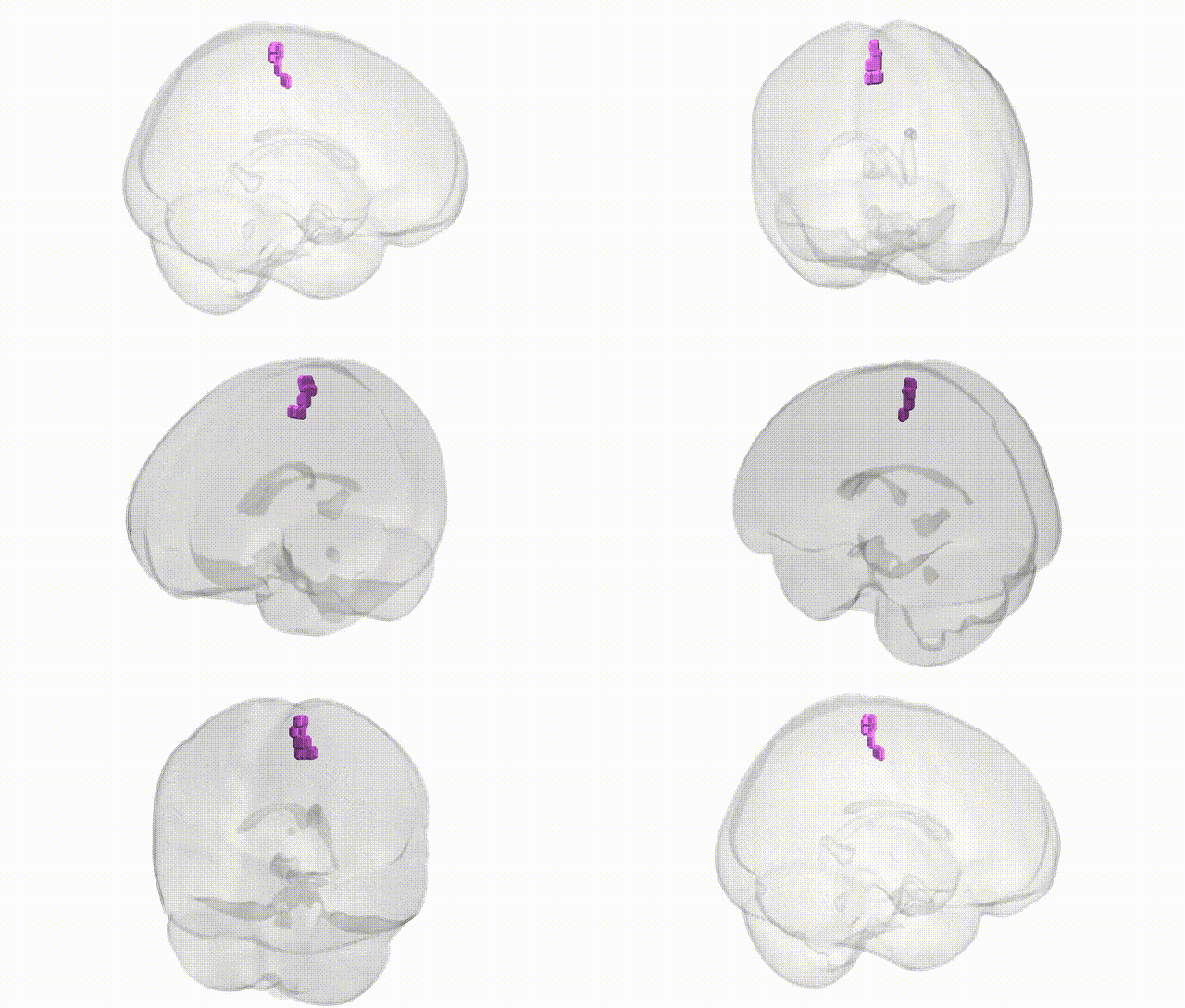
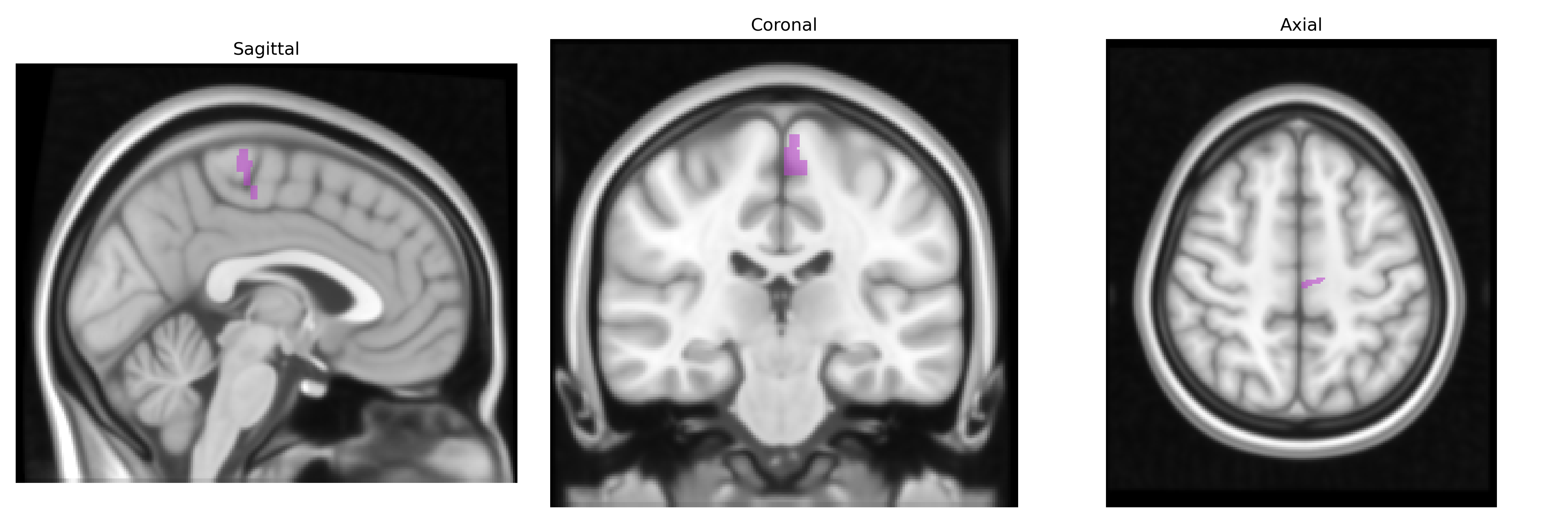
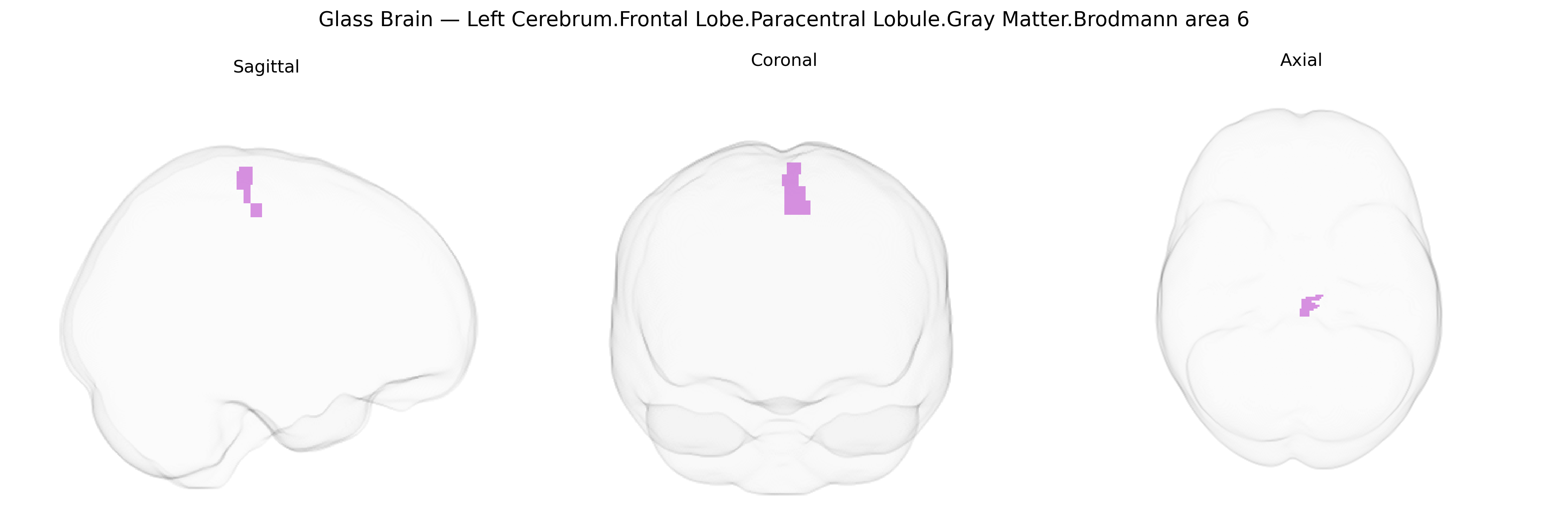
The bilateral Left Cerebrum.Frontal Lobe.Paracentral Lobule.Gray Matter.Brodmann area 6 corresponds to a portion of the premotor/supplementary motor cortex located on the medial aspect of the frontal lobe, adjacent to the primary motor representation of the lower limb in the paracentral lobule. Histologically defined as Brodmann area 6, this region participates in higher-order motor planning, preparation, and coordination of complex and sequential movements, including those involving the contralateral leg and trunk, and contributes to the initiation and modulation of voluntary motor output via extensive corticocortical and corticospinal connections. Functional imaging and lesion studies implicate this area in motor imagery, internally generated movement sequences, and the integration of sensory information into motor programs. There is no dedicated Wikipedia article for this exact Talairach-defined region; a closely related structure is Brodmann area 6.
The bilateral left paracentral lobule in Brodmann area 6, a premotor–supplementary motor sector of the medial frontal lobe, has been implicated in several genetic and GWAS-based associations spanning motor control, neurodevelopment, and psychiatric phenotypes. Large-scale structural MRI GWAS (e.g., ENIGMA and UK Biobank) have found SNP-based heritability and specific loci influencing cortical thickness and surface area in medial premotor/paracentral regions, with notable signals in or near genes such as MAPT, KCNK2, HMGA2, and loci enriched for neurodevelopmental and synaptic pathways. Paracentral BA6 activation and morphology have been linked to common polygenic risk for schizophrenia, bipolar disorder, and major depression, and to specific risk loci in genes involved in glutamatergic signaling and synaptic plasticity (e.g., GRM3, CACNA1C), often in the context of altered motor preparation and internal timing. Motor-related disorders with genetic underpinnings, including familial forms of primary dystonia, hereditary spastic paraplegia, and ALS, show structural or functional abnormalities involving medial premotor and paracentral cortex, with causal or risk genes such as TOR1A, SPAST, and C9orf72 implicated in network-level changes that include this region. GWAS of Parkinson’s disease and essential tremor also implicate premotor–supplementary motor circuits, with risk loci (e.g., LRRK2, SNCA, and others) associated with altered connectivity or gray matter measures encompassing paracentral BA6. Additionally, polygenic scores for cognitive performance, educational attainment, and general intelligence show associations with medial frontal morphology and activation, including in paracentral premotor regions, reflecting a broader genetic architecture in which neurodevelopmental, synaptic, and myelination genes shape interindividual variation in this BA6 sector.
Overview generated by GPT-4o (2026).
Region ID: 1075
Hemisphere: bilateral
Atlas: Talairach labels 1mm
Full Quality Version: Download MP4
Full Quality Version: Download MP4
Wali Sidiqyar*, Gaurav Rudravaram*, Elyssa M. McMaster, Trent M. Schwartz, Adam M. Saunders, Kurt G. Schilling, Bennett A. Landman "Introducing SPINS: A Shared Public Visualization Library of Neuroanatomical Structures." Medical Imaging with Deep Learning- short paper
This resource is licensed under CC0 1.0 Universal (Public Domain).