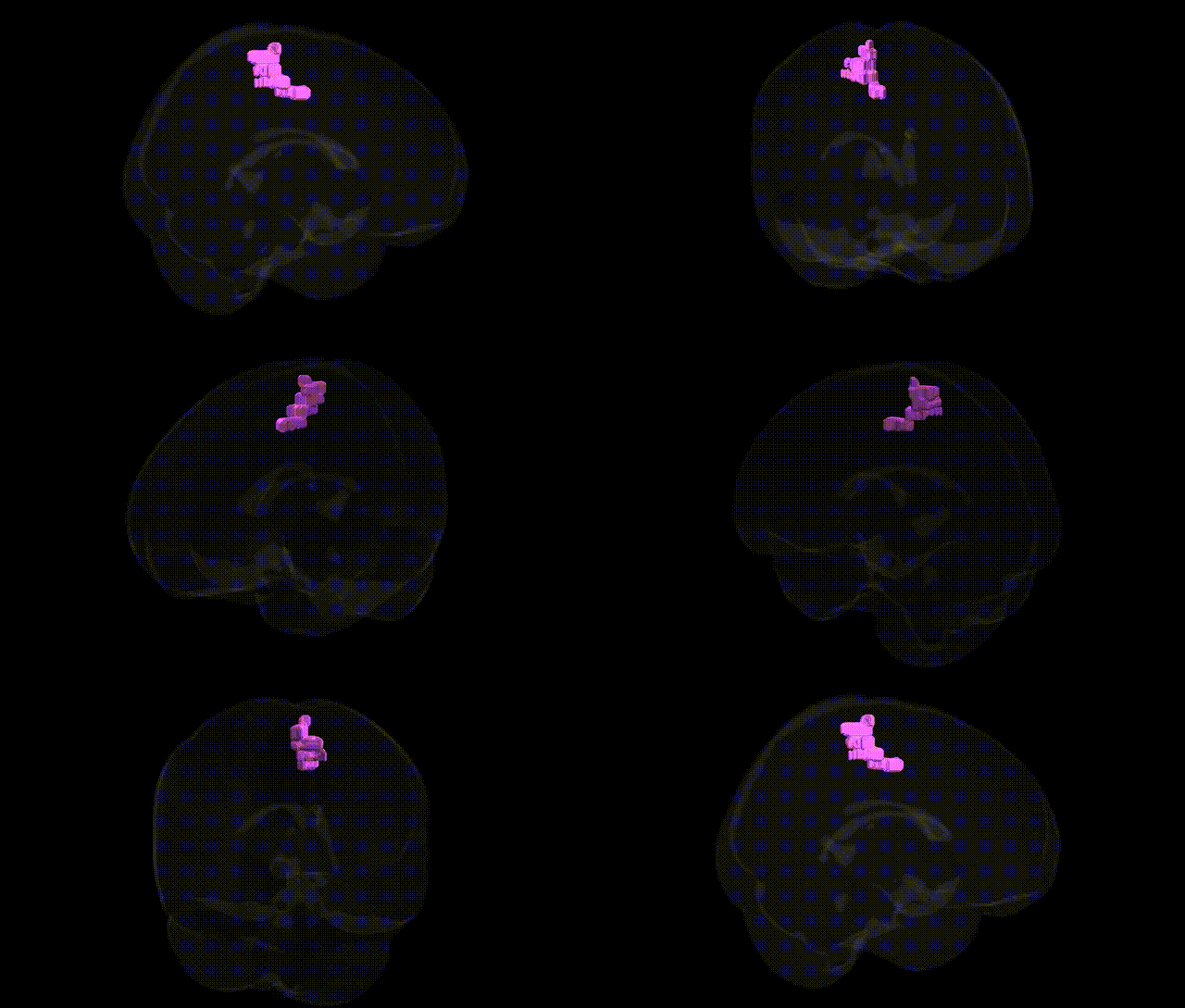
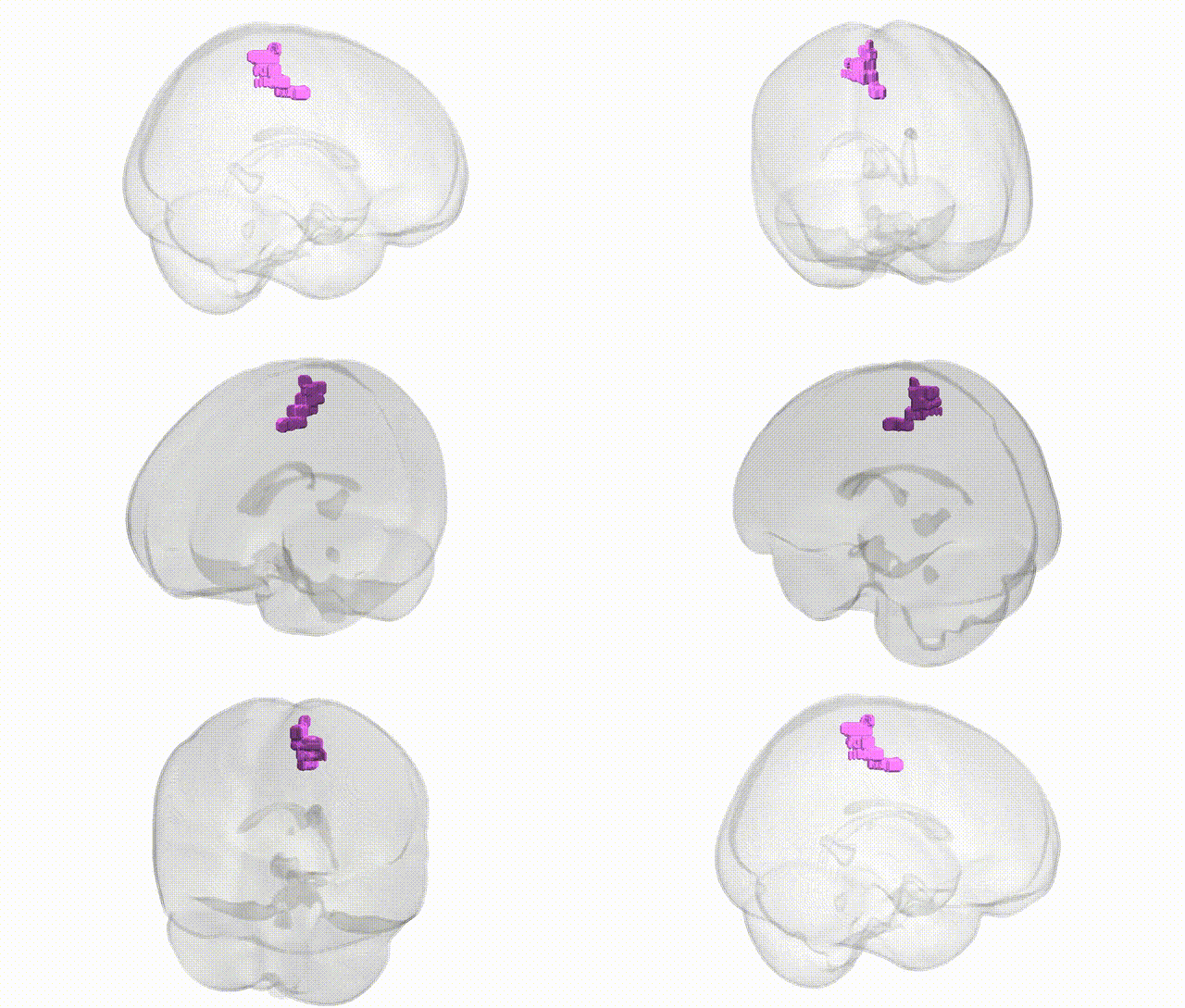
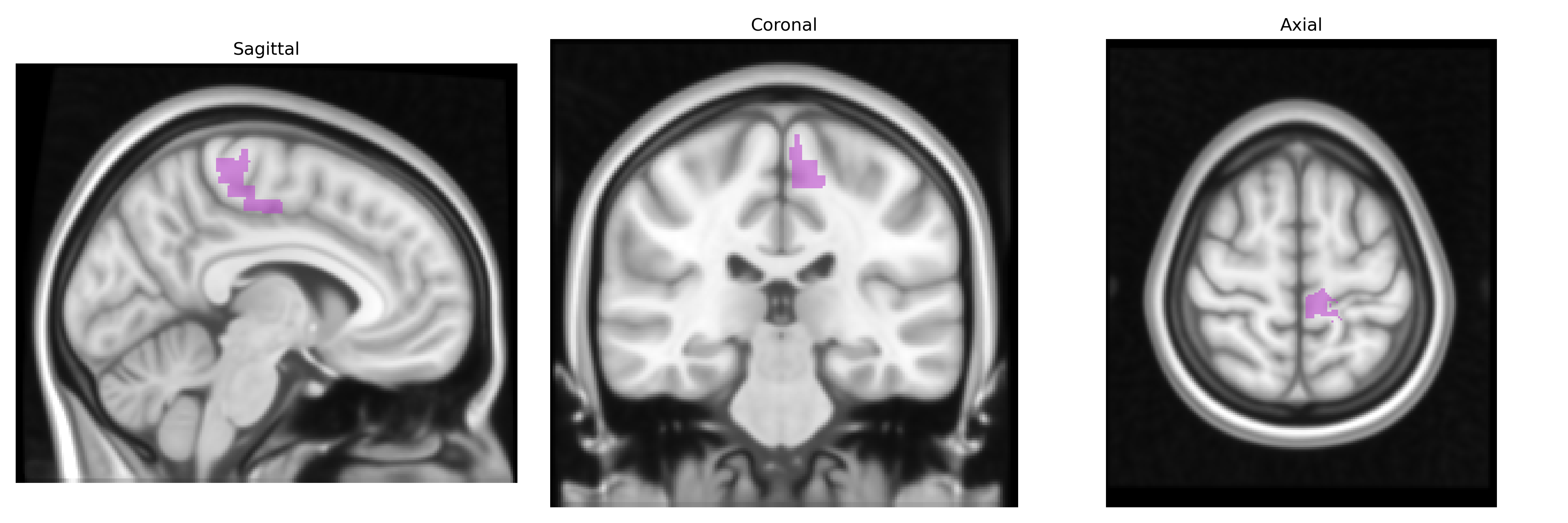
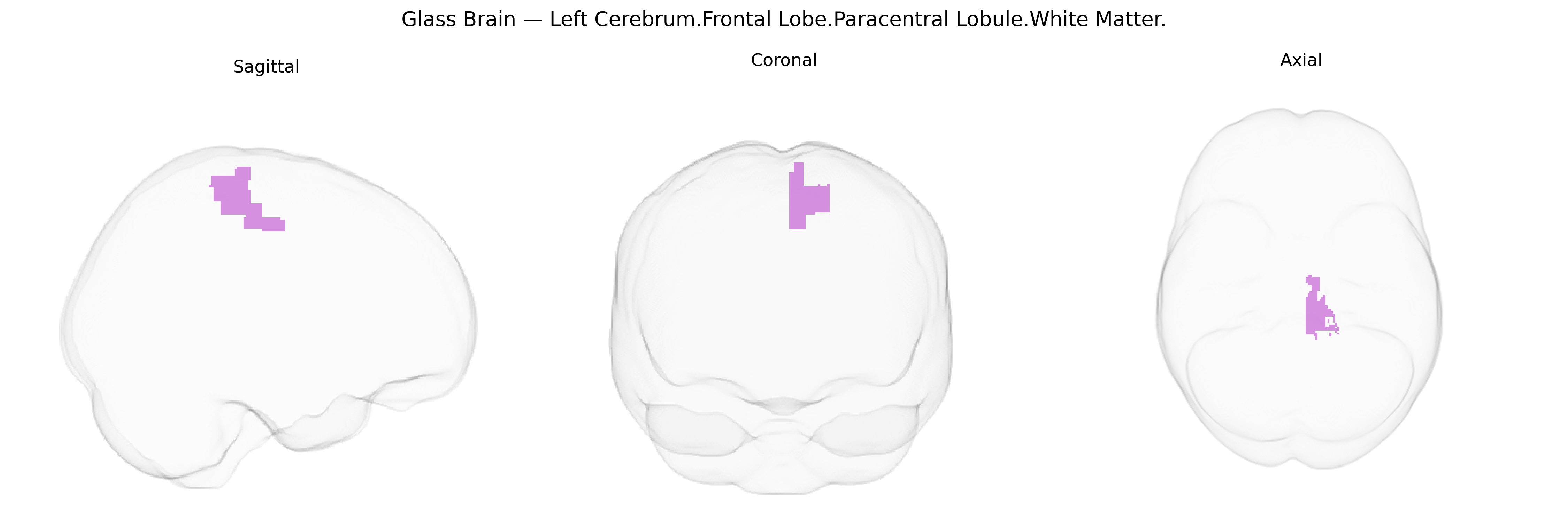
The bilateral Left Cerebrum.Frontal Lobe.Paracentral Lobule.White Matter corresponds to subcortical myelinated fiber pathways underlying the paracentral lobule of the frontal lobe, a medial sensorimotor region that bridges the precentral and postcentral gyri around the central sulcus. These white matter tracts include short and long association fibers, projection fibers related to corticospinal and thalamocortical pathways, and interhemispheric callosal connections that support motor and somatosensory integration for the contralateral lower limb and perineal regions. Functionally, this white matter is critical for voluntary leg and foot movements, gait-related control, and somatosensory processing from the lower extremities, as well as for coordination between motor planning and execution within frontal sensorimotor networks. There is no direct Wikipedia article for the white matter of the paracentral lobule; for the overlying cortical region, see Paracentral lobule.
Genetic associations specifically targeting the bilateral Left Cerebrum.Frontal Lobe.Paracentral Lobule.White Matter, as defined in the Talairach 1 mm atlas, are typically inferred from broader imaging genetics and GWAS studies of cortical structure and motor/somatosensory circuitry rather than from this exact label alone. Large-scale GWAS of brain MRI measures, such as ENIGMA and UK Biobank analyses, have identified multiple loci (e.g., in genes like HMGA2, IGF1, TESC, and variants near neurodevelopmental and axon guidance genes) associated with regional cortical thickness, surface area, and white matter microstructure in frontal and paracentral regions, reflecting genetic influences on myelination, axonal organization, and cortical development. The paracentral lobule, which encompasses primary motor (especially leg/foot representation) and somatosensory areas, participates in networks implicated by genetic studies of movement and neurodegenerative disorders (including loci associated with ALS, Parkinson’s disease, and hereditary spastic paraplegia) and of autoimmune and inflammatory conditions that affect motor/sensory pathways (such as multiple sclerosis, where susceptibility genes like HLA-DRB1 and others contribute to white matter lesion burden involving frontal-paracentral regions). Polygenic risk scores for psychiatric conditions (schizophrenia, bipolar disorder, major depression, ADHD) and cognitive traits (general intelligence, educational attainment) have been associated with alterations in frontal white matter integrity and cortical metrics in imaging genetics studies, which often include paracentral areas within broader frontal networks. Although direct GWAS reporting effects exclusively on the Talairach-defined paracentral lobule white matter are scarce, convergent genetic evidence indicates that common and rare variants affecting neurodevelopment, myelination, immune function, and synaptic signaling contribute to structural variability and disease-related changes in this motor-somatosensory frontal white matter region.
Overview generated by GPT-4o (2026).
Region ID: 1051
Hemisphere: bilateral
Atlas: Talairach labels 1mm
Full Quality Version: Download MP4
Full Quality Version: Download MP4
Wali Sidiqyar*, Gaurav Rudravaram*, Elyssa M. McMaster, Trent M. Schwartz, Adam M. Saunders, Kurt G. Schilling, Bennett A. Landman "Introducing SPINS: A Shared Public Visualization Library of Neuroanatomical Structures." Medical Imaging with Deep Learning- short paper
This resource is licensed under CC0 1.0 Universal (Public Domain).