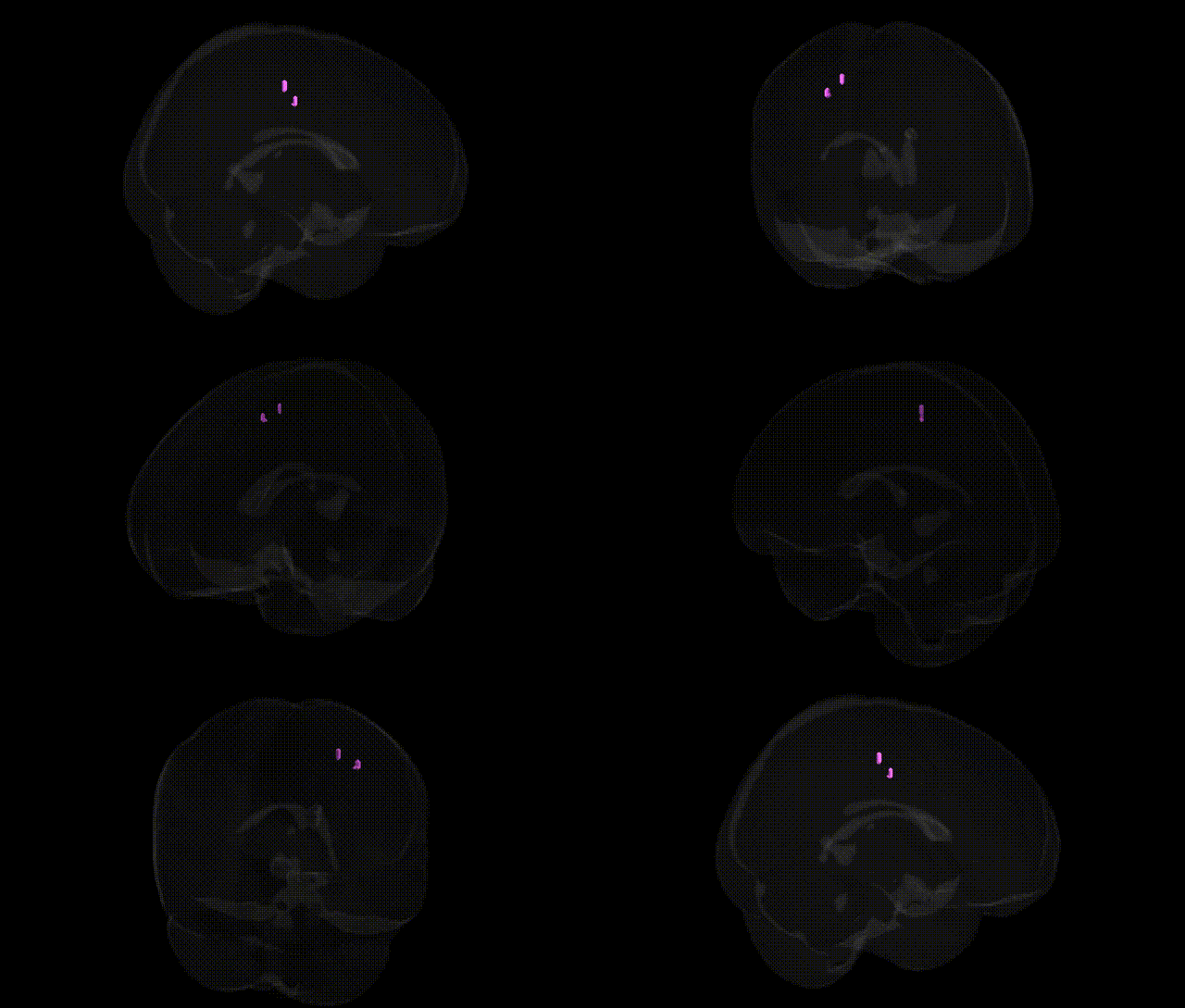
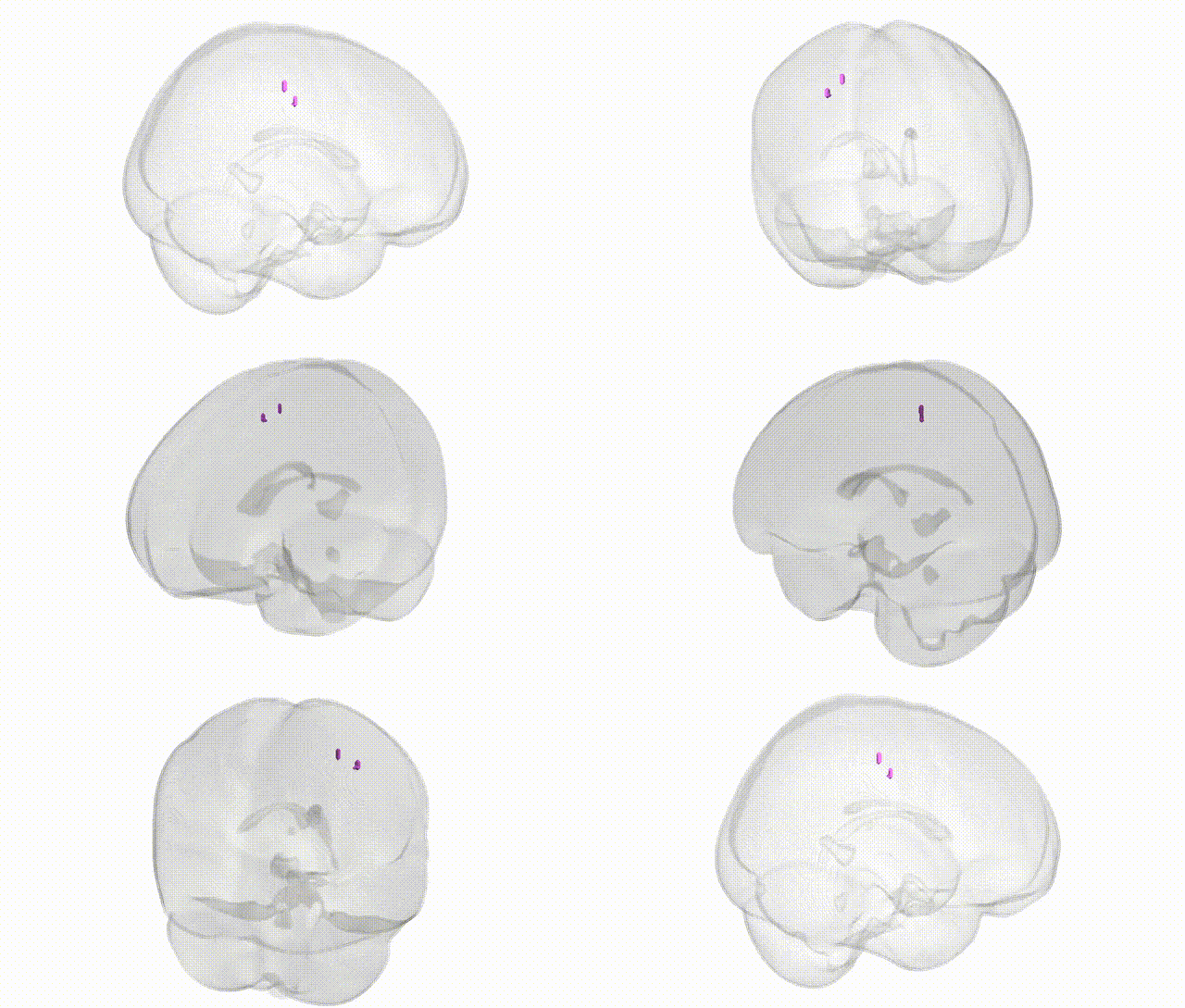
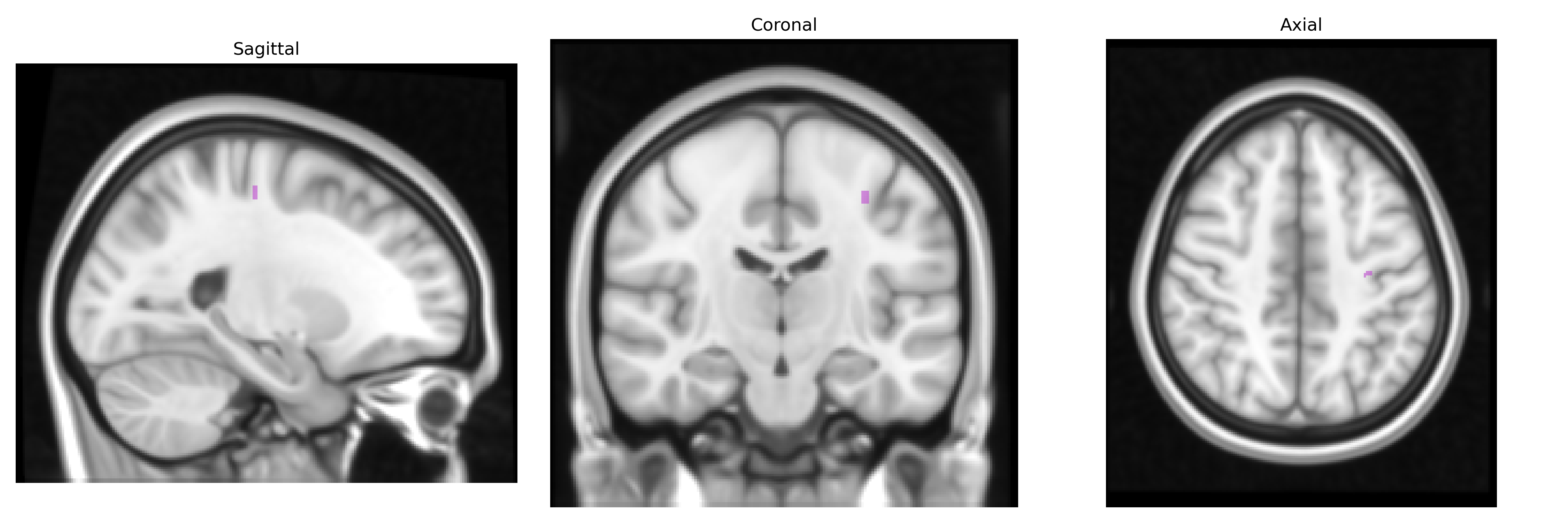
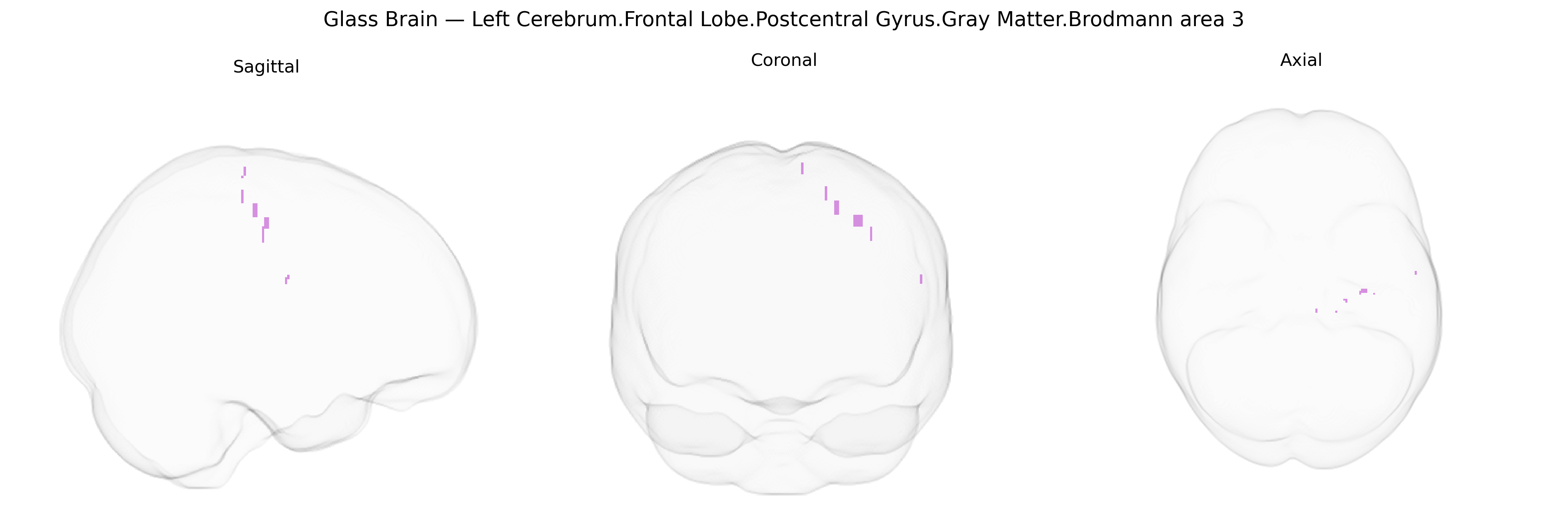
The bilateral Left Cerebrum.Frontal Lobe.Postcentral Gyrus.Gray Matter.Brodmann area 3, as defined in the Talairach labels 1 mm Atlas, corresponds primarily to the anterior portion of the primary somatosensory cortex situated along the postcentral gyrus, bordering the central sulcus. Brodmann area 3 is heavily granular cortex receiving dense thalamocortical input from the ventral posterior nucleus of the thalamus and is critically involved in processing fine tactile and proprioceptive information from the contralateral body, particularly cutaneous inputs (e.g., touch, vibration, and texture). Neurons in this region exhibit small receptive fields and high somatotopic specificity, contributing to the somatotopic map that underlies precise sensory discrimination, and project to adjacent somatosensory areas (BAs 1 and 2) as well as to higher-order parietal regions for further integration. There is no direct link for Brodmann area 3, but it is a component of the Primary somatosensory cortex.
The bilateral Left Cerebrum.Frontal Lobe.Postcentral Gyrus.Gray Matter.Brodmann area 3, corresponding to primary somatosensory cortex bordering motor-related frontal regions, has been implicated in multiple genetic and GWAS findings, particularly for cortical thickness, surface area, and overall brain morphology. Large-scale imaging–genetics consortia (e.g., ENIGMA, UK Biobank) have identified common variants in genes involved in neurodevelopment and synaptic function—such as HMGA2, MIR2113, IGF1, and multiple loci near microtubule- and cell-adhesion–related genes—as influencing regional cortical measures that include or overlap BA3/postcentral–precentral territories. Polygenic architectures for traits such as general cognitive ability, educational attainment, and sensorimotor performance show enrichment in genetic influences on somatosensory and adjacent motor cortex, and several schizophrenia, major depression, and autism spectrum disorder risk loci have been linked, via imaging intermediates, to altered thickness or gyrification in postcentral and neighboring frontal sensorimotor regions. In Parkinson’s disease and other movement or pain-related disorders, risk variants affecting dopaminergic and glutamatergic pathways, as well as genes related to microglial and immune signaling (e.g., in the MHC region), have been associated with structural or functional alterations in primary sensorimotor cortex, including BA3, although these effects are typically modest and highly polygenic rather than region-specific.
Overview generated by GPT-4o (2026).
Region ID: 897
Hemisphere: bilateral
Atlas: Talairach labels 1mm
Full Quality Version: Download MP4
Full Quality Version: Download MP4
Wali Sidiqyar*, Gaurav Rudravaram*, Elyssa M. McMaster, Trent M. Schwartz, Adam M. Saunders, Kurt G. Schilling, Bennett A. Landman "Introducing SPINS: A Shared Public Visualization Library of Neuroanatomical Structures." Medical Imaging with Deep Learning- short paper
This resource is licensed under CC0 1.0 Universal (Public Domain).