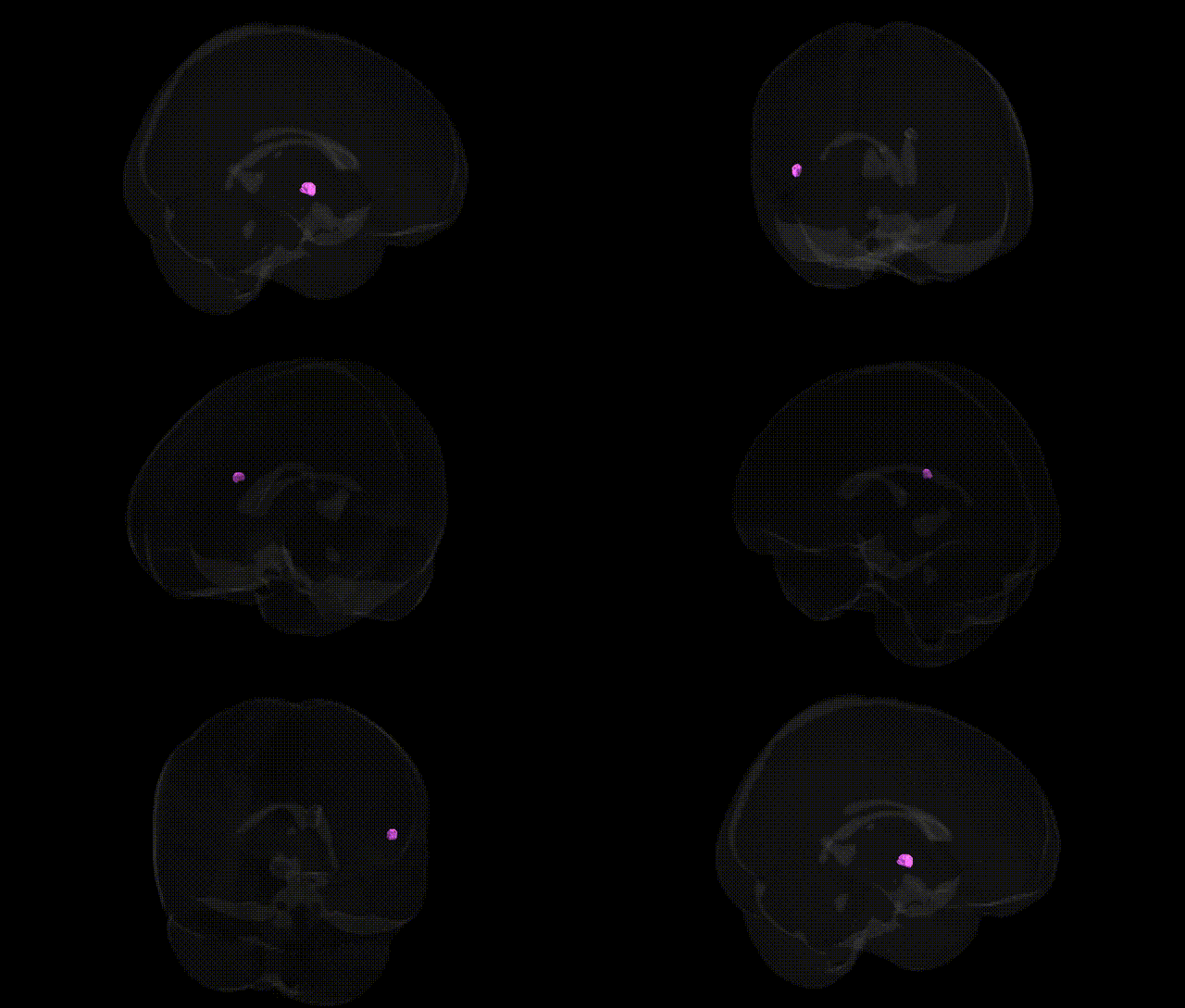
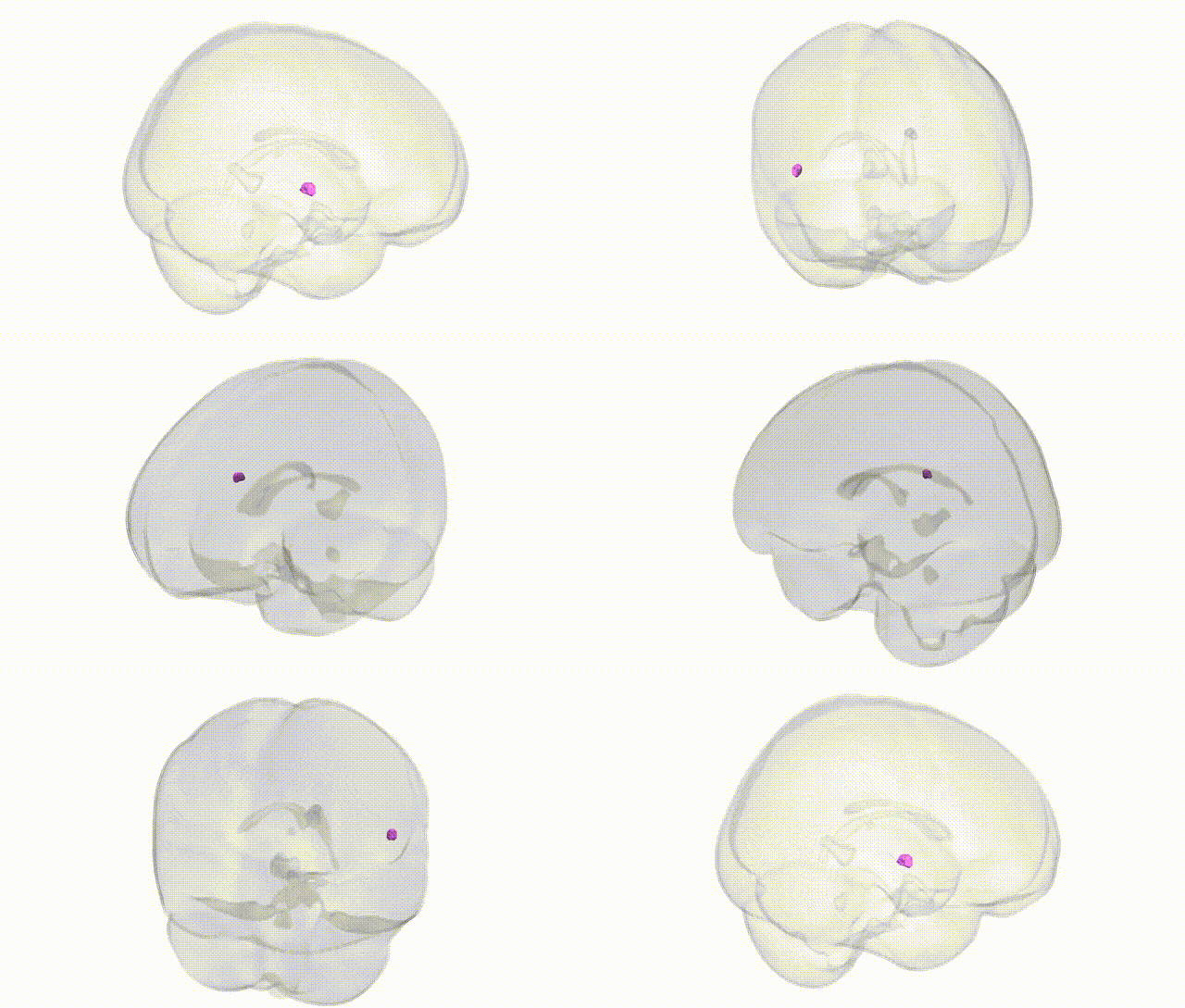
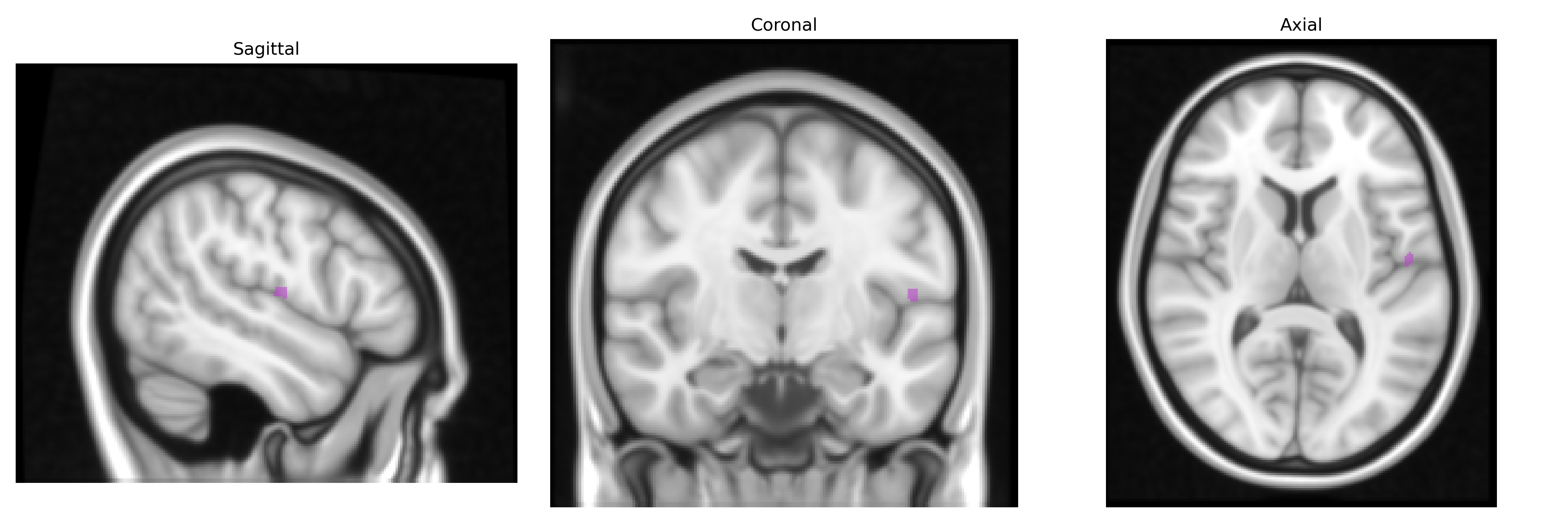
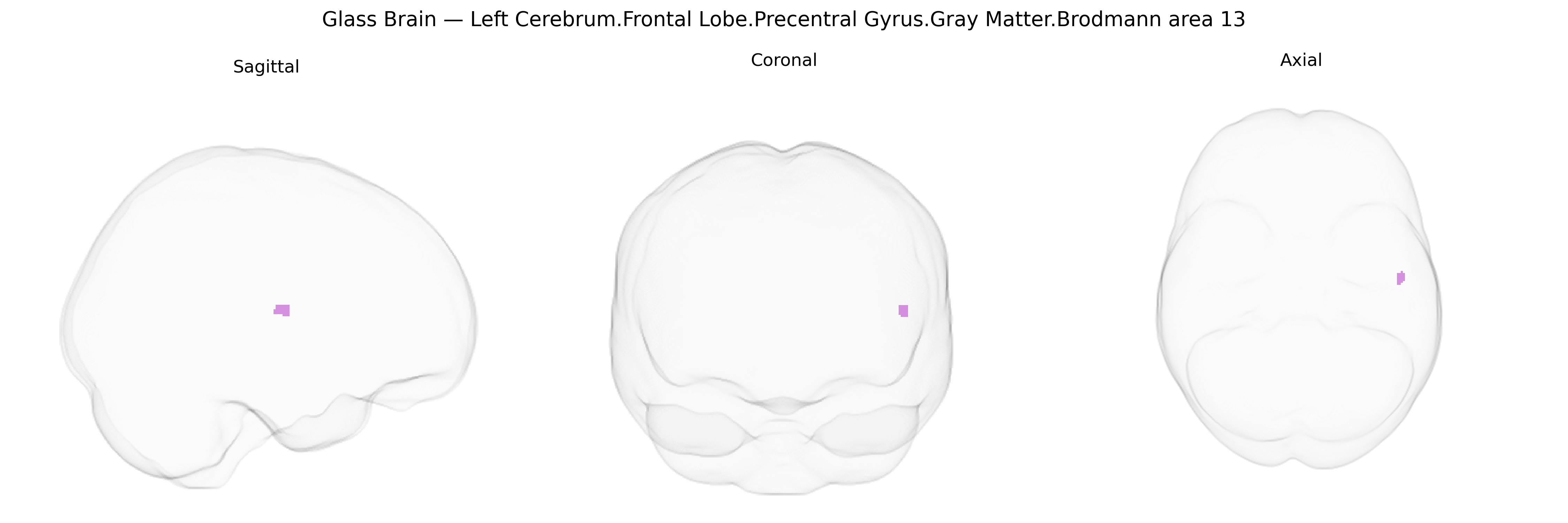
The bilateral Left Cerebrum.Frontal Lobe.Precentral Gyrus.Gray Matter.Brodmann area 13 region, as labeled in the Talairach 1 mm atlas, reflects a mapping artifact rather than a canonical neuroanatomical entity, since Brodmann area 13 is classically assigned to the insular cortex, not the precentral gyrus of the frontal lobe. Functionally, the true Brodmann area 13 is associated with multimodal integration of visceral, emotional, and autonomic information, contributing to interoception, affective processing, and higher-order aspects of decision-making and social cognition. In contrast, the precentral gyrus gray matter belongs primarily to the primary motor cortex (classically Brodmann area 4, with premotor and supplementary motor contributions from areas 6), which is critical for voluntary motor control, somatotopic representation of the body, and coordination of complex movements. Because of this discrepancy, the Talairach label here likely reflects the intersection of atlas parcellation schemes rather than a distinct, widely recognized Brodmann-defined frontal motor subregion. There is no direct link for “precentral gyrus Brodmann area 13”; a closely related and anatomically appropriate structure is the insular Brodmann area 13.
The bilateral Left Cerebrum.Frontal Lobe.Precentral Gyrus.Gray Matter.Brodmann area 13 label in the Talairach 1 mm atlas corresponds to a ventral frontal/insular–adjacent region whose genetic associations in imaging-genetics and GWAS largely overlap with those reported for frontal/insular cortical thickness and volume rather than the classic primary motor precentral gyrus. Large-scale consortia (e.g., ENIGMA, UK Biobank) have identified numerous common variants influencing frontal lobe gray-matter structure, with prominent signals in genes involved in neurodevelopment and synaptic function (such as MAPT, TBR1, and genes in the WNT and FGF pathways), although specific SNPs are typically reported at the level of broader frontal or insular parcels rather than Brodmann area 13 alone. Structural variation in ventral frontal and insular regions overlapping this label has been genetically linked to risk for major depressive disorder, bipolar disorder, schizophrenia, and substance use phenotypes, with polygenic risk scores for these disorders predicting reduced cortical thickness or altered gray-matter volume in the region. Additionally, GWAS of traits such as cognitive performance, educational attainment, and neuroticism show genetic correlations with frontal cortical morphology that encompass this area, indicating that shared polygenic architectures contribute to both regional gray-matter variation and these behavioral or clinical phenotypes, though precise, consistently replicated locus-level associations specific to Talairach Brodmann area 13 remain limited.
Overview generated by GPT-4o (2026).
Region ID: 733
Hemisphere: bilateral
Atlas: Talairach labels 1mm
Full Quality Version: Download MP4
Full Quality Version: Download MP4
Wali Sidiqyar*, Gaurav Rudravaram*, Elyssa M. McMaster, Trent M. Schwartz, Adam M. Saunders, Kurt G. Schilling, Bennett A. Landman "Introducing SPINS: A Shared Public Visualization Library of Neuroanatomical Structures." Medical Imaging with Deep Learning- short paper
This resource is licensed under CC0 1.0 Universal (Public Domain).