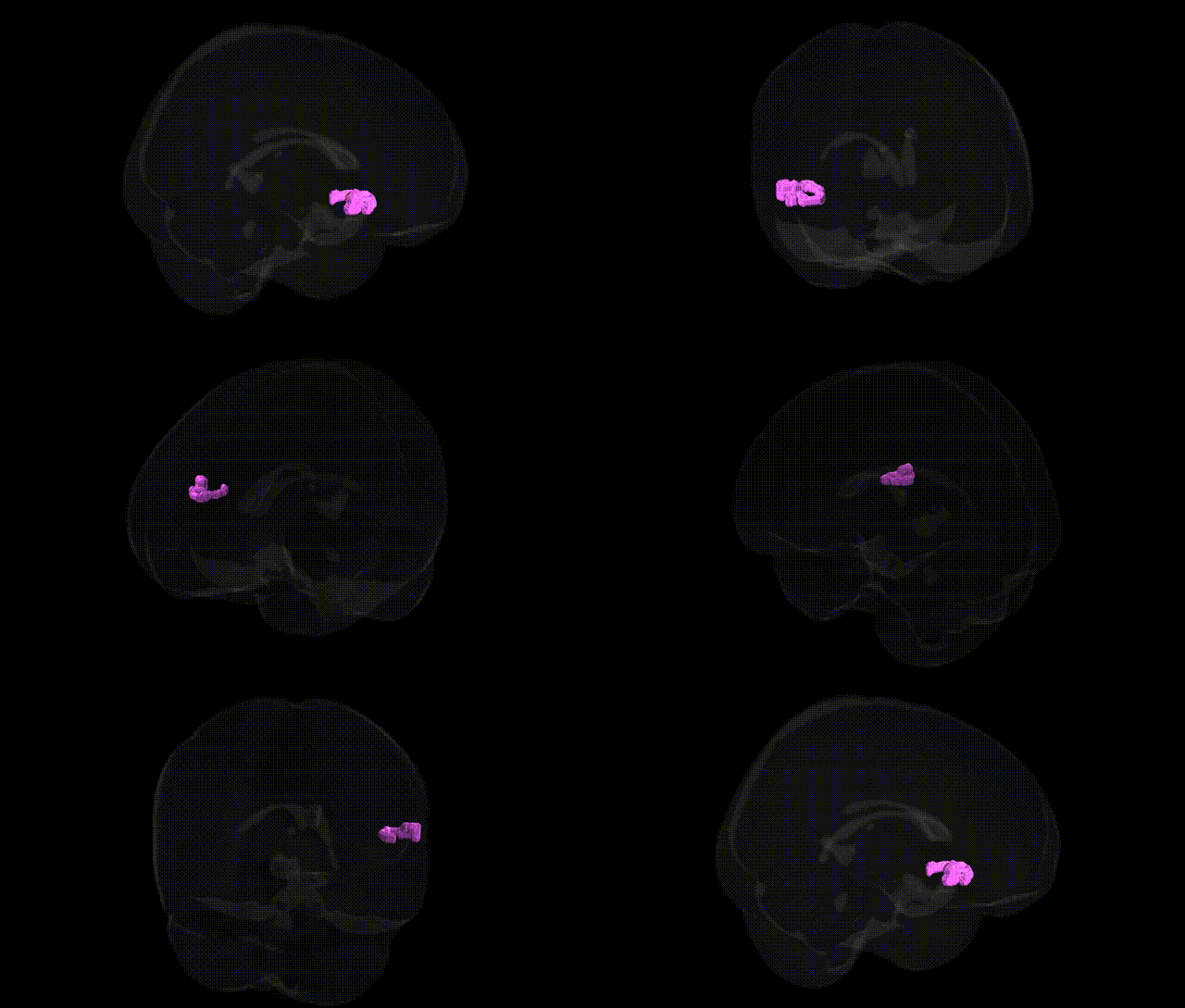
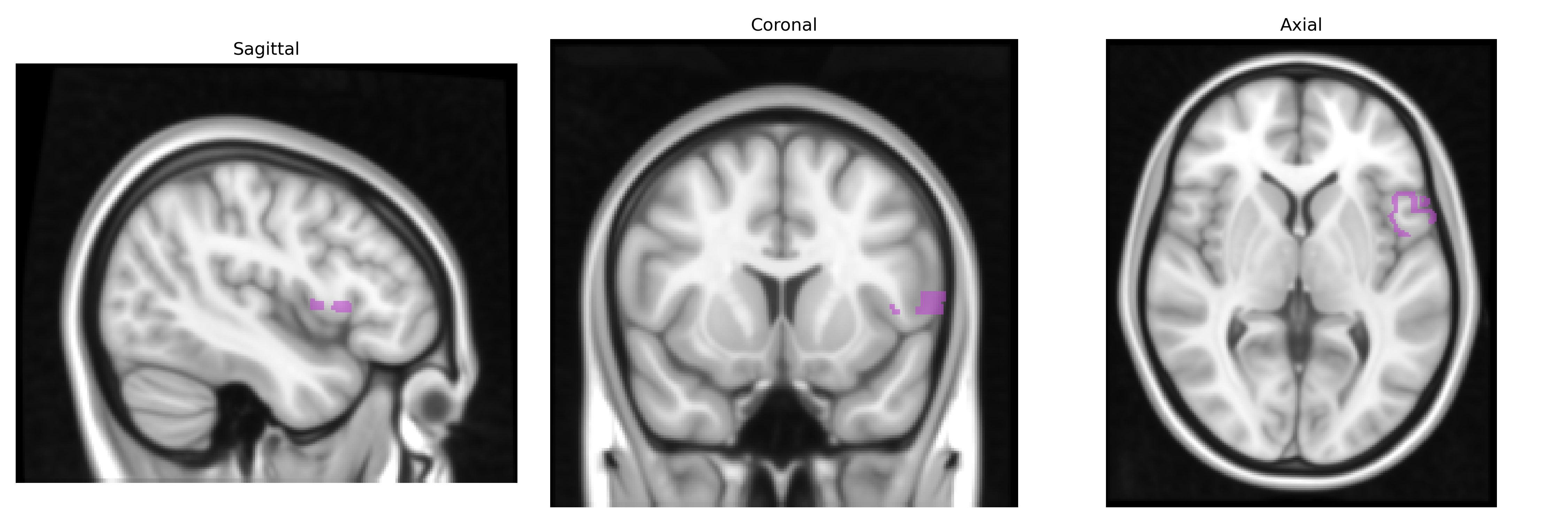
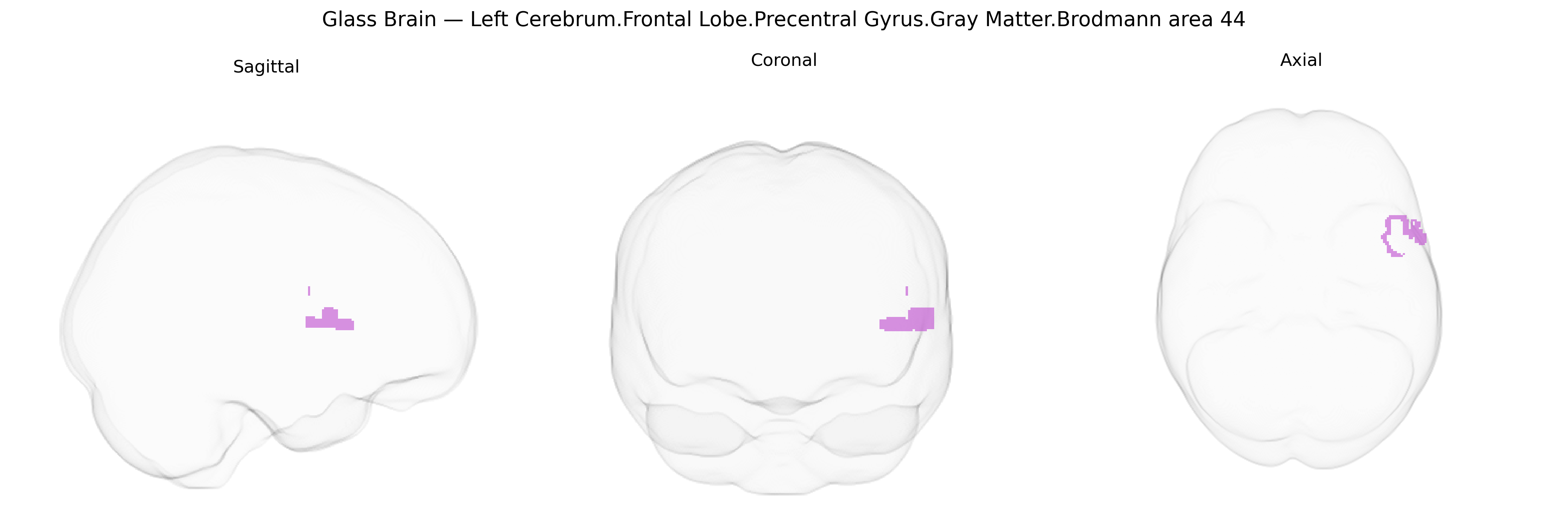
The bilateral Left Cerebrum.Frontal Lobe.Precentral Gyrus.Gray Matter.Brodmann area 44 corresponds to a sector of the inferior frontal region situated just anterior to the precentral motor cortex, typically associated with premotor and language-related functions. Cytoarchitectonically defined by Brodmann, area 44 is characterized by a granular frontal cortex with specific laminar organization and is often considered a core component of the inferior frontal gyrus, overlapping substantially with the posterior pars opercularis and forming a major part of classical Broca’s area in the dominant (usually left) hemisphere. Functionally, this region contributes to speech production, syntactic processing, and aspects of orofacial motor planning, while also participating in broader cognitive and motor networks, including action observation and imitation. There is no direct Wikipedia article for this exact Talairach label; a closely related structure is Broca’s area.
Brodmann area 44 (part of the left frontal precentral/inferior frontal gyrus, overlapping classical Broca’s region) has been repeatedly implicated in genetic studies of language, motor speech, and higher cognitive functions, with GWAS and imaging‑genetics work linking its structure and activity to specific variants and polygenic architectures. Common polymorphisms in FOXP2, CNTNAP2, and related language‑pathway genes show associations with altered BA44 morphology or activation, particularly in tasks involving phonological processing and speech production, and rare FOXP2 mutations produce structural and functional abnormalities in this region in individuals with childhood apraxia of speech. Large‑scale imaging GWAS (e.g., ENIGMA, UK Biobank) report SNP heritability for cortical thickness and surface area in the inferior frontal/precentral language–motor territory, with loci near genes involved in neuronal migration, synaptic plasticity, and cortical patterning (such as microtubule, axon guidance, and cell adhesion genes) contributing to interindividual differences. BA44 has also emerged in genetic studies of developmental language disorder, dyslexia, and autism spectrum conditions, where risk variants and polygenic scores correlate with atypical activation or gray‑matter volume, and in schizophrenia and bipolar disorder imaging‑genetics analyses, which link risk alleles to altered connectivity and structure in left frontal language circuits. Additionally, polygenic scores for educational attainment, general cognitive ability, and handedness show associations with BA44‑adjacent frontal measures in population cohorts, suggesting that genetic influences on verbal intelligence and hemispheric specialization partially converge on this region’s gray‑matter architecture.
Overview generated by GPT-4o (2026).
Region ID: 690
Hemisphere: bilateral
Atlas: Talairach labels 1mm
Full Quality Version: Download MP4
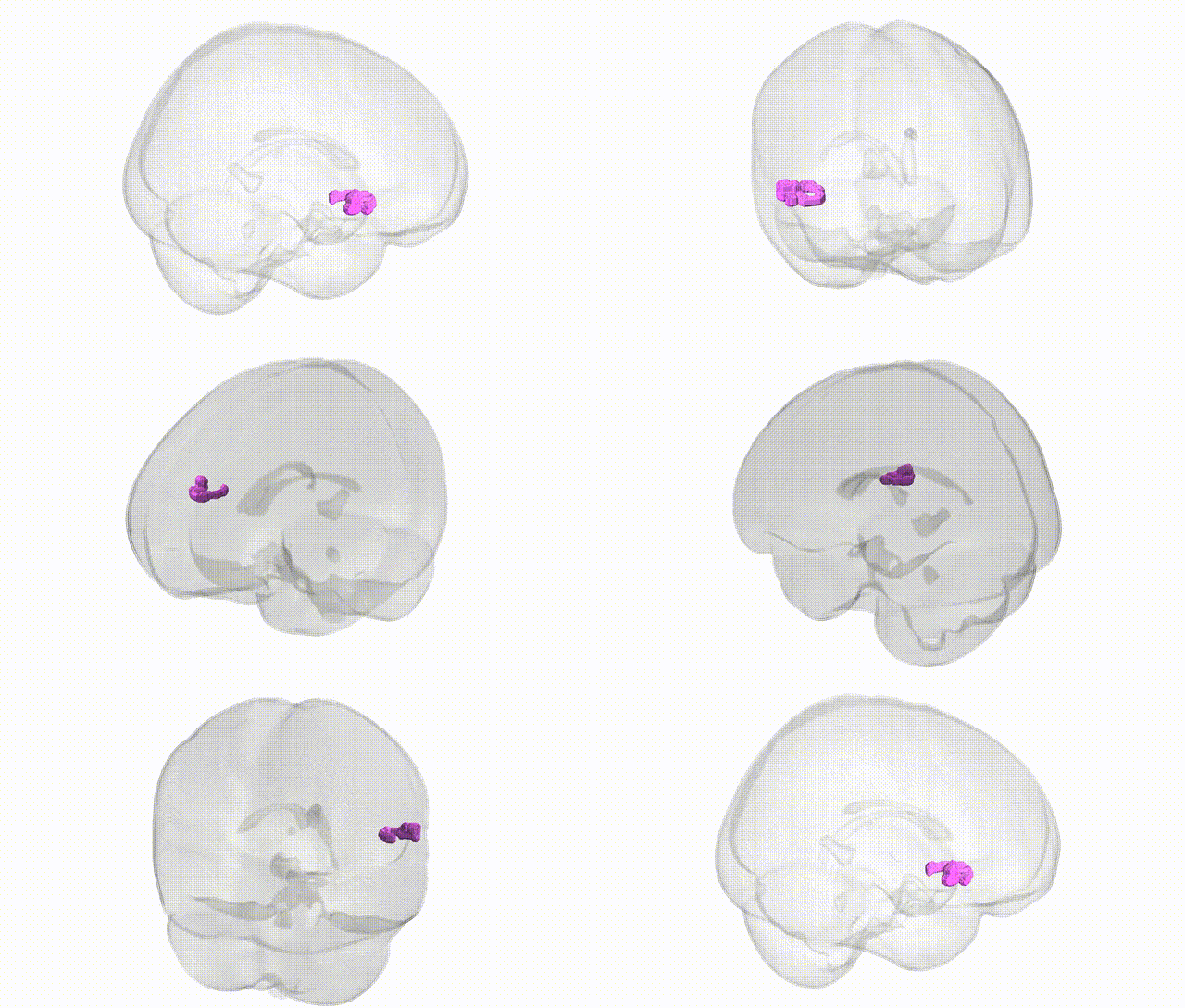
Full Quality Version: Download MP4
Wali Sidiqyar*, Gaurav Rudravaram*, Elyssa M. McMaster, Trent M. Schwartz, Adam M. Saunders, Kurt G. Schilling, Bennett A. Landman "Introducing SPINS: A Shared Public Visualization Library of Neuroanatomical Structures." Medical Imaging with Deep Learning- short paper
This resource is licensed under CC0 1.0 Universal (Public Domain).