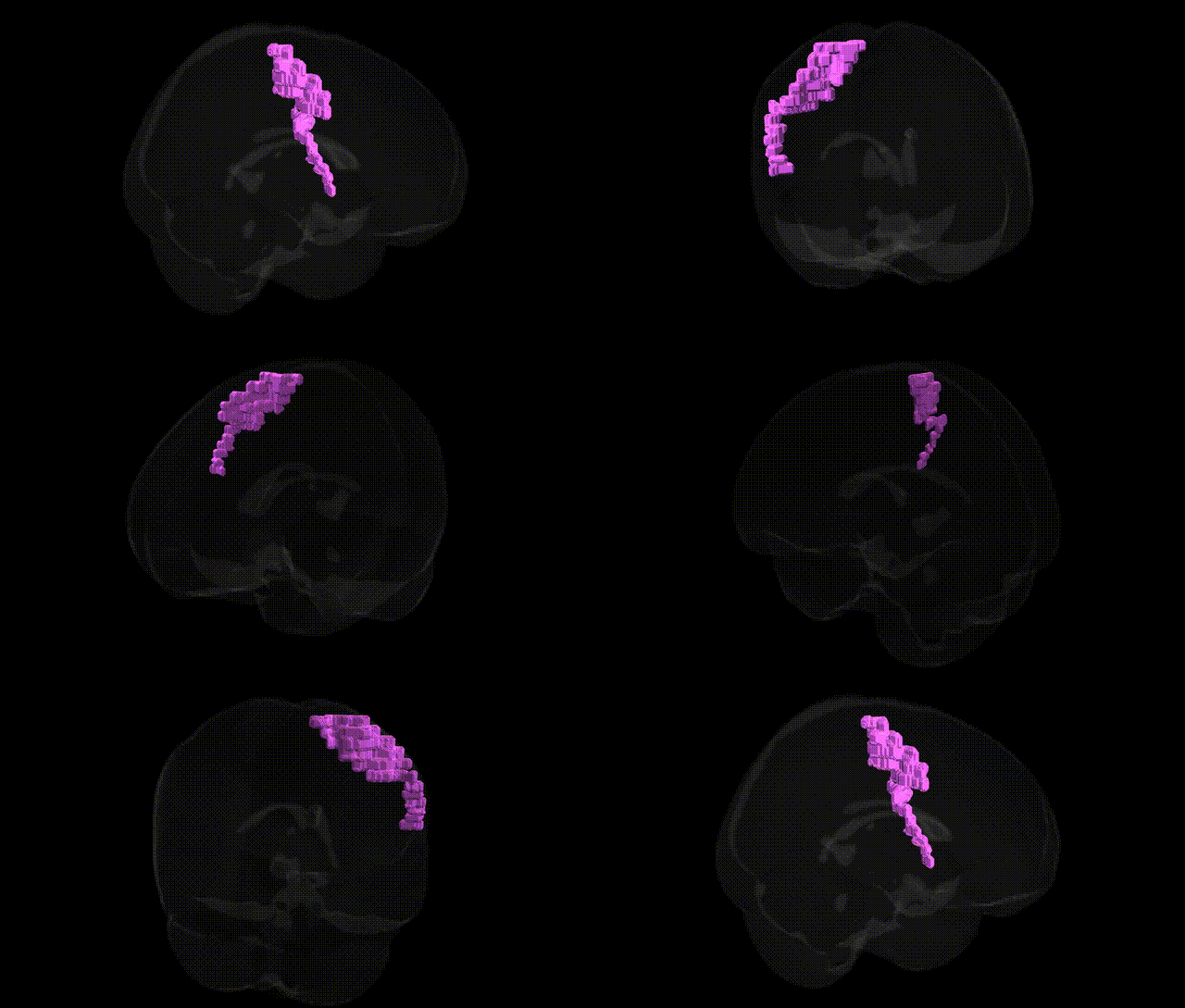
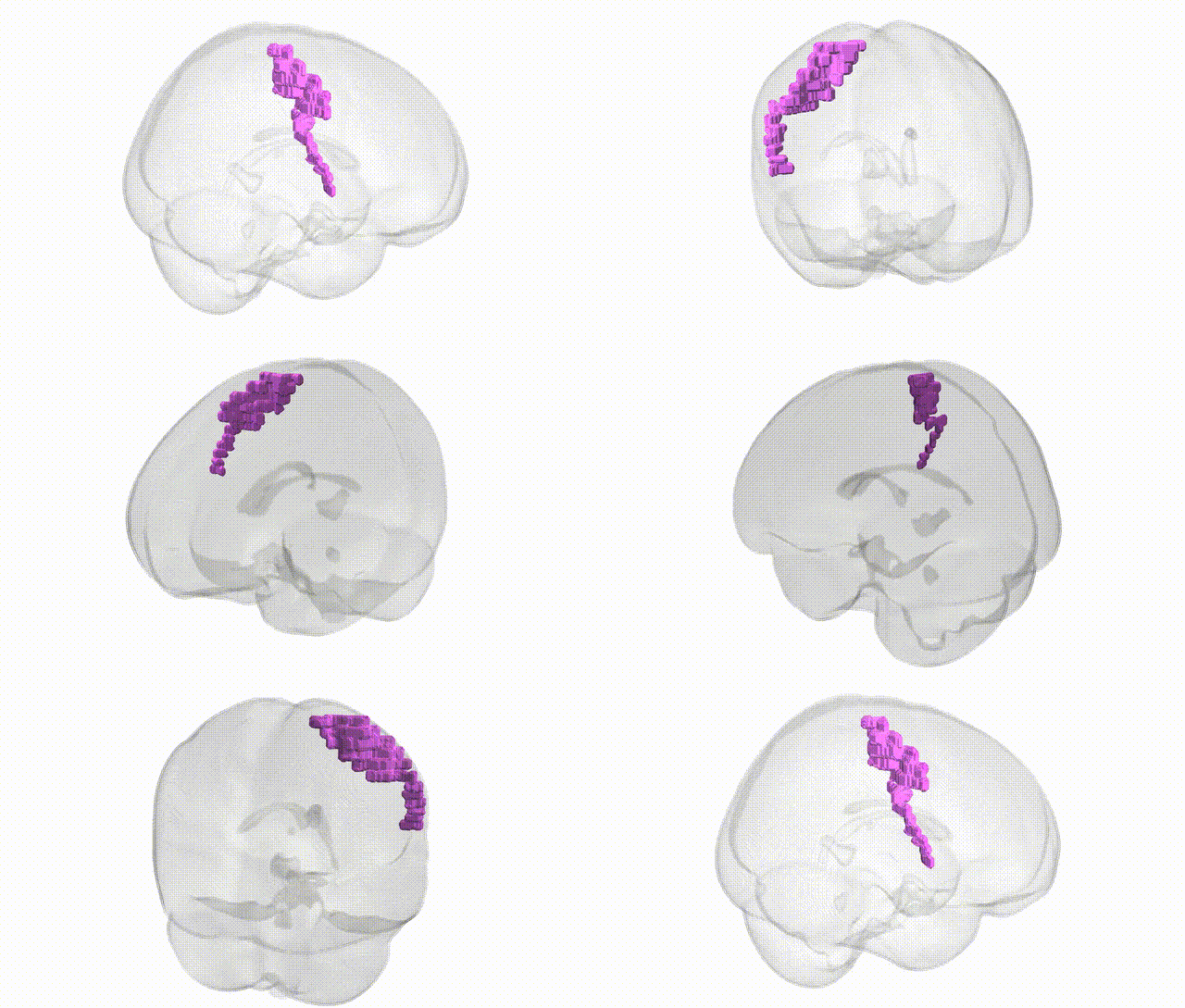
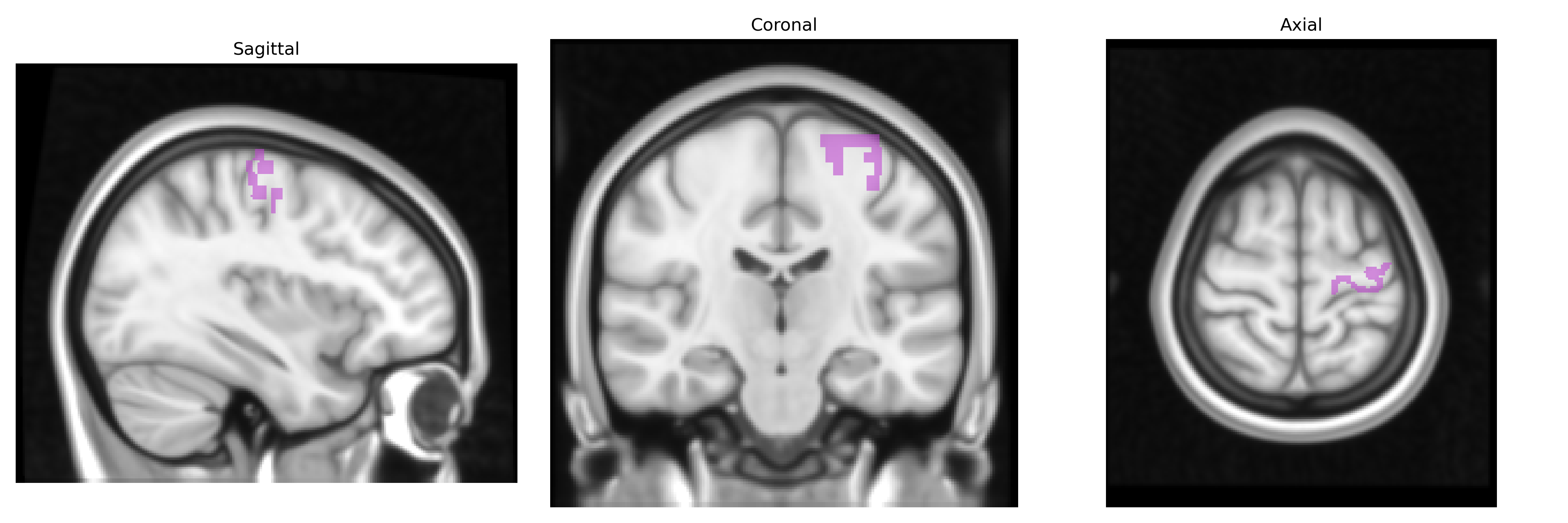
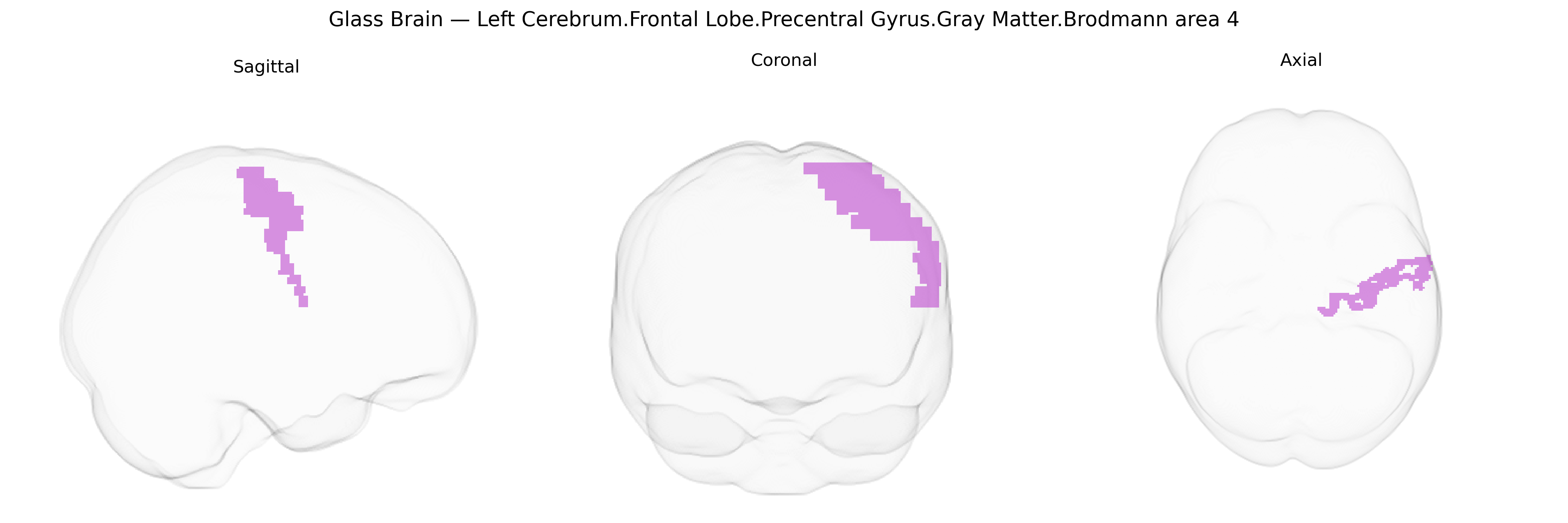
The bilateral Left Cerebrum.Frontal Lobe.Precentral Gyrus.Gray Matter.Brodmann area 4 corresponds to the primary motor cortex located in the precentral gyrus of the frontal lobe, specifically on the left hemisphere but represented bilaterally in this Talairach grouping. Brodmann area 4 is characterized by its agranular cortical architecture and contains large pyramidal neurons (Betz cells) that give rise to the corticospinal and corticobulbar tracts, which provide the principal descending motor commands to spinal and cranial motor nuclei. This region is somatotopically organized in a motor homunculus, with distinct territories controlling voluntary movements of different body parts, and it plays a crucial role in the initiation and execution of fine, skilled, and forceful movements, particularly of the contralateral side of the body.
The bilateral precentral gyrus (Brodmann area 4, primary motor cortex) in the left frontal lobe has been implicated in multiple genetic and GWAS-based associations, largely through imaging-genetics and neuropsychiatric studies that use Talairach or similar atlases to localize effects. Polygenic influences on cortical thickness, surface area, and gray matter volume in BA4 have been identified in large-scale consortia such as ENIGMA and UK Biobank, with common variants in genes involved in neurodevelopment and synaptic function (e.g., microtubule- and axon-guidance–related genes) explaining modest portions of trait variance. Motor cortex volume and structure show heritability and have been linked to variants also associated with general cognitive ability, educational attainment, and intracranial volume, reflecting shared polygenic architecture across cortical regions. Disease-focused GWAS and imaging-genetics studies have reported altered structure or activation of BA4 associated with genetic risk for amyotrophic lateral sclerosis (ALS) and other motor neuron diseases (e.g., variants near C9orf72, SOD1, and additional loci influencing corticospinal integrity), as well as in Parkinson’s disease, where dopamine-related and synaptic genes modulate motor cortical function and compensatory activation. In psychiatric domains, schizophrenia and major depression polygenic risk scores have been associated with subtle structural and functional differences in precentral gyrus, suggesting pleiotropic effects on motor and higher-order circuits; autism spectrum disorder and ADHD risk variants have similarly been tied to motor cortex connectivity and microstructural changes in some cohorts. Overall, genetic associations with this specific Talairach-defined region are highly polygenic and overlapping rather than region-specific, with BA4 serving as a key node where broadly acting neurodevelopmental and neurodegenerative genetic factors manifest in motor system anatomy and physiology.
Overview generated by GPT-4o (2026).
Region ID: 808
Hemisphere: bilateral
Atlas: Talairach labels 1mm
Full Quality Version: Download MP4
Full Quality Version: Download MP4
Wali Sidiqyar*, Gaurav Rudravaram*, Elyssa M. McMaster, Trent M. Schwartz, Adam M. Saunders, Kurt G. Schilling, Bennett A. Landman "Introducing SPINS: A Shared Public Visualization Library of Neuroanatomical Structures." Medical Imaging with Deep Learning- short paper
This resource is licensed under CC0 1.0 Universal (Public Domain).