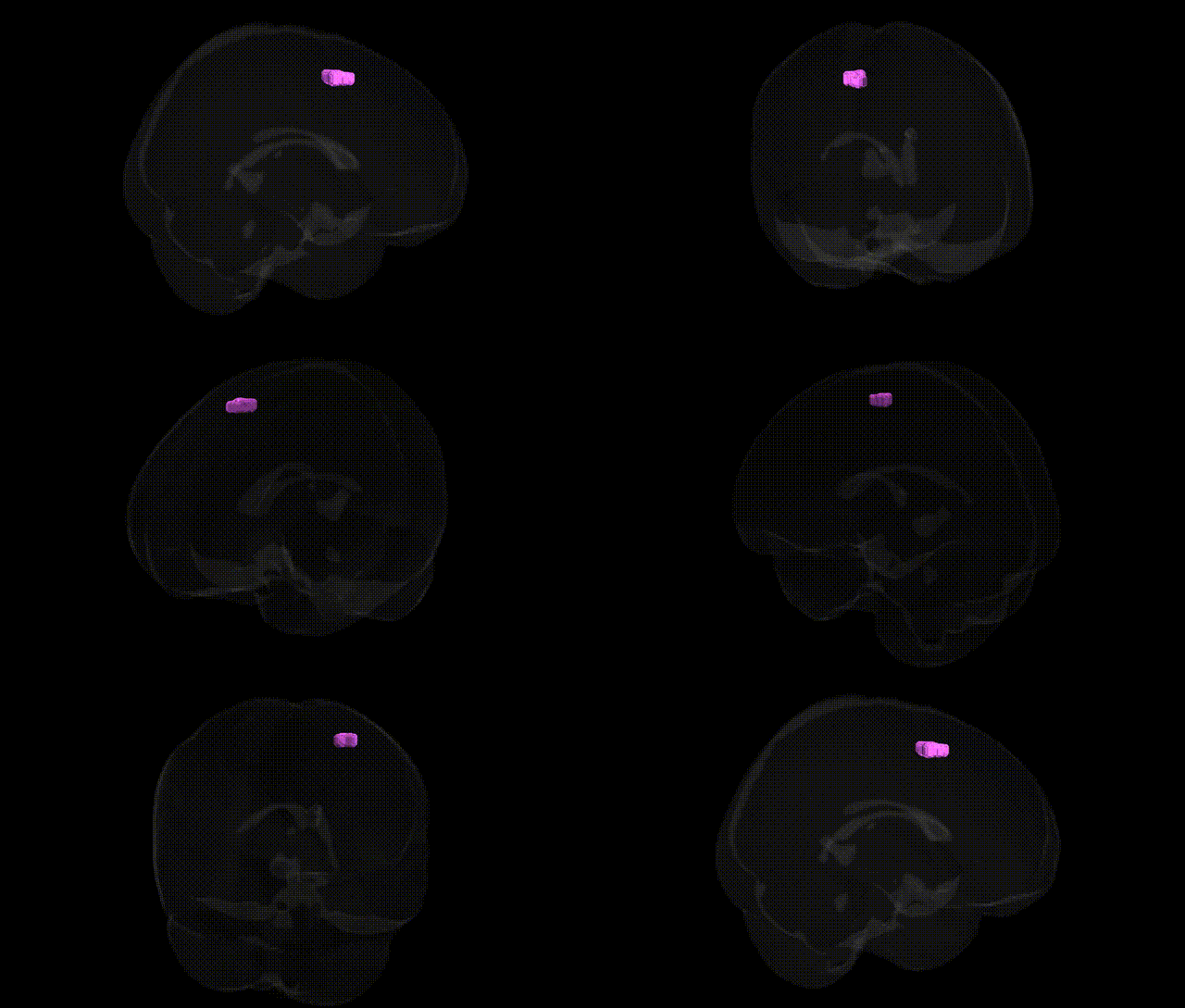
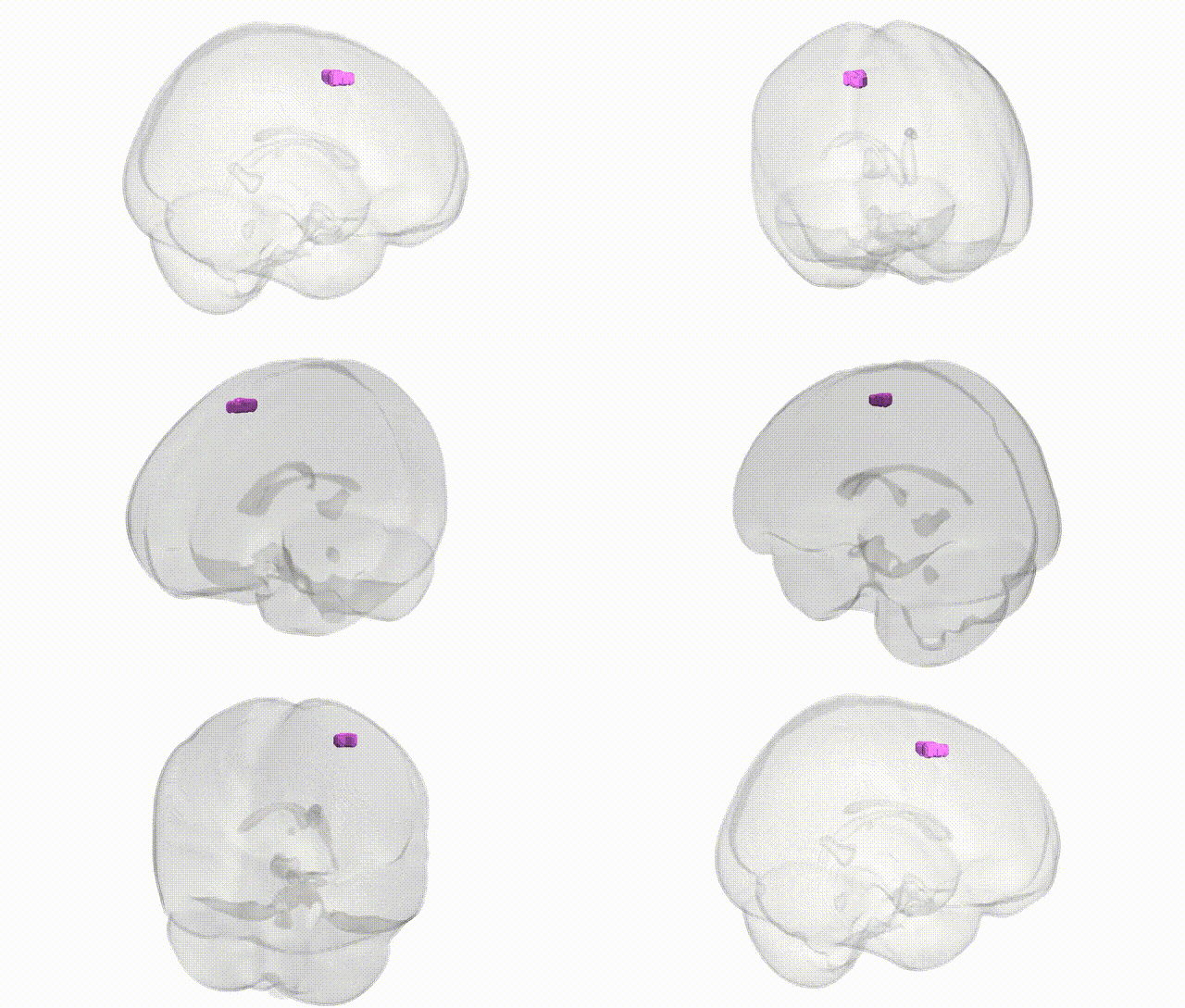
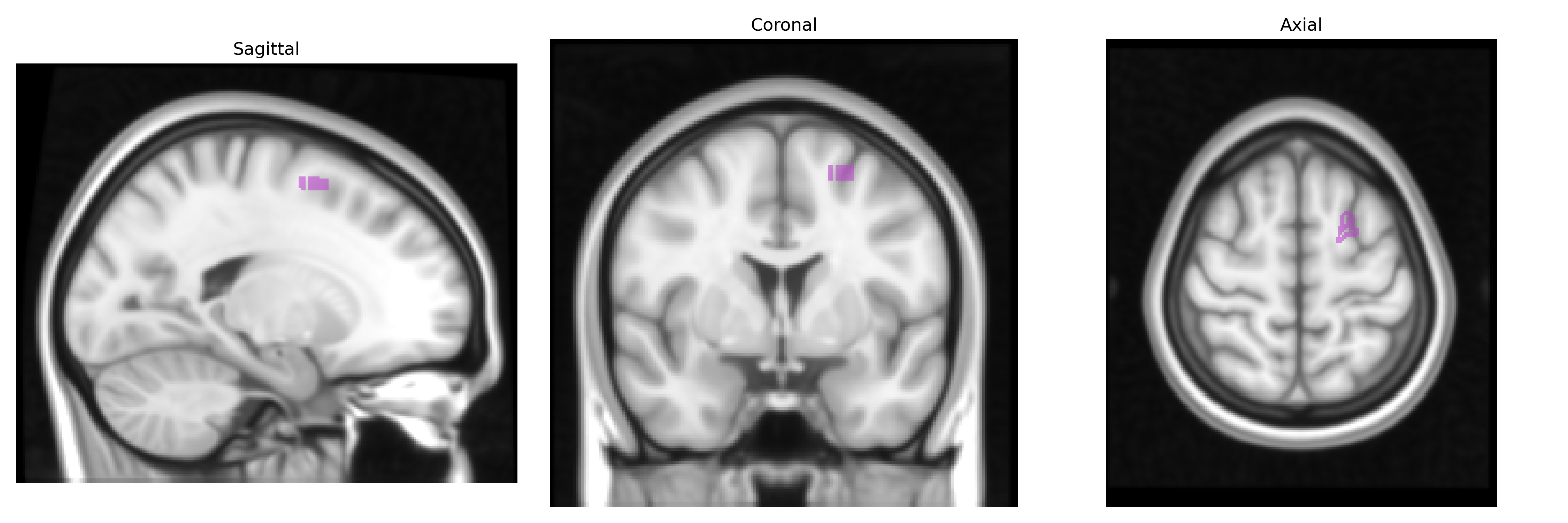
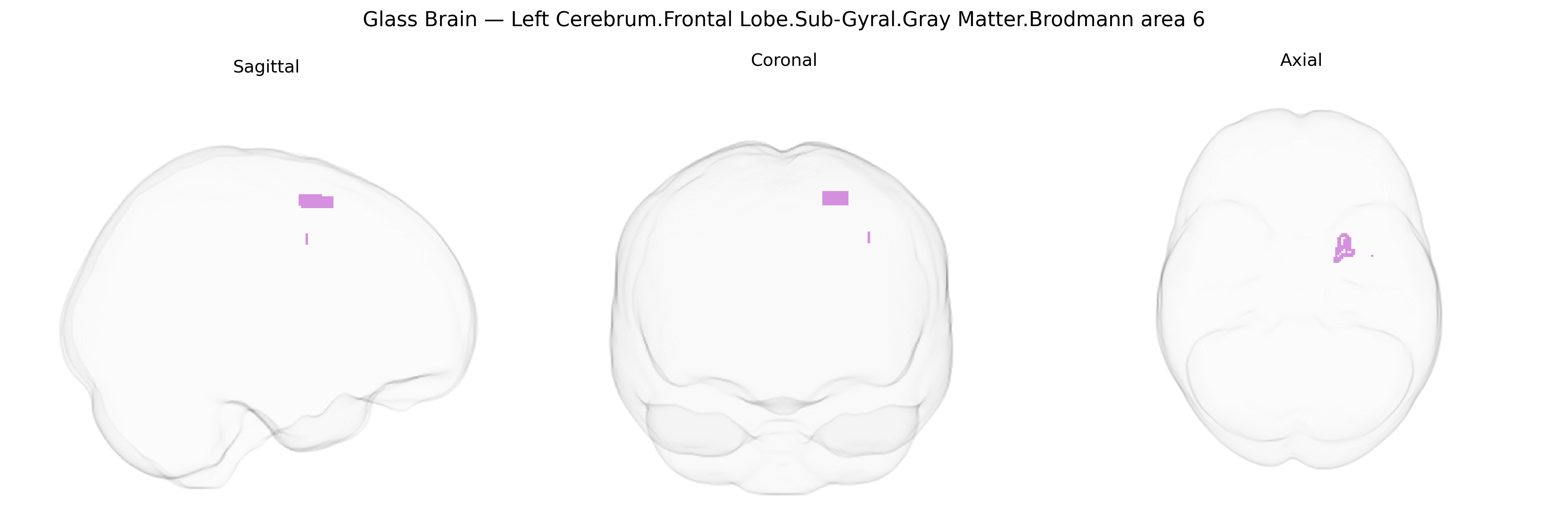
The bilateral Left Cerebrum.Frontal Lobe.Sub-Gyral.Gray Matter.Brodmann area 6 corresponds primarily to premotor and supplementary motor cortical regions situated anterior to the primary motor cortex (Brodmann area 4) within the frontal lobe. This agranular cortex is involved in higher-order motor control, including planning and sequencing of voluntary movements, preparation and initiation of motor actions, and integration of sensory cues for motor output. Neurons in this region contribute to coordination of complex, learned motor behaviors and are engaged in the transformation of intention into action, often functioning in concert with primary motor cortex, basal ganglia, and cerebellar circuits. No direct Wikipedia article exists for this exact Talairach label; a closely related structure is Brodmann area 6.
Brodmann area 6 in the left frontal sub-gyral gray matter—encompassing premotor and supplementary motor regions—has been implicated in multiple genetic and GWAS findings spanning motor, neurodevelopmental, and psychiatric phenotypes. Common variants influencing cortical thickness, surface area, and overall frontal lobe volume in this region have been mapped in large MRI–GWAS consortia (e.g., ENIGMA, UK Biobank), highlighting loci in genes such as HMGA2, MAPT, and microtubule- or synapse-related pathways that affect frontal morphology. Structural and functional alterations of BA6 show genetic associations with movement-related disorders, including Parkinson’s disease (e.g., MAPT, LRRK2-linked networks), dystonia, and essential tremor, as well as with motor tics and Tourette syndrome, where risk variants and polygenic scores correlate with premotor/supplementary motor cortex changes. Neurodevelopmental conditions such as ADHD and autism display heritable differences in BA6 thickness and activation that track with polygenic liability and variants in synaptic and neurodevelopmental genes (e.g., CNTNAP2, GRIN2B-related networks), while schizophrenia and major depression GWAS signals show enrichment in frontal cortical regulatory elements that include BA6, with case–control imaging–genetics studies linking risk alleles (e.g., in CACNA1C, ZNF804A) to altered premotor connectivity. Additionally, BA6 is involved in polygenic architectures of traits such as general cognitive ability, motor learning, and handedness, with GWAS indicating frontal cortex–enriched gene expression and regulatory variants that modulate the structure and function of this premotor territory.
Overview generated by GPT-4o (2026).
Region ID: 1022
Hemisphere: bilateral
Atlas: Talairach labels 1mm
Full Quality Version: Download MP4
Full Quality Version: Download MP4
Wali Sidiqyar*, Gaurav Rudravaram*, Elyssa M. McMaster, Trent M. Schwartz, Adam M. Saunders, Kurt G. Schilling, Bennett A. Landman "Introducing SPINS: A Shared Public Visualization Library of Neuroanatomical Structures." Medical Imaging with Deep Learning- short paper
This resource is licensed under CC0 1.0 Universal (Public Domain).