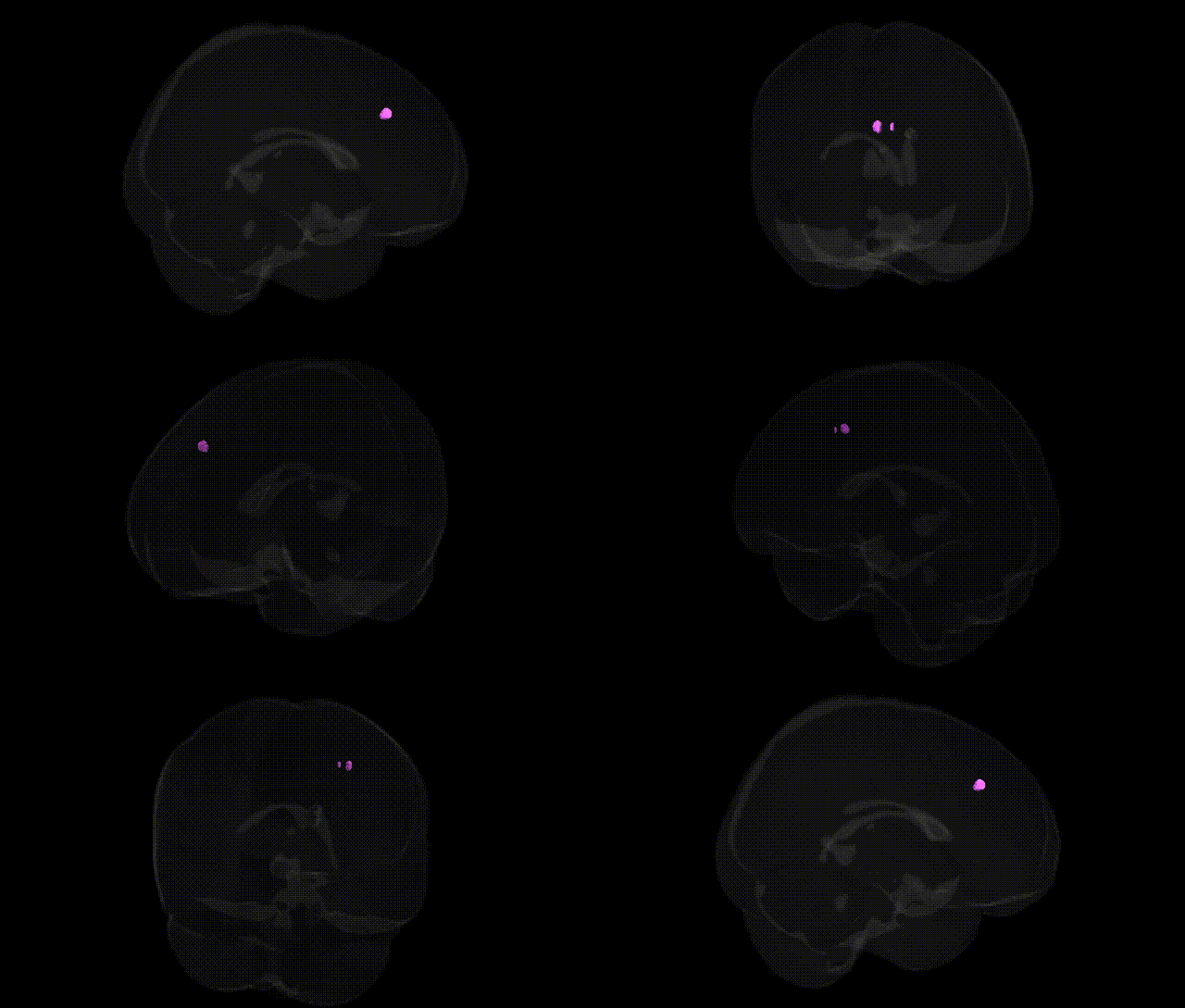
Bilateral Left Cerebrum.Frontal Lobe.Sub-Gyral.Gray Matter.Brodmann area 8 corresponds to a dorsal prefrontal cortical region located anterior to the premotor cortex and superior to the middle frontal gyrus, encompassing part of the frontal eye fields and higher-order motor-related associative cortex. This area is implicated in the voluntary control of eye movements (particularly saccades), attentional orienting, working memory, and aspects of decision making and executive control, integrating sensory and cognitive inputs to guide goal-directed behavior. Cytoarchitectonically, Brodmann area 8 is characterized by a granular prefrontal lamination pattern, with well-developed layers III and V that support extensive corticocortical and corticofugal connections to parietal, temporal, and subcortical structures, including the superior colliculus and basal ganglia. There is no direct link for this exact Talairach label; a closely related structure is Brodmann area 8.
The bilateral left frontal lobe sub-gyral gray matter corresponding to Brodmann area 8 (BA8), a dorsal prefrontal region encompassing parts of the frontal eye fields and higher-order executive networks, has been implicated in multiple genetic and GWAS-based associations through imaging-genetics and polygenic risk studies rather than single-gene effects. Variants in genes influencing synaptic plasticity, neurodevelopment, and myelination (for example, BDNF, COMT, and genes within major psychiatric risk loci such as CACNA1C and ZNF804A) have been linked to structural and functional variation in BA8, including cortical thickness, gray matter volume, and task-related activation. Large-scale ENIGMA and UK Biobank GWAS on cortical morphology have identified numerous loci of small effect that collectively contribute to inter-individual differences in dorsolateral and medial prefrontal regions overlapping BA8, many of which are enriched in neurodevelopmental and axon guidance pathways. Polygenic risk scores for schizophrenia, bipolar disorder, major depressive disorder, and attention-deficit/hyperactivity disorder show associations with altered gray matter or functional activation in BA8-related networks, consistent with the region’s role in working memory, cognitive control, and oculomotor planning. Additionally, genes and loci associated with intelligence, educational attainment, and cognitive performance have shown correlations with structural metrics of dorsal prefrontal cortex encompassing BA8, indicating that genetically driven variation in this region contributes to both psychiatric vulnerability and normal-range cognitive traits.
Overview generated by GPT-4o (2026).
Region ID: 1027
Hemisphere: bilateral
Atlas: Talairach labels 1mm
Full Quality Version: Download MP4
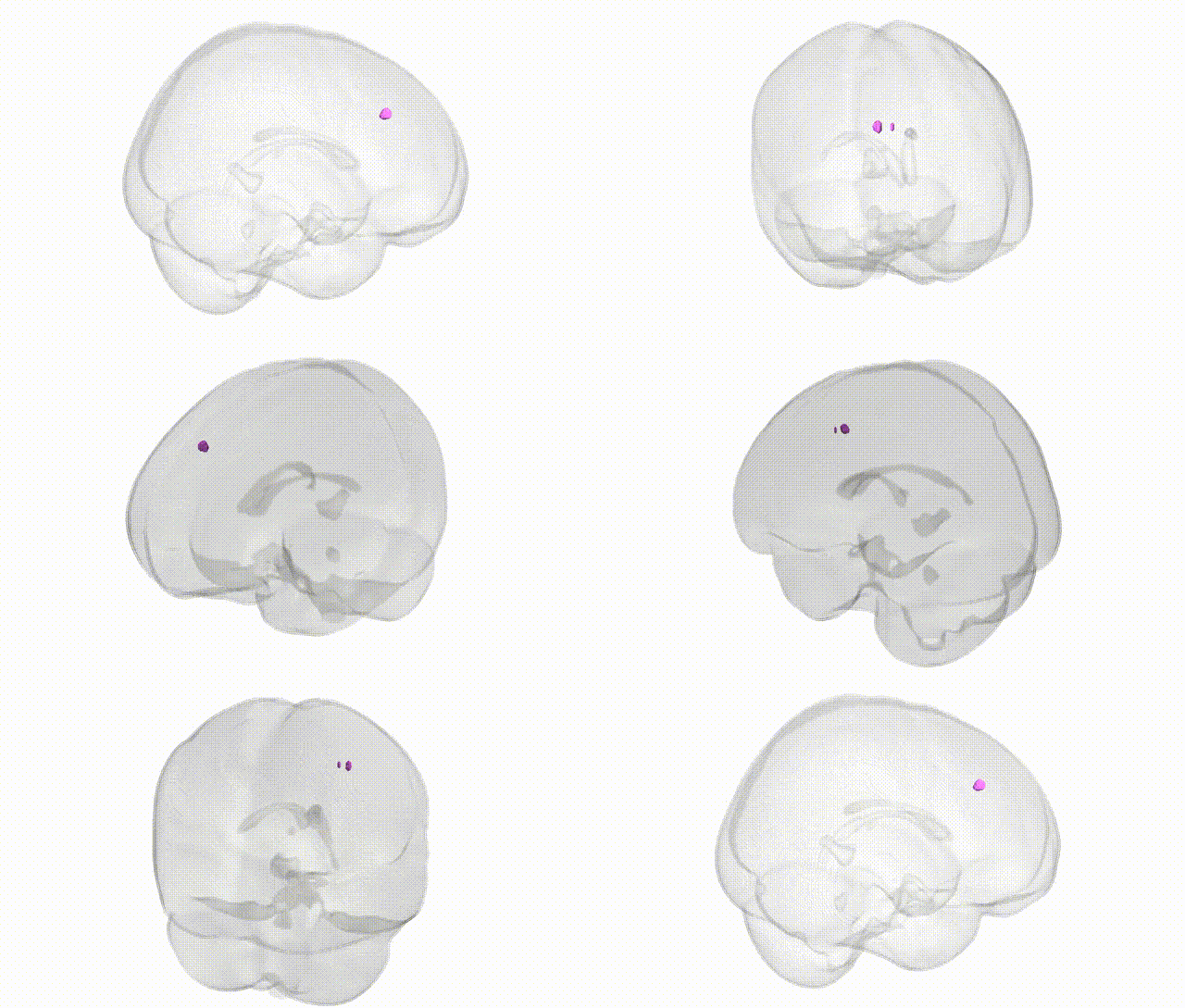
Full Quality Version: Download MP4
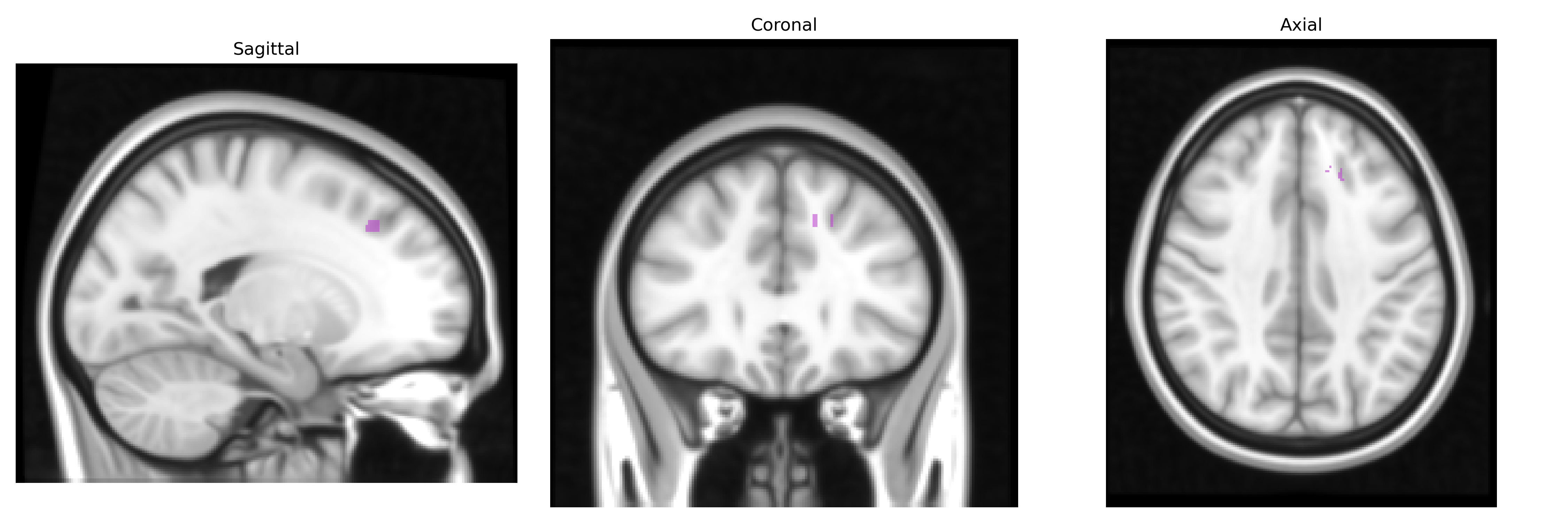
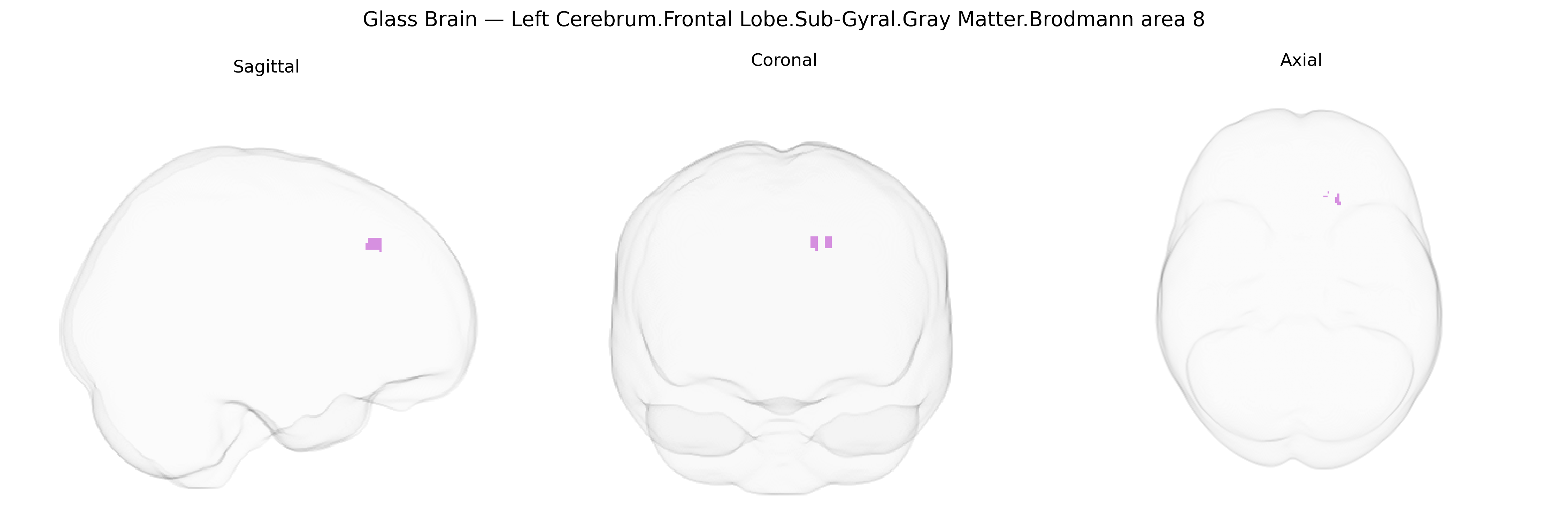
Wali Sidiqyar*, Gaurav Rudravaram*, Elyssa M. McMaster, Trent M. Schwartz, Adam M. Saunders, Kurt G. Schilling, Bennett A. Landman "Introducing SPINS: A Shared Public Visualization Library of Neuroanatomical Structures." Medical Imaging with Deep Learning- short paper
This resource is licensed under CC0 1.0 Universal (Public Domain).