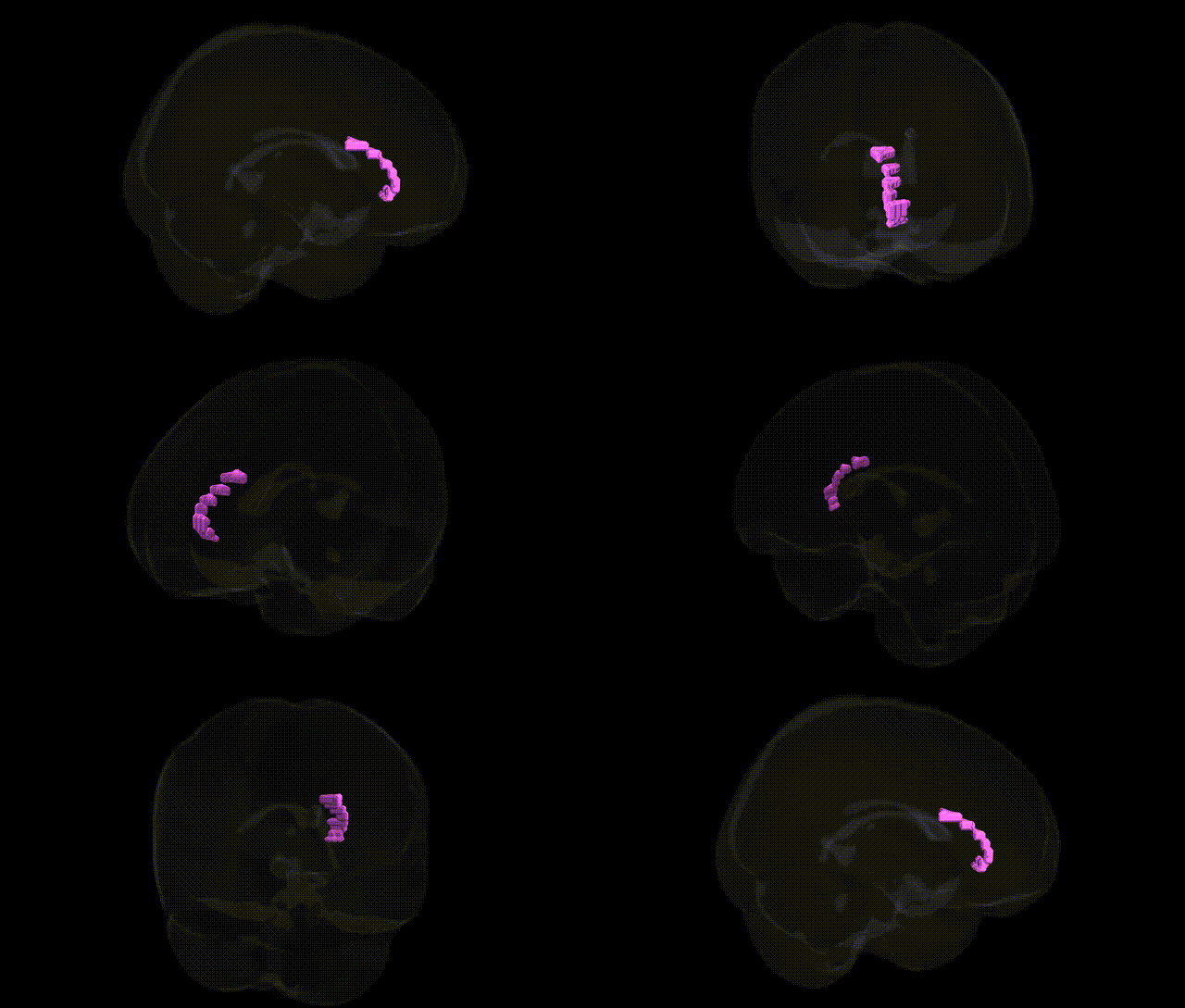
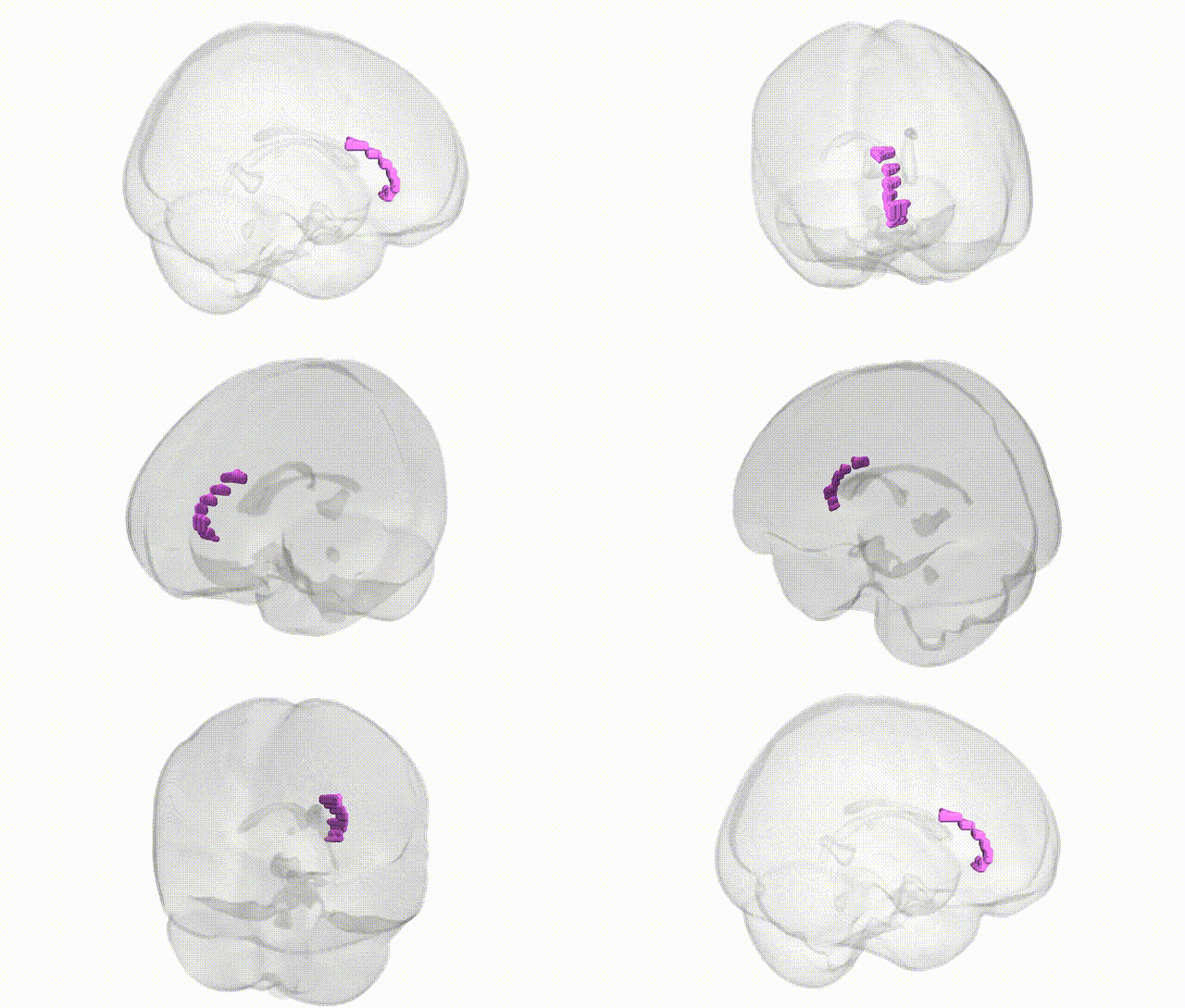
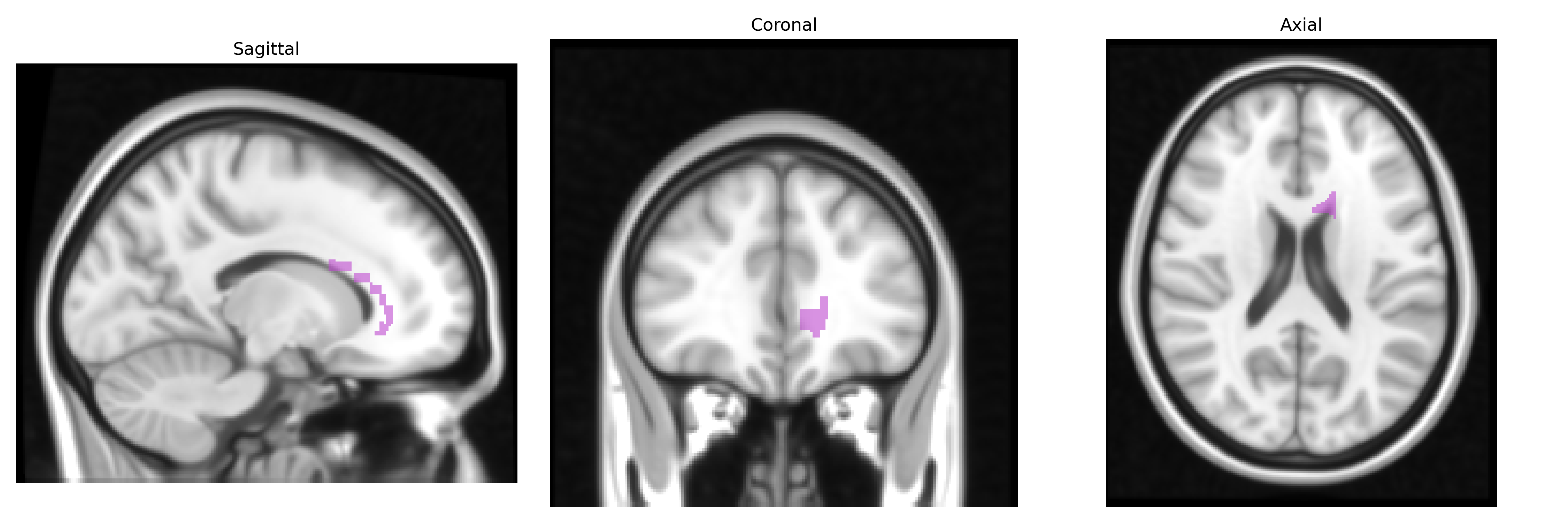
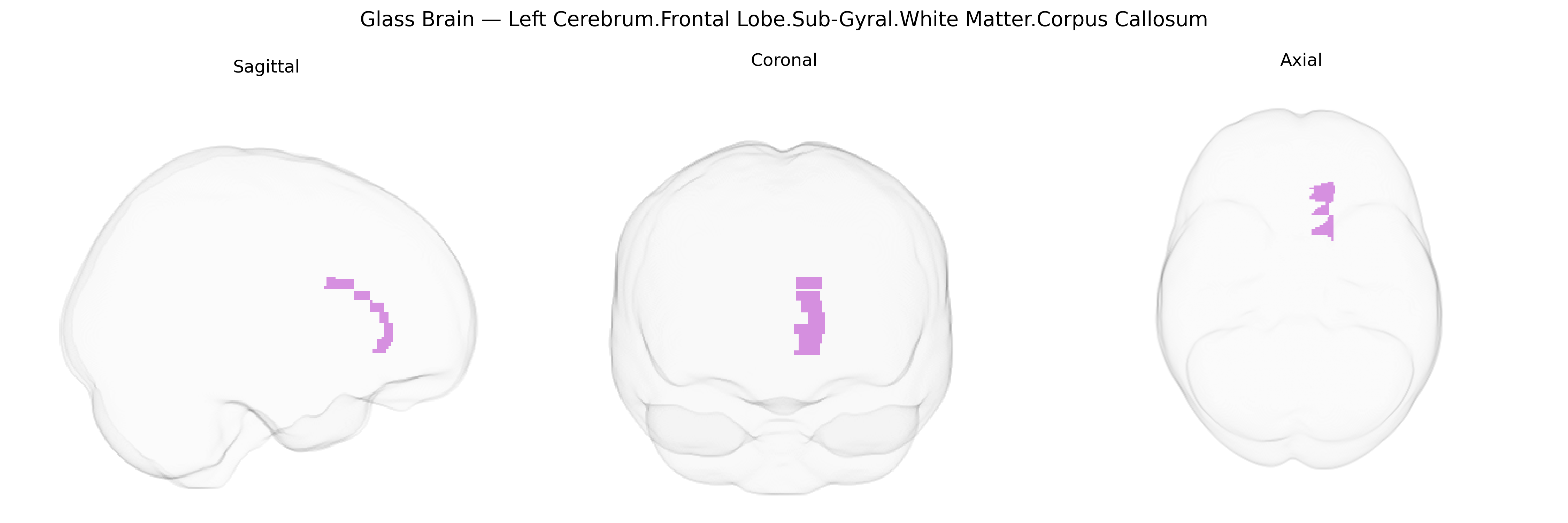
The bilateral Left Cerebrum.Frontal Lobe.Sub-Gyral.White Matter.Corpus Callosum region corresponds to deep frontal lobe white matter traversed by interhemispheric callosal fibers, primarily within the genu and anterior body of the corpus callosum. This area contains densely myelinated axons that connect homologous and associated cortical regions of both frontal lobes, supporting integration of executive, motor, and higher-order cognitive functions across hemispheres. It lies beneath the frontal gyri (sub-gyral) and participates in large-scale distributed networks involved in attention, working memory, response inhibition, and planning, as well as modulation of frontal motor and premotor circuits. Pathological involvement of this white matter region, such as in demyelinating disease, traumatic injury, or callosal dysgenesis, can disrupt interhemispheric transfer of information and lead to deficits in cognitive flexibility, bimanual coordination, and other frontal lobe–dependent behaviors.
The bilateral Left Cerebrum.Frontal Lobe.Sub-Gyral.White Matter.Corpus Callosum region, as defined in the Talairach 1 mm atlas, encompasses interhemispheric frontal callosal fibers that have been repeatedly implicated in genetic studies of brain structure and neuropsychiatric risk. Large-scale imaging–genetics GWAS (e.g., ENIGMA, UK Biobank) have identified common variants near or within genes involved in axon guidance, myelination, and neurodevelopment—such as NRG1, CNTNAP2, LINGO1, and multiple loci in microtubule- and oligodendrocyte-related genes—as contributing to individual differences in frontal callosal and adjacent frontal white-matter volume, thickness, and fractional anisotropy. Polygenic risk scores for schizophrenia, bipolar disorder, major depressive disorder, autism spectrum disorder, and attention-deficit/hyperactivity disorder show associations with reduced integrity or altered microstructure of frontal callosal pathways, suggesting shared genetic architectures affecting this region’s connectivity. In addition, GWAS of cognitive traits (general intelligence, processing speed, educational attainment) and personality dimensions (e.g., neuroticism) report overlapping loci that influence frontal white matter, including callosal fibers, consistent with a role for genetically mediated frontal interhemispheric connectivity in higher-order cognition and affect regulation.
Overview generated by GPT-4o (2026).
Region ID: 514
Hemisphere: bilateral
Atlas: Talairach labels 1mm
Full Quality Version: Download MP4
Full Quality Version: Download MP4
Wali Sidiqyar*, Gaurav Rudravaram*, Elyssa M. McMaster, Trent M. Schwartz, Adam M. Saunders, Kurt G. Schilling, Bennett A. Landman "Introducing SPINS: A Shared Public Visualization Library of Neuroanatomical Structures." Medical Imaging with Deep Learning- short paper
This resource is licensed under CC0 1.0 Universal (Public Domain).