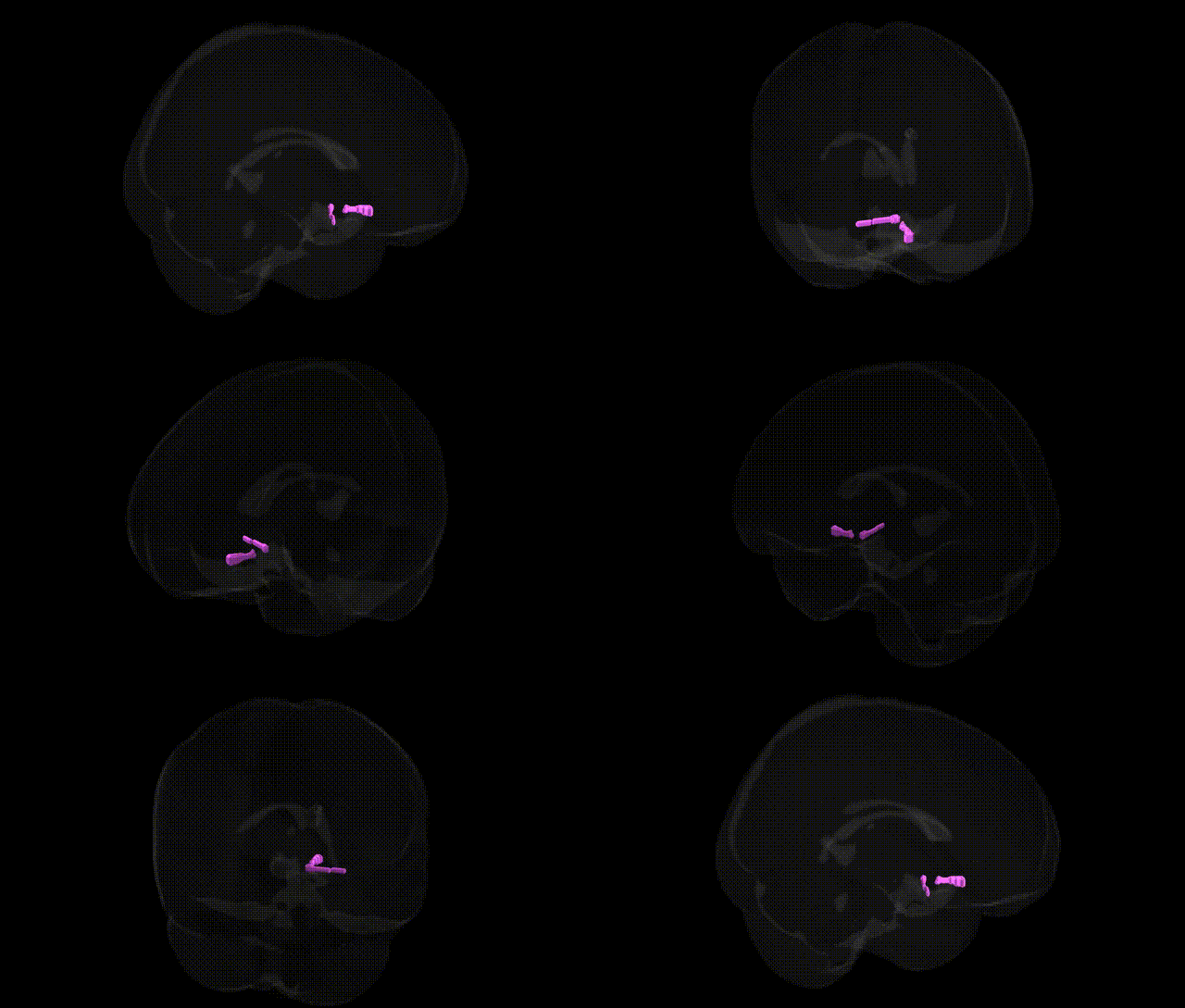
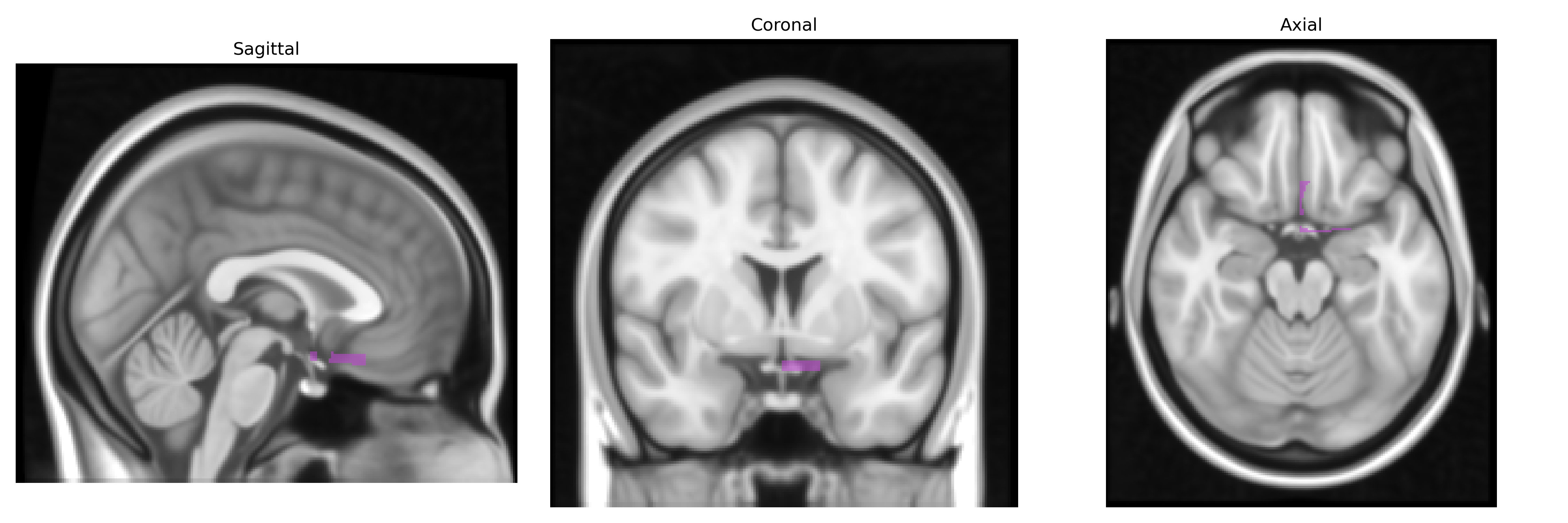
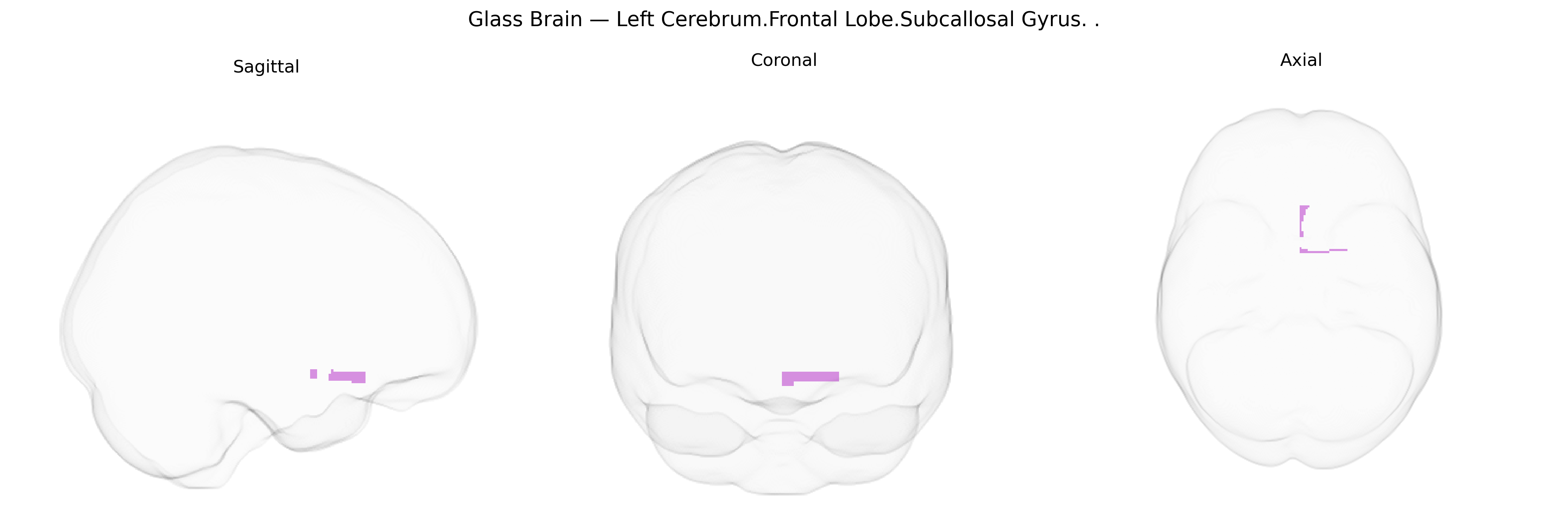
The bilateral left cerebrum frontal lobe subcallosal gyrus corresponds to a ventromedial frontal cortical region located inferior to the genu of the corpus callosum, often considered part of the ventromedial prefrontal cortex and/or Brodmann area 25 (subgenual cingulate cortex). This region lies at the interface of limbic and frontal executive networks and is heavily interconnected with the hypothalamus, amygdala, hippocampus, and other prefrontal areas, supporting roles in visceromotor regulation, affective processing, mood regulation, and autonomic/endocrine control. Functional and clinical studies implicate this area in emotional valuation, reward-related decision-making, and the pathophysiology of mood disorders, particularly major depressive disorder, where altered activity and connectivity have been observed. There is no direct link for “subcallosal gyrus”; a closely related structure is Subgenual cingulate cortex.
The bilateral left subcallosal gyrus (subgenual/ventromedial prefrontal cortex, often corresponding to Brodmann area 25) has been repeatedly implicated in genetic and genomic studies of mood and related psychiatric traits, largely through imaging–genetics and GWAS-based neuroimaging analyses rather than locus-specific candidate-gene work. Structural and functional variation in this region shows heritable components and has been associated in large neuroimaging GWAS consortia (e.g., ENIGMA, UK Biobank–based studies) with common variants in genes involved in neurodevelopment, synaptic function, and axon guidance, including loci near or within genes such as MAPT, DCC, and others contributing to prefrontal cortical morphology, though most effects are polygenic and individually small. Polygenic risk scores for major depressive disorder, bipolar disorder, and schizophrenia correlate with altered volume, thickness, or activity of the subcallosal/subgenual cingulate region, and this area is a consistent site of structural and metabolic abnormality in carriers of high psychiatric genetic risk, including those with risk variants in SLC6A4, BDNF, and CACNA1C identified in broader cortical or limbic imaging-genetics work. GWAS of depression, neuroticism, and related affective traits have repeatedly highlighted loci that influence fronto-limbic circuitry in which the subcallosal gyrus is a key hub, with convergent evidence from transcriptomic and eQTL studies showing that risk variants modulate expression of synaptic and stress-response genes in this ventromedial frontal region; however, no single gene–region association is uniquely specific to the Talairach-defined Left Cerebrum.Frontal Lobe.Subcallosal Gyrus, and current evidence supports a distributed, highly polygenic architecture linking this region to mood, anxiety, and broader psychopathology.
Overview generated by GPT-4o (2026).
Region ID: 277
Hemisphere: bilateral
Atlas: Talairach labels 1mm
Full Quality Version: Download MP4
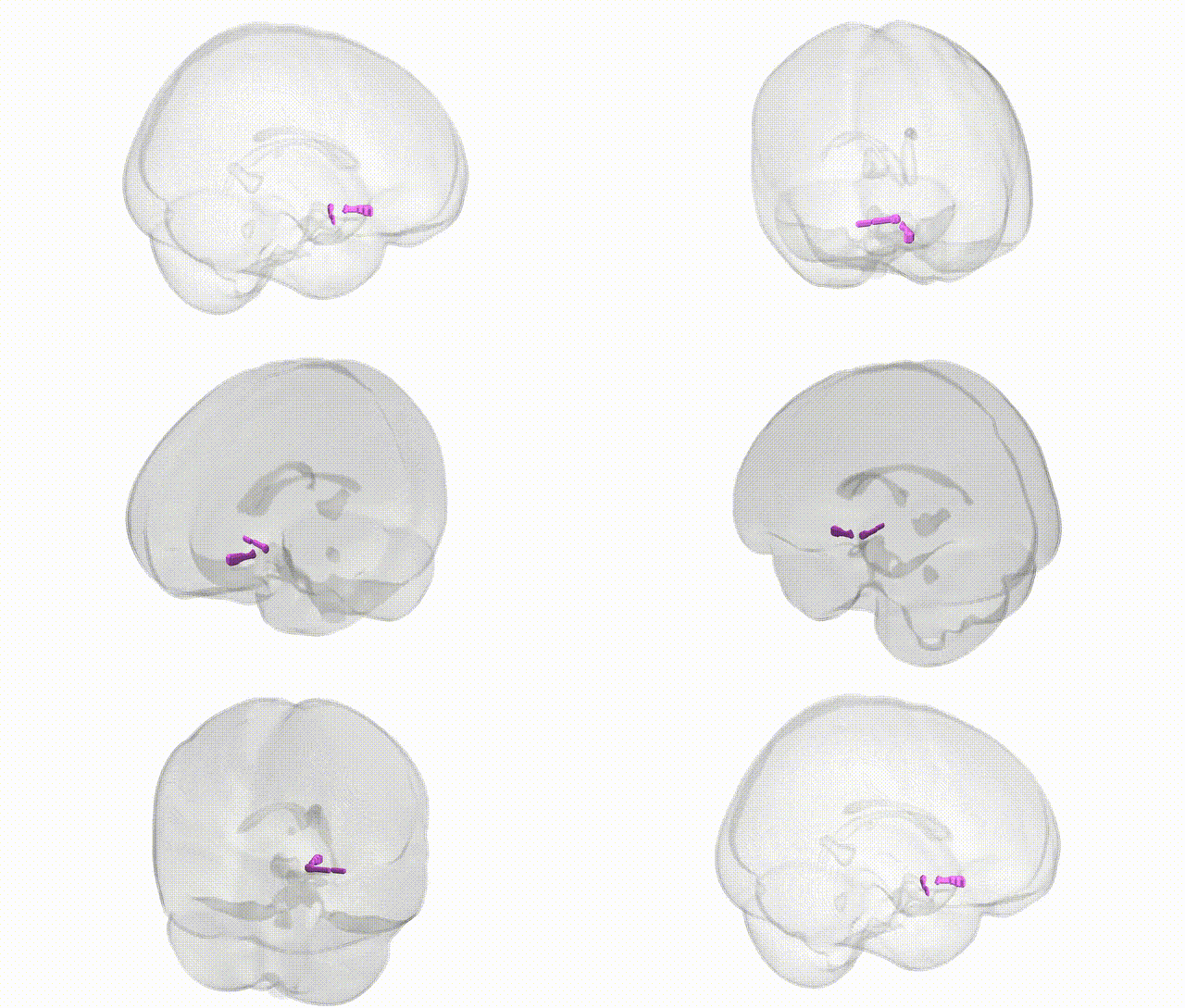
Full Quality Version: Download MP4
Wali Sidiqyar*, Gaurav Rudravaram*, Elyssa M. McMaster, Trent M. Schwartz, Adam M. Saunders, Kurt G. Schilling, Bennett A. Landman "Introducing SPINS: A Shared Public Visualization Library of Neuroanatomical Structures." Medical Imaging with Deep Learning- short paper
This resource is licensed under CC0 1.0 Universal (Public Domain).