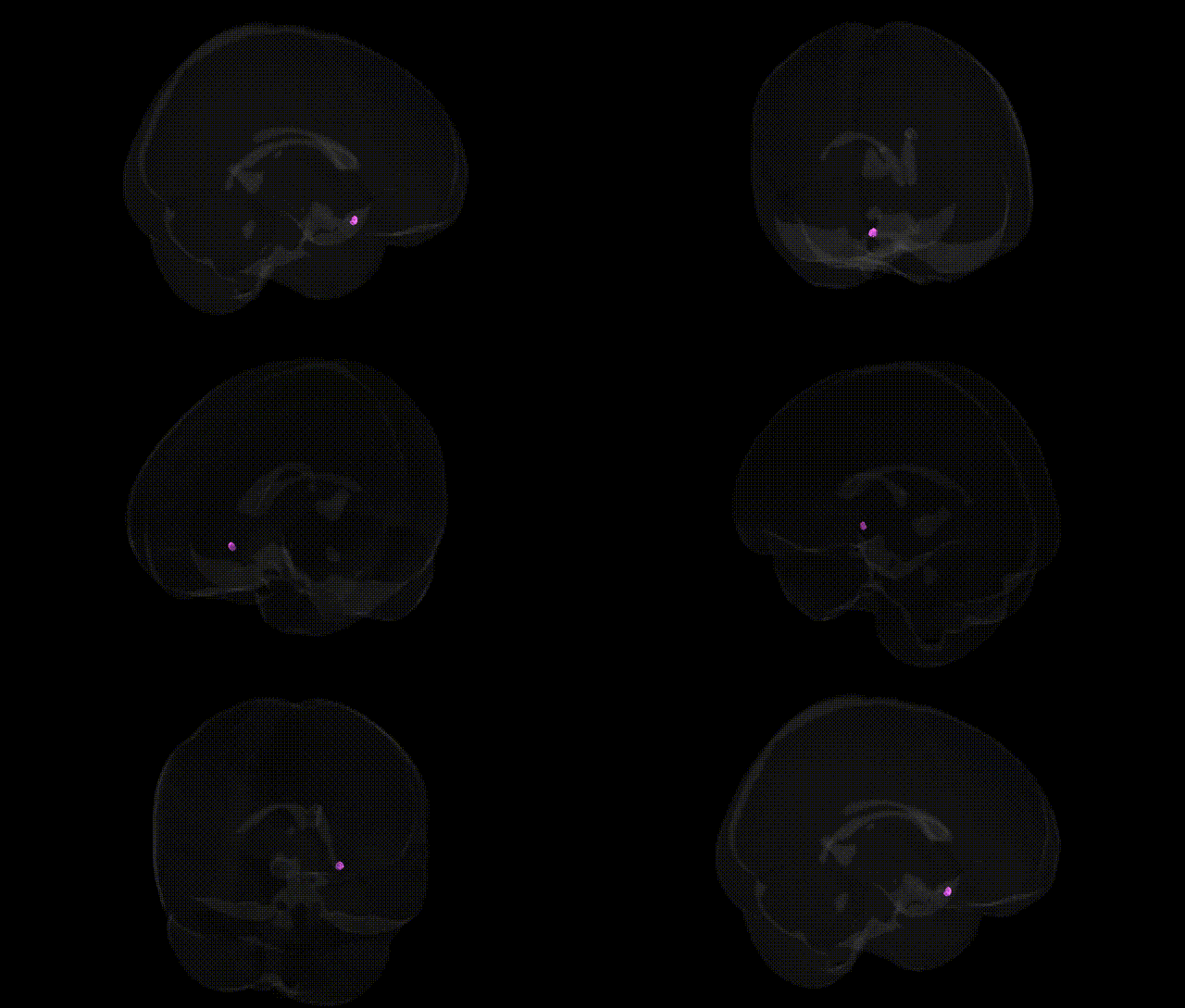
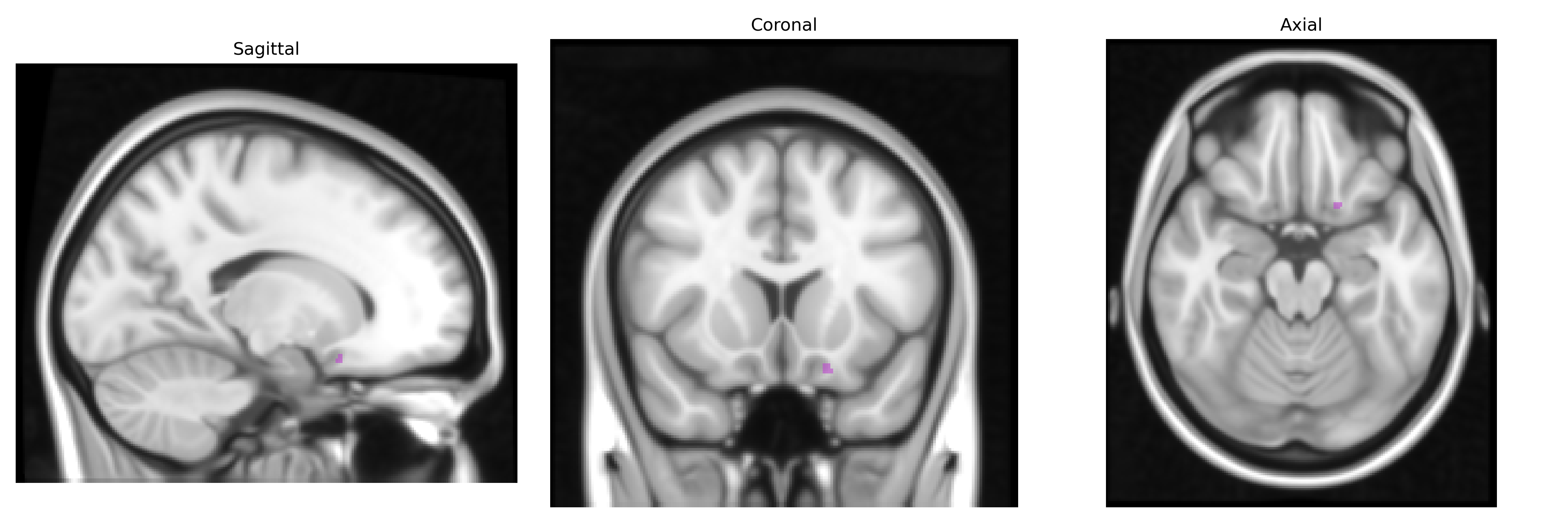
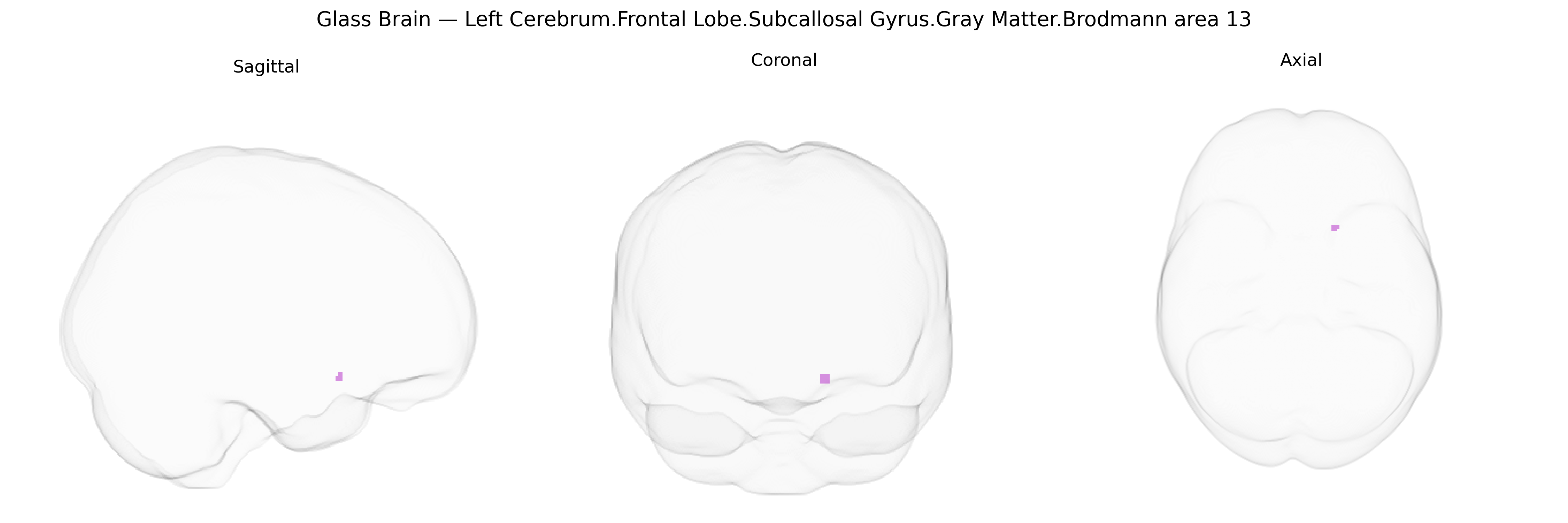
The bilateral Left Cerebrum.Frontal Lobe.Subcallosal Gyrus.Gray Matter.Brodmann area 13 corresponds to a ventromedial frontal cortical region located within the subcallosal (subgenual) portion of the cingulate/medial frontal cortex, situated inferior to the genu of the corpus callosum and continuous with the orbitofrontal and anterior cingulate territories. In Brodmann’s classification, area 13 belongs to the orbitofrontal cortex, characterized cytoarchitectonically by a well-developed granular layer IV and distinct lamination patterns associated with higher-order association processing. Functionally, this region is implicated in emotional regulation, reward valuation, autonomic and visceral integration, and mood-related processes, often engaged in networks mediating affective decision-making and contextual modulation of behavior. There is no direct link for this exact Talairach label; a related structure is the Orbitofrontal cortex.
The subcallosal gyrus (often corresponding to subgenual cingulate/BA25–13 region) has been repeatedly implicated in genetic and GWAS-based studies of mood and affective traits, though direct, region-specific genetic associations for “Left Cerebrum.Frontal Lobe.Subcallosal Gyrus.Gray Matter.Brodmann area 13” per the Talairach 1 mm atlas are typically inferred from imaging–genetics and large-scale MRI GWAS rather than from single-region candidate studies. Polygenic risk for major depressive disorder, bipolar disorder, and neuroticism shows robust associations with reduced gray matter volume and altered functional activity in the subcallosal region, and variants in genes related to serotonin signaling (e.g., SLC6A4), glutamatergic transmission, and neurotrophic pathways (e.g., BDNF) have been linked indirectly through structural and functional imaging measures in this area. Large consortia such as ENIGMA and UK Biobank–based MRI GWAS report that common variants in multiple loci (e.g., near genes involved in neuronal development and synaptic function) influence cortical thickness and volume in ventromedial prefrontal and cingulate territories that include or overlap the subcallosal gyrus, and these morphological measures mediate genetic risk for depression, anxiety, and related traits. Additionally, variants associated with treatment response in depression, especially to deep brain stimulation or antidepressants, have been explored with respect to subcallosal cingulate circuitry, underscoring a genetically modulated vulnerability of this region in mood and affective disorders, although precise locus- and gene-level mappings specific to BA13 within the subcallosal gyrus remain limited and are often reported at a broader regional or network level.
Overview generated by GPT-4o (2026).
Region ID: 296
Hemisphere: bilateral
Atlas: Talairach labels 1mm
Full Quality Version: Download MP4
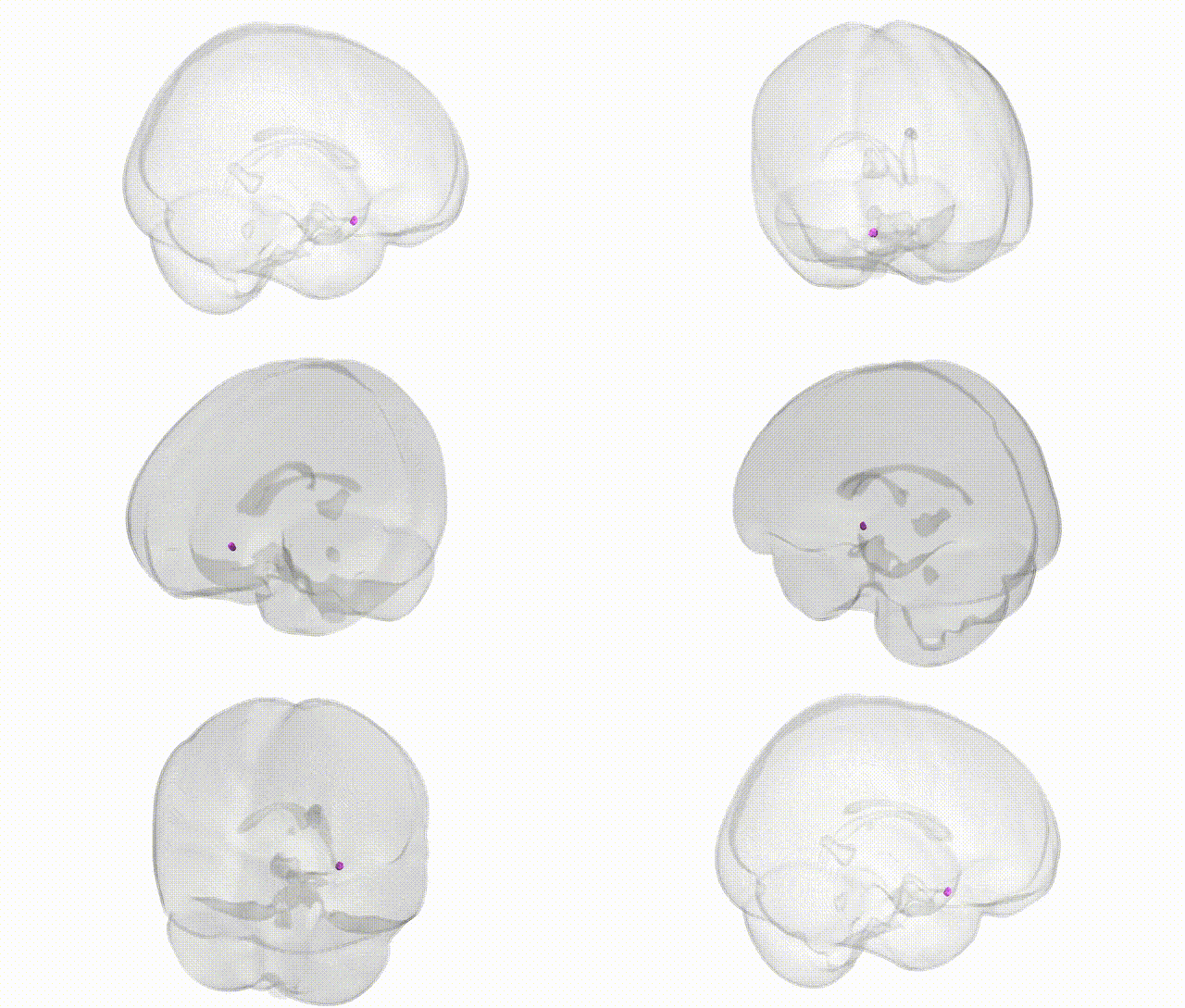
Full Quality Version: Download MP4
Wali Sidiqyar*, Gaurav Rudravaram*, Elyssa M. McMaster, Trent M. Schwartz, Adam M. Saunders, Kurt G. Schilling, Bennett A. Landman "Introducing SPINS: A Shared Public Visualization Library of Neuroanatomical Structures." Medical Imaging with Deep Learning- short paper
This resource is licensed under CC0 1.0 Universal (Public Domain).