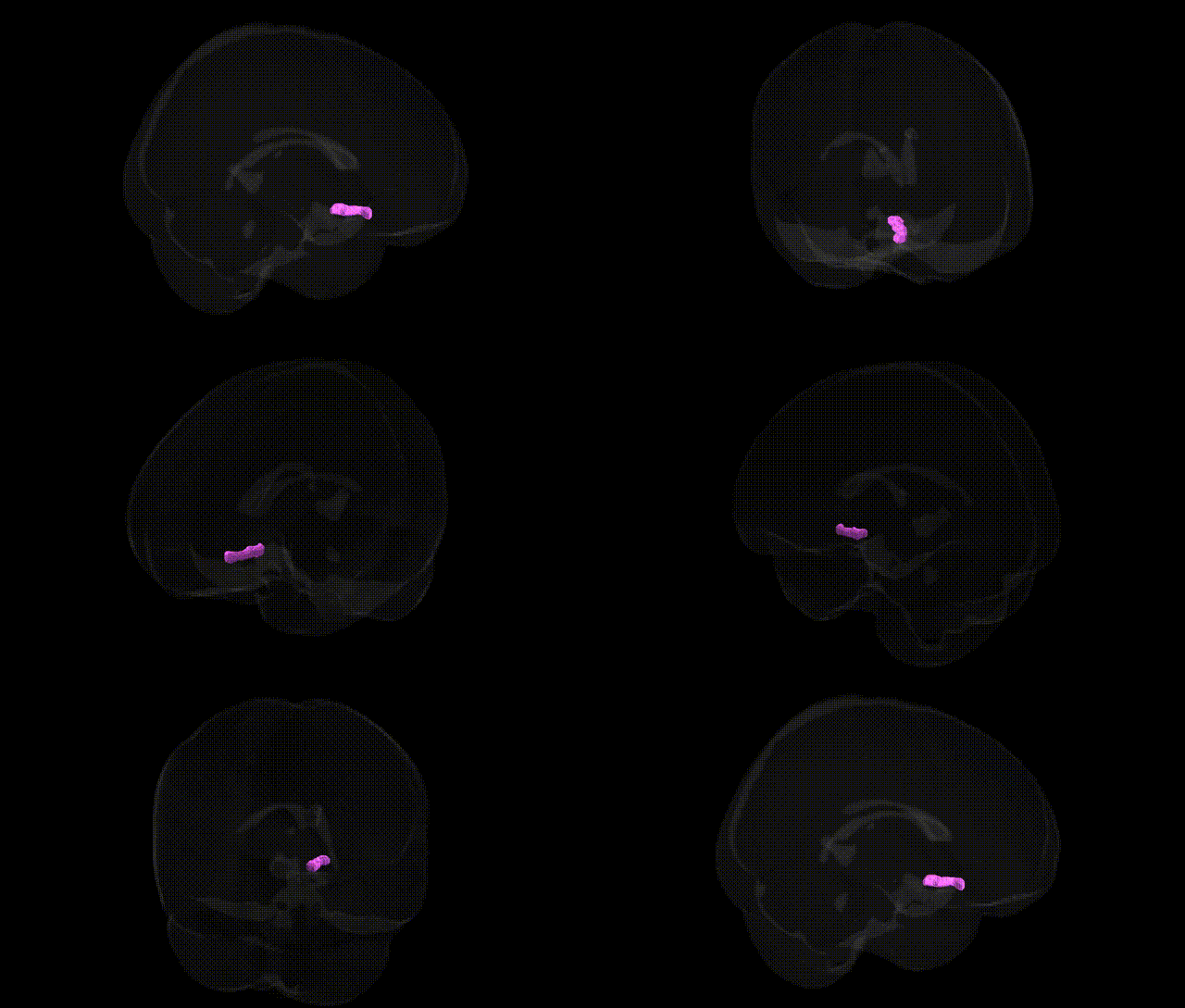
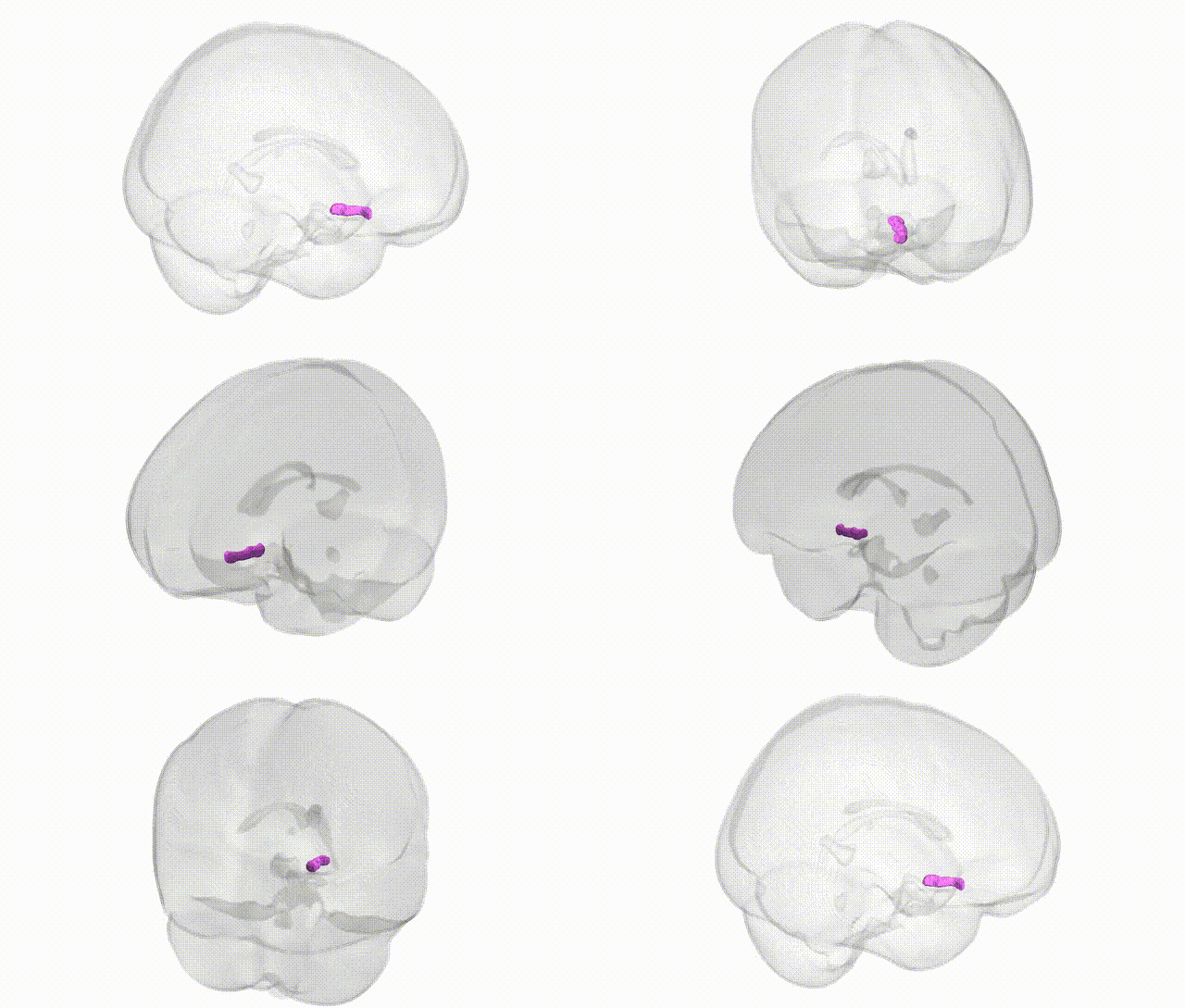
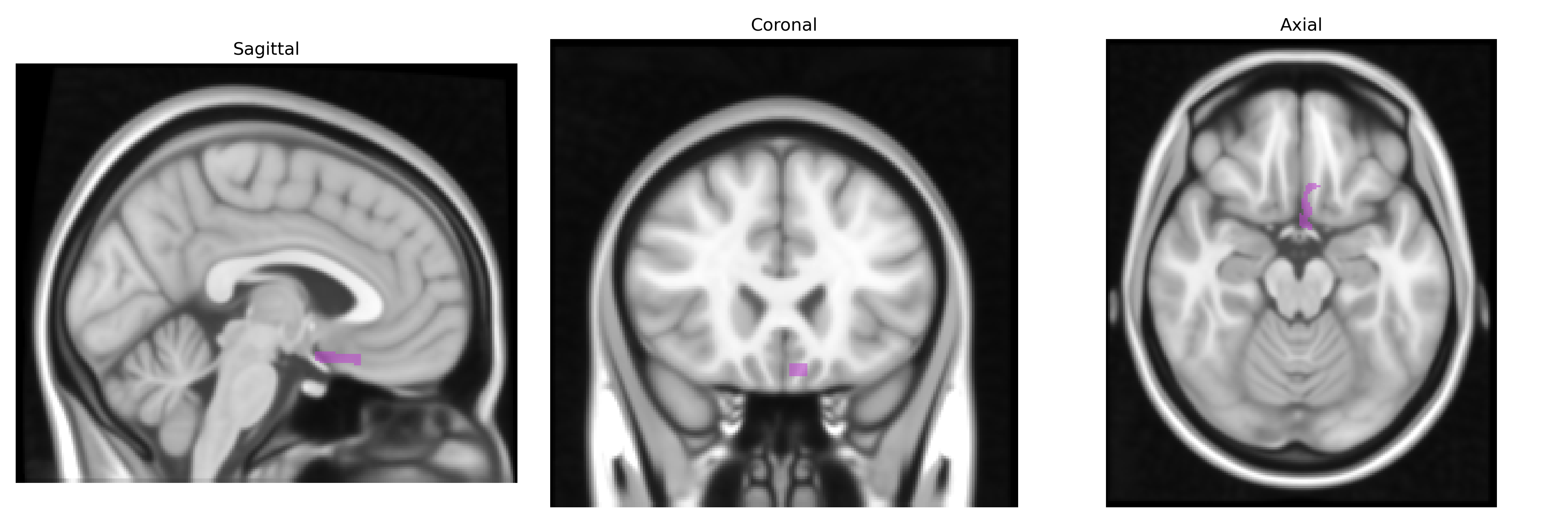
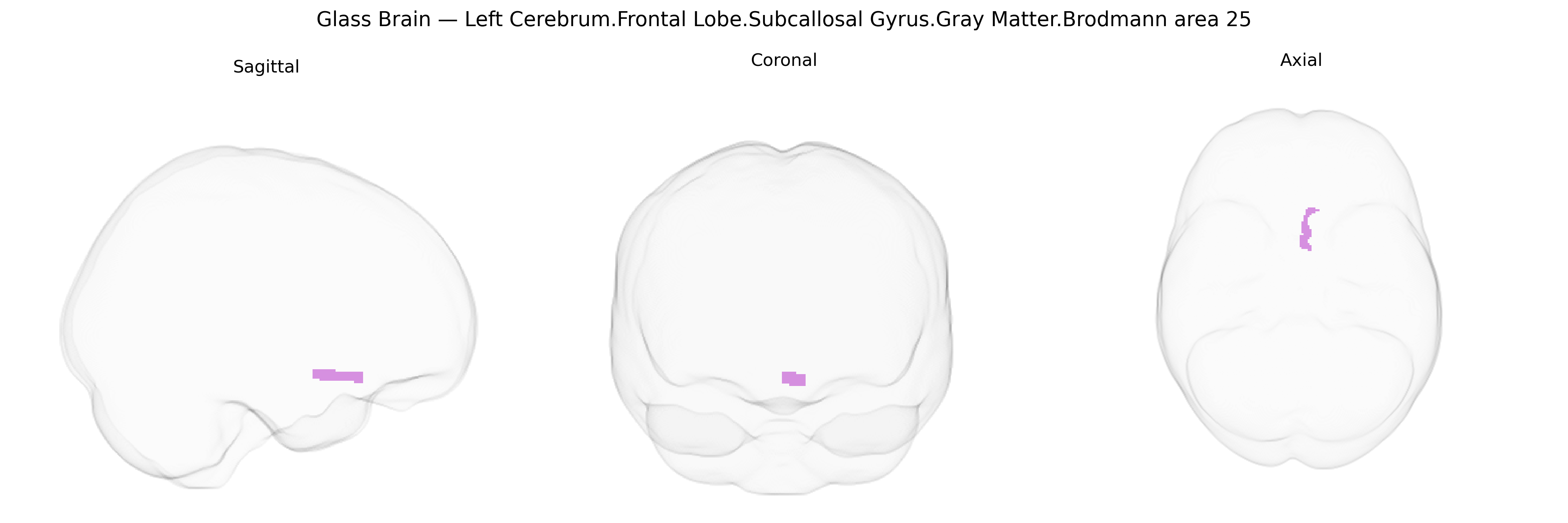
The bilateral Left Cerebrum.Frontal Lobe.Subcallosal Gyrus.Gray Matter.Brodmann area 25 corresponds to a ventromedial prefrontal/limbic cortical region located beneath the genu of the corpus callosum, forming part of the subcallosal gyrus and ventral anterior cingulate cortex. Brodmann area 25 is characterized cytoarchitectonically by a relatively thin, agranular cortex with dense reciprocal connections to the hypothalamus, amygdala, hippocampal formation, ventral striatum, and other medial prefrontal and limbic regions, supporting roles in visceral-autonomic regulation, mood, reward, and stress responses. Functional imaging and clinical studies implicate this region in affective processing and major depressive disorder, including as a target for deep brain stimulation in treatment-resistant depression. There is no direct link for this exact composite label; a related structure is Subgenual anterior cingulate cortex (Brodmann area 25).
The subcallosal gyrus (Brodmann area 25, BA25) has been strongly implicated in affective and stress-related phenotypes through converging genetic and imaging‑genetic evidence, although few GWAS target this region explicitly. BA25 is a key node of the limbic–cortical mood-regulation circuit and shows consistent structural and functional abnormalities in major depressive disorder (MDD), bipolar disorder, and treatment‑resistant depression, with imaging-genetics studies linking common variants in serotonergic (e.g., 5-HTTLPR/SLC6A4), glutamatergic (GRM and NMDA-related genes), and stress-response pathways (e.g., FKBP5, CRHR1) to altered volume, activity, or connectivity in this region under negative affect or stress. Polygenic risk for MDD, neuroticism, and related traits has been associated with subgenual cingulate/subcallosal cortical thickness and gray-matter volume in large neuroimaging consortia (e.g., ENIGMA), while BA25 structural and functional measures partially mediate the relationship between genetic risk and depressive symptoms. Variants in BDNF (notably Val66Met) and genes involved in synaptic plasticity and inflammatory signaling have also been reported to influence subgenual cingulate responsiveness to emotional stimuli and antidepressant treatment response, consistent with BA25’s role as a target for deep brain stimulation in refractory depression; however, most associations are indirect, emerging from imaging‑genetics of mood and anxiety traits or from GWAS-based polygenic score studies rather than region-specific GWAS focused solely on Talairach-defined BA25.
Overview generated by GPT-4o (2026).
Region ID: 281
Hemisphere: bilateral
Atlas: Talairach labels 1mm
Full Quality Version: Download MP4
Full Quality Version: Download MP4
Wali Sidiqyar*, Gaurav Rudravaram*, Elyssa M. McMaster, Trent M. Schwartz, Adam M. Saunders, Kurt G. Schilling, Bennett A. Landman "Introducing SPINS: A Shared Public Visualization Library of Neuroanatomical Structures." Medical Imaging with Deep Learning- short paper
This resource is licensed under CC0 1.0 Universal (Public Domain).