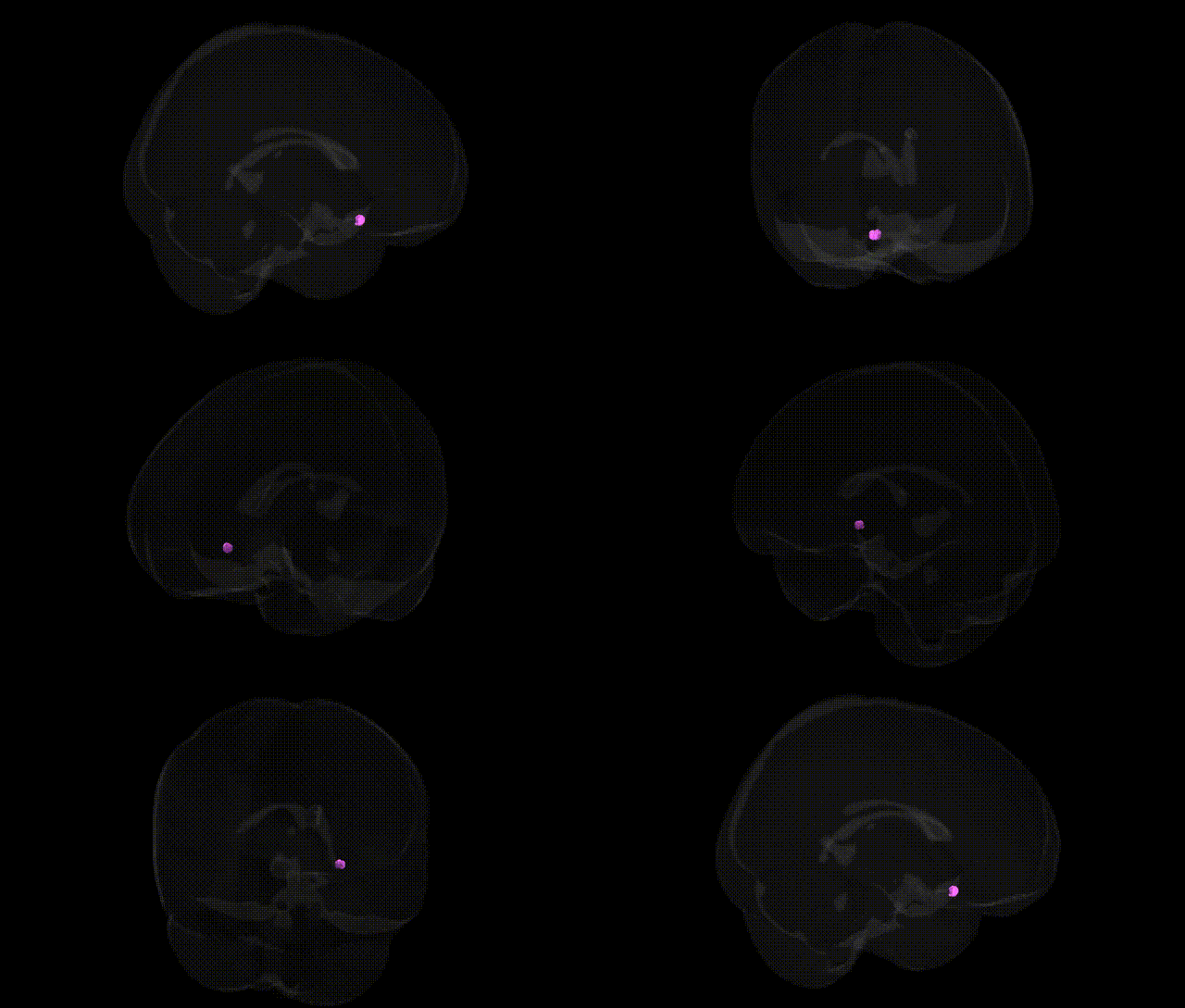
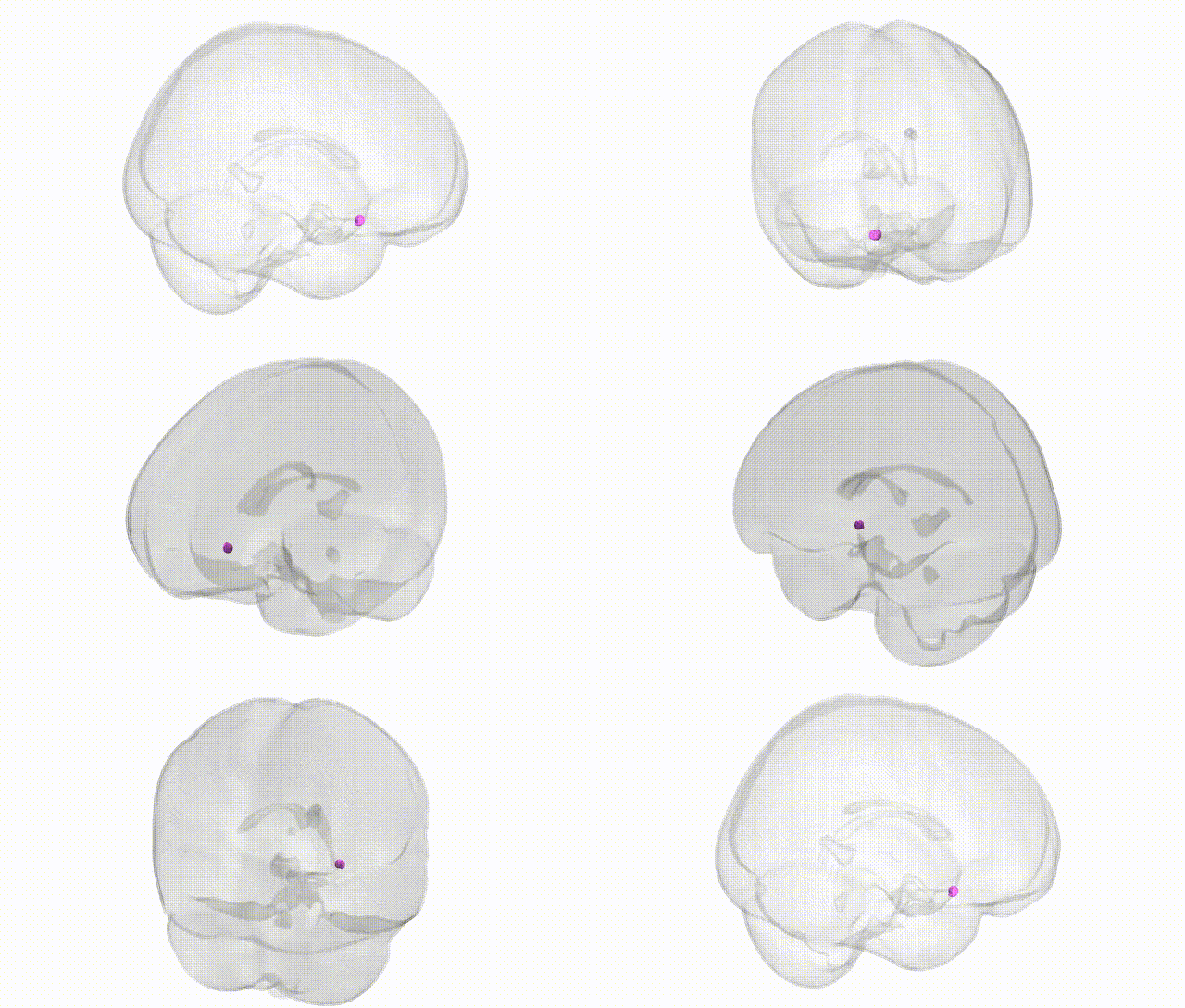
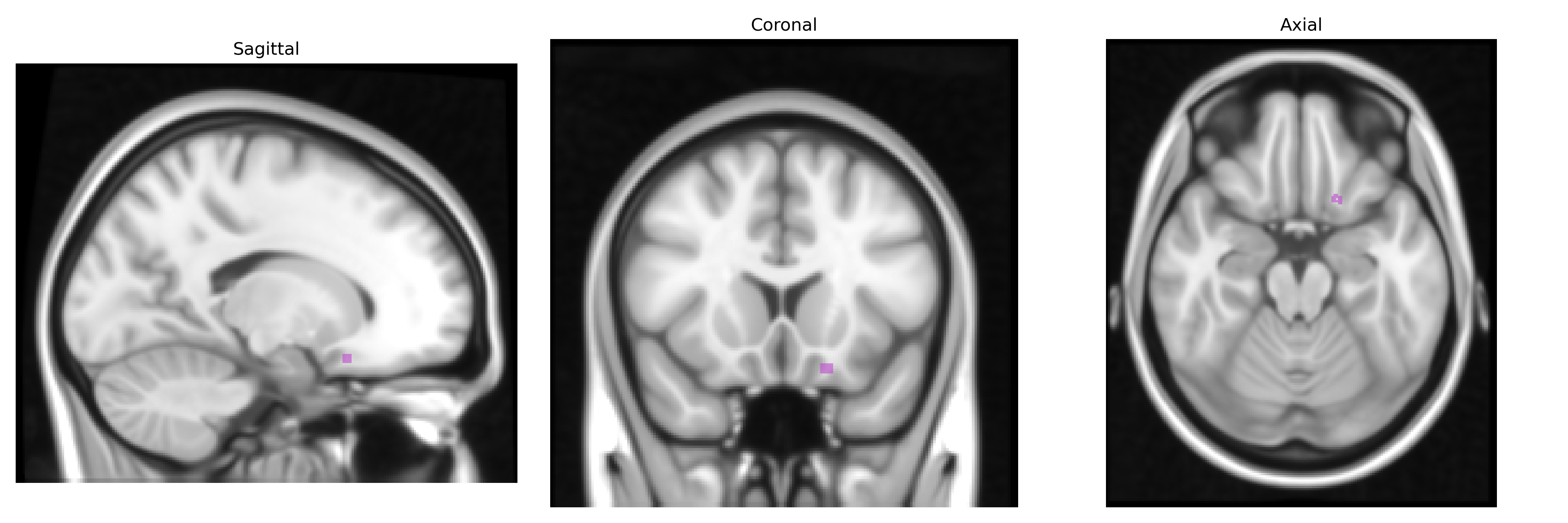
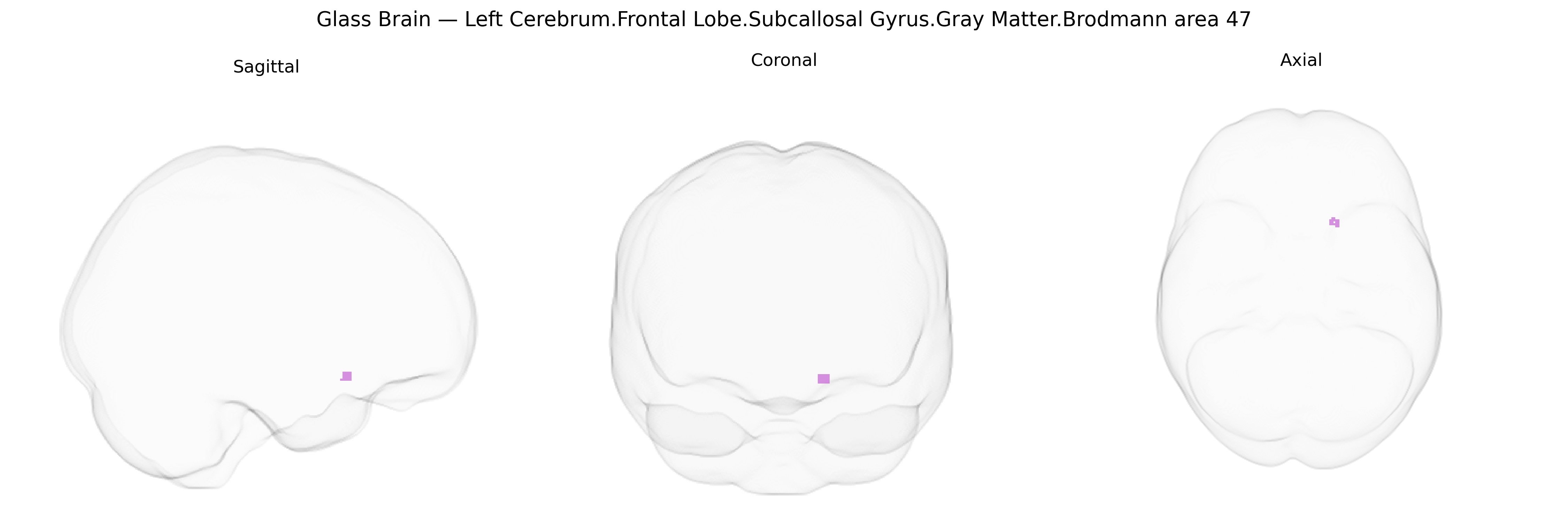
The bilateral Left Cerebrum.Frontal Lobe.Subcallosal Gyrus.Gray Matter.Brodmann area 47 corresponds to a ventral prefrontal region located in the inferior frontal gyrus and adjacent subcallosal/ventromedial frontal areas, within the orbitofrontal cortex. Brodmann area 47 is cytoarchitectonically characterized by granular cortex and is implicated in high-level cognitive and affective functions, including semantic processing, language comprehension, decision-making, reward evaluation, and regulation of emotional responses. Its subcallosal position links it structurally and functionally to limbic circuitry, integrating inputs from medial prefrontal, cingulate, and temporal regions to modulate mood, motivation, and behavioral flexibility. There is no direct link for this exact composite label; a closely related structure is Brodmann area 47.
Brodmann area 47 in the subcallosal/ventral frontal region (often overlapping orbitofrontal and ventromedial prefrontal cortex) has been implicated in multiple genetic and GWAS findings, primarily through imaging-genetics and psychiatric genomics studies rather than region-specific locus screens. Variants in genes related to synaptic plasticity, neurodevelopment, and monoaminergic signaling (for example, BDNF, SLC6A4, COMT, and dopaminergic pathway genes) have been associated with structural and functional variation in this region, particularly in gray matter volume and activation during reward, emotion, and inhibitory control tasks. Large-scale GWAS of cortical morphology (e.g., ENIGMA and UK Biobank–based studies) have identified common variants near genes involved in neuronal differentiation, cell adhesion, and axon guidance (such as variants in or near MIR genes, PLEKHM1, and other neurodevelopmental loci) that associate with orbitofrontal and inferior frontal thickness or surface area, which likely encompass BA47. Genetically influenced alterations in this area have been reported in major depressive disorder, bipolar disorder, schizophrenia, and obsessive–compulsive disorder, where risk loci for these disorders show convergent effects on orbitofrontal/subcallosal structure and connectivity, and in substance use and impulsivity-related traits, where polygenic risk scores correlate with BA47 volume or activation during reward and decision-making paradigms. In addition, GWAS of personality traits (e.g., neuroticism), cognitive control, and risk-taking have linked polygenic architectures to variation in inferior frontal/orbitofrontal regions, suggesting that BA47 acts as a convergence zone where common genetic variation influences affect regulation, reward valuation, and executive processes.
Overview generated by GPT-4o (2026).
Region ID: 298
Hemisphere: bilateral
Atlas: Talairach labels 1mm
Full Quality Version: Download MP4
Full Quality Version: Download MP4
Wali Sidiqyar*, Gaurav Rudravaram*, Elyssa M. McMaster, Trent M. Schwartz, Adam M. Saunders, Kurt G. Schilling, Bennett A. Landman "Introducing SPINS: A Shared Public Visualization Library of Neuroanatomical Structures." Medical Imaging with Deep Learning- short paper
This resource is licensed under CC0 1.0 Universal (Public Domain).