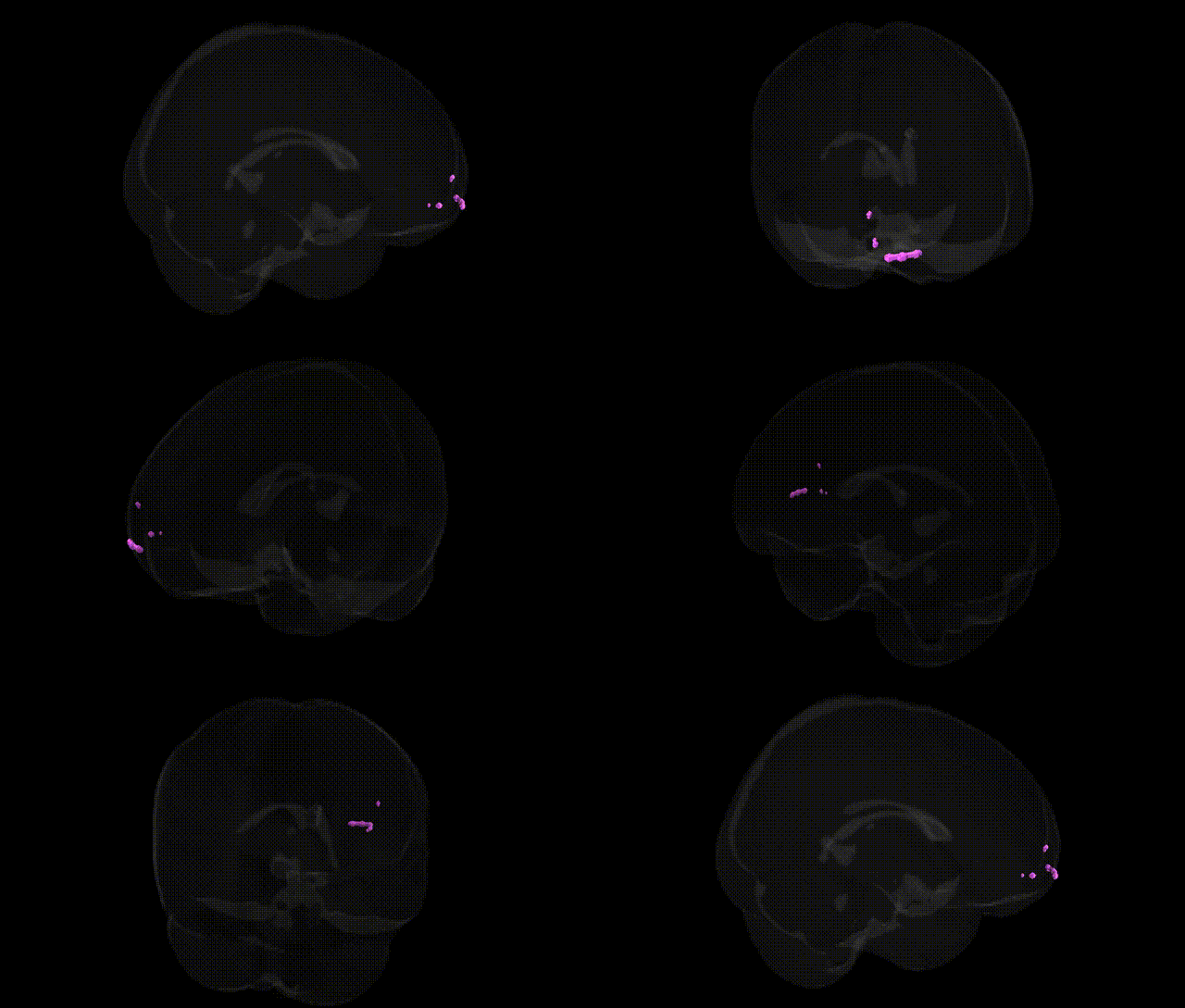
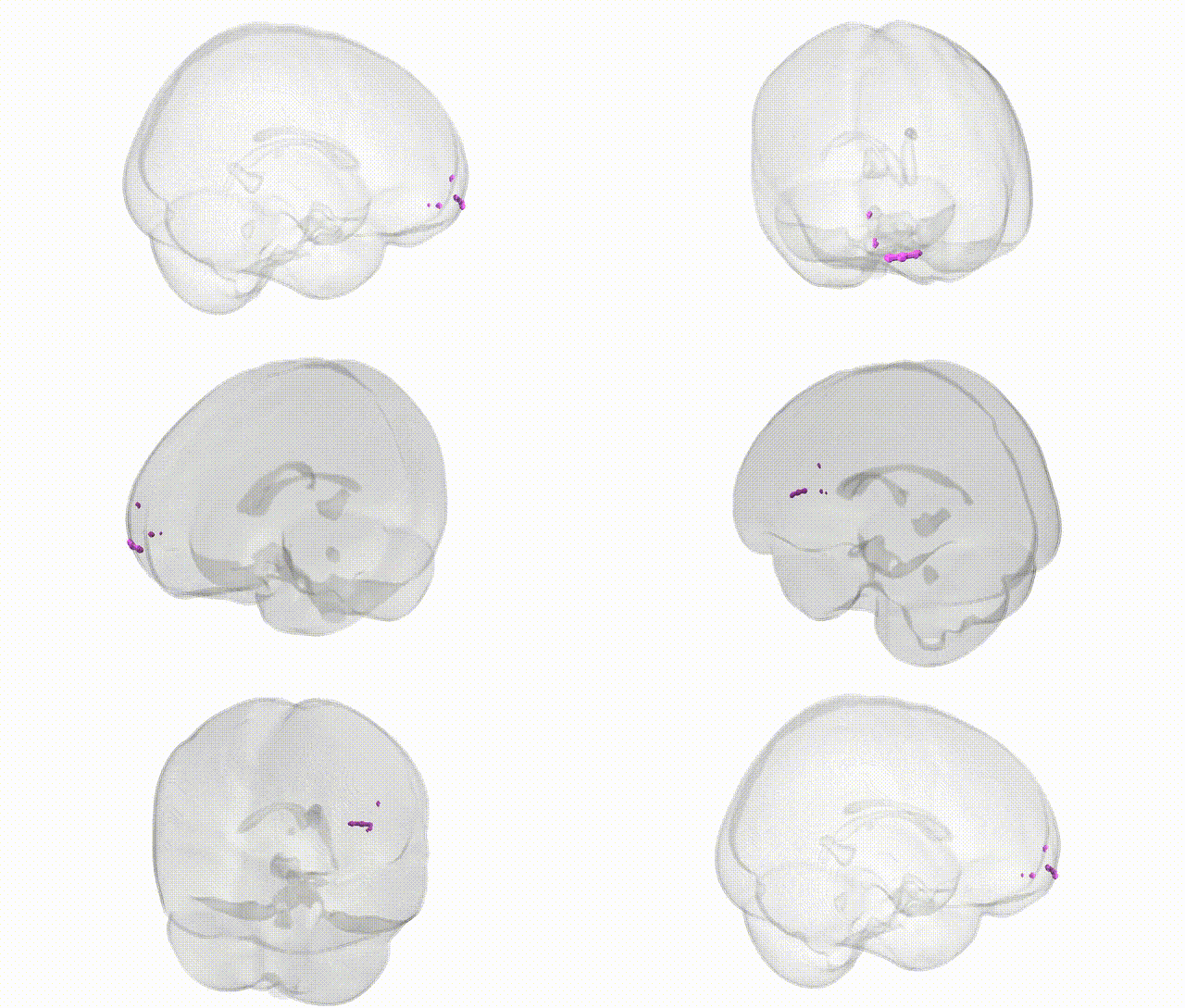
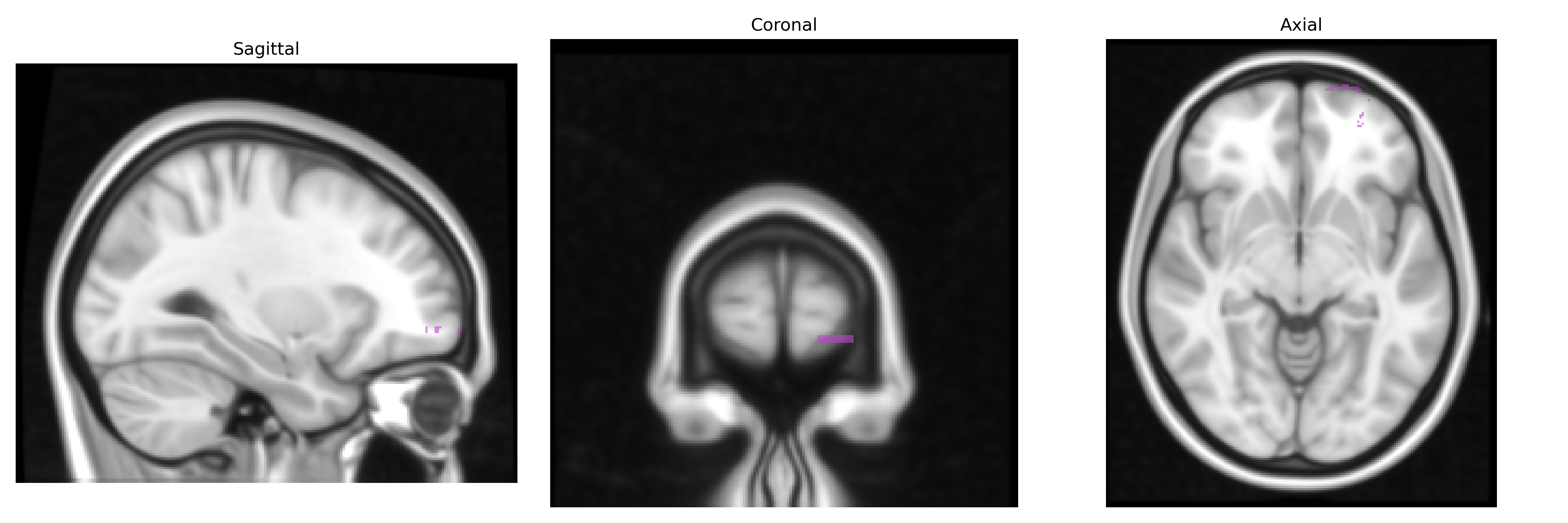
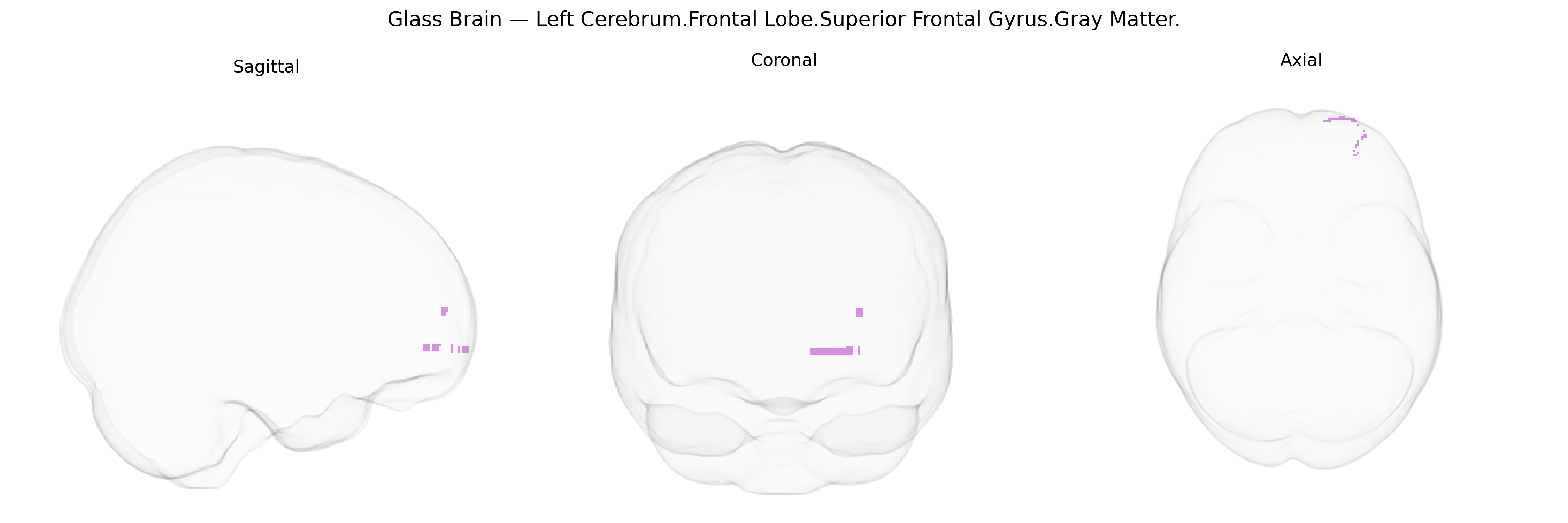
The bilateral Left Cerebrum.Frontal Lobe.Superior Frontal Gyrus.Gray Matter corresponds to cortical tissue in the superior frontal gyrus of the frontal lobe, extending along the dorsal aspect of the frontal cortex anterior to the premotor regions. This area is involved in higher-order executive functions, including working memory, attentional control, decision making, and aspects of self-referential and metacognitive processing, and contributes to motor planning through its proximity to and partial overlap with premotor and supplementary motor regions. Functionally, it participates in large-scale networks such as the frontoparietal control network and components of the default mode network, and is implicated in cognitive control, planning, and regulation of goal-directed behavior. Superior frontal gyrus
The bilateral left superior frontal gyrus (Talairach “Left Cerebrum.Frontal Lobe.Superior Frontal Gyrus.Gray Matter”) has been implicated in multiple genetic and imaging‑genetic studies linking frontal cortical structure and function to diverse traits and disorders. GWAS of cortical thickness and surface area (e.g., ENIGMA, UK Biobank) have identified common variants in genes involved in neurodevelopment, synaptic function, and cortical patterning—such as MIR137, NRXN1, TBR1/TBR1‑proximal loci, and regulators of Wnt and FGF signaling—that associate with superior frontal or nearby dorsomedial prefrontal morphology and connectivity. Polygenic risk scores for schizophrenia, bipolar disorder, and major depressive disorder show associations with reduced gray matter volume or altered thickness in superior frontal regions, while risk loci such as CACNA1C, ZNF804A, and DISC1‑related pathways have been tied to prefrontal abnormalities that encompass this area. In ADHD, autism spectrum disorder, and cognitive GWAS, variants in genes related to dopamine and glutamate signaling (e.g., DRD2, GRIN2B) and neurodevelopmental transcription factors have been linked to structural and functional differences in medial and dorsolateral superior frontal cortex, contributing to executive, working memory, and attentional phenotypes. Additionally, GWAS of general cognitive ability, educational attainment, and personality traits (notably conscientiousness and neuroticism) implicate polygenic influences on superior frontal thickness and activation, with loci in genes such as HMGA2, MAPT‑region haplotypes, and pleiotropic neurodevelopmental genes contributing to interindividual variation in gray matter characteristics of this region.
Overview generated by GPT-4o (2026).
Region ID: 615
Hemisphere: bilateral
Atlas: Talairach labels 1mm
Full Quality Version: Download MP4
Full Quality Version: Download MP4
Wali Sidiqyar*, Gaurav Rudravaram*, Elyssa M. McMaster, Trent M. Schwartz, Adam M. Saunders, Kurt G. Schilling, Bennett A. Landman "Introducing SPINS: A Shared Public Visualization Library of Neuroanatomical Structures." Medical Imaging with Deep Learning- short paper
This resource is licensed under CC0 1.0 Universal (Public Domain).