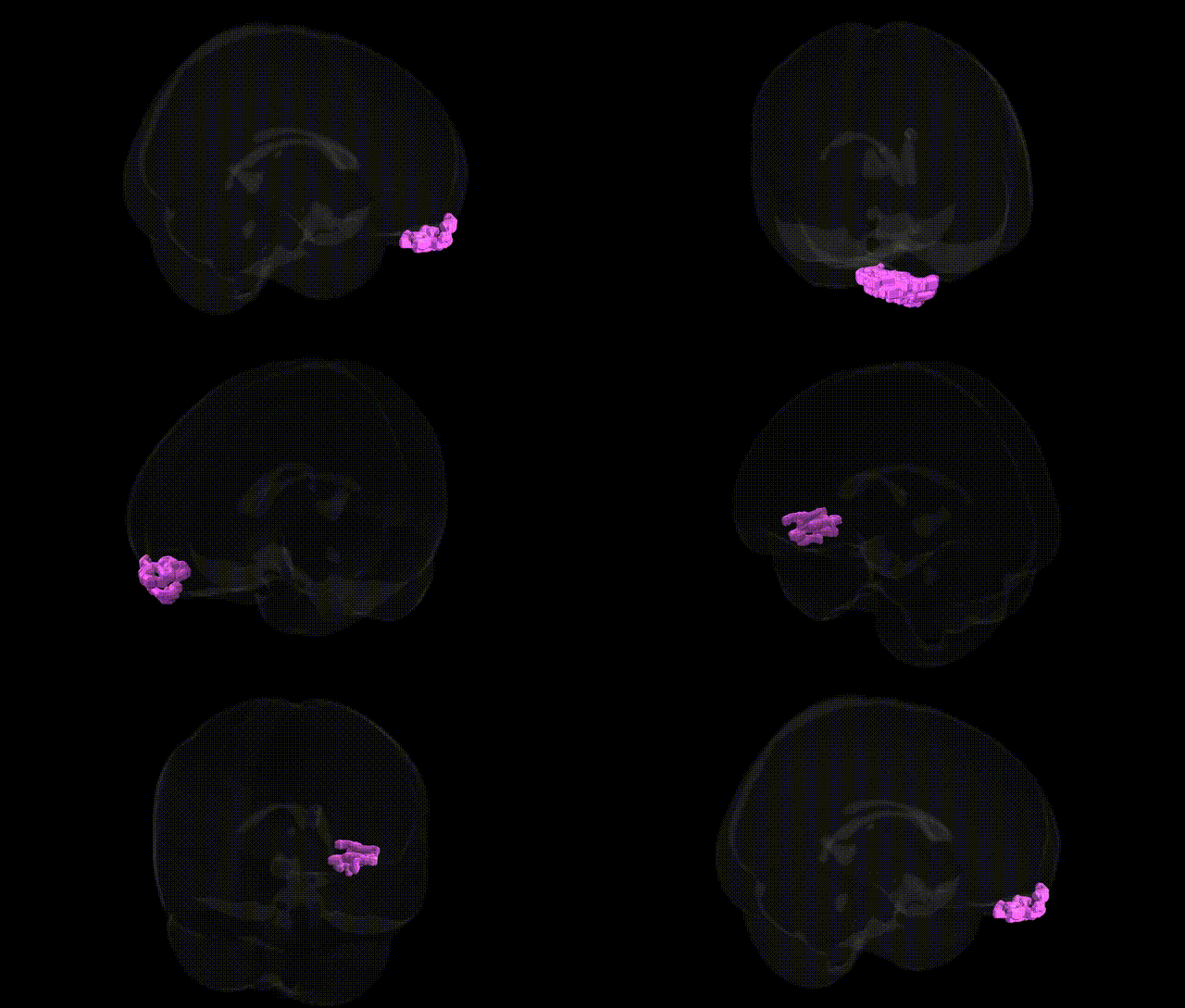
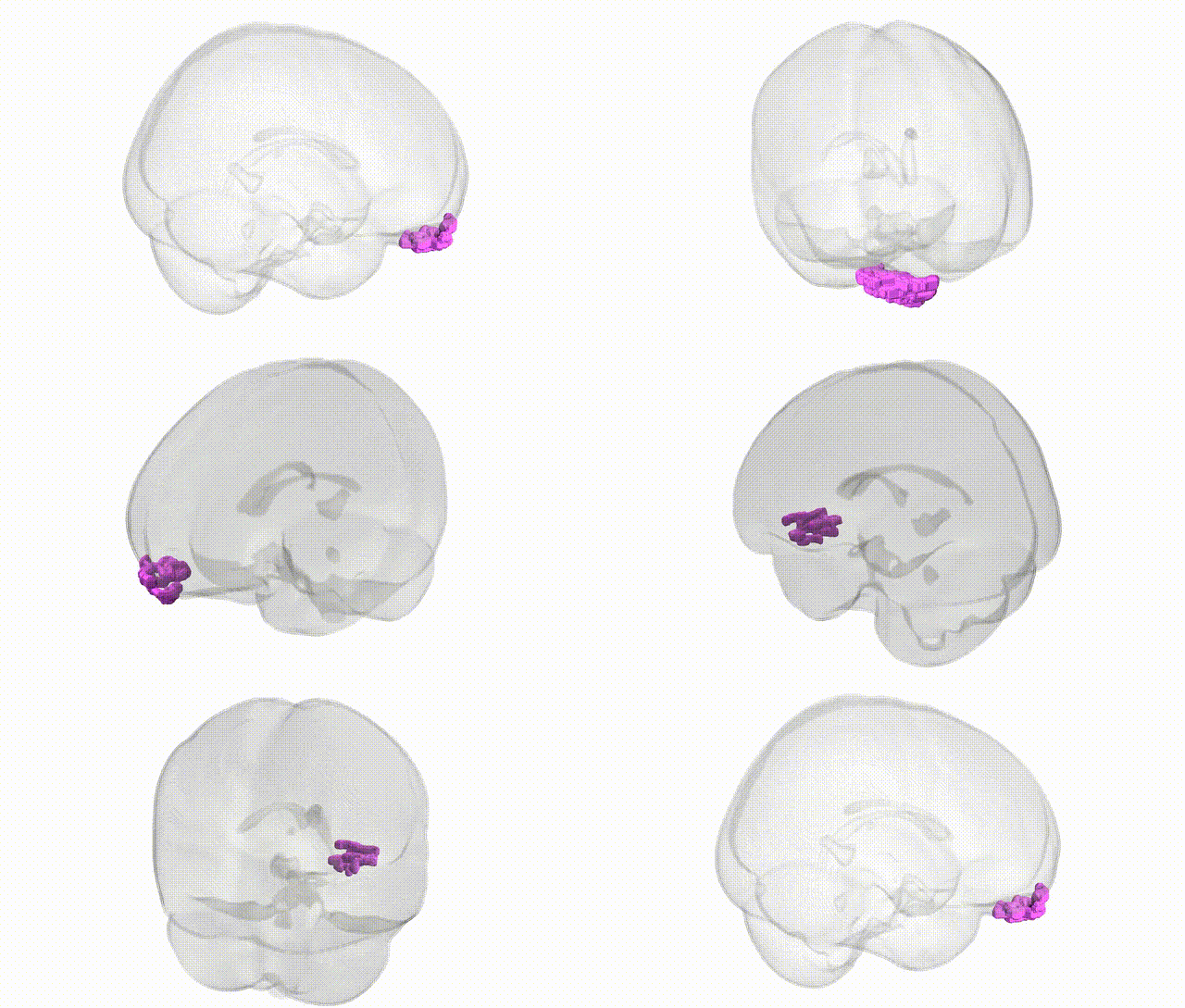
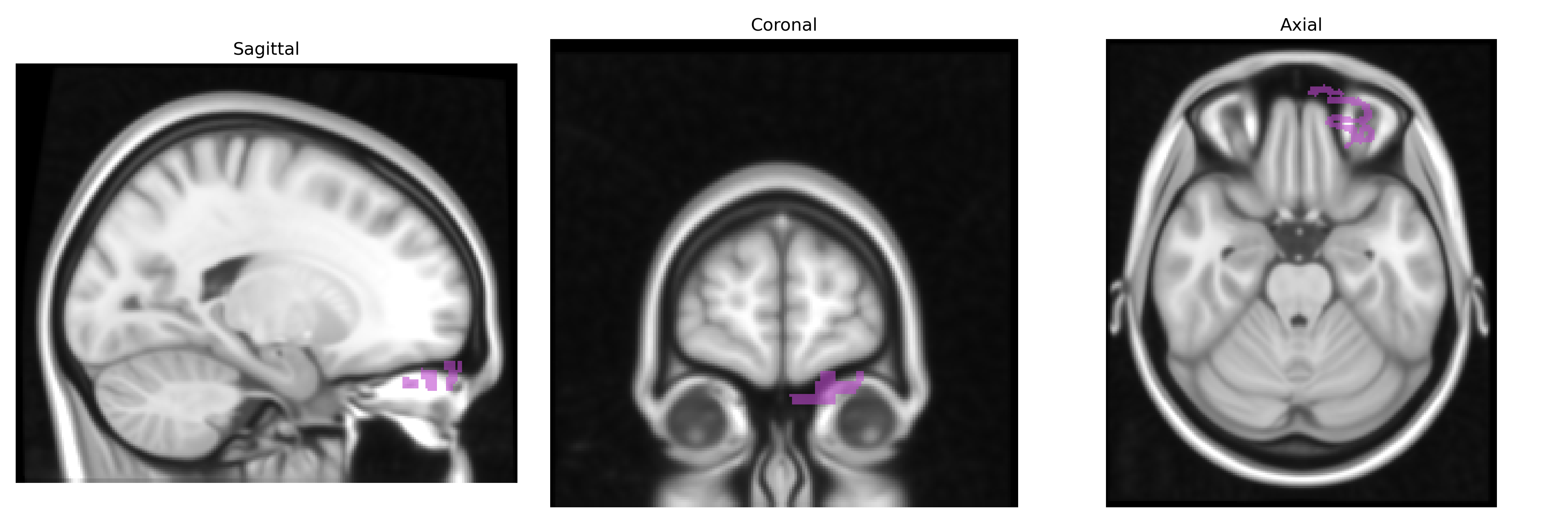
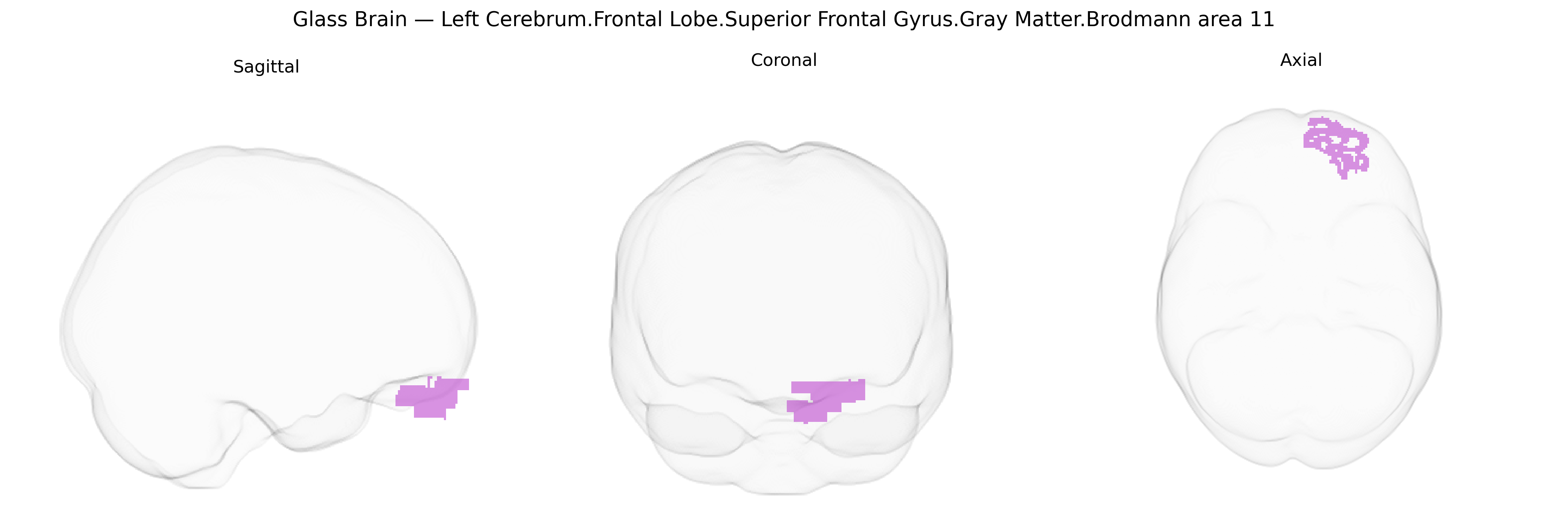
The bilateral Left Cerebrum.Frontal Lobe.Superior Frontal Gyrus.Gray Matter.Brodmann area 11 corresponds primarily to the orbitofrontal portion of the prefrontal cortex, situated in the ventral aspect of the frontal lobe above the orbits and extending medially along the superior frontal gyrus in Talairach space. This agranular cortical region is heavily interconnected with limbic, sensory, and autonomic structures, including the amygdala, hypothalamus, and other prefrontal areas, and is supplied mainly by branches of the anterior cerebral artery. Neurons in Brodmann area 11 participate in integrating reward value, emotional salience, and visceral information to guide decision-making, evaluation of outcomes, and adaptive social behavior, contributing to processes such as value-based choice, expectation, and modulation of affective responses. In the Talairach 1 mm atlas, its label reflects gray matter within the superior frontal gyrus that functionally and cytoarchitectonically falls within the orbitofrontal network. Orbitofrontal cortex
The bilateral left superior frontal gyrus gray matter in Brodmann area 11 (orbitofrontal/ventromedial prefrontal territory in the Talairach 1 mm atlas) has been repeatedly implicated in imaging‑genetics and GWAS work linking common variants to variation in prefrontal structure and function, particularly in domains of decision-making, reward valuation, and affect regulation. Large-scale brain MRI GWAS from consortia such as ENIGMA and UK Biobank have identified loci in and near genes involved in neurodevelopment, synaptic plasticity, and axon guidance (for example, variants in genes like HMGA2, MAPT, and others in fronto-temporal networks) that associate with cortical thickness, surface area, or volume within frontal regions encompassing BA11, though often at the level of broader frontal or orbitofrontal ROIs rather than this precise Talairach label. Genetically influenced alterations in this area’s structure and activation have been reported in relation to major depressive disorder, bipolar disorder, schizophrenia, obsessive–compulsive disorder, and anxiety traits, with risk variants in serotonin transporter (SLC6A4), BDNF (e.g., Val66Met), and dopamine-related genes contributing to differential orbitofrontal activation or gray-matter differences. GWAS of personality traits and behavioral phenotypes—such as neuroticism, risk-taking, impulsivity, and substance-use liability—have also linked polygenic scores to morphometric and functional variation in orbitofrontal and superior frontal regions overlapping BA11, suggesting that partly shared genetic architectures contribute to both behavioral traits and structural/functional organization of this prefrontal territory.
Overview generated by GPT-4o (2026).
Region ID: 152
Hemisphere: bilateral
Atlas: Talairach labels 1mm
Full Quality Version: Download MP4
Full Quality Version: Download MP4
Wali Sidiqyar*, Gaurav Rudravaram*, Elyssa M. McMaster, Trent M. Schwartz, Adam M. Saunders, Kurt G. Schilling, Bennett A. Landman "Introducing SPINS: A Shared Public Visualization Library of Neuroanatomical Structures." Medical Imaging with Deep Learning- short paper
This resource is licensed under CC0 1.0 Universal (Public Domain).