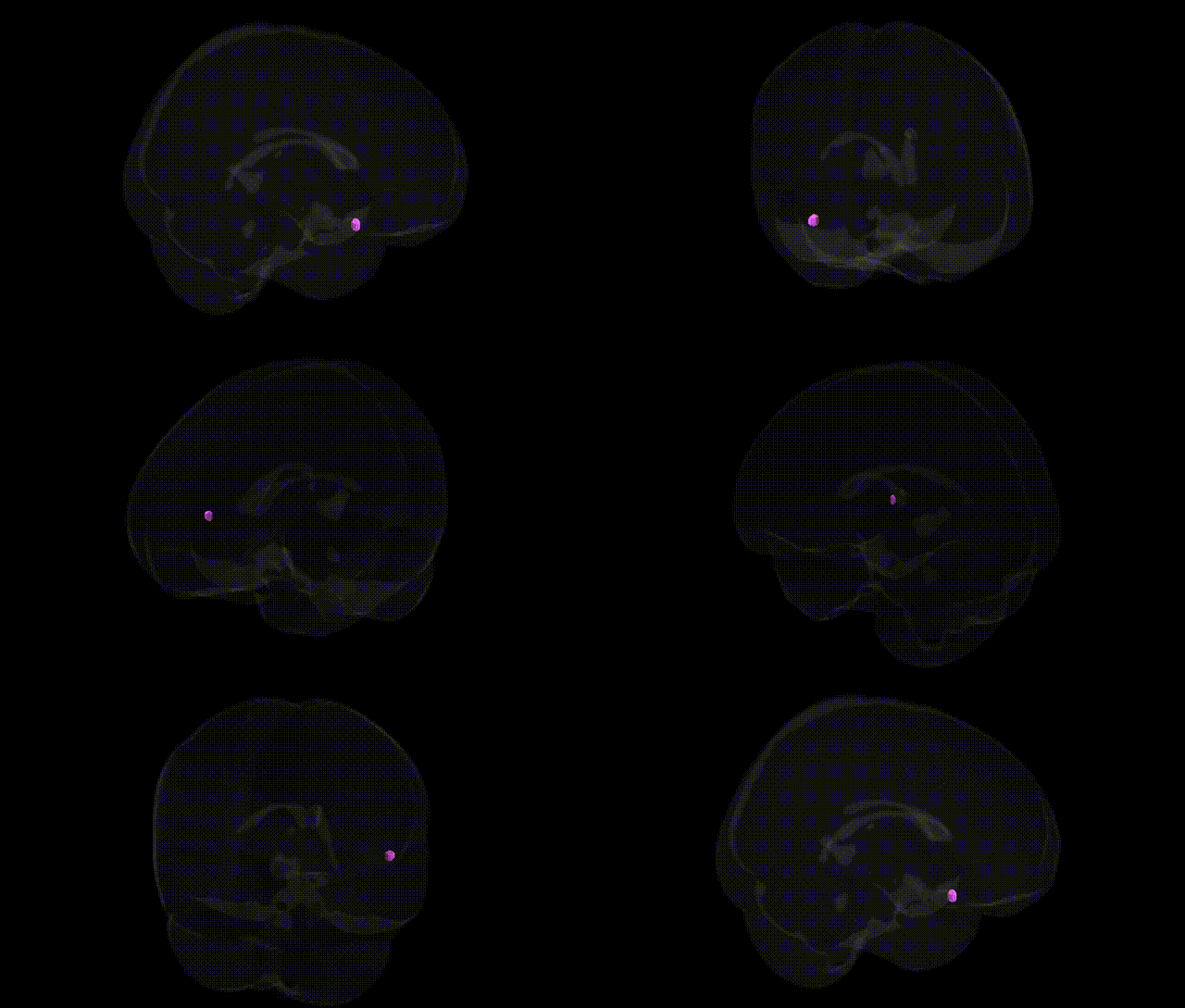
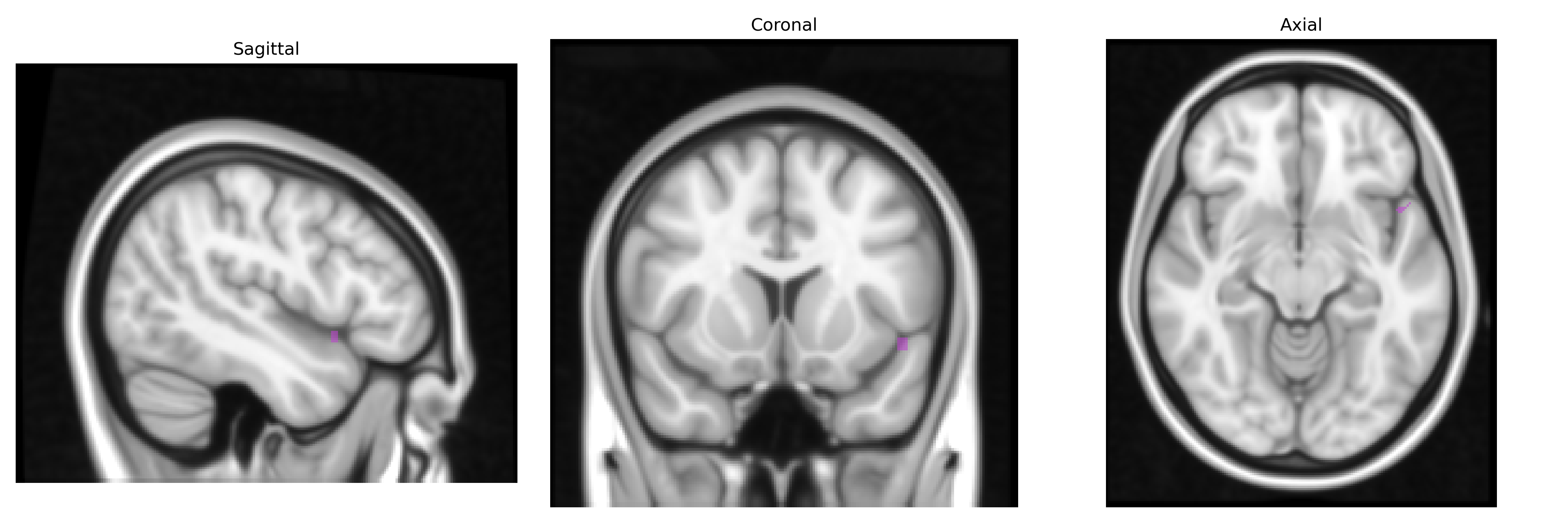
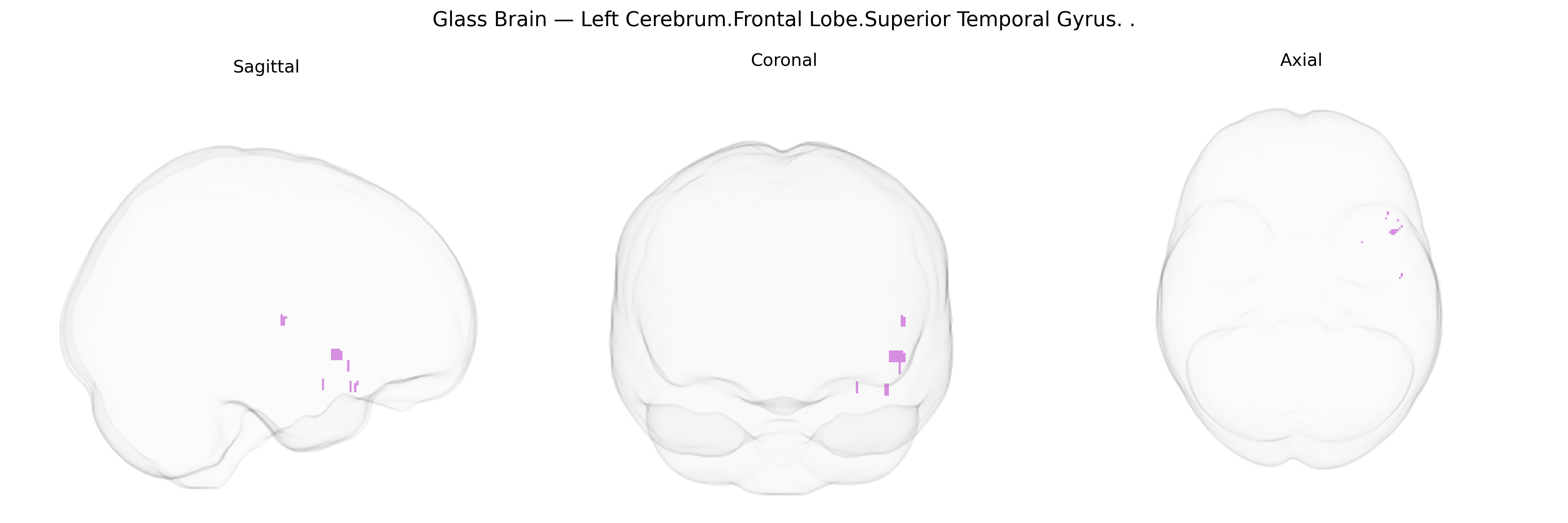
The bilateral Left Cerebrum.Frontal Lobe.Superior Temporal Gyrus, as labeled in the Talairach 1 mm atlas, spans portions of the superior temporal gyrus that extend anteriorly toward the frontal lobe border, reflecting the atlas’s hierarchical labeling rather than strict classical neuroanatomical boundaries. Functionally, the superior temporal gyrus is a key component of the auditory cortex and higher-order auditory association areas, involved in sound processing, speech perception, and aspects of language comprehension, as well as social and multimodal integration of auditory with visual and contextual information. In the dominant (typically left) hemisphere, this region contributes to phonological processing and semantic aspects of language, while bilateral engagement supports perception of complex sounds such as music and environmental noises. Although there is no distinct Wikipedia entry corresponding to the exact Talairach compound label, the primary anatomical and functional substrate is the Superior temporal gyrus.
The bilateral Left Cerebrum.Frontal Lobe.Superior Temporal Gyrus, corresponding largely to lateral prefrontal and superior temporal association cortex involved in language, social cognition, and auditory processing, shows multiple genetic associations from GWAS and imaging‑genetics studies: common variants in FOXP2, CNTNAP2, and DCDC2 have been linked to structural and functional differences in superior temporal and adjacent frontal language regions, particularly in developmental language disorder and dyslexia; schizophrenia and bipolar disorder GWAS have implicated risk loci (e.g., in CACNA1C, ZNF804A, MIR137‑associated regions) that correlate with altered gray matter volume, cortical thickness, or connectivity in superior temporal and frontal networks; autism spectrum disorder risk genes (such as SHANK3, NRXN1, and 16p11.2 CNVs) have been associated with atypical superior temporal gyrus morphology and disrupted fronto‑temporal circuitry relevant to social communication; large‑scale ENIGMA and UK Biobank imaging‑GWAS have identified polygenic influences on cortical thickness and surface area in superior temporal and frontal regions, including loci near genes like HMGA2, KIAA0586, and others involved in neurodevelopment and synaptic function; and psychiatric and cognitive traits (major depression, intelligence, educational attainment, and risk‑taking) show overlapping polygenic architectures with structural and functional variation in these fronto‑temporal areas, underscoring a shared genetic basis for higher‑order language, cognition, and psychopathology.
Overview generated by GPT-4o (2026).
Region ID: 225
Hemisphere: bilateral
Atlas: Talairach labels 1mm
Full Quality Version: Download MP4
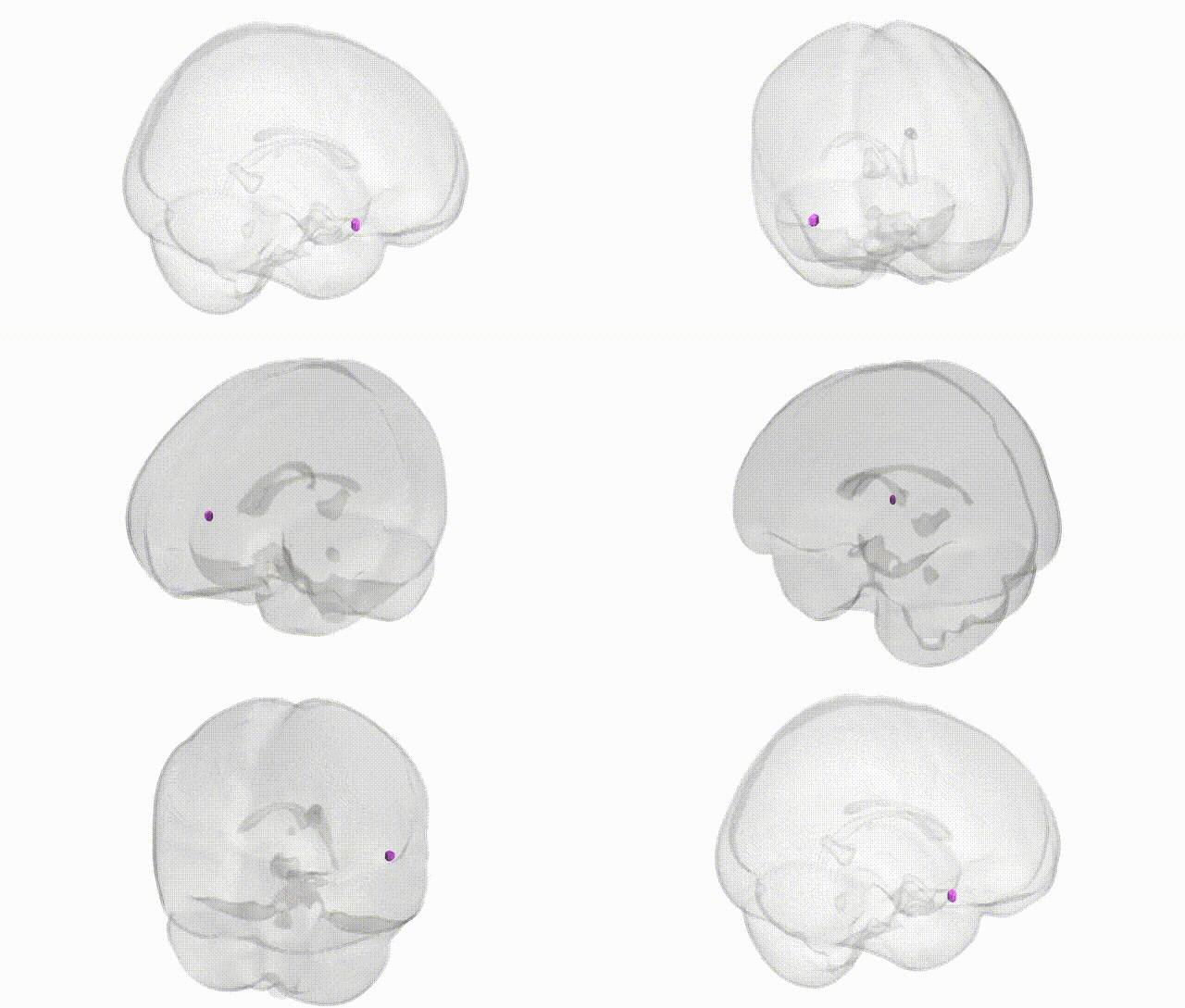
Full Quality Version: Download MP4
Wali Sidiqyar*, Gaurav Rudravaram*, Elyssa M. McMaster, Trent M. Schwartz, Adam M. Saunders, Kurt G. Schilling, Bennett A. Landman "Introducing SPINS: A Shared Public Visualization Library of Neuroanatomical Structures." Medical Imaging with Deep Learning- short paper
This resource is licensed under CC0 1.0 Universal (Public Domain).