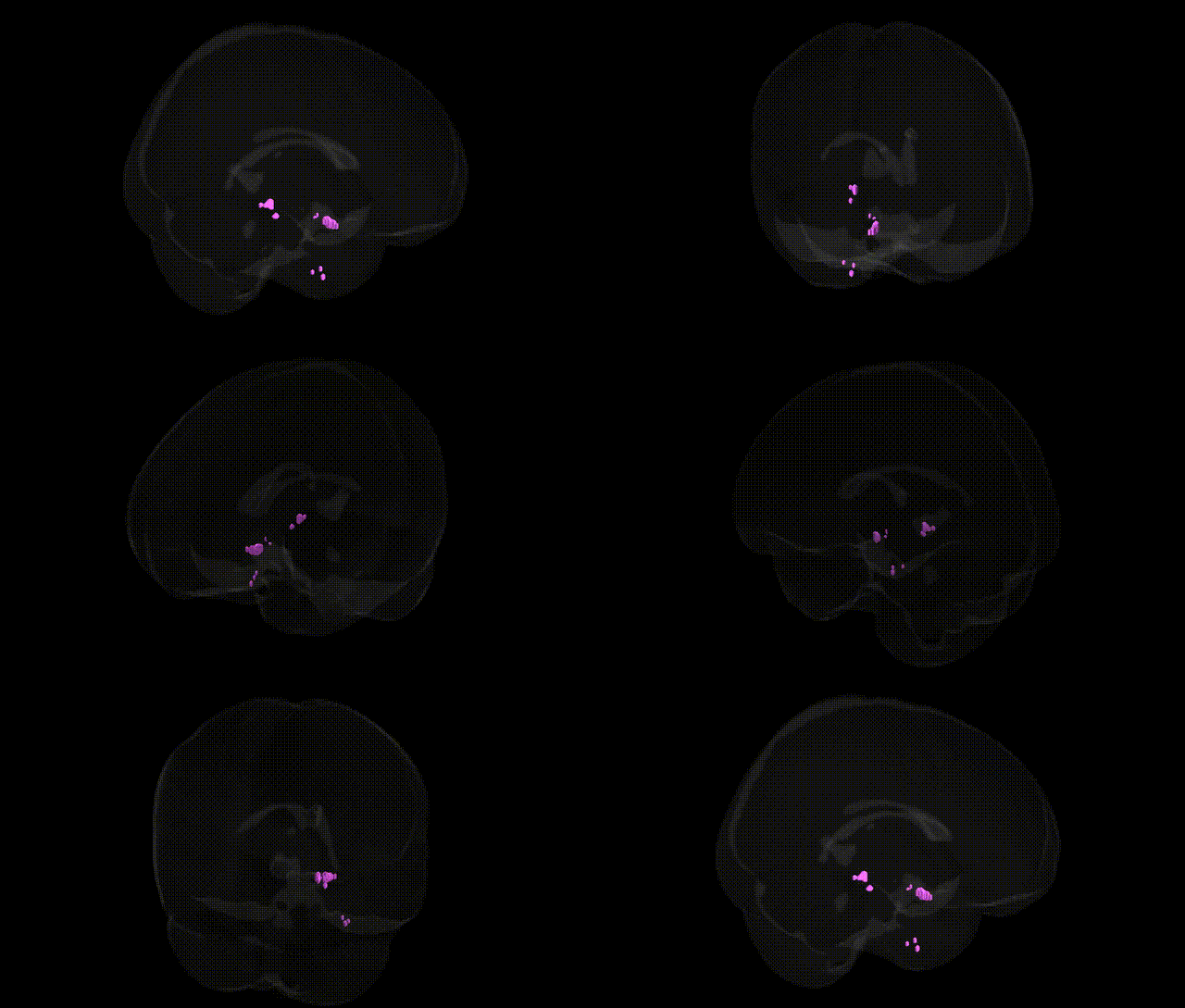
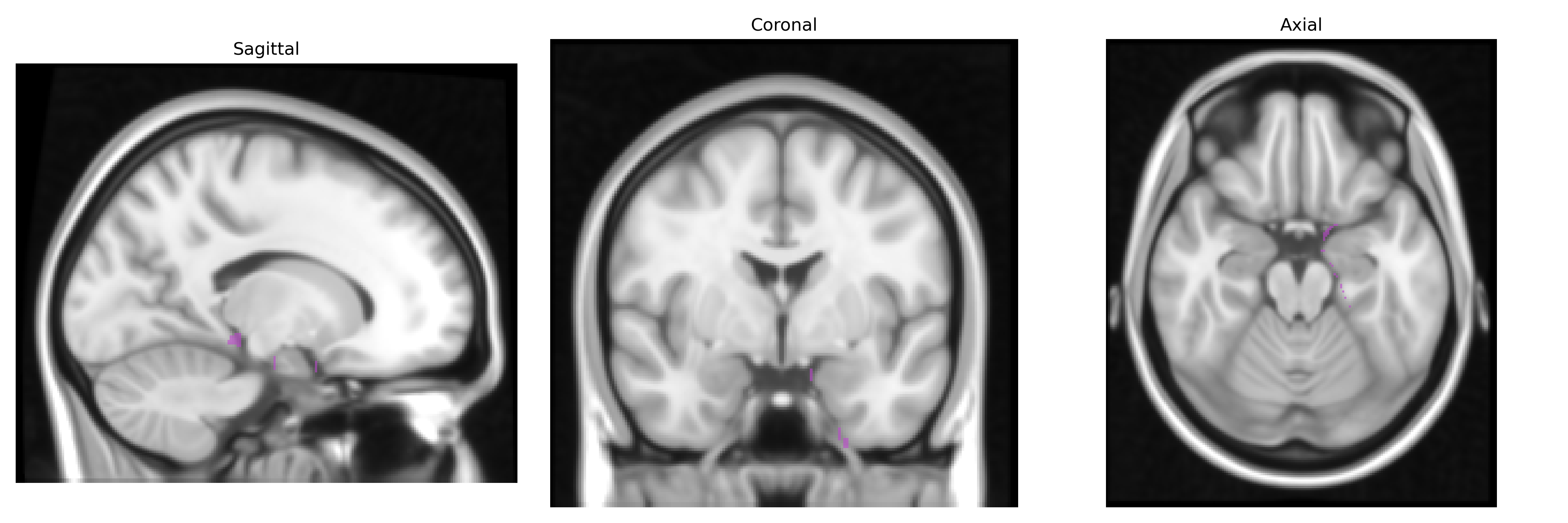
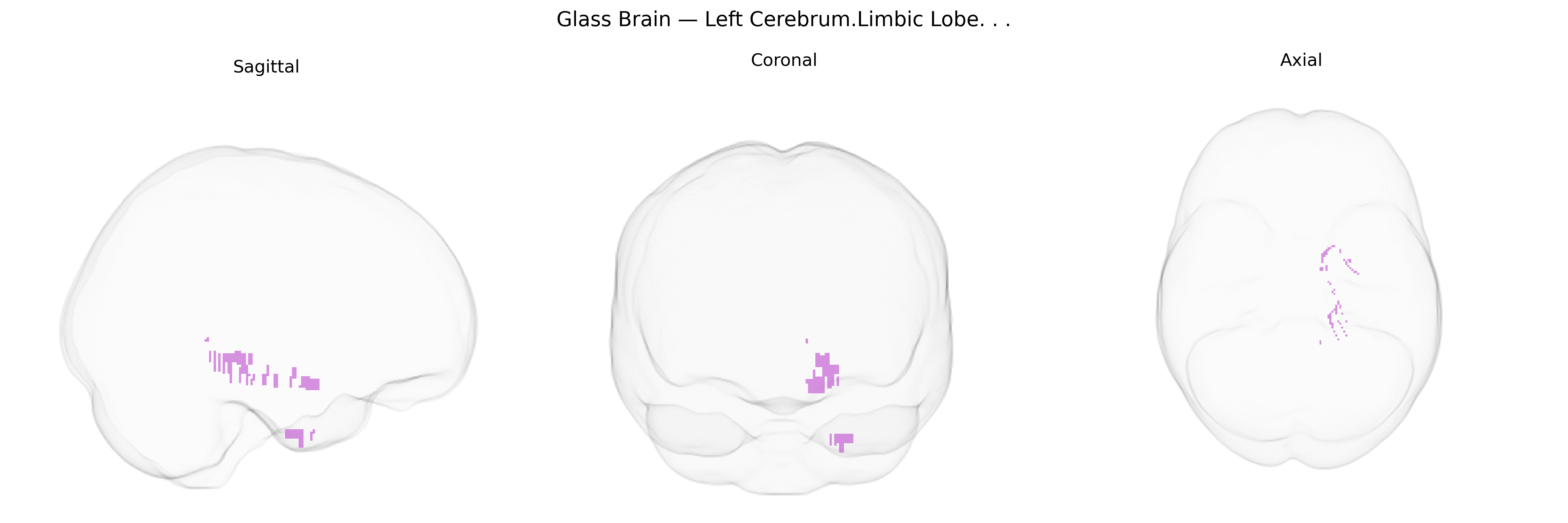
The bilateral Left Cerebrum Limbic Lobe in the Talairach 1 mm atlas refers to cortical and subcortical structures forming part of the limbic system within the left cerebral hemisphere, including components such as the cingulate gyrus, parahippocampal gyrus, and adjacent medial temporal and frontal regions. Functionally, this lobe is associated with emotional processing, memory formation and retrieval (particularly episodic and contextual memory), autonomic regulation, and aspects of motivation and affective behavior. It participates in integrating sensory and internal bodily states with higher-order cognition to generate emotional experience and influence decision-making. As a composite and somewhat atlas-specific designation rather than a single discrete structure, there is no direct Wikipedia article for “Limbic Lobe”; a closely related article is Limbic system.
The bilateral left cerebrum limbic lobe (including structures such as the hippocampus, amygdala, cingulate gyrus, and parahippocampal regions as defined in the Talairach labels 1 mm atlas) has been repeatedly implicated in genetic studies of neuropsychiatric and neurodegenerative phenotypes, though few GWAS pinpoint it as an isolated target region. Large imaging-genetics consortia (e.g., ENIGMA, UK Biobank) have identified common variants in genes such as APOE, SORL1, BIN1, and CLU associated with limbic volume and cortical thickness, particularly in relation to Alzheimer’s disease risk and hippocampal atrophy; other loci (e.g., BDNF, RELN, and genes in glutamatergic and GABAergic pathways) show associations with limbic structure and function in depression, anxiety, schizophrenia, and bipolar disorder. Limbic lobe–linked GWAS findings also include variants in serotonin transporter (SLC6A4) and dopaminergic genes influencing amygdala and cingulate reactivity in emotion-processing and fear-conditioning tasks, as well as genome-wide significant loci affecting cingulate volume and connectivity in major depression, PTSD, and chronic pain. Additionally, polygenic scores for educational attainment, cognitive performance, and general intelligence correlate with structural variation in hippocampal and parahippocampal regions, while genetic risk for obesity and metabolic traits (e.g., FTO, MC4R) has been connected to limbic volume and reward-related activation, underscoring the limbic lobe’s role as a heritable neuroanatomical substrate for both psychiatric and cognitive traits.
Overview generated by GPT-4o (2026).
Region ID: 21
Hemisphere: bilateral
Atlas: Talairach labels 1mm
Full Quality Version: Download MP4
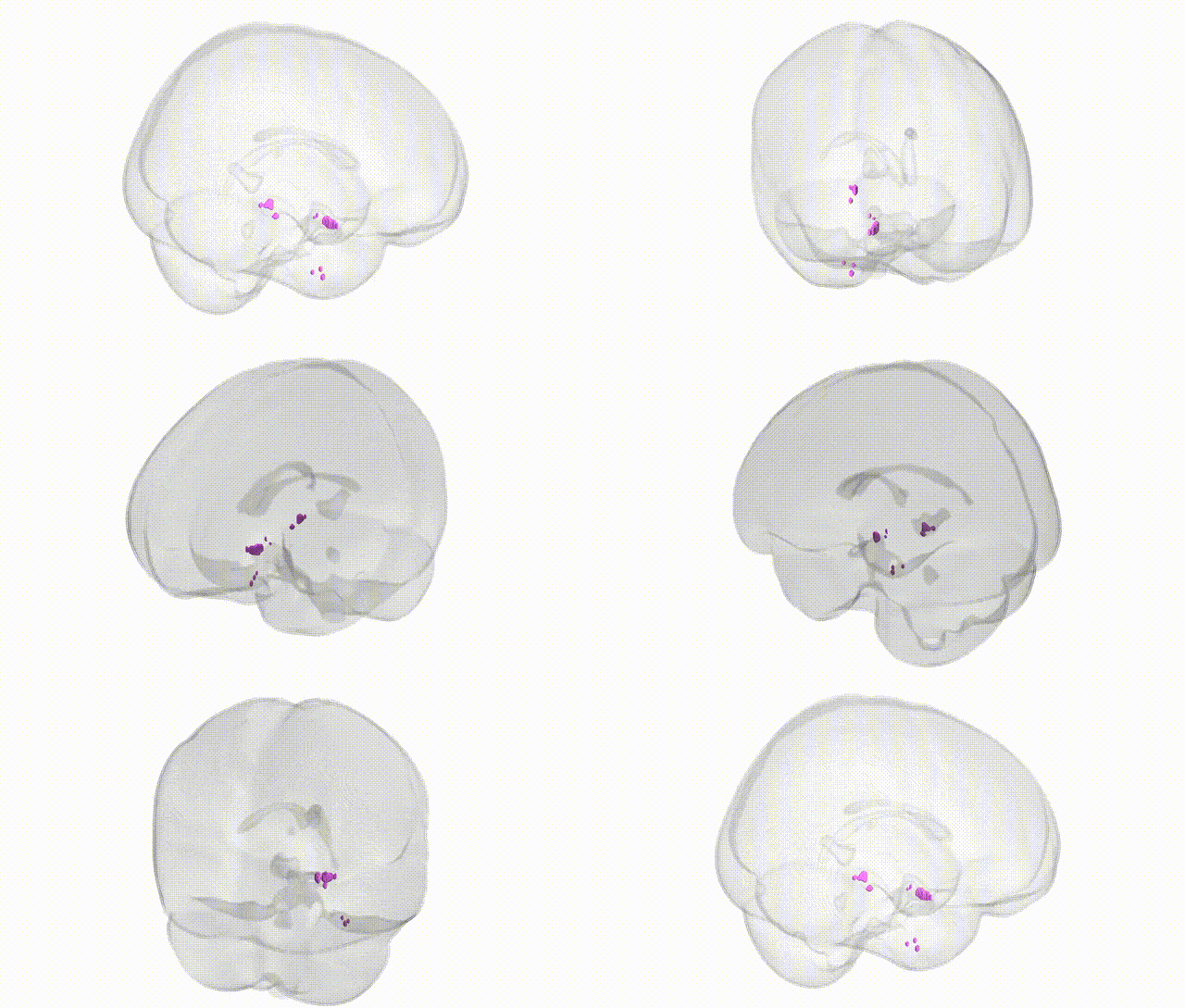
Full Quality Version: Download MP4
Wali Sidiqyar*, Gaurav Rudravaram*, Elyssa M. McMaster, Trent M. Schwartz, Adam M. Saunders, Kurt G. Schilling, Bennett A. Landman "Introducing SPINS: A Shared Public Visualization Library of Neuroanatomical Structures." Medical Imaging with Deep Learning- short paper
This resource is licensed under CC0 1.0 Universal (Public Domain).