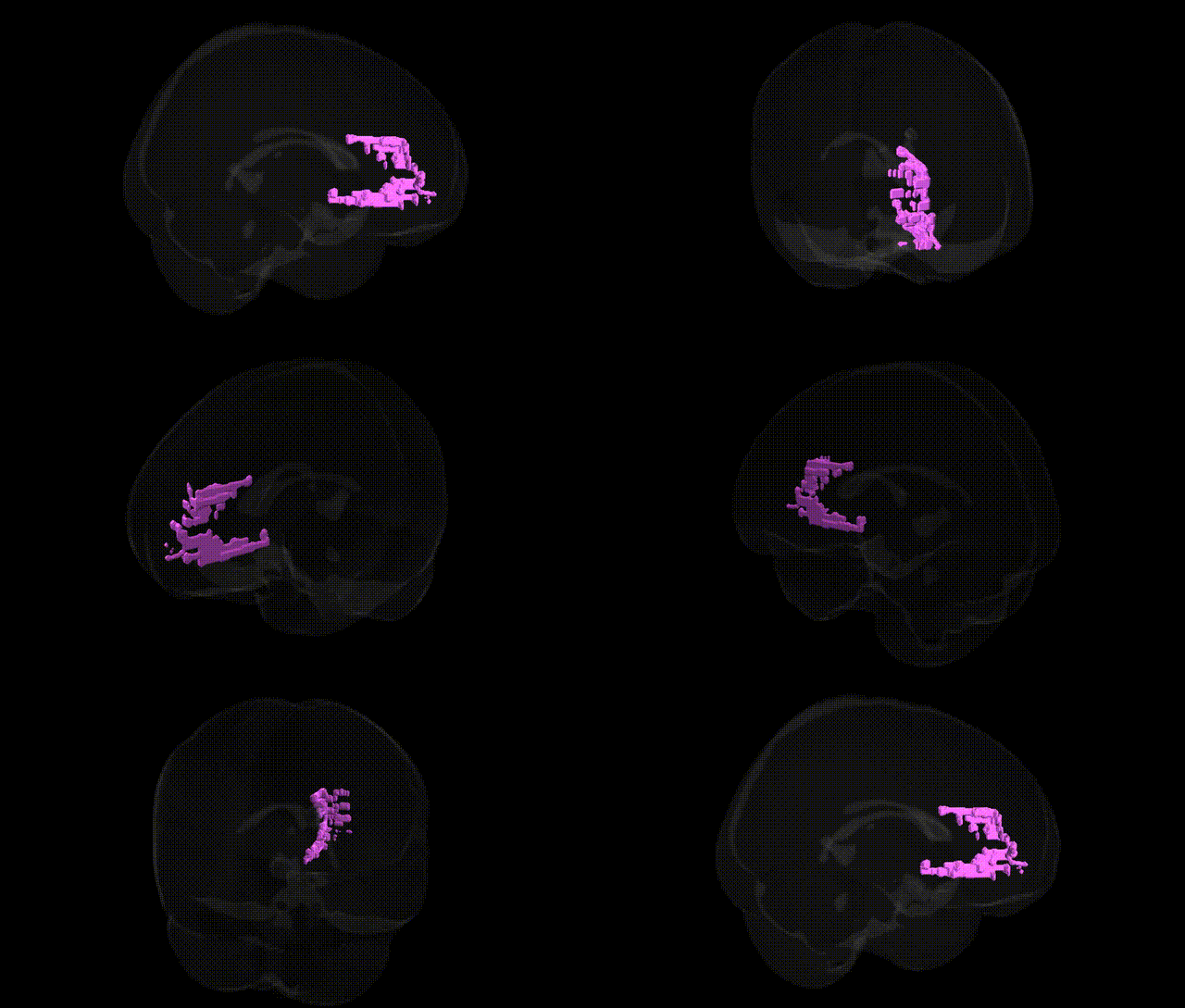
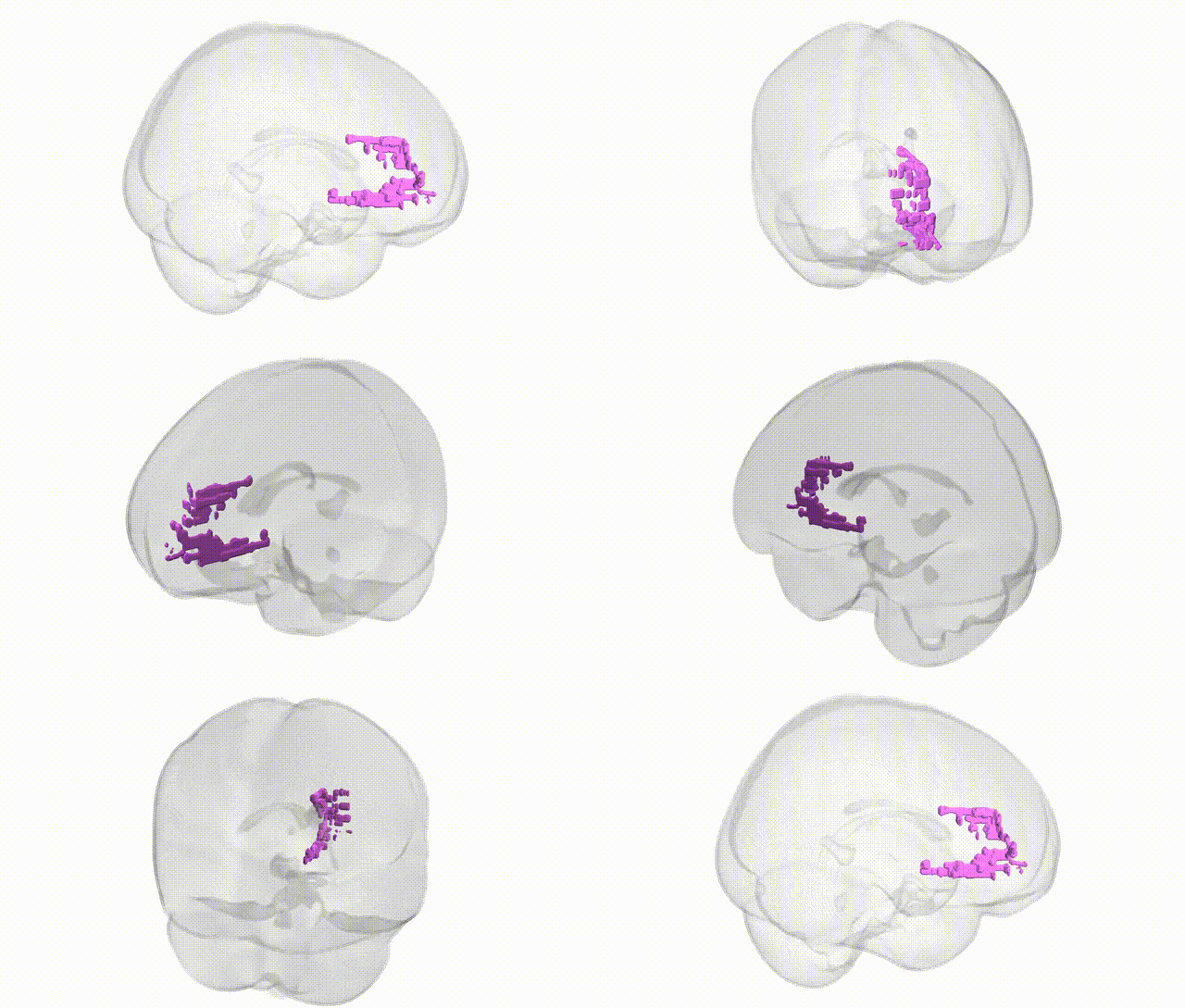
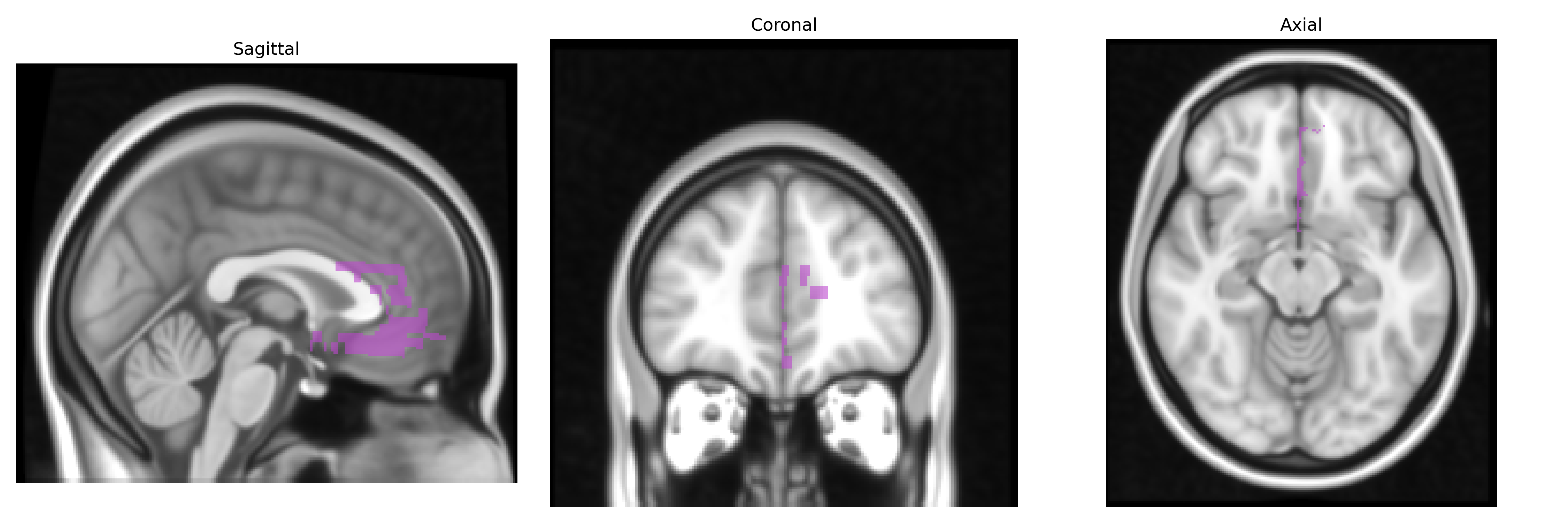
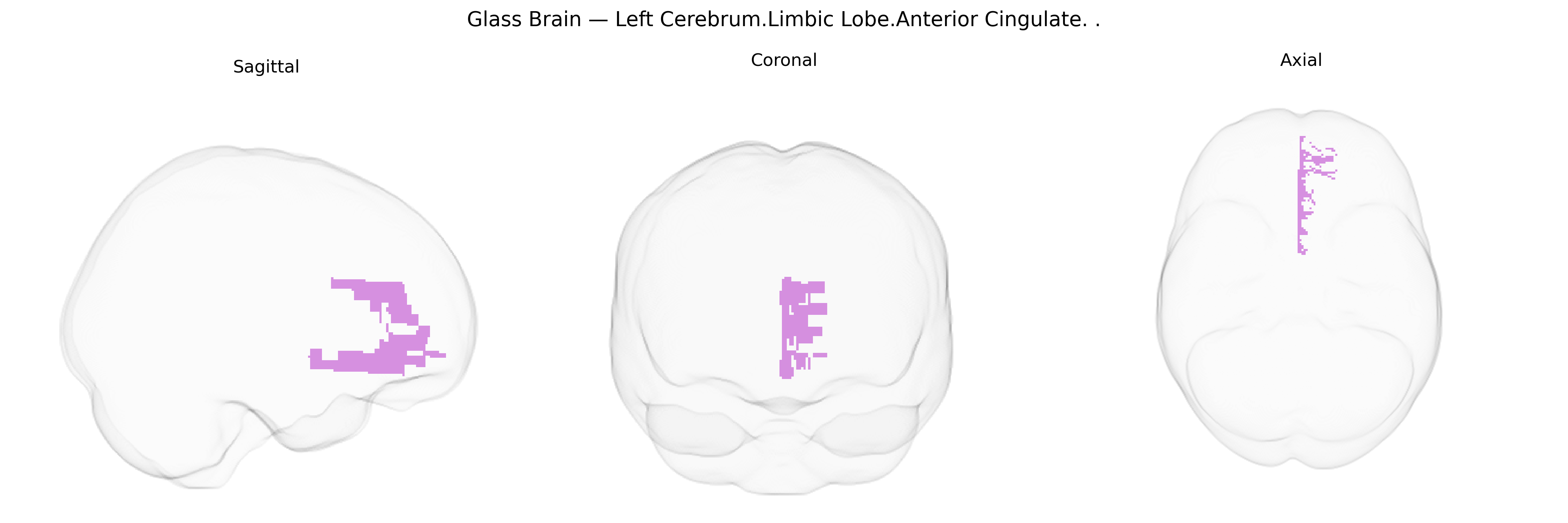
The bilateral Left Cerebrum.Limbic Lobe.Anterior Cingulate, as defined in the Talairach 1 mm atlas, corresponds to the anterior portion of the cingulate gyrus situated on the medial surface of the frontal lobe within the limbic system. This region arches above the corpus callosum and is involved in integrating cognitive, emotional, and autonomic processes, including error detection, conflict monitoring, motivation, and aspects of pain perception and affective regulation. Its extensive connections with prefrontal, limbic, and subcortical structures support roles in attention, decision-making, and modulation of emotional responses and autonomic output. Anterior cingulate cortex
The bilateral left anterior cingulate cortex (ACC) of the limbic lobe, corresponding to the Talairach “Left Cerebrum.Limbic Lobe.Anterior Cingulate” label, has been repeatedly implicated in genetic and GWAS-based studies of psychiatric, cognitive, and pain-related traits. Polygenic risk for major depressive disorder, schizophrenia, bipolar disorder, and anxiety disorders is associated with variation in ACC volume, thickness, and functional activation, with large imaging–genetics consortia (e.g., ENIGMA, UK Biobank) highlighting loci near genes involved in synaptic function (such as GRM3, CACNA1C, and NRGN) and neurodevelopment (e.g., ZNF804A) that relate to ACC structure and connectivity. GWAS of intracranial and regional cortical volumes have identified common variants in genes like HMGA2, IGF1, and others that influence global and frontal-limbic morphology, including ACC measures, while heritability analyses indicate substantial genetic control of ACC anatomy and its coupling with default mode and salience networks. Genetic variants associated with pain sensitivity and chronic pain (e.g., in COMT and OPRM1) and with attention and cognitive control traits (including ADHD risk loci) have been linked to altered ACC function or morphometry, consistent with the region’s role in affect regulation, error monitoring, and conflict processing. Together, these findings support the ACC as a key neuroanatomical hub through which polygenic liability for mood, psychotic, pain, and cognitive traits exerts structural and functional effects.
Overview generated by GPT-4o (2026).
Region ID: 372
Hemisphere: bilateral
Atlas: Talairach labels 1mm
Full Quality Version: Download MP4
Full Quality Version: Download MP4
Wali Sidiqyar*, Gaurav Rudravaram*, Elyssa M. McMaster, Trent M. Schwartz, Adam M. Saunders, Kurt G. Schilling, Bennett A. Landman "Introducing SPINS: A Shared Public Visualization Library of Neuroanatomical Structures." Medical Imaging with Deep Learning- short paper
This resource is licensed under CC0 1.0 Universal (Public Domain).