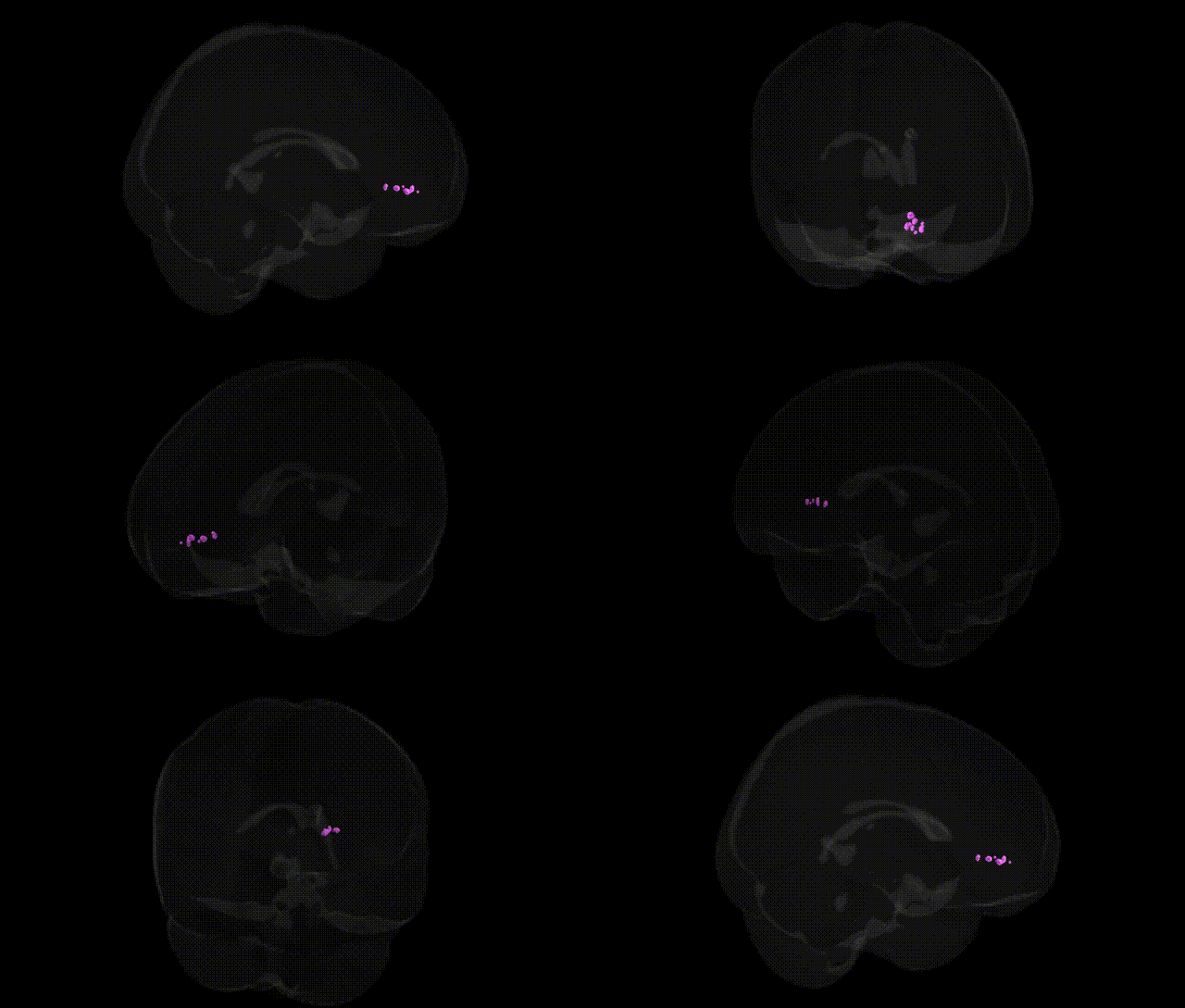
The bilateral Left Cerebrum.Limbic Lobe.Anterior Cingulate.Gray Matter corresponds to gray matter in the anterior portion of the cingulate gyrus, a key node of the limbic system situated on the medial surface of the frontal lobe, arching above the corpus callosum. This region participates in higher-order functions integrating emotion, cognition, autonomic regulation, and motor control, including error detection, conflict monitoring, decision-making, motivation, and aspects of pain and affective processing. Anterior cingulate gray matter shows rich connectivity with prefrontal, parietal, limbic, and subcortical structures (such as the amygdala and basal ganglia), supporting its role in attention, reward-based learning, and modulation of sympathetic and parasympathetic outflow.
The anterior cingulate cortex (ACC) gray matter of the left limbic lobe, as defined in the Talairach 1 mm atlas, has been repeatedly implicated in genetic studies of brain structure, cognition, and psychopathology. GWAS of cortical thickness and surface area (e.g., ENIGMA and UK Biobank consortia) have identified associations between ACC morphology and variants in genes involved in synaptic plasticity, neurodevelopment, and glutamatergic signaling, including loci near MEF2C, GRIN2A/GRIN2B, and genes in the Wnt and MAPK pathways. ACC gray matter measures show heritability and have been linked to polygenic scores for schizophrenia, major depressive disorder, bipolar disorder, and autism, often reflecting reduced volume or altered thickness in individuals with higher genetic risk. Risk variants in genes such as CACNA1C, ZNF804A, and those within the MHC region have been associated with ACC structural and functional alterations in imaging‑genetics studies of mood and psychotic disorders. GWAS of traits like pain sensitivity, anxiety, cognitive control, and emotion regulation have also pointed to ACC involvement, with common variants in serotonin (e.g., SLC6A4), dopamine (e.g., DRD2, COMT), and opioid system genes influencing ACC activation and, in some cases, gray matter characteristics. While specific bilateral left ACC coordinates from the Talairach atlas are not individually tagged in large GWAS, the broader anterior cingulate region consistently appears as a genetically modulated hub for affective processing, error monitoring, and self‑referential cognition in imaging‑genetic and polygenic risk studies.
Overview generated by GPT-4o (2026).
Region ID: 605
Hemisphere: bilateral
Atlas: Talairach labels 1mm
Full Quality Version: Download MP4
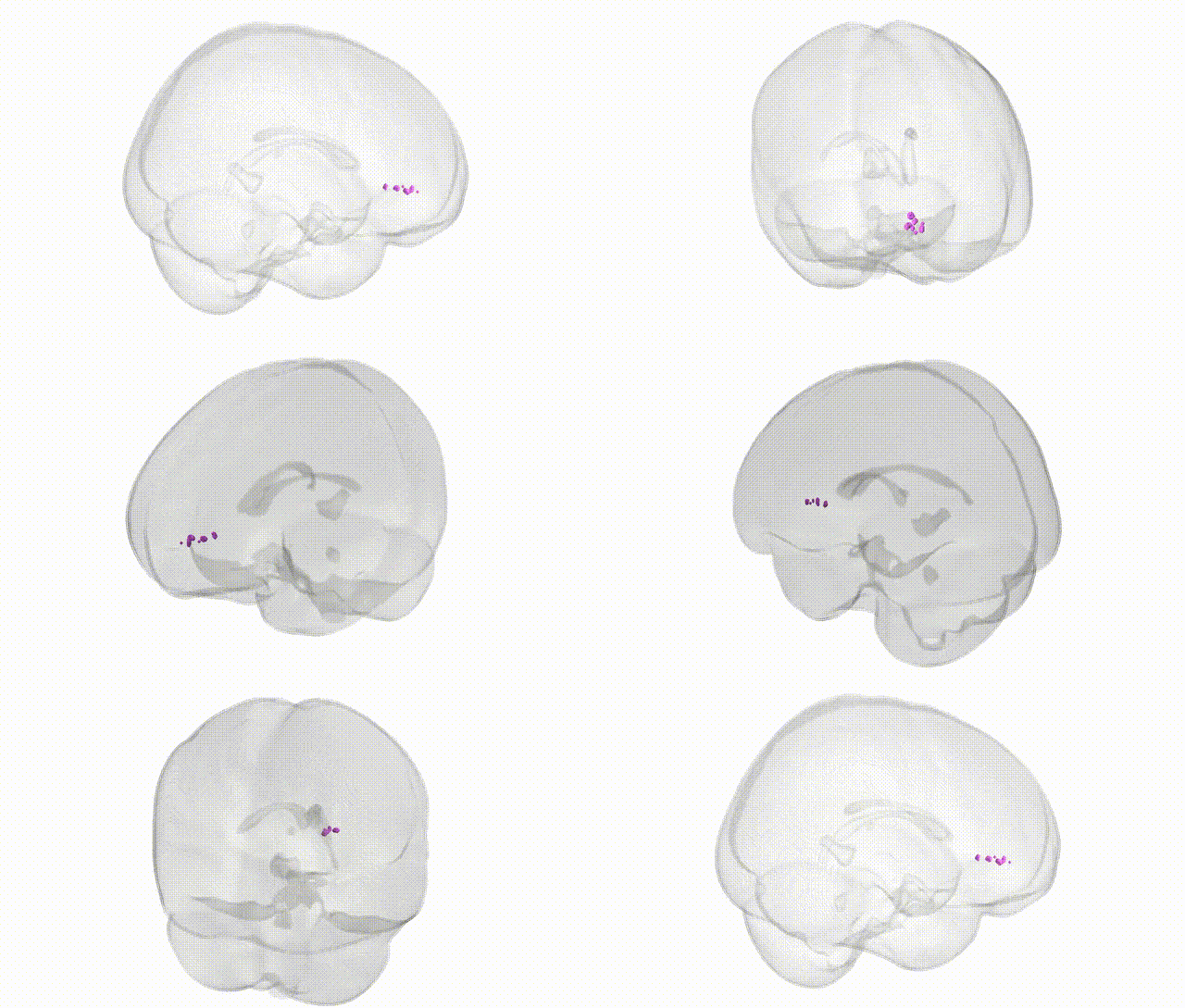
Full Quality Version: Download MP4
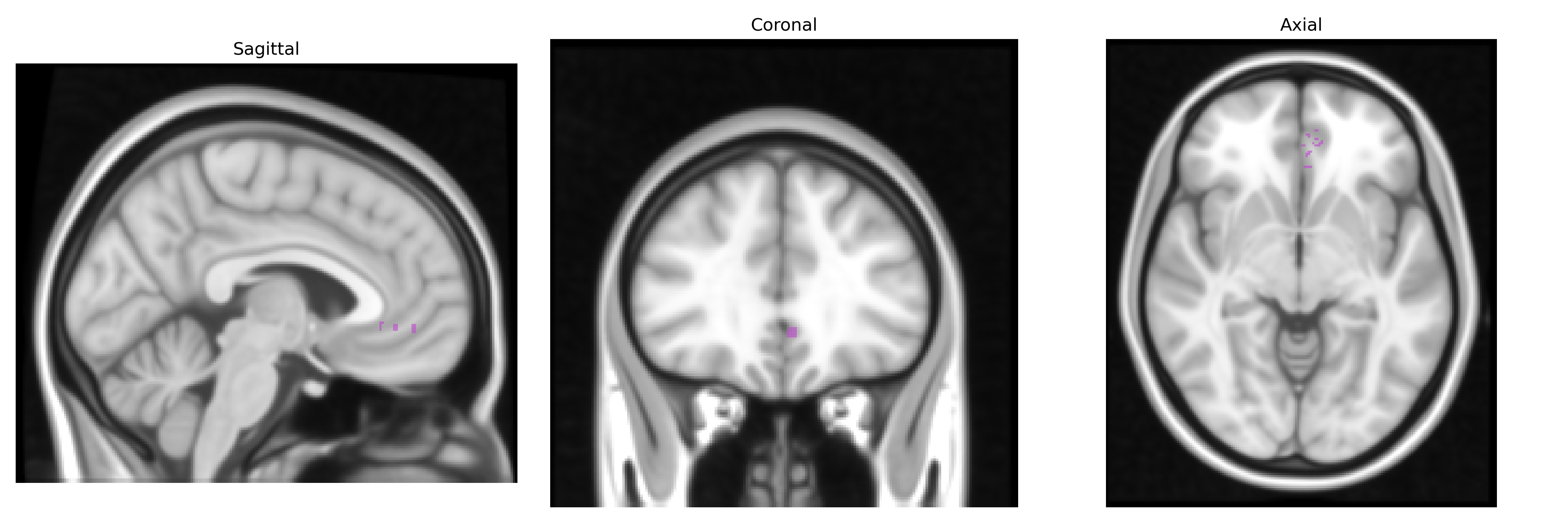
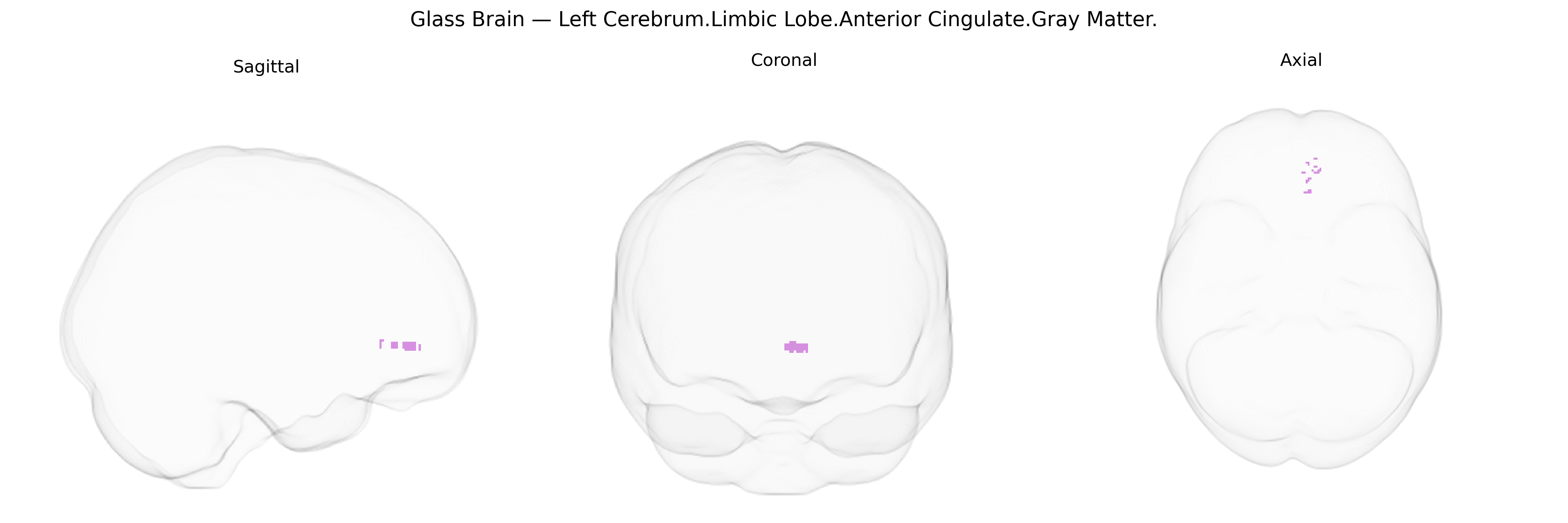
Wali Sidiqyar*, Gaurav Rudravaram*, Elyssa M. McMaster, Trent M. Schwartz, Adam M. Saunders, Kurt G. Schilling, Bennett A. Landman "Introducing SPINS: A Shared Public Visualization Library of Neuroanatomical Structures." Medical Imaging with Deep Learning- short paper
This resource is licensed under CC0 1.0 Universal (Public Domain).