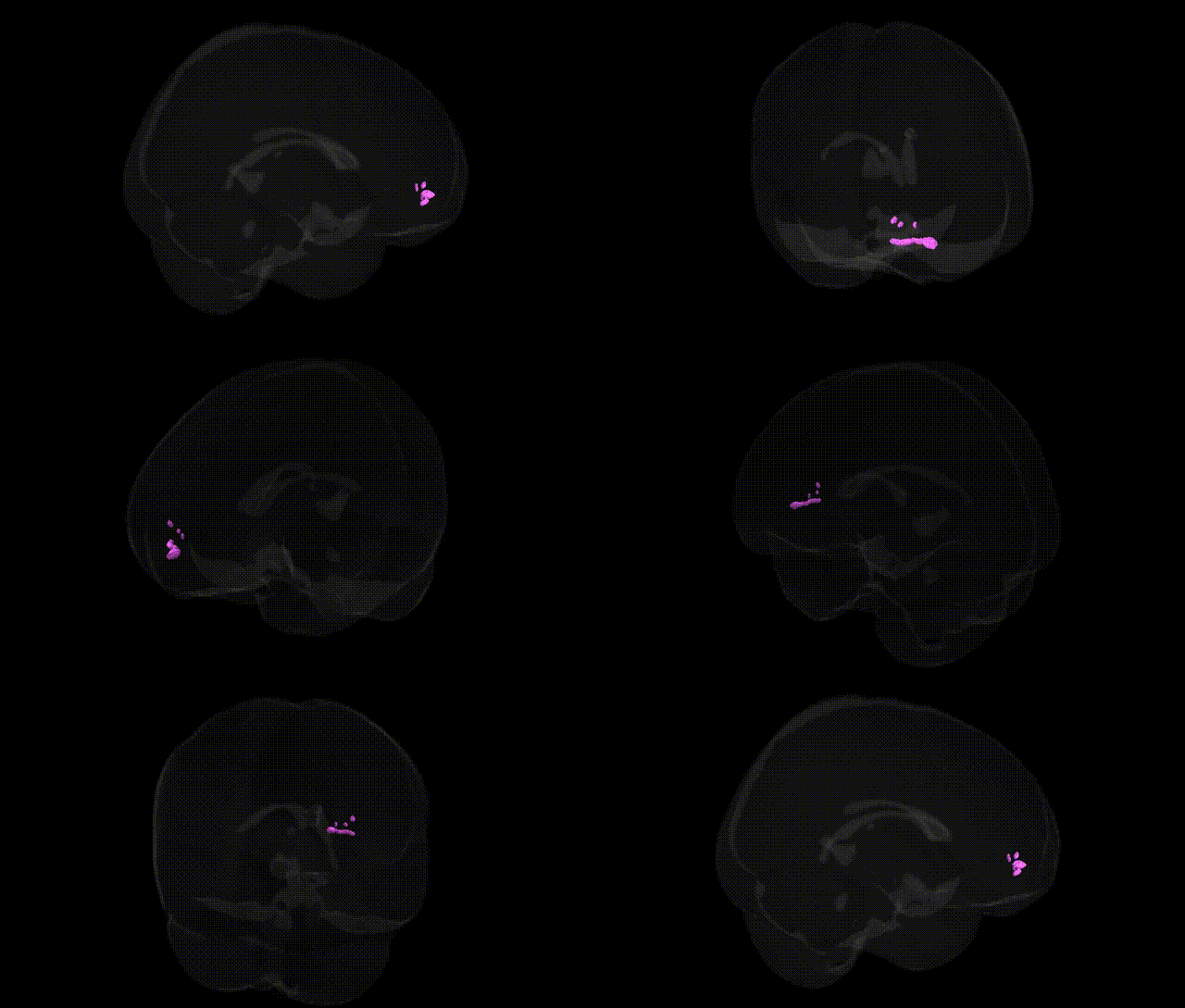
The bilateral Left Cerebrum.Limbic Lobe.Anterior Cingulate.Gray Matter.Brodmann area 10 (BA10) region, as labeled in the Talairach 1 mm Atlas, corresponds to a rostral/anterior extension of cingulate gray matter into the most frontal portions of the medial prefrontal cortex, functionally bridging limbic and higher-order associative territories. Although BA10 is classically associated with the frontal pole, in this labeling scheme its anterior cingulate component reflects integration of emotional, motivational, and evaluative processing with complex, prospective, and introspective cognitive functions such as planning, social cognition, and mentalizing. Histologically, BA10 is a highly developed granular prefrontal field with dense reciprocal connections to other prefrontal, limbic (including cingulate and hippocampal formations), and thalamic nuclei, supporting roles in regulating attention, decision-making under uncertainty, and the contextual modulation of autonomic and affective responses. There is no direct Wikipedia article for this specific Talairach-defined subregion; a closely related structure is the Brodmann area 10.
The bilateral anterior cingulate cortex (ACC) in Brodmann area 10, part of the limbic system and medial prefrontal network, has been repeatedly implicated in genetic studies of cognition, emotion regulation, and psychiatric risk, although most GWAS map variants to circuits including but not limited specifically to BA10. Large-scale GWAS of major depressive disorder, anxiety, bipolar disorder, schizophrenia, and ADHD identify risk loci in genes affecting synaptic plasticity, glutamatergic and GABAergic signaling, and neurodevelopment (for example, CACNA1C, GRIN2A, DRD2, and genes within the MHC region), with neuroimaging–genetics work showing that risk alleles modulate ACC/mPFC gray matter volume and functional activation during conflict monitoring, reward processing, and emotional appraisal. Polygenic risk scores for depression, schizophrenia, and bipolar disorder correlate with altered ACC thickness and connectivity, and variants in serotonin transporter (SLC6A4) and COMT have been linked to individual differences in ACC activation and morphology in tasks tapping cognitive control and affective processing. GWAS of cognitive traits (education, general intelligence, executive function) and personality dimensions such as neuroticism also point to frontal–limbic networks that include BA10, with risk alleles associated with structural and functional variation in this region. In addition, imaging–genetics studies link common variants in BDNF and genes influencing myelination and cortical development to ACC gray matter characteristics, and pain, addiction, and obsessive–compulsive–related GWAS highlight fronto-limbic circuits where ACC/BA10 plays a central role, suggesting that genetic influences on this region contribute broadly to vulnerability for mood, psychotic, anxiety, and impulse-control disorders as well as to normal variation in cognitive control and emotional traits.
Overview generated by GPT-4o (2026).
Region ID: 405
Hemisphere: bilateral
Atlas: Talairach labels 1mm
Full Quality Version: Download MP4
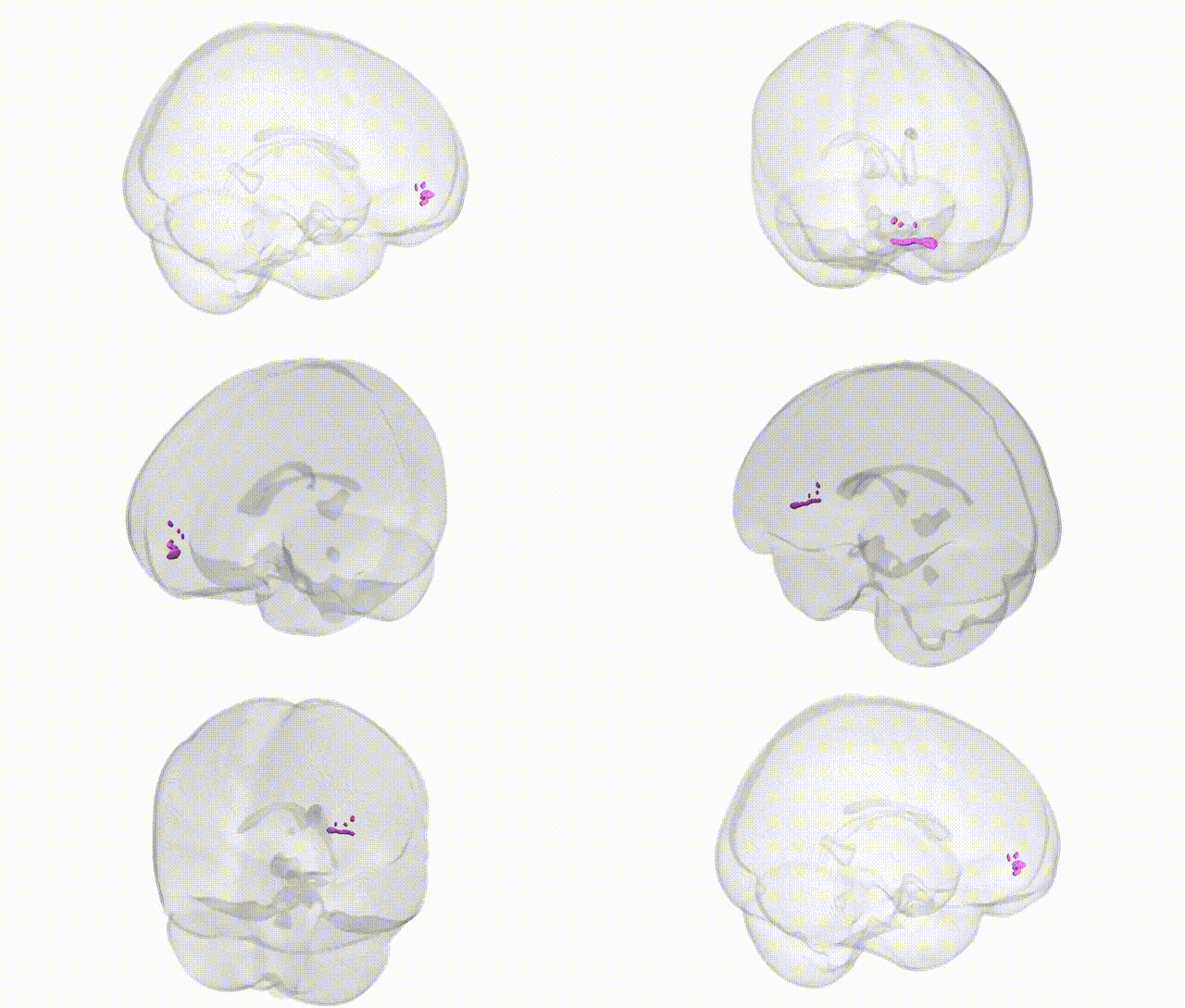
Full Quality Version: Download MP4
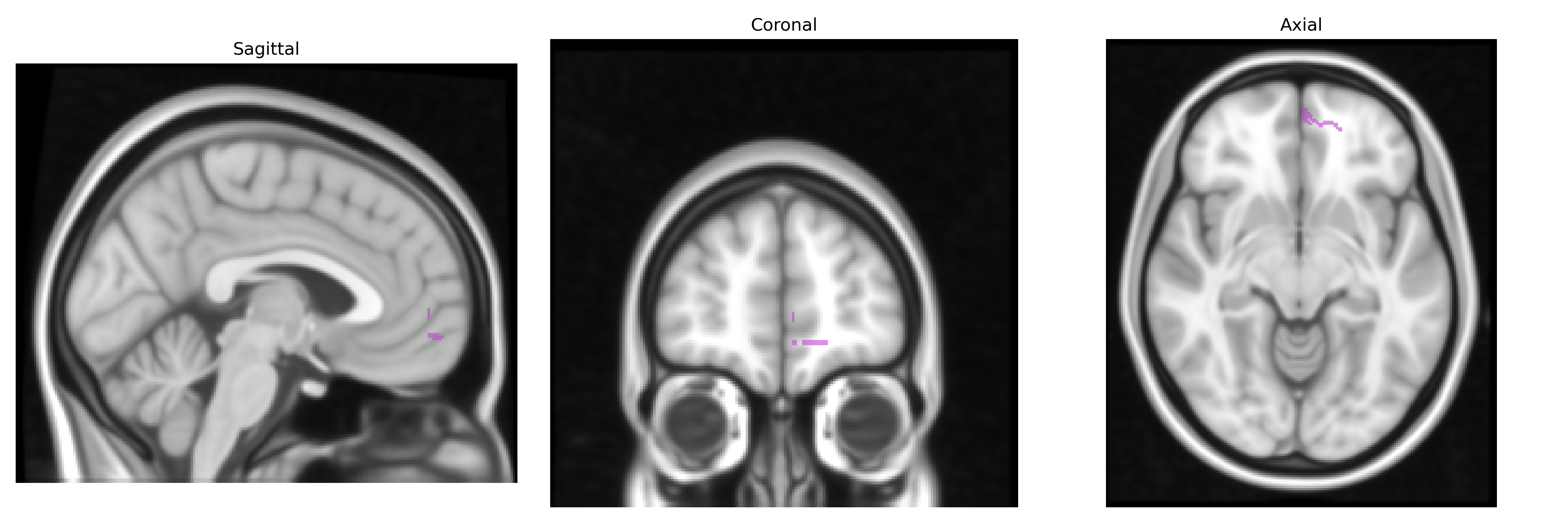
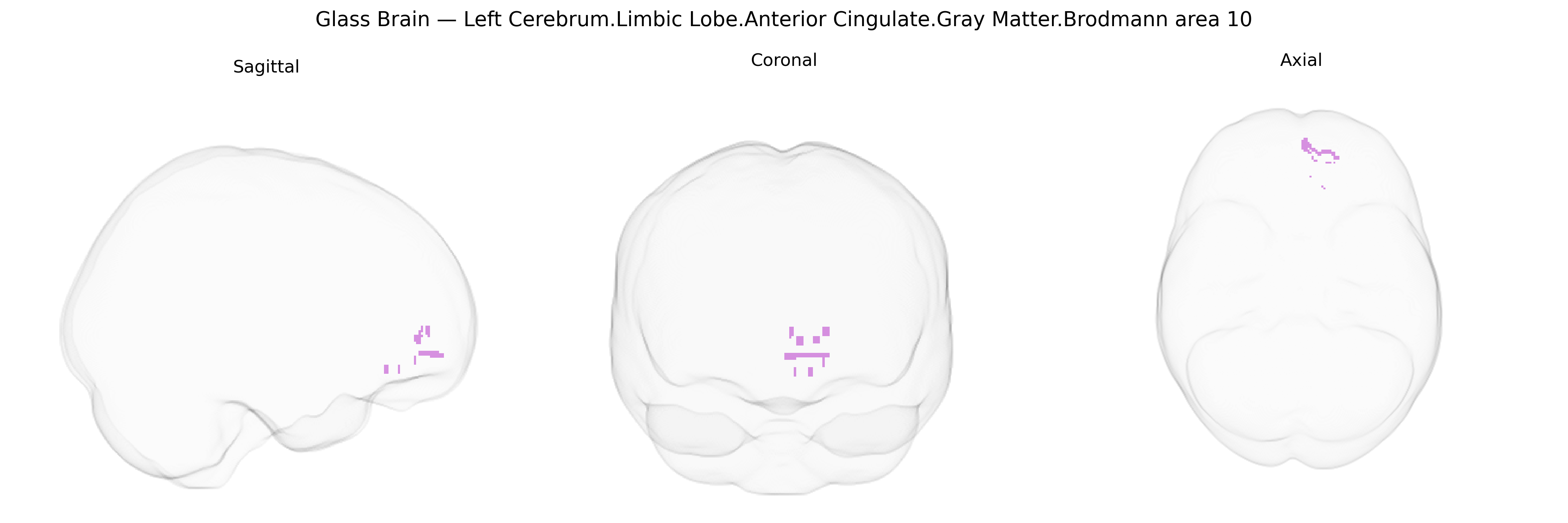
Wali Sidiqyar*, Gaurav Rudravaram*, Elyssa M. McMaster, Trent M. Schwartz, Adam M. Saunders, Kurt G. Schilling, Bennett A. Landman "Introducing SPINS: A Shared Public Visualization Library of Neuroanatomical Structures." Medical Imaging with Deep Learning- short paper
This resource is licensed under CC0 1.0 Universal (Public Domain).