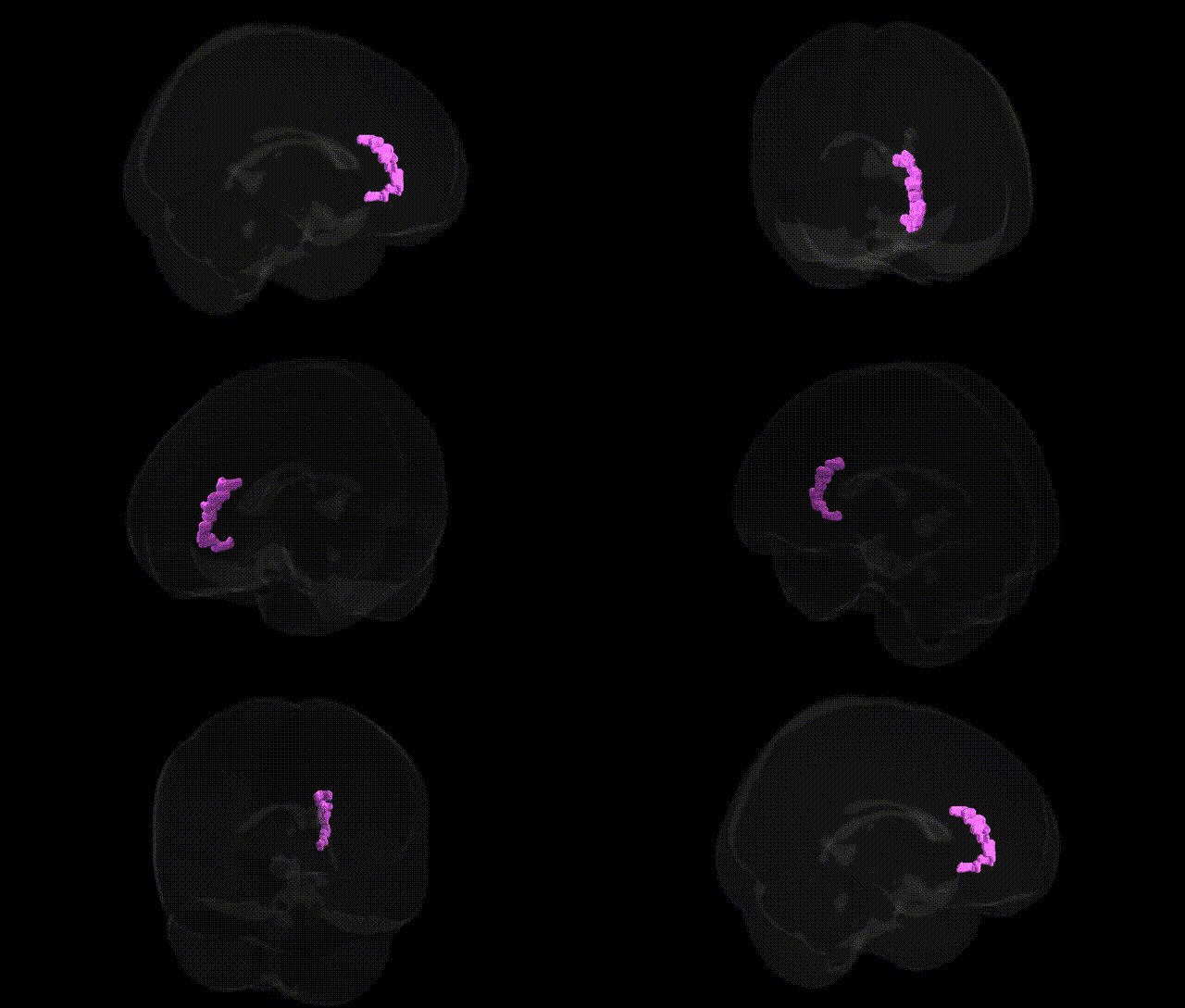
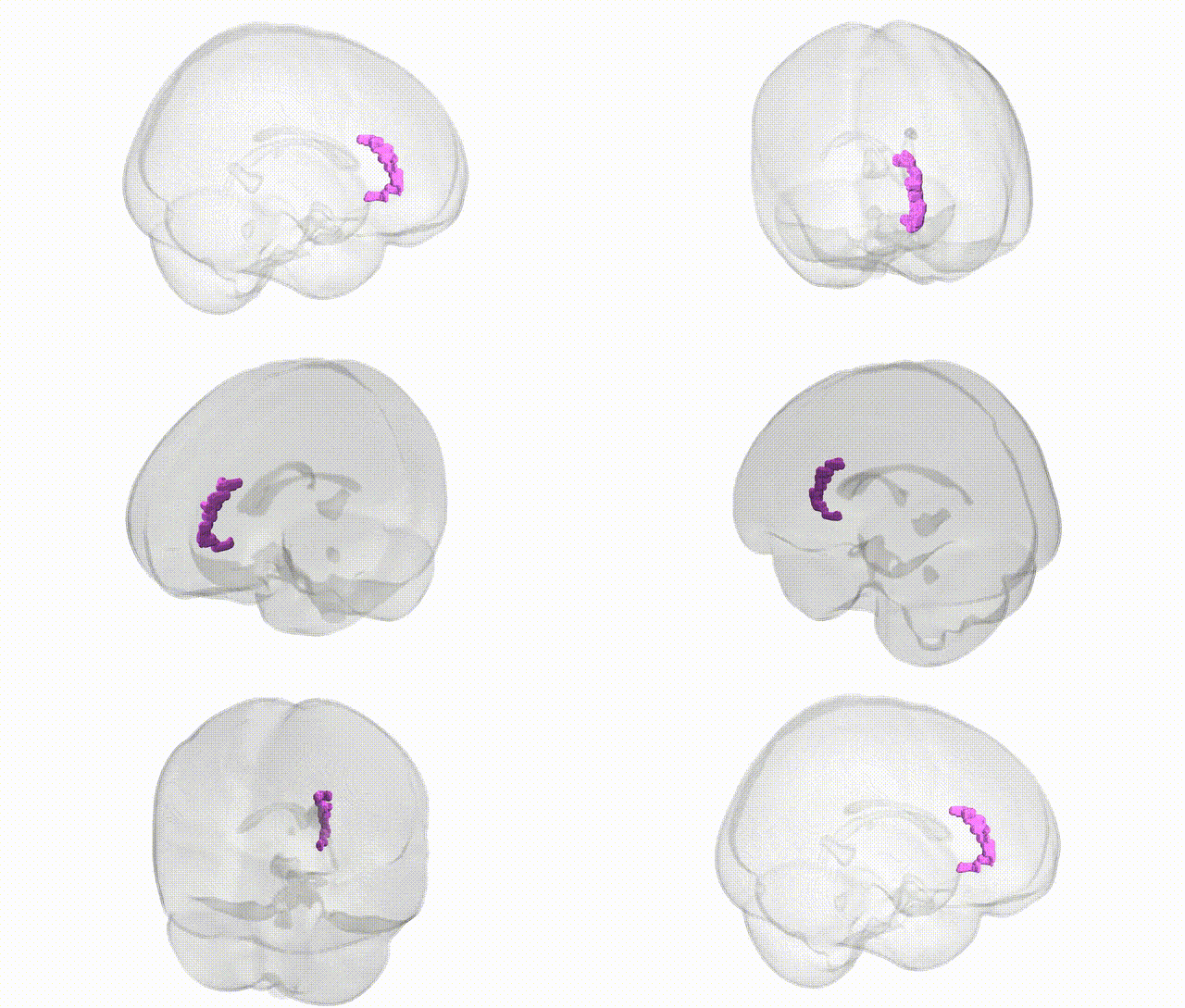
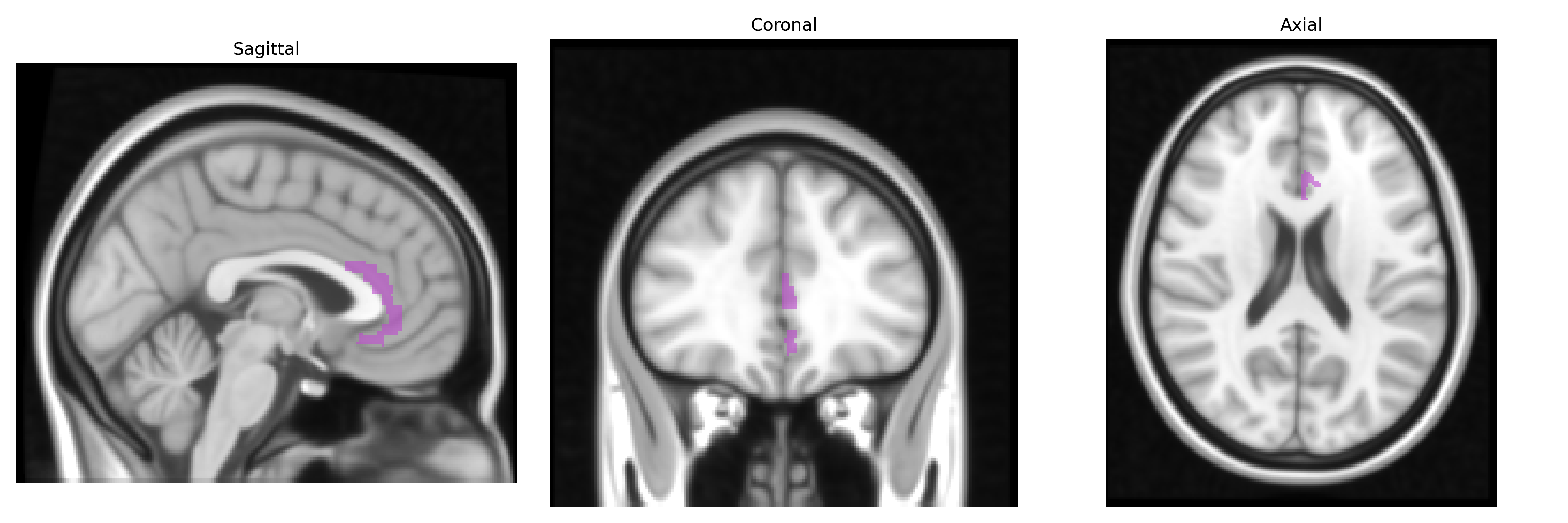
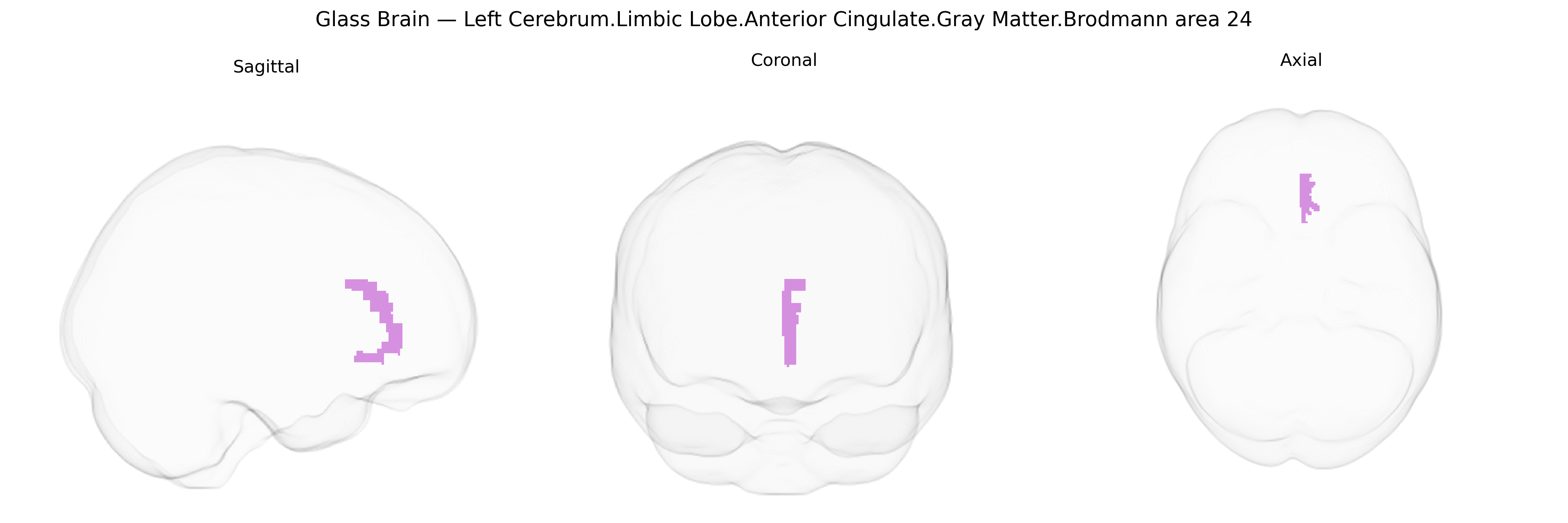
The bilateral Left Cerebrum.Limbic Lobe.Anterior Cingulate.Gray Matter.Brodmann area 24 corresponds to a cytoarchitectonic field within the anterior cingulate cortex (ACC), located on the medial surface of the frontal lobe, arching above the corpus callosum within the limbic lobe. Brodmann area 24 is characterized by agranular cortex and dense connections with prefrontal, premotor, limbic, and subcortical structures, including the amygdala, nucleus accumbens, and autonomic brainstem nuclei. Functionally, this region is implicated in affective processing, conflict monitoring, cognitive control, error detection, pain perception, and modulation of autonomic responses, integrating emotional and cognitive information to guide motivated behavior and decision making. It plays a central role in mood regulation and is frequently implicated in neuropsychiatric conditions such as depression, anxiety, and disorders of impulse control.
The bilateral left anterior cingulate cortex (ACC; limbic lobe, Brodmann area 24) has been repeatedly implicated in imaging genetics and GWAS of brain structure and function, as well as in risk for neuropsychiatric and behavioral traits. Common variants in genes regulating monoaminergic transmission (e.g., SLC6A4, DRD2, COMT), glutamatergic signaling (e.g., GRIN2B), and neurotrophic factors (e.g., BDNF) have been associated with ACC gray matter volume, cortical thickness, or activity, while large-scale ENIGMA and UK Biobank–based GWAS have identified multiple loci (such as in or near genes like HMGA2, IGF1, and others related to neurodevelopment and synaptic function) that influence cingulate cortical morphology, though these effects are often shared across broader frontal and cingulate regions rather than being specific to BA24. Genetically informed studies link ACC structure and activation to major depressive disorder, anxiety disorders, bipolar disorder, schizophrenia, post-traumatic stress disorder, obsessive–compulsive disorder, and attention-deficit/hyperactivity disorder, as well as to traits such as neuroticism, harm avoidance, impulsivity, pain sensitivity, and cognitive control, with polygenic risk scores for schizophrenia and depression showing associations with reduced or altered ACC metrics. In addition, risk variants in immune- and myelination-related genes (e.g., MHC region loci, genes implicated in microglial function) have been associated with ACC abnormalities in psychotic and mood disorders, and ACC measures partly mediate genetic effects on treatment response (for example, to antidepressants) and on outcomes such as suicidality and substance use. Overall, genetic influences on this Talairach-defined BA24 region are highly polygenic and pleiotropic, reflecting shared genetic architectures across limbic–frontal circuits that support emotion regulation, conflict monitoring, and salience processing.
Overview generated by GPT-4o (2026).
Region ID: 469
Hemisphere: bilateral
Atlas: Talairach labels 1mm
Full Quality Version: Download MP4
Full Quality Version: Download MP4
Wali Sidiqyar*, Gaurav Rudravaram*, Elyssa M. McMaster, Trent M. Schwartz, Adam M. Saunders, Kurt G. Schilling, Bennett A. Landman "Introducing SPINS: A Shared Public Visualization Library of Neuroanatomical Structures." Medical Imaging with Deep Learning- short paper
This resource is licensed under CC0 1.0 Universal (Public Domain).