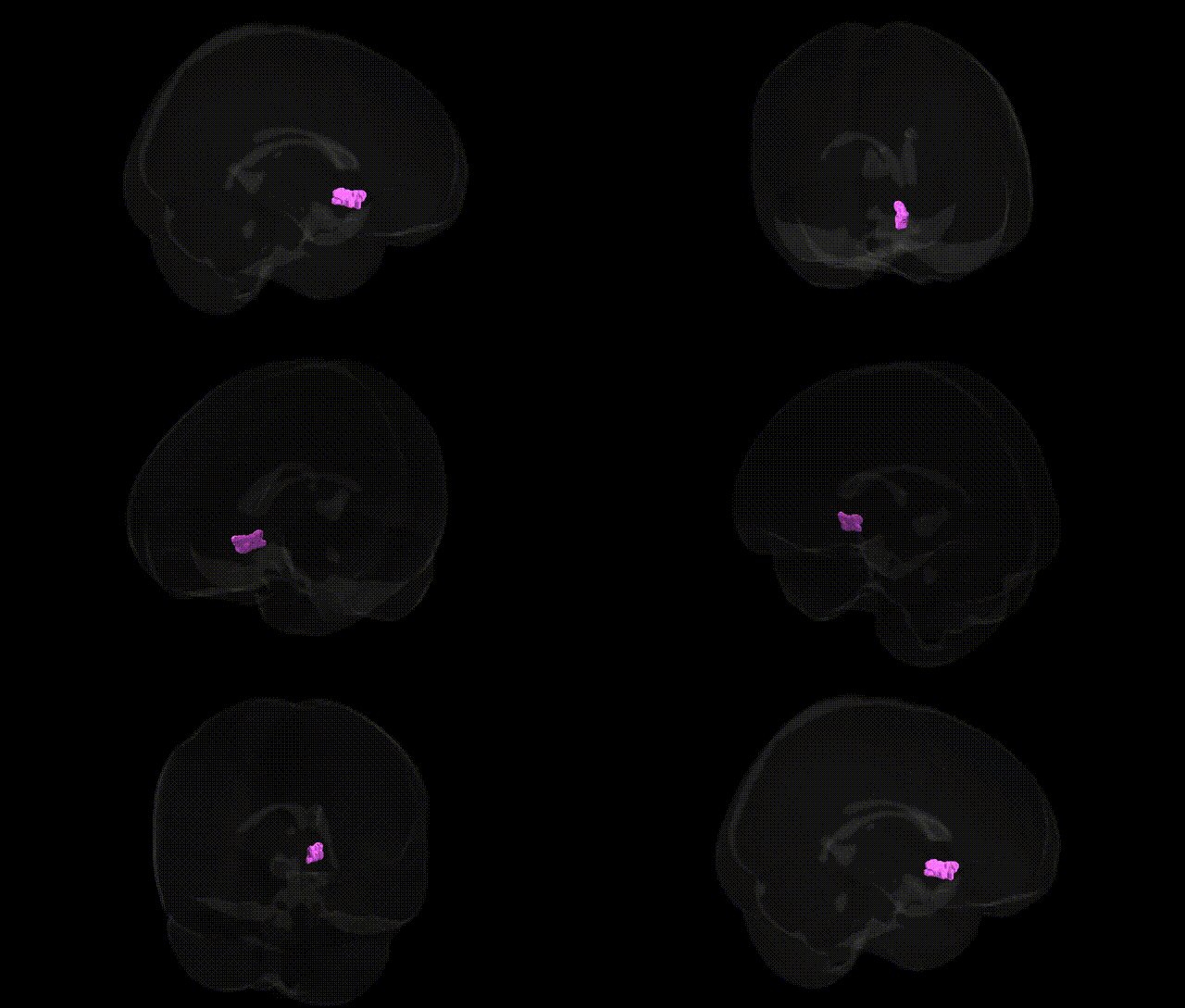
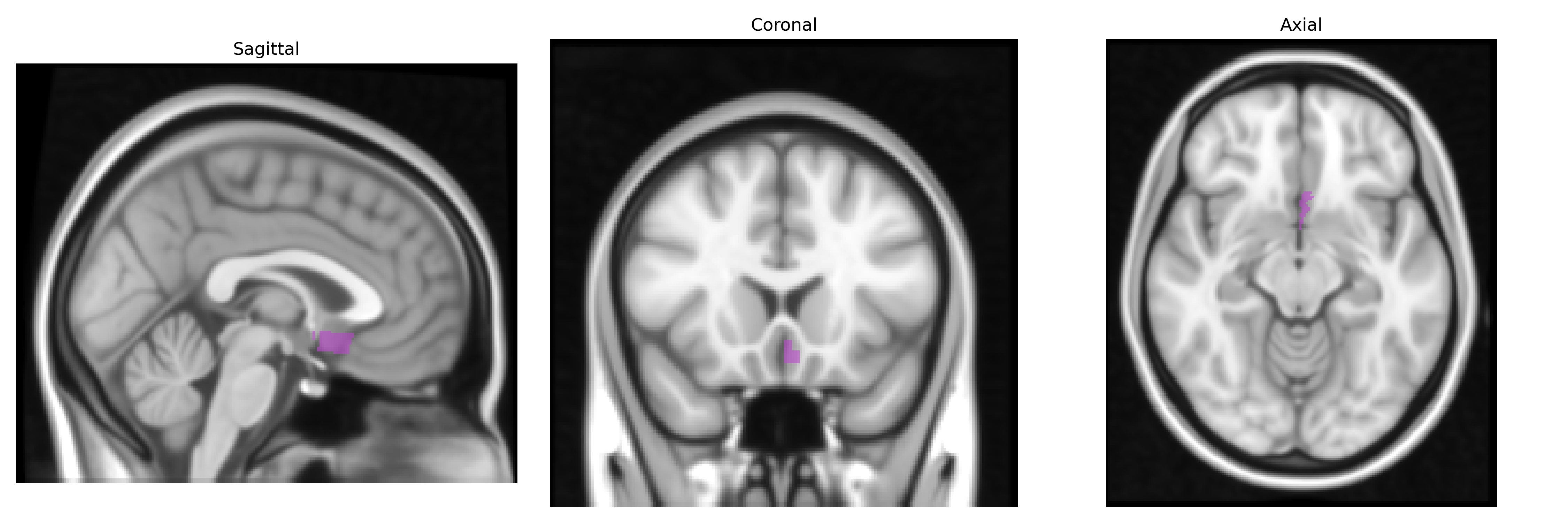
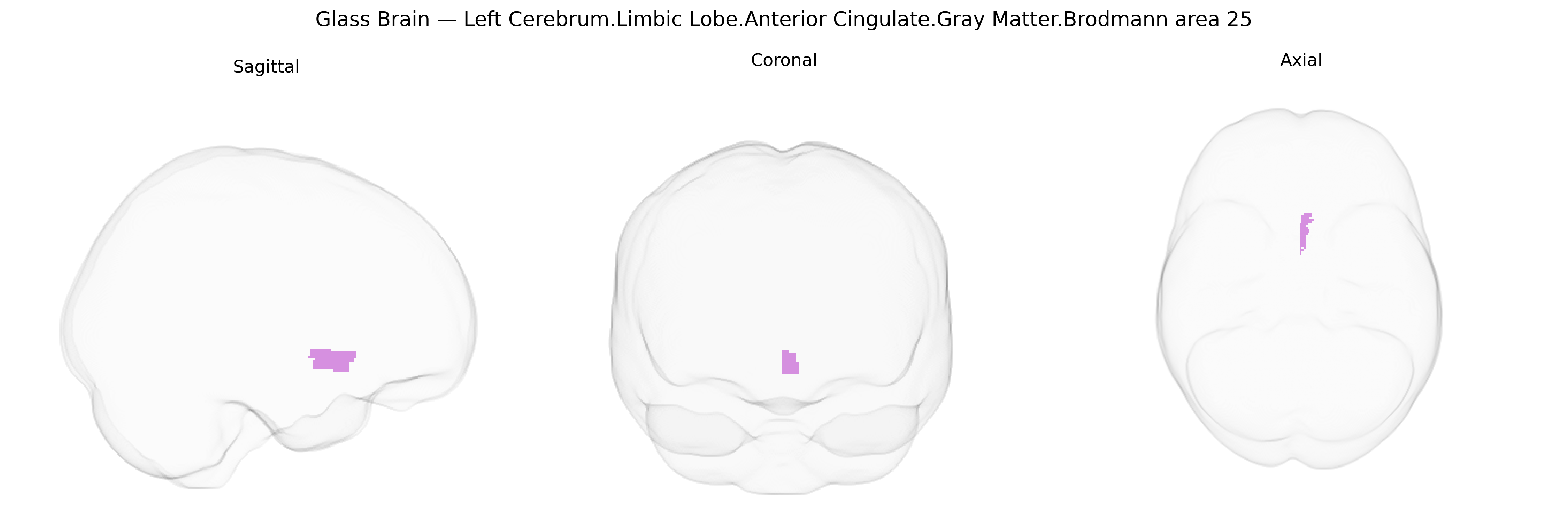
The bilateral Left Cerebrum Limbic Lobe Anterior Cingulate Gray Matter Brodmann area 25 corresponds to a small, ventral portion of the anterior cingulate cortex located beneath the genu of the corpus callosum, often referred to as the subgenual cingulate cortex. This region is part of the limbic system and is heavily interconnected with the hypothalamus, amygdala, hippocampal formation, ventromedial prefrontal cortex, and brainstem autonomic nuclei, supporting roles in affective processing, visceral-autonomic regulation, and mood-related behavior. Brodmann area 25 has been strongly implicated in the pathophysiology of major depressive disorder and treatment-resistant depression, and serves as a key target for deep brain stimulation and other neuromodulatory interventions in psychiatric research. There is no direct link for this exact label; a closely related structure is the Subgenual anterior cingulate cortex.
The bilateral anterior cingulate cortex (ACC) in Brodmann area 25—often described as subgenual or ventral ACC—has been implicated in multiple genetic and genome‑wide association studies linking structural and functional variation in this region to psychiatric and neurobehavioral traits. Common variants in serotonergic (e.g., SLC6A4/5‑HTTLPR) and glutamatergic genes, as well as CACNA1C, BDNF, and COMT, have been associated with ACC gray matter volume, cortical thickness, and activity in tasks involving emotion regulation and cognitive control. Large‑scale GWAS of major depressive disorder, bipolar disorder, and schizophrenia have identified risk loci (for example in CACNA1C, ODZ4, and other synaptic or calcium-channel genes) whose carriers show altered ACC structure or connectivity on imaging‑genetics analyses, and BA25 specifically has been highlighted in treatment‑resistant depression and response to deep brain stimulation. Imaging GWAS from consortia such as ENIGMA and UK Biobank have linked polygenic risk scores for depression, anxiety, neuroticism, and schizophrenia to ACC morphology and functional coupling with limbic regions, while genes related to inflammatory pathways and HPA‑axis regulation show more modest associations with ACC metabolic activity and stress reactivity. Overall, convergent genetic evidence supports a role for BA25/ACC as a key node through which polygenic risk for mood and psychotic disorders, as well as personality traits like neuroticism and harm avoidance, manifests in altered limbic network structure and function.
Overview generated by GPT-4o (2026).
Region ID: 380
Hemisphere: bilateral
Atlas: Talairach labels 1mm
Full Quality Version: Download MP4
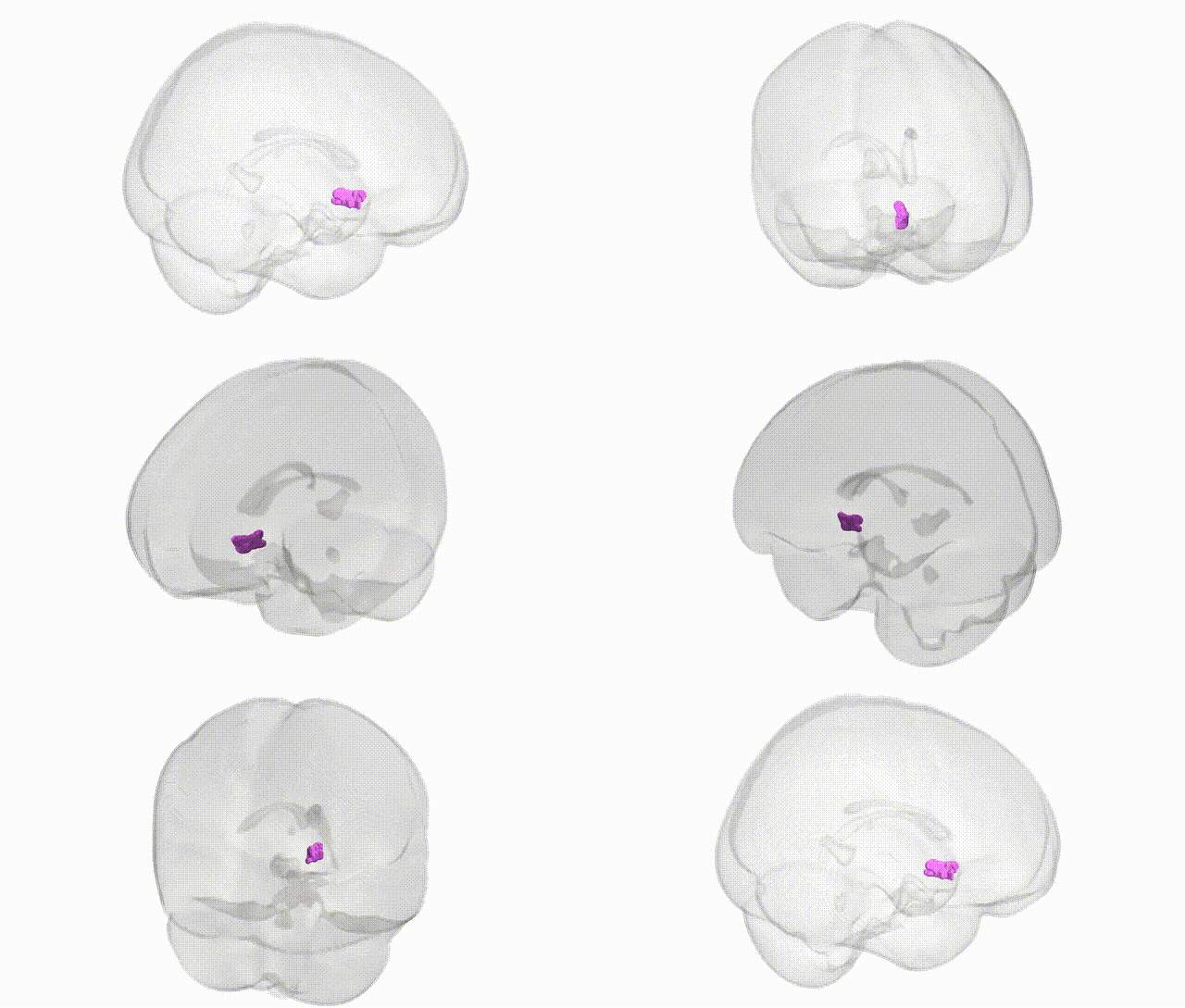
Full Quality Version: Download MP4
Wali Sidiqyar*, Gaurav Rudravaram*, Elyssa M. McMaster, Trent M. Schwartz, Adam M. Saunders, Kurt G. Schilling, Bennett A. Landman "Introducing SPINS: A Shared Public Visualization Library of Neuroanatomical Structures." Medical Imaging with Deep Learning- short paper
This resource is licensed under CC0 1.0 Universal (Public Domain).