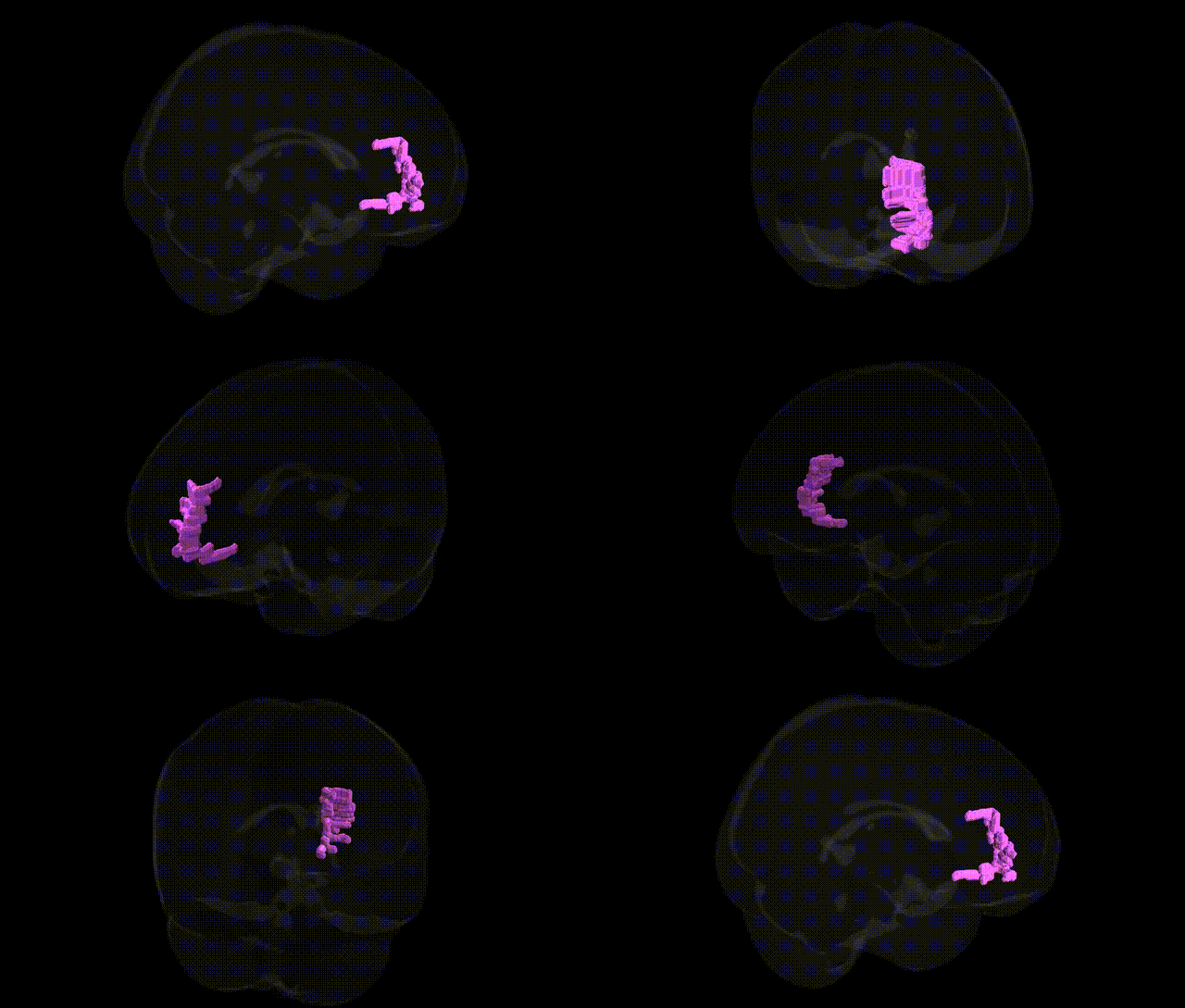
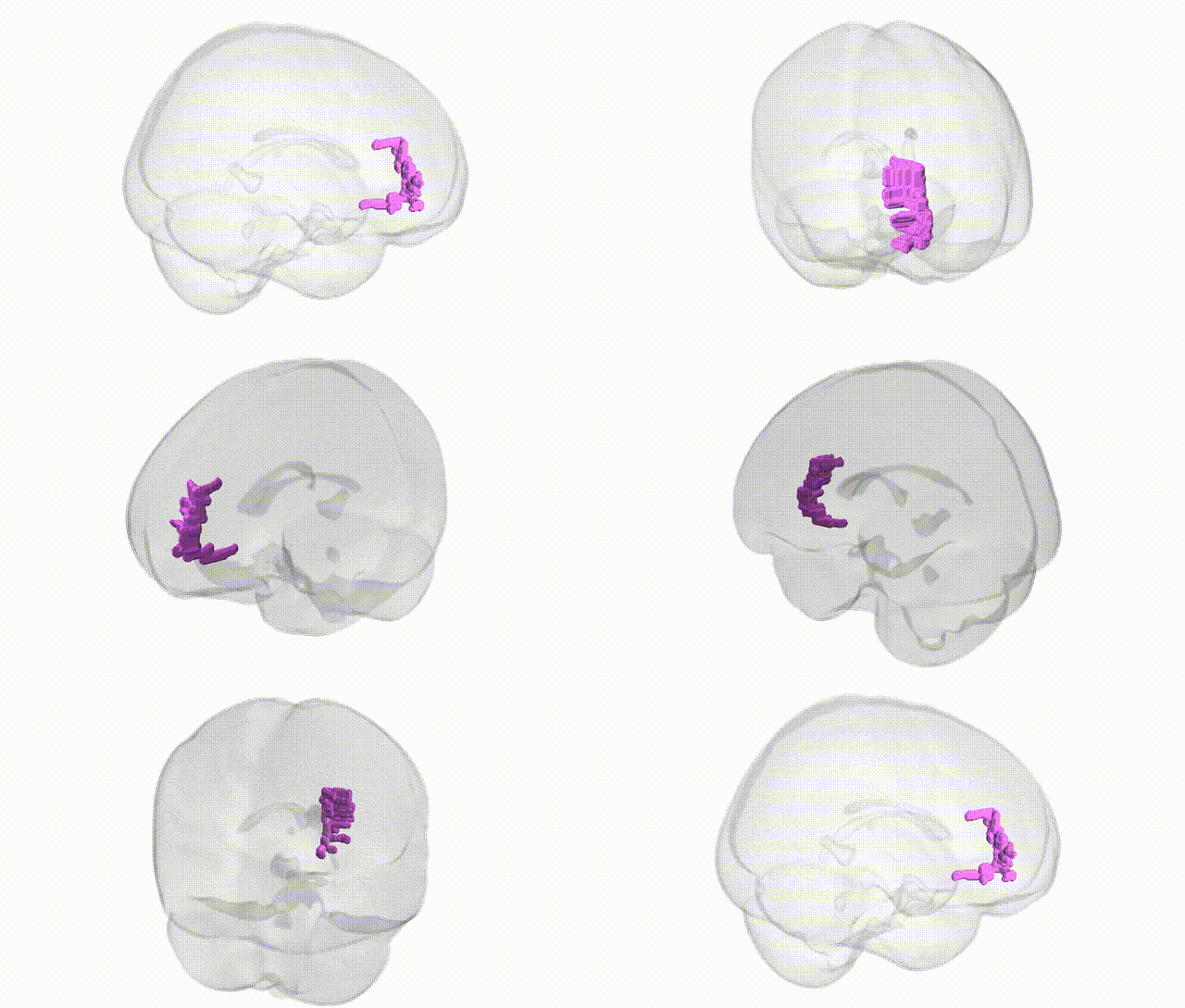
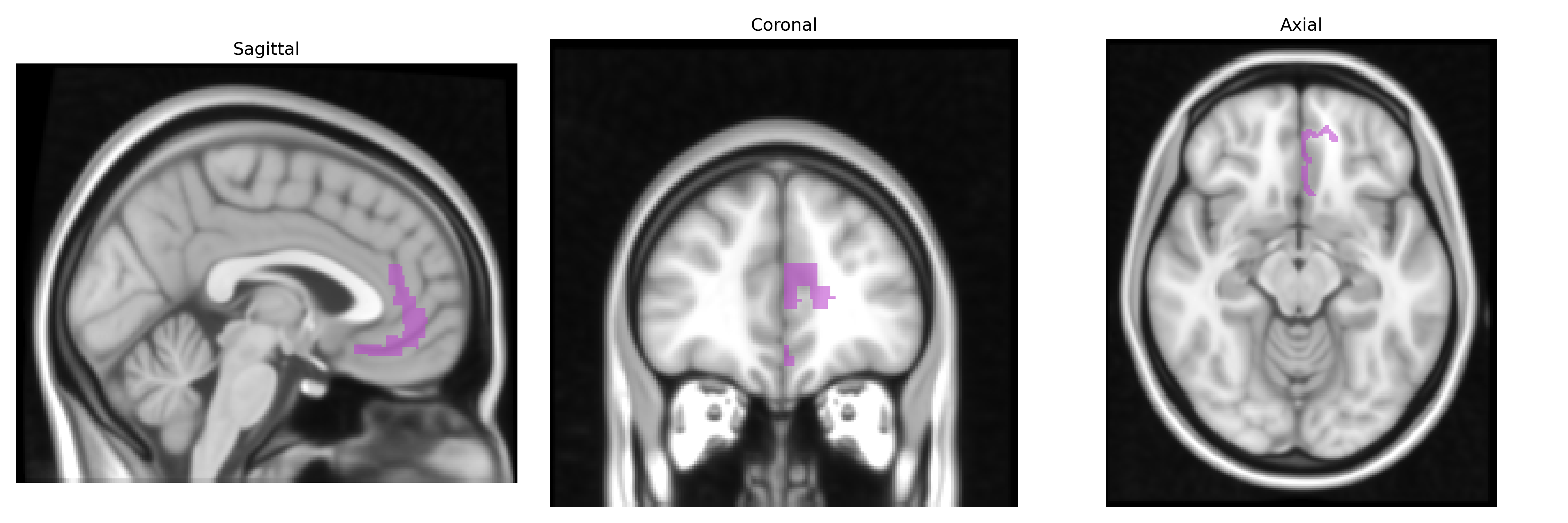
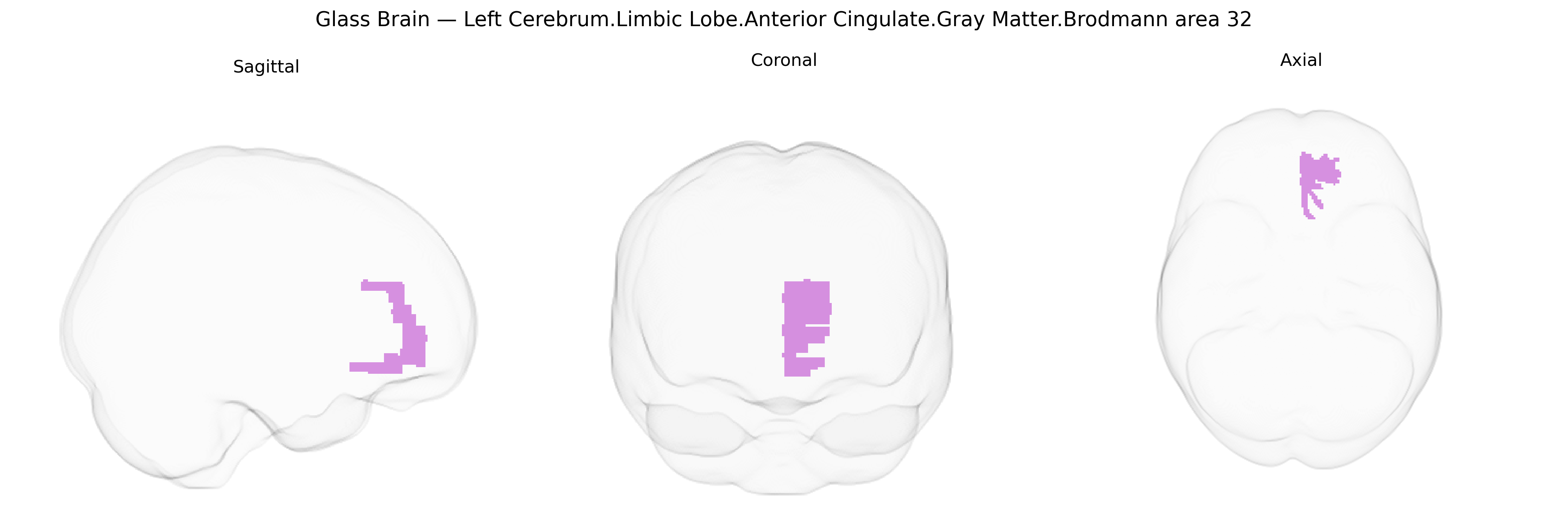
The bilateral Left Cerebrum.Limbic Lobe.Anterior Cingulate.Gray Matter.Brodmann area 32 corresponds to a medial prefrontal component of the anterior cingulate cortex (ACC), forming part of the limbic lobe and involved in higher-order integration of emotion, cognition, and autonomic regulation. Cytoarchitectonically defined as Brodmann area 32, this region lies dorsal to the genu of the corpus callosum along the cingulate gyrus and overlaps with medial prefrontal cortex territories that participate in monitoring internal states, conflict detection, decision-making, and regulation of affective responses. Functionally, it is implicated in cognitive control, error processing, motivation, and aspects of social and self-referential cognition, and is interconnected with other limbic, prefrontal, and subcortical structures, including the amygdala, thalamus, and basal ganglia. There is no direct link for Brodmann area 32, but it is a subregion of the Anterior cingulate cortex.
The bilateral anterior cingulate cortex (ACC), particularly Brodmann area 32 in the limbic lobe of the left cerebrum, has been repeatedly implicated in genetic studies of psychiatric, cognitive, and pain-related phenotypes, though GWAS typically reference ACC structure or function rather than this atlas label specifically. Large-scale neuroimaging GWAS have identified common variants influencing ACC cortical thickness and surface area, including loci near genes involved in synaptic function, neurodevelopment, and myelination (for example, variants in or near genes such as DCC, MECP2, and GRIN2B have been associated with cingulate morphology or connectivity in some cohorts). In psychiatric genetics, polygenic risk scores and individual variants linked to major depressive disorder (e.g., in SLC6A4, CACNA1C), schizophrenia (e.g., ZNF804A, NRG1), bipolar disorder, and anxiety disorders have been associated with ACC volume, activation, or connectivity in imaging–genetics studies, suggesting the ACC as a key mediator of genetic risk on emotion regulation and cognitive control. GWAS and candidate-gene studies of pain sensitivity, chronic pain, and placebo analgesia have implicated ACC-related networks, with variants in dopaminergic and opioid system genes (such as OPRM1 and COMT) influencing ACC response to pain and reward. ACC structure and function, including BA32, have also been linked through imaging–genetic work to traits such as impulsivity, cognitive control, treatment response in depression, and susceptibility to stress, although most findings are polygenic, modest in effect size, and not specific to a single Brodmann area, reflecting distributed genetic influences on limbic–prefrontal circuits.
Overview generated by GPT-4o (2026).
Region ID: 395
Hemisphere: bilateral
Atlas: Talairach labels 1mm
Full Quality Version: Download MP4
Full Quality Version: Download MP4
Wali Sidiqyar*, Gaurav Rudravaram*, Elyssa M. McMaster, Trent M. Schwartz, Adam M. Saunders, Kurt G. Schilling, Bennett A. Landman "Introducing SPINS: A Shared Public Visualization Library of Neuroanatomical Structures." Medical Imaging with Deep Learning- short paper
This resource is licensed under CC0 1.0 Universal (Public Domain).