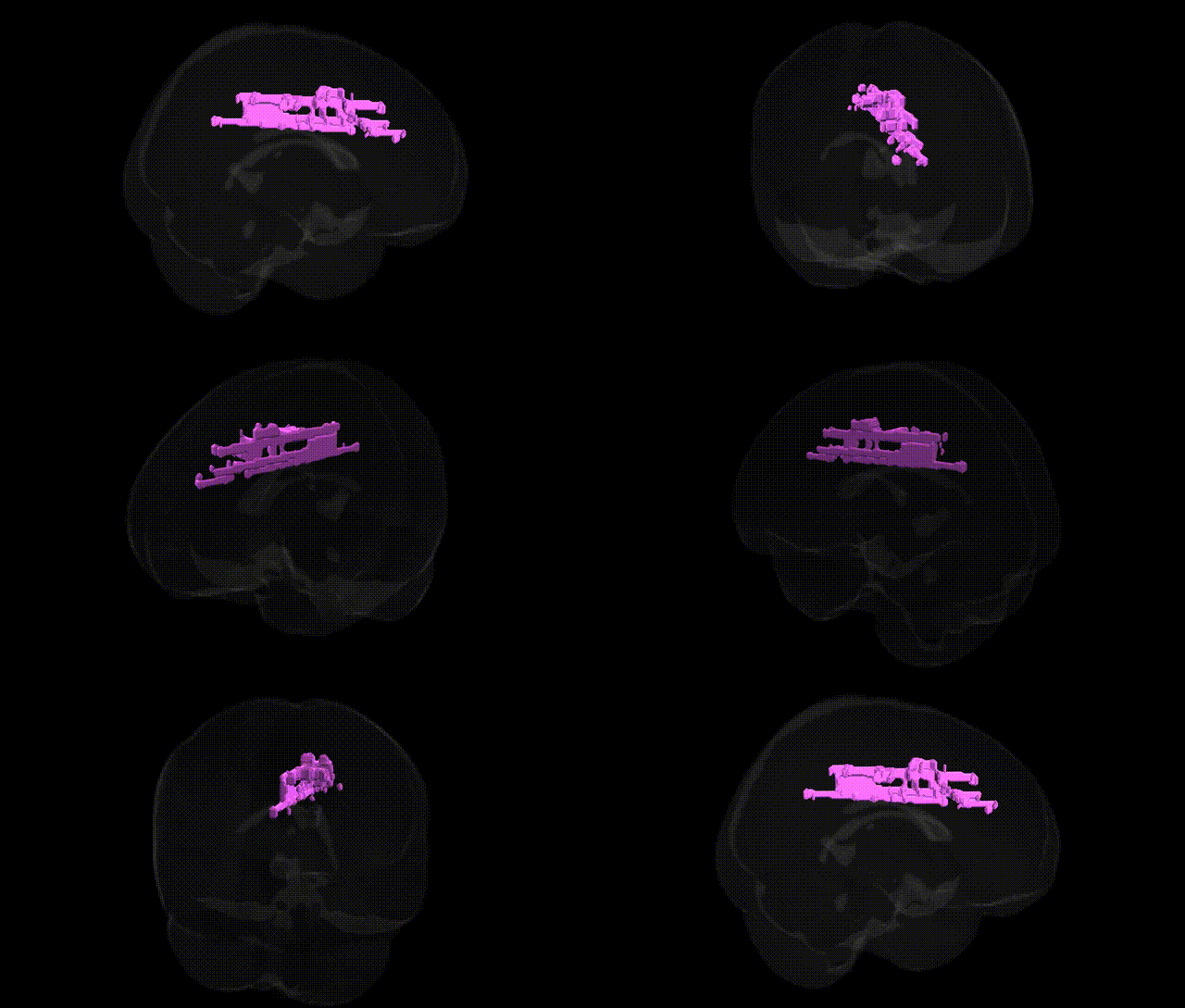
The bilateral Left Cerebrum.Limbic Lobe.Cingulate Gyrus is a medial cortical structure arching above the corpus callosum, forming a major component of the limbic lobe and extending from the subcallosal area anteriorly to the isthmus and parahippocampal region posteriorly. It is cytoarchitectonically heterogeneous, including anterior, mid, and posterior portions, each associated with partially distinct functions, such as emotional processing, autonomic regulation, pain perception, cognitive control, and integration of motivational and attentional demands. The cingulate gyrus forms extensive reciprocal connections with the prefrontal cortex, hippocampal formation, thalamus, and other limbic structures, supporting roles in learning, memory, conflict monitoring, error detection, and modulation of affective states. Cingulate gyrus
The bilateral left cingulate gyrus in the limbic lobe has been repeatedly implicated in genetic and GWAS-based studies of psychiatric, cognitive, and pain-related traits, with many associations emerging from imaging–genetics work using structural or functional measures rather than direct Talairach-based labels. Variants in genes affecting synaptic function, neurodevelopment, and myelination (for example, in pathways involving glutamatergic signaling and axon guidance) have been linked to cingulate thickness, surface area, and activation patterns, and large neuroimaging GWAS (e.g., ENIGMA, UK Biobank) report heritable variation in anterior and mid-cingulate morphology tied to polygenic risk scores for major depressive disorder, schizophrenia, bipolar disorder, ADHD, and autism spectrum conditions. Cingulate structure and function show genetic correlations with traits such as neuroticism, cognitive performance, risk-taking, chronic pain, and stress reactivity, and specific loci near genes like DRD2, GRIN2A, and CACNA1C have been associated with both psychiatric diagnoses and cingulate volume or activity. Genetic studies of pain sensitivity and chronic pain syndromes have highlighted the cingulate as a key heritable node in nociceptive and affective pain networks, while alleles influencing fronto-limbic connectivity and default mode network activity also map onto cingulate metrics. Overall, the cingulate gyrus serves as a genetically influenced hub linking limbic, cognitive control, and pain systems, with many risk variants for mood, psychotic, and pain disorders exerting part of their effect through this region’s structure and function.
Overview generated by GPT-4o (2026).
Region ID: 912
Hemisphere: bilateral
Atlas: Talairach labels 1mm
Full Quality Version: Download MP4
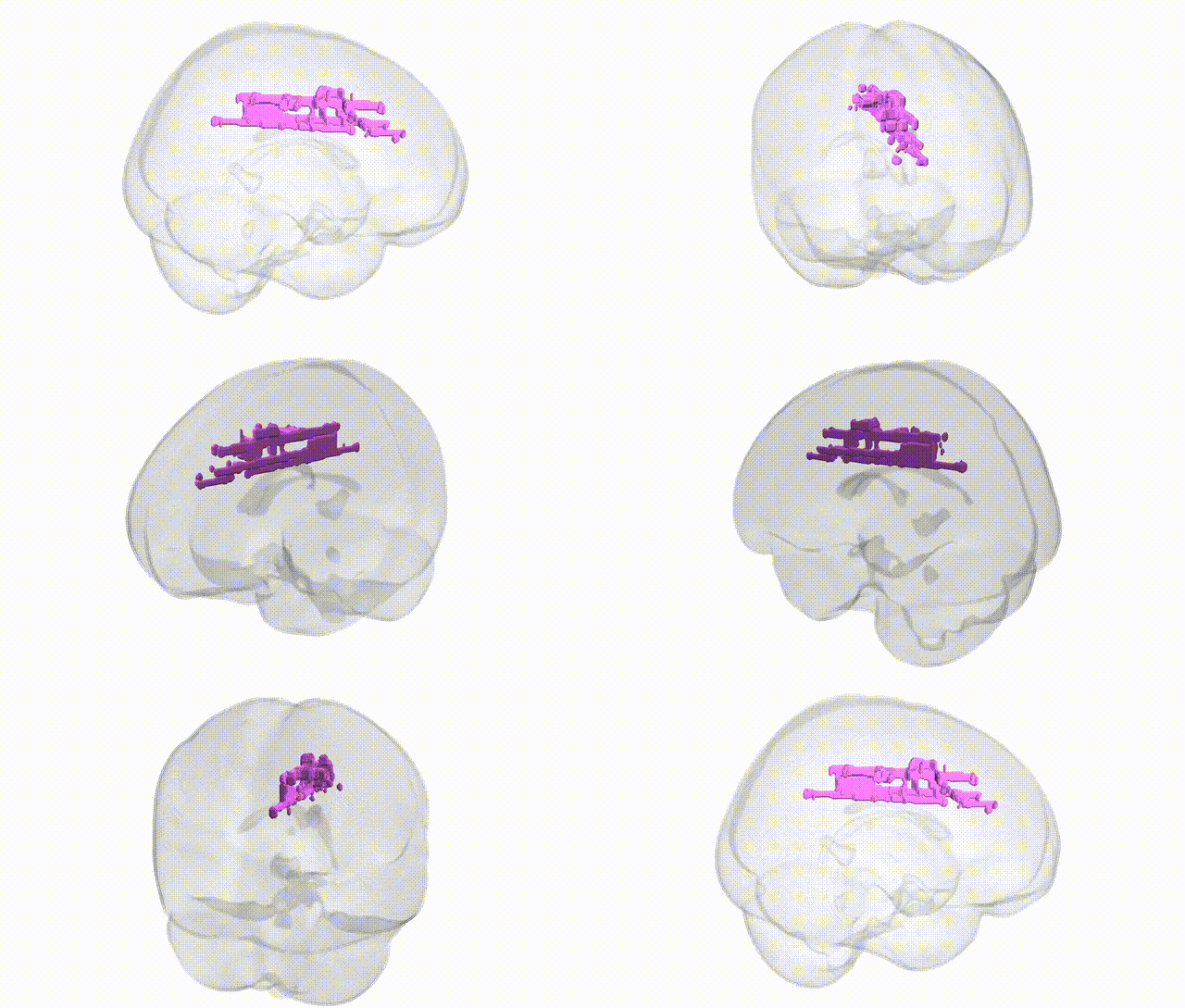
Full Quality Version: Download MP4
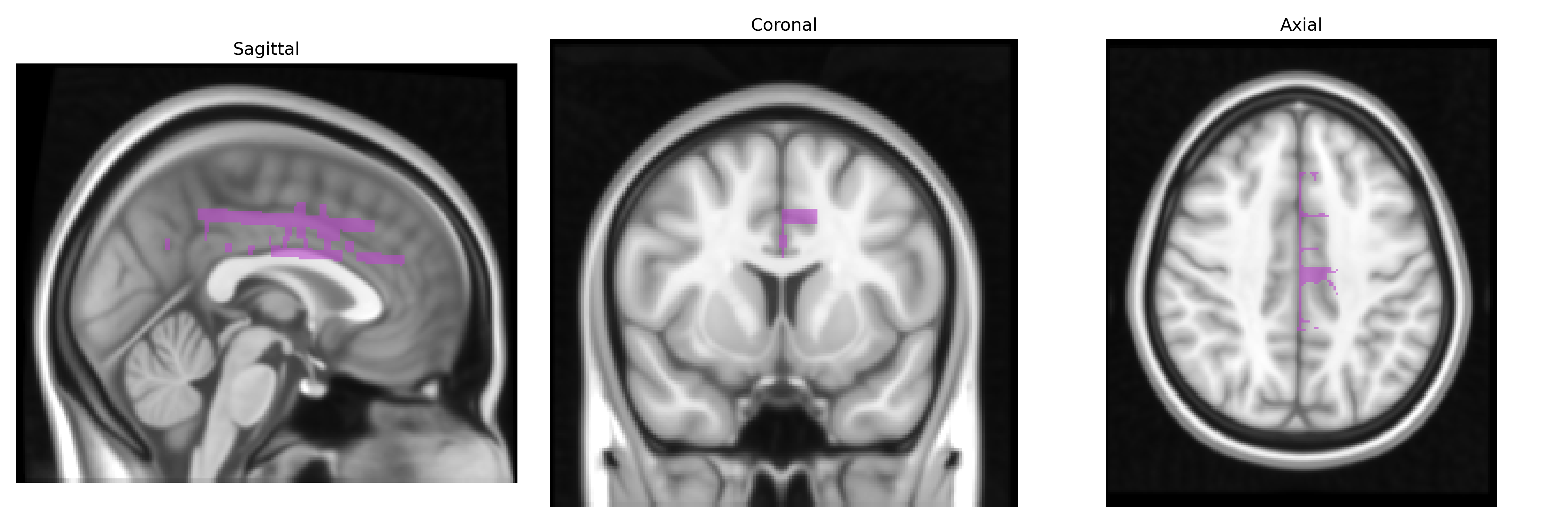
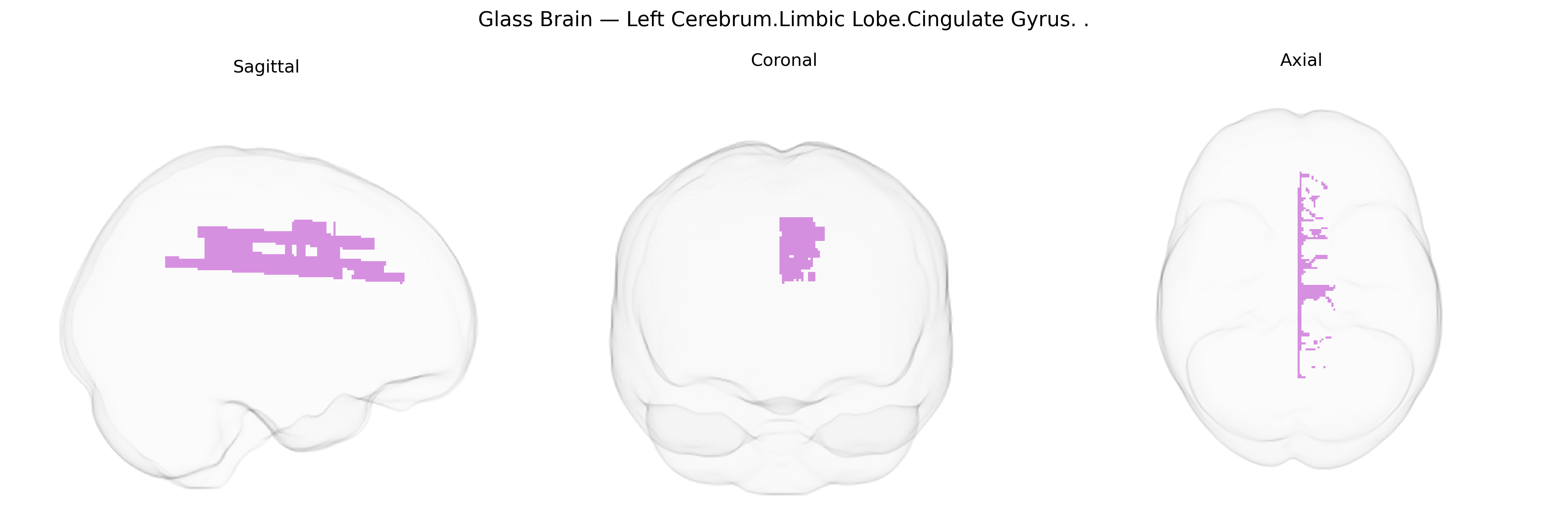
Wali Sidiqyar*, Gaurav Rudravaram*, Elyssa M. McMaster, Trent M. Schwartz, Adam M. Saunders, Kurt G. Schilling, Bennett A. Landman "Introducing SPINS: A Shared Public Visualization Library of Neuroanatomical Structures." Medical Imaging with Deep Learning- short paper
This resource is licensed under CC0 1.0 Universal (Public Domain).