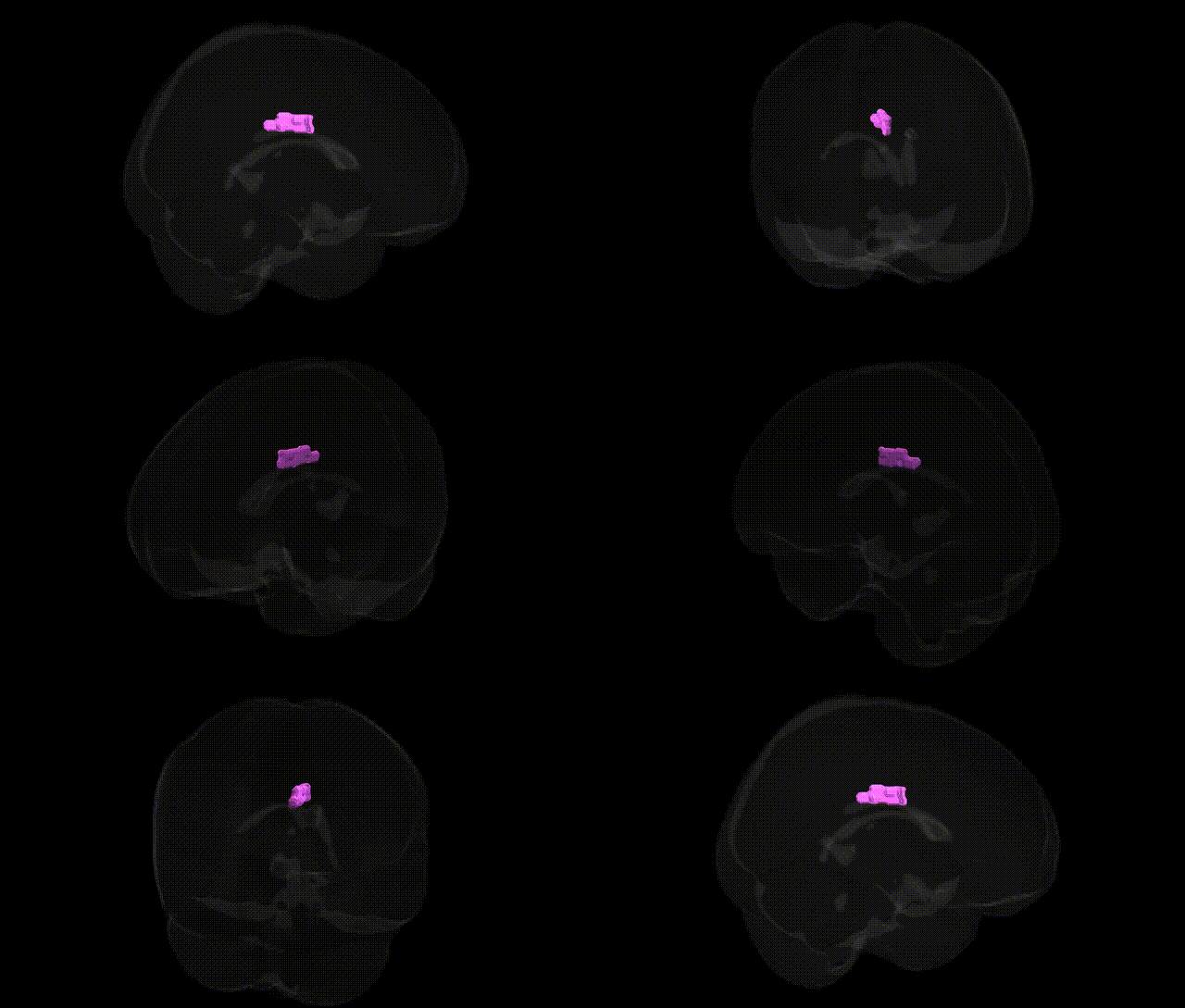
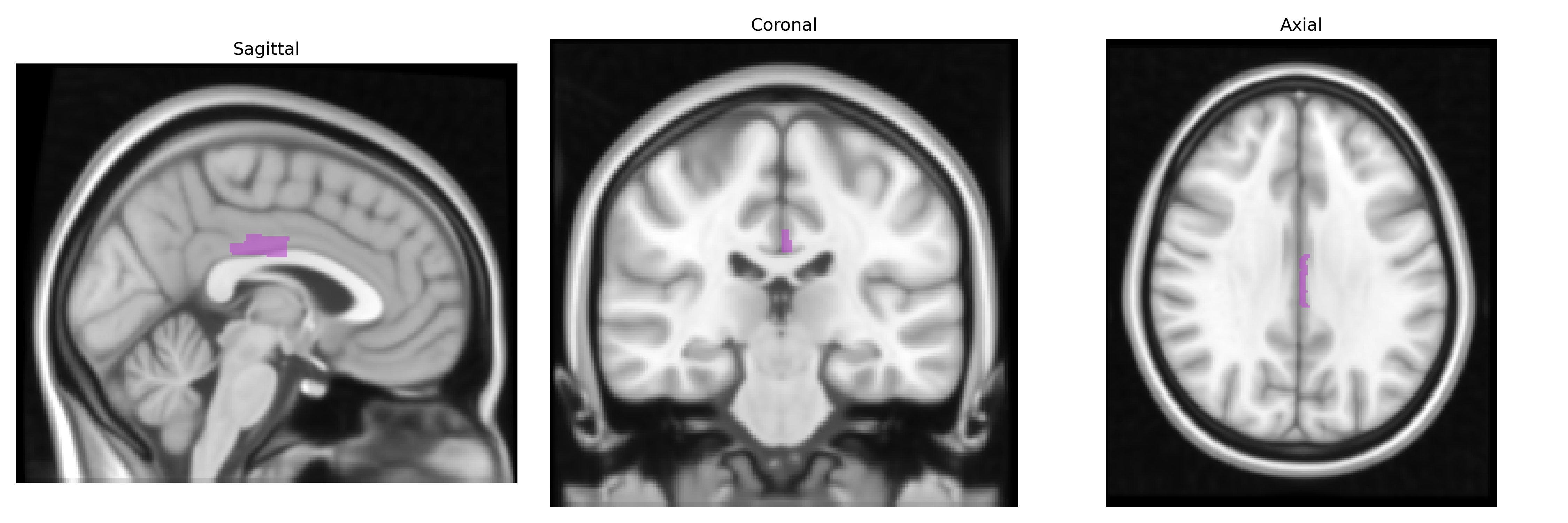
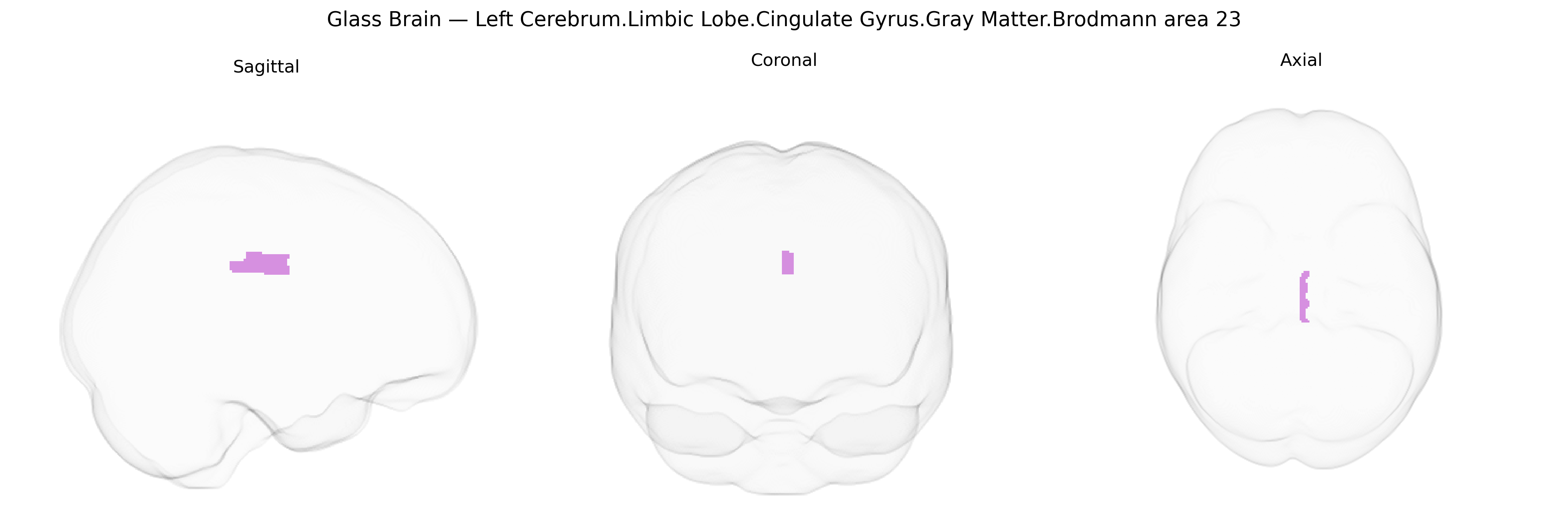
Brodmann area 23 of the cingulate gyrus is a gray matter region within the limbic lobe of the left and right cerebrum, typically classified as part of the posterior cingulate cortex. It is involved in higher-order associative and limbic functions, including integration of emotional information, internally directed thought, autobiographical memory, and aspects of visuospatial and attentional processing, often participating in the default mode network. Cytoarchitectonically, it is characterized by a granular to dysgranular structure and lies adjacent to other posterior cingulate and retrosplenial areas, with dense reciprocal connections to the hippocampal formation, medial prefrontal cortex, and parietal association cortices, supporting its role in memory-guided behavior and emotional-cognitive integration. There is no direct link for “Brodmann area 23” as a standalone article; a closely related structure is the Posterior cingulate cortex.
Brodmann area 23 in the posterior cingulate gyrus—part of the limbic network and default mode system—shows convergent genetic associations from imaging genetics and GWAS that implicate neurodevelopmental, synaptic, and neurodegenerative pathways. Twin and SNP-heritability studies indicate moderate heritability of posterior cingulate gray-matter volume and connectivity, with polygenic influences from genes related to glutamatergic transmission (e.g., GRIN2B), synaptic scaffolding (e.g., DLG4/PSD-95), and axonal guidance/myelination (e.g., NRG1, MAG). Large-scale GWAS of cortical thickness and surface area have identified associations between variants near genes such as HMGA2, WNT signaling components, and other neurodevelopmental loci and structural variation in medial/posterior cingulate regions overlapping BA23. Posterior cingulate/BA23 structure and function are genetically correlated with risk for Alzheimer’s disease (e.g., APOE ε4 and polygenic risk scores showing stronger atrophy and hypometabolism in this region), and with traits such as major depressive disorder, schizophrenia, and autism spectrum conditions through overlap with common risk loci affecting default mode network connectivity. Additional GWAS and imaging-genetics consortia (e.g., ENIGMA, UK Biobank) report that polygenic scores for cognitive ability, educational attainment, and internalizing symptoms predict individual differences in BA23 volume and functional coupling, supporting a role for distributed, pleiotropic common variants—rather than single genes alone—in shaping the structure and function of this limbic cingulate territory.
Overview generated by GPT-4o (2026).
Region ID: 934
Hemisphere: bilateral
Atlas: Talairach labels 1mm
Full Quality Version: Download MP4
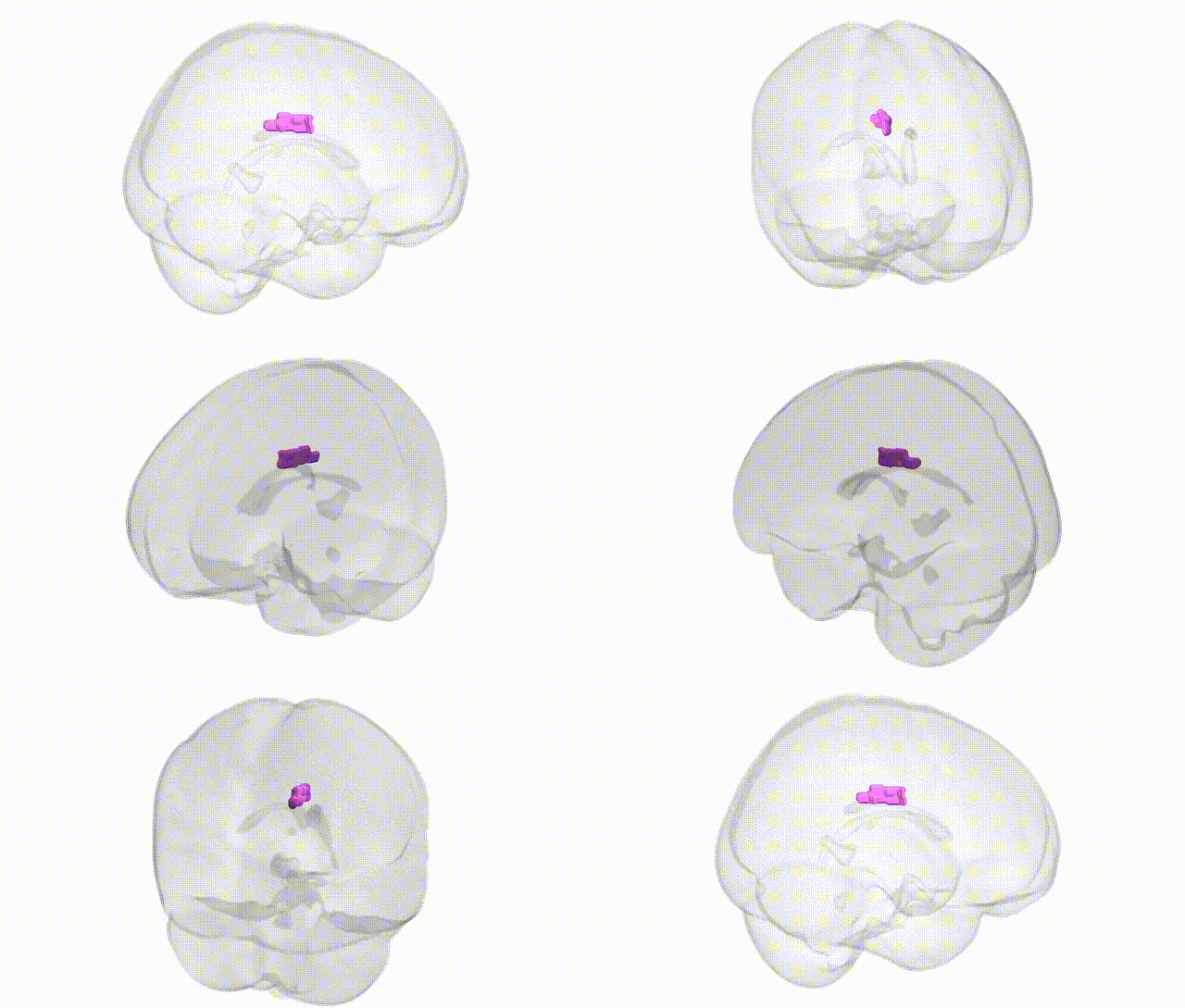
Full Quality Version: Download MP4
Wali Sidiqyar*, Gaurav Rudravaram*, Elyssa M. McMaster, Trent M. Schwartz, Adam M. Saunders, Kurt G. Schilling, Bennett A. Landman "Introducing SPINS: A Shared Public Visualization Library of Neuroanatomical Structures." Medical Imaging with Deep Learning- short paper
This resource is licensed under CC0 1.0 Universal (Public Domain).