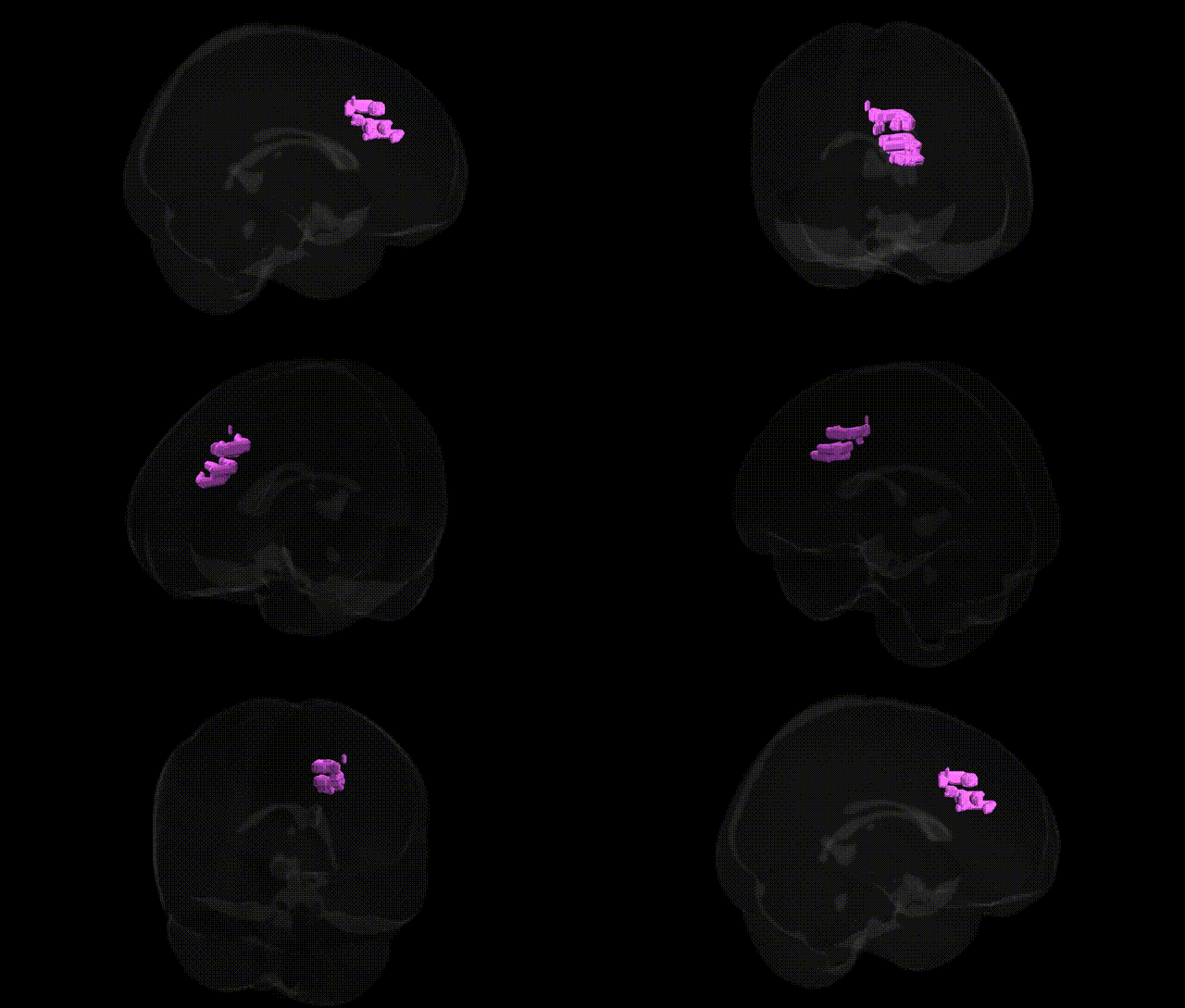
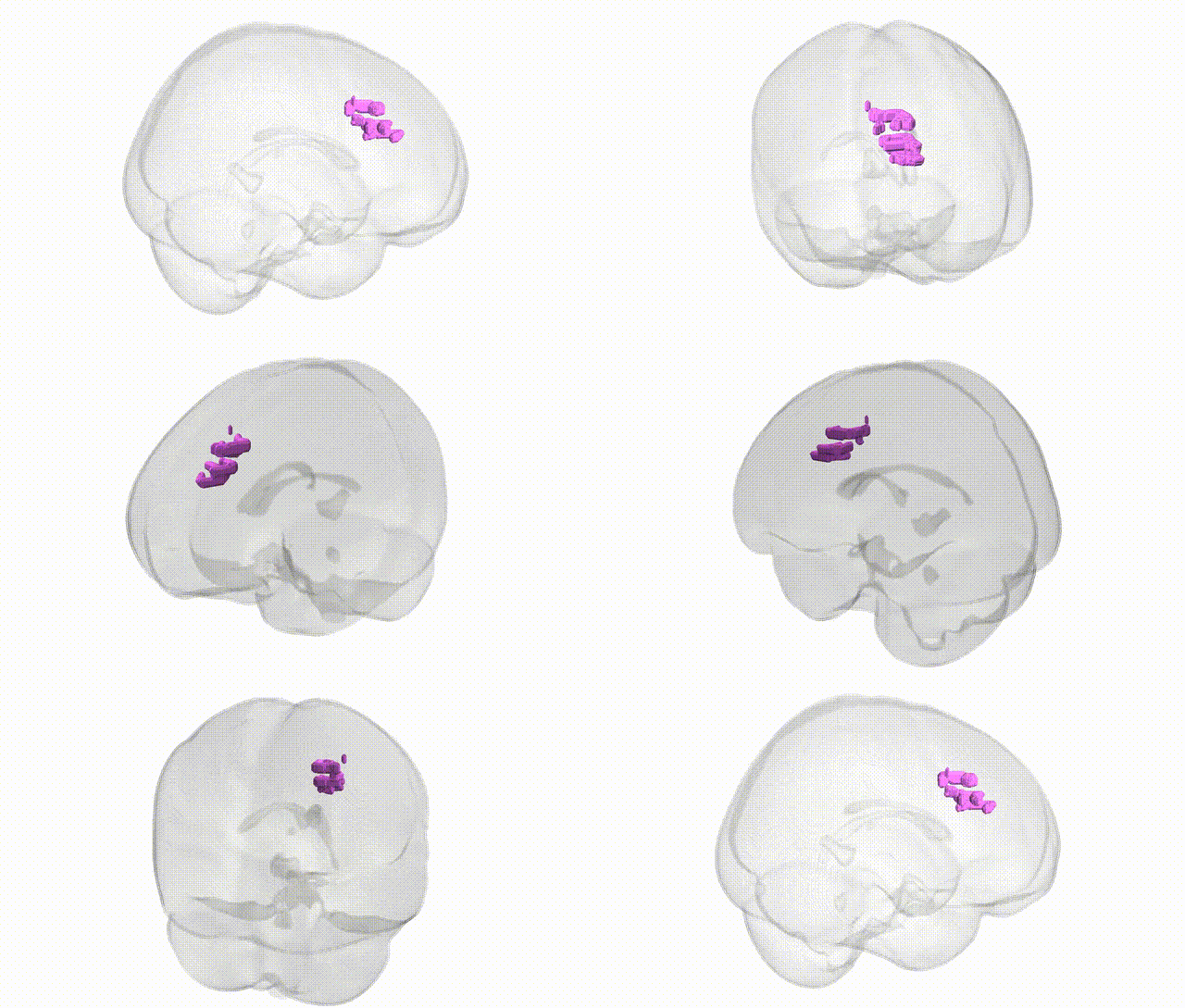
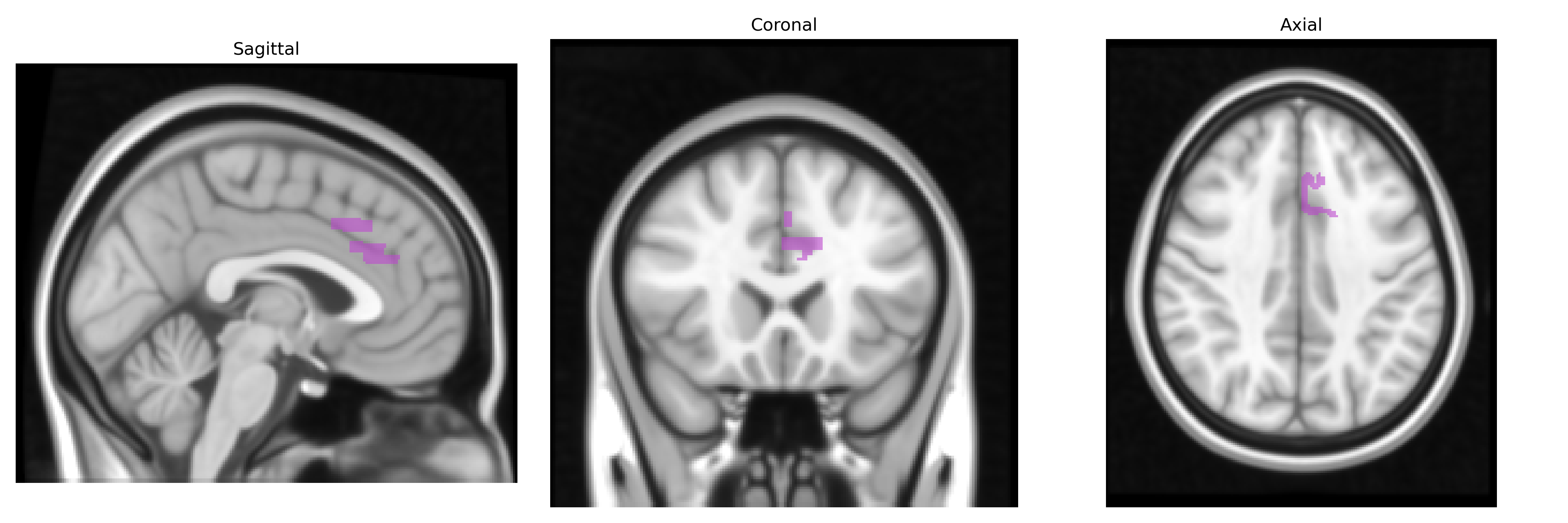
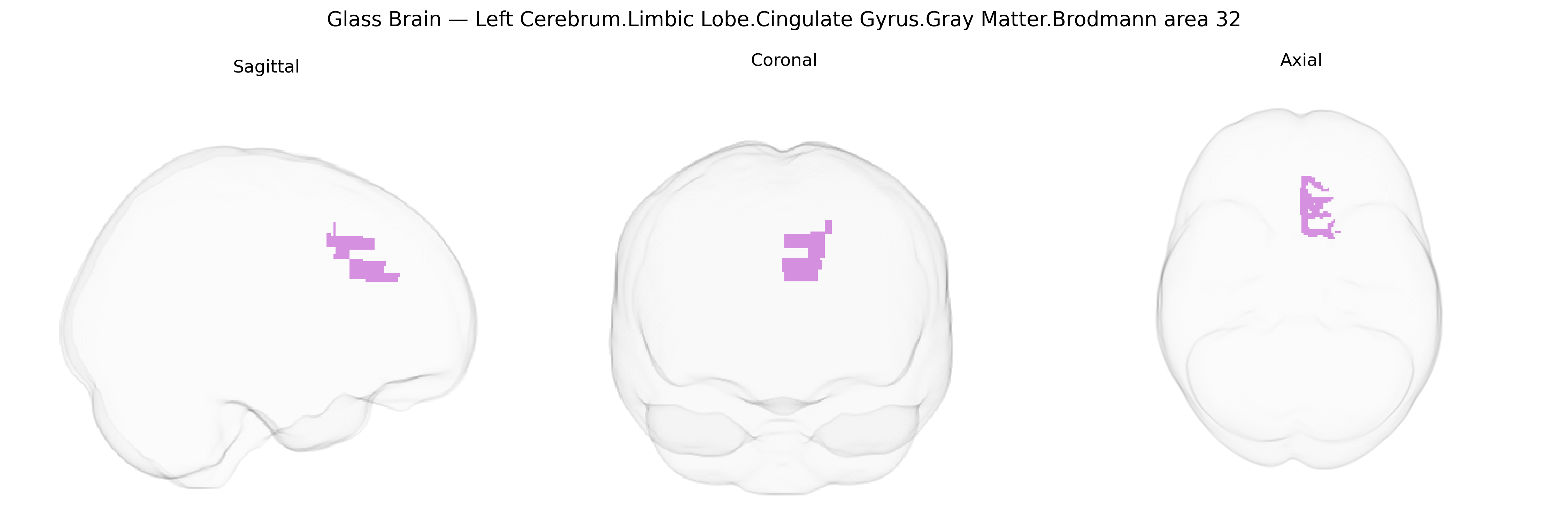
Bilateral Left Cerebrum Limbic Lobe Cingulate Gyrus Gray Matter Brodmann area 32 corresponds to a portion of the dorsal anterior cingulate cortex, a limbic-associated region situated on the medial surface of the frontal lobe, above the corpus callosum. Cytoarchitectonically defined as area 32, it is involved in higher-order executive and affective functions, including cognitive control, conflict monitoring, decision-making under uncertainty, and modulation of emotional responses and autonomic output. This region participates in fronto-limbic networks linking prefrontal cortex with amygdala, insula, and other cingulate territories, supporting integration of motivation, attention, and goal-directed behavior. There is no direct link for “Brodmann area 32,” but a closely related structure is the Anterior cingulate cortex.
Brodmann area 32 (BA32) of the cingulate gyrus, a core node of the dorsal anterior cingulate/medial prefrontal network, shows convergent genetic associations from large-scale imaging–genetics and GWAS studies linking its gray matter volume, cortical thickness, and functional activity to polygenic architectures for mood, psychotic, and anxiety-related traits. Twin and SNP-based heritability analyses (e.g., ENIGMA, UK Biobank) indicate moderate heritability for BA32 morphology, with pleiotropic overlap between genetic variants influencing this region and those conferring risk for major depressive disorder, bipolar disorder, and schizophrenia, particularly within synaptic, glutamatergic, and calcium-channel–related genes (such as CACNA1C and GRM3) as well as MHC-region loci implicated in cortical thinning of medial frontal/cingulate areas. Polygenic risk scores for depression, neuroticism, and suicidality have been associated with reduced volume or altered thickness of dorsal anterior cingulate/BA32, while variants in serotonin transporter (SLC6A4) and related serotonin-pathway genes modulate BA32 responses in functional imaging tasks of emotion and conflict processing. Additional GWAS and imaging-genetics findings link BA32 structure and function to traits such as cognitive control, pain sensitivity, and stress reactivity, including associations with COMT and DRD2 polymorphisms affecting dopaminergic modulation of cingulate circuitry, collectively supporting a genetically influenced role of BA32 in affect regulation, executive control, and vulnerability to internalizing and psychotic disorders.
Overview generated by GPT-4o (2026).
Region ID: 945
Hemisphere: bilateral
Atlas: Talairach labels 1mm
Full Quality Version: Download MP4
Full Quality Version: Download MP4
Wali Sidiqyar*, Gaurav Rudravaram*, Elyssa M. McMaster, Trent M. Schwartz, Adam M. Saunders, Kurt G. Schilling, Bennett A. Landman "Introducing SPINS: A Shared Public Visualization Library of Neuroanatomical Structures." Medical Imaging with Deep Learning- short paper
This resource is licensed under CC0 1.0 Universal (Public Domain).