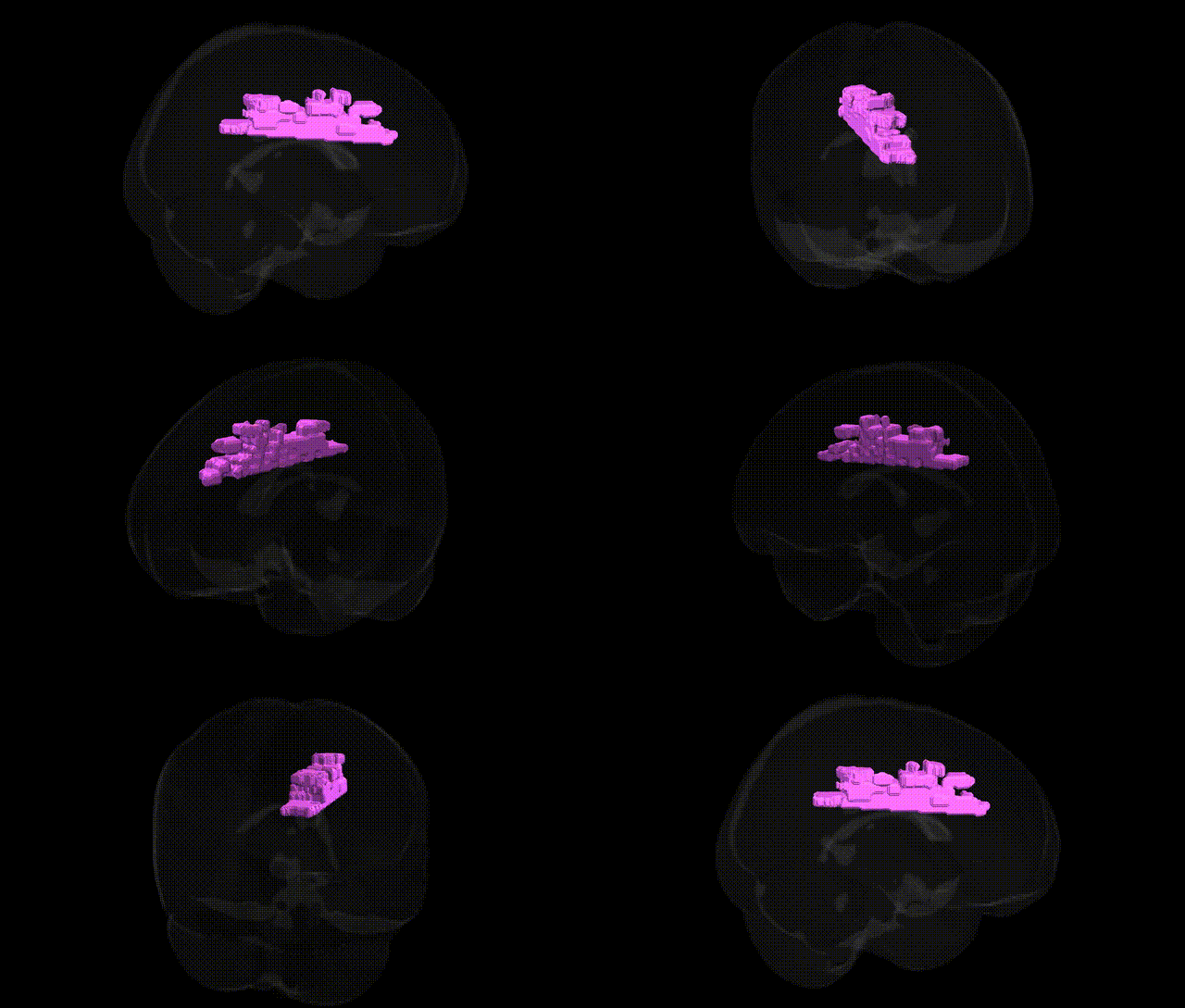
The bilateral Left Cerebrum.Limbic Lobe.Cingulate Gyrus.White Matter corresponds to the subcortical myelinated fiber pathways coursing beneath the cingulate gyrus, a key component of the limbic lobe arching over the corpus callosum. These white matter tracts include association fibers that link different cingulate subdivisions and connect the cingulate cortex with medial prefrontal, parietal, and limbic structures such as the hippocampal formation and thalamus, thereby supporting functions in emotion, pain processing, attention, and cognitive control. As part of the limbic circuitry, this region contributes to integration of affective and autonomic information with higher-order executive processes. There is no direct link for the white matter component alone; a related cortical structure is the Cingulate gyrus.
The bilateral left cingulate gyrus white matter (Talairach: Left Cerebrum, Limbic Lobe, Cingulate Gyrus, White Matter) has been implicated in numerous genetic and GWAS findings through its role in limbic connectivity, cognitive control, and affective processing. Imaging–genetics and large consortia GWAS (e.g., ENIGMA, UK Biobank) have linked common variants in genes involved in myelination and axonal integrity (such as NRG1/ERBB4, MAG, MOG, and other oligodendrocyte- and myelin-related loci) to cingulate white-matter microstructure, typically indexed via fractional anisotropy and mean diffusivity. Polygenic risk scores for major depressive disorder, schizophrenia, bipolar disorder, and attention-deficit/hyperactivity disorder show associations with reduced integrity or altered volume of cingulate white matter, consistent with this tract’s role in fronto-limbic circuitry. Specific risk loci in genes related to synaptic plasticity and glutamatergic or GABAergic signaling (e.g., CACNA1C, GRM3, and others) have been associated with structural and functional variation in cingulate pathways, though findings often involve broader medial frontal or limbic networks rather than this region alone. Cingulate white matter alterations have also emerged in GWAS and candidate gene studies of traits such as neuroticism, anxiety sensitivity, cognitive flexibility, pain sensitivity, and default-mode network connectivity, and in neurodegenerative or demyelinating conditions (including multiple sclerosis and Alzheimer’s disease) where risk variants in immune- and lipid-metabolism genes (e.g., HLA region, APOE) are linked to white-matter damage encompassing cingulate bundles, highlighting this region as a convergent target of polygenic influences on affective, cognitive, and neurodevelopmental phenotypes.
Overview generated by GPT-4o (2026).
Region ID: 921
Hemisphere: bilateral
Atlas: Talairach labels 1mm
Full Quality Version: Download MP4
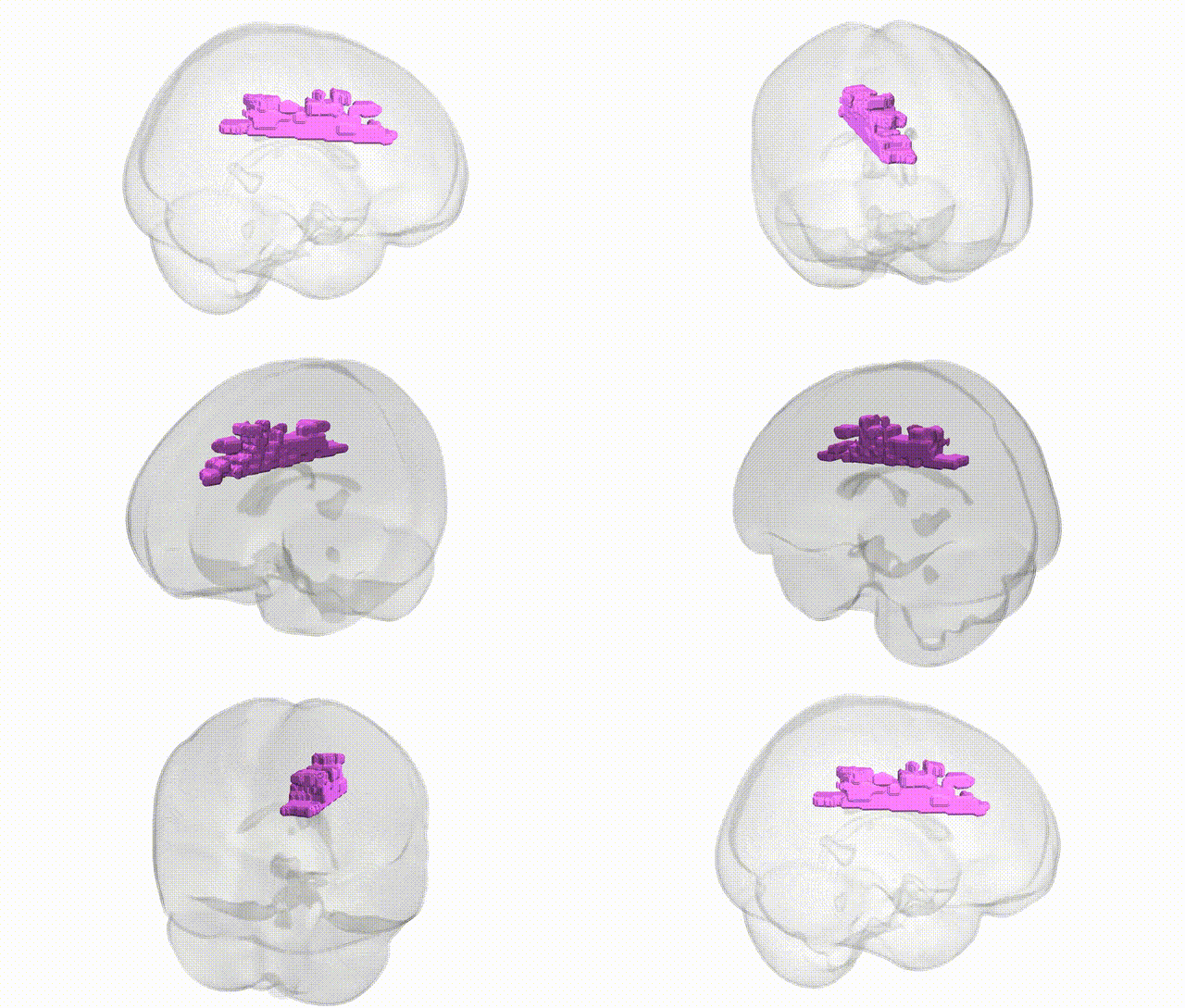
Full Quality Version: Download MP4
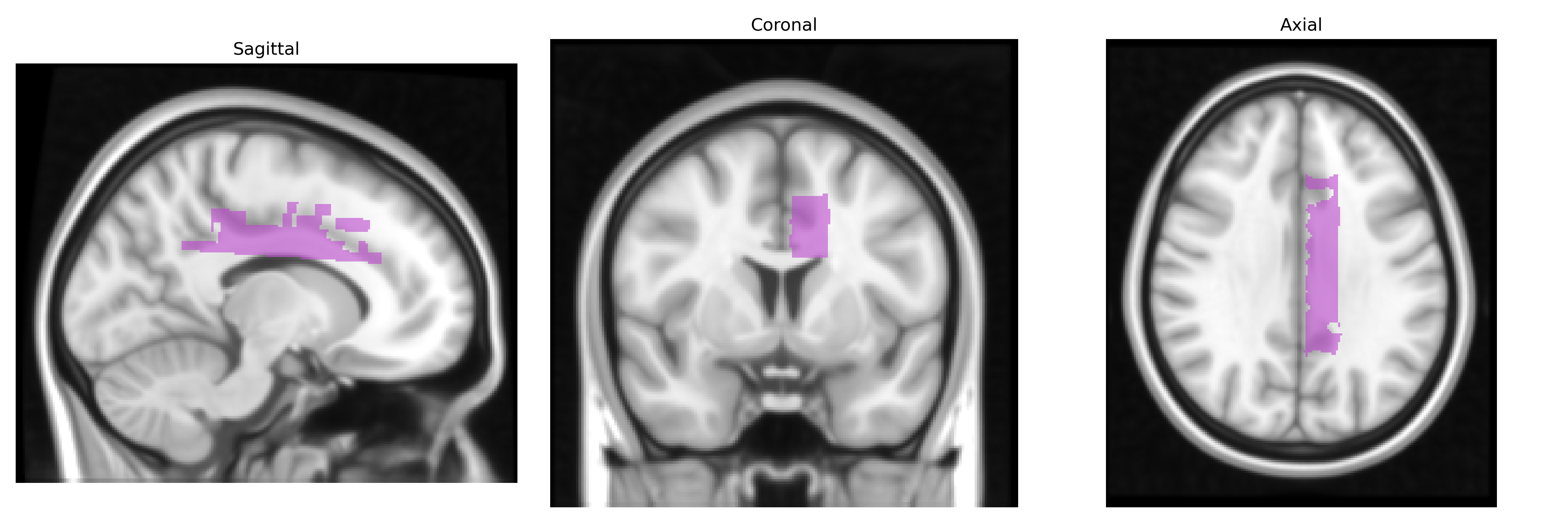
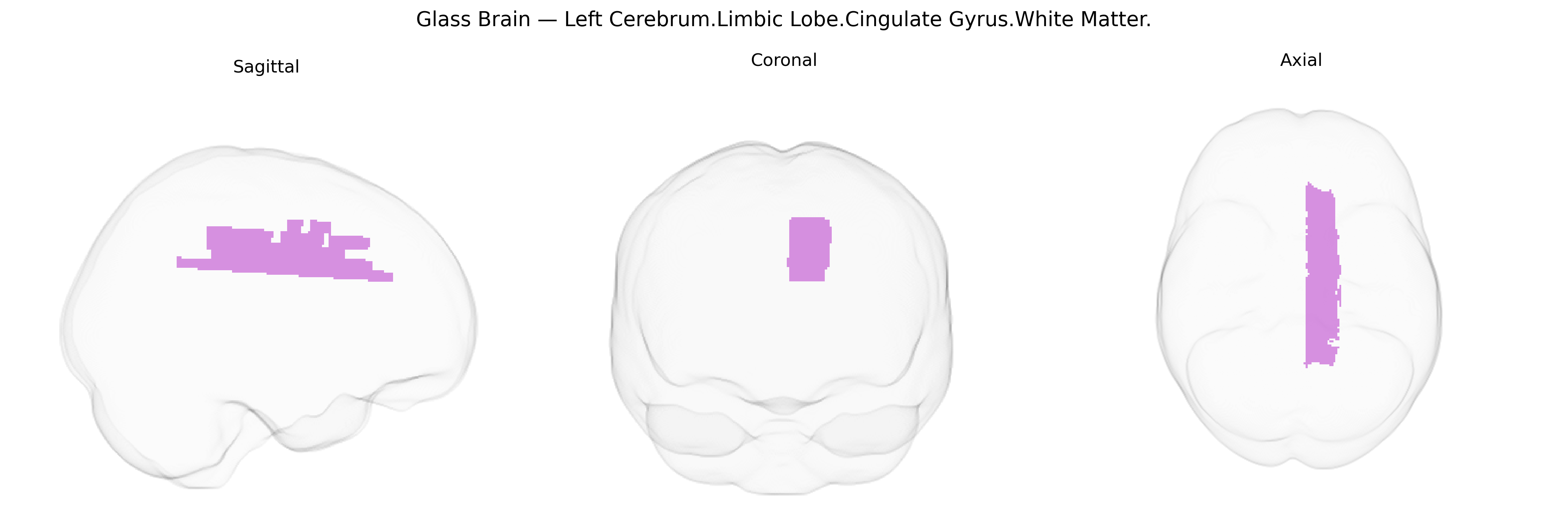
Wali Sidiqyar*, Gaurav Rudravaram*, Elyssa M. McMaster, Trent M. Schwartz, Adam M. Saunders, Kurt G. Schilling, Bennett A. Landman "Introducing SPINS: A Shared Public Visualization Library of Neuroanatomical Structures." Medical Imaging with Deep Learning- short paper
This resource is licensed under CC0 1.0 Universal (Public Domain).