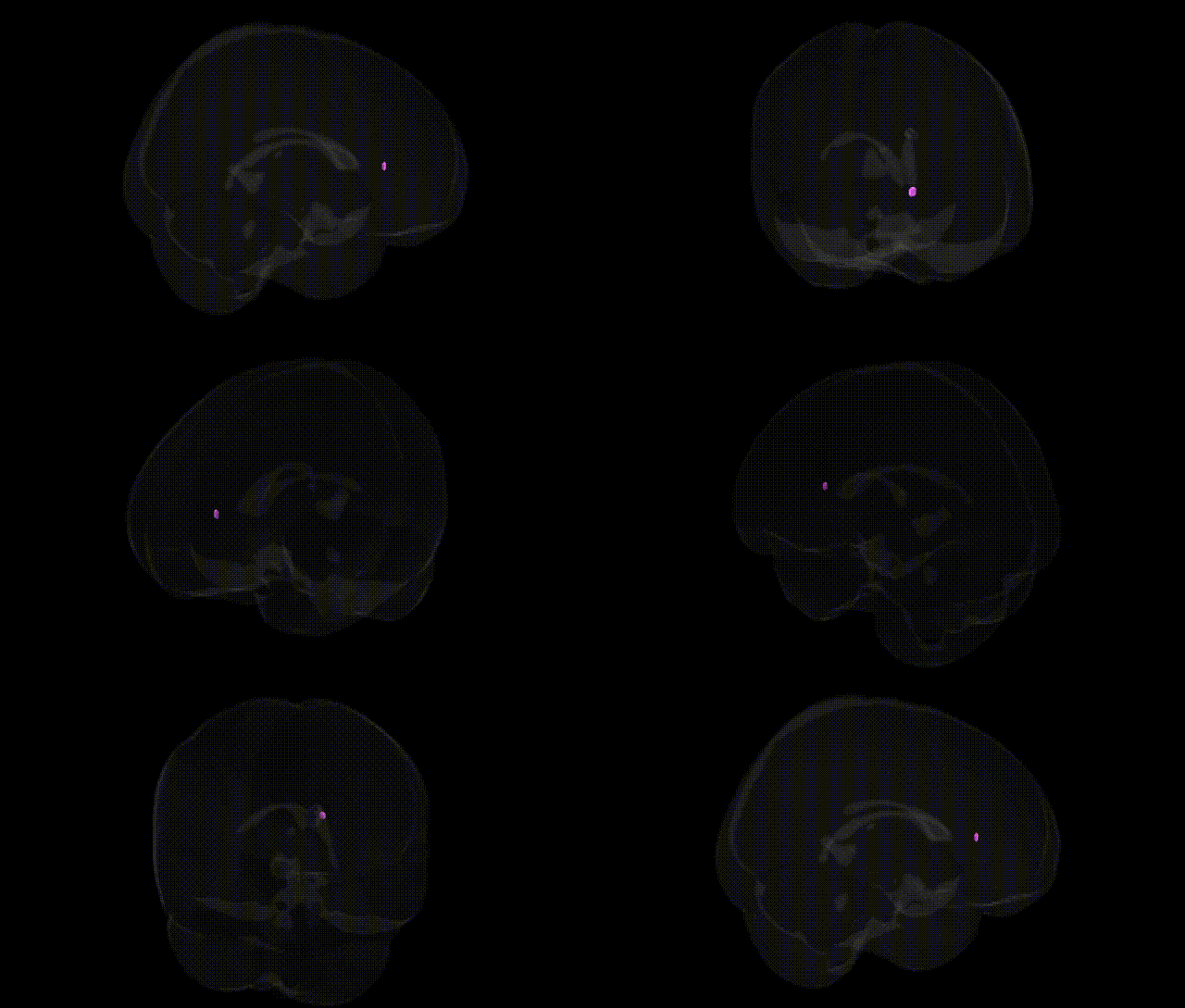
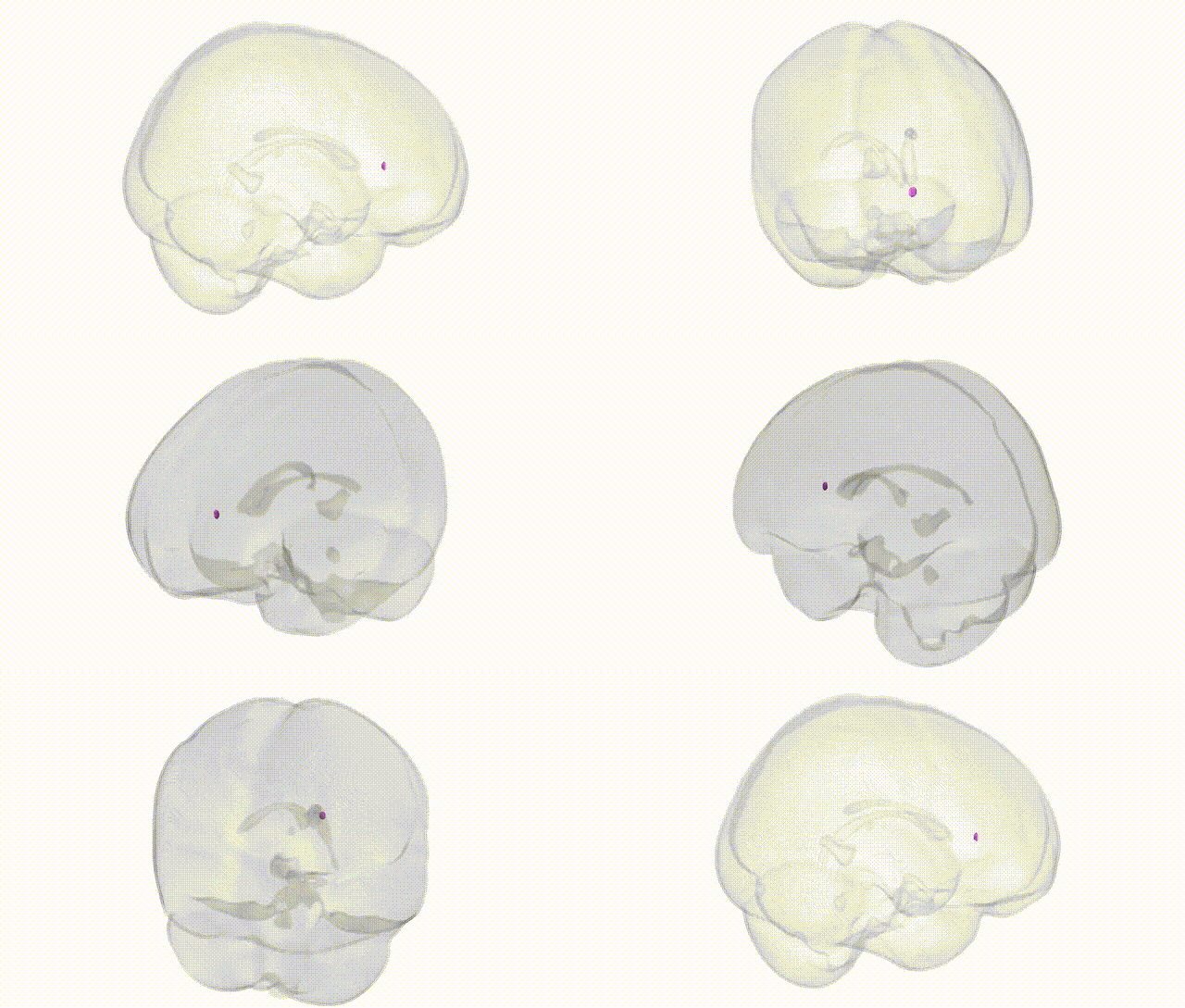
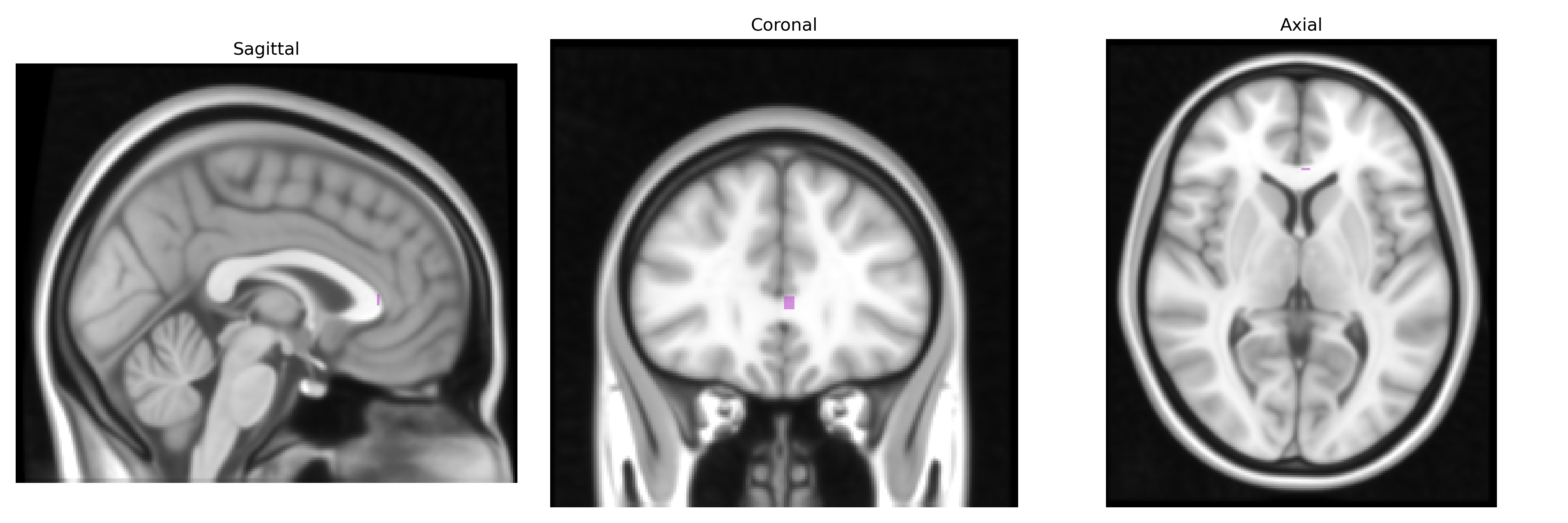
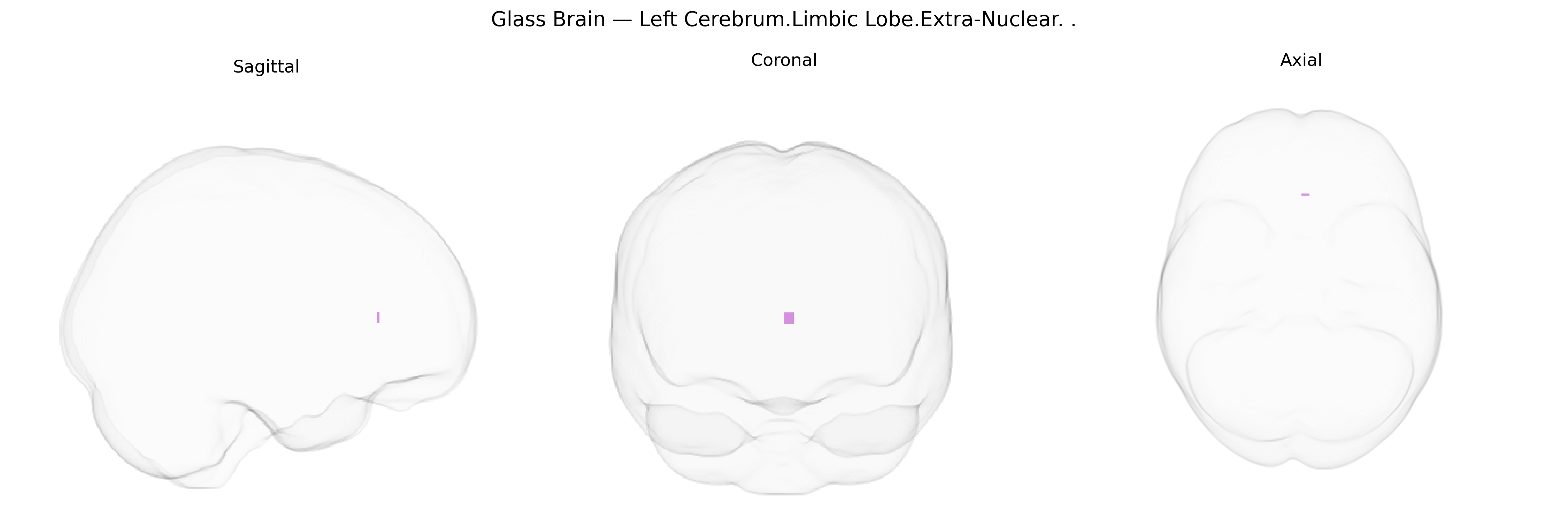
The bilateral Left Cerebrum.Limbic Lobe.Extra-Nuclear region in the Talairach 1 mm Atlas refers to limbic-associated gray matter located outside the major, well-delimited nuclear groups (such as the amygdala or thalamic nuclei), encompassing periallocortical and subcortical areas involved in emotion, memory, and autonomic regulation. Functionally, this territory participates in limbic circuitry linking the cingulate cortex, hippocampal formation, and subcortical structures, contributing to affective processing, motivational states, and integration of visceral and cognitive information. Anatomically, “extra-nuclear” denotes regions in the limbic lobe not assigned to a specific classic nucleus, including transitional cortex and adjacent white matter interfaces that support limbic connectivity. There is no direct link for this composite label; a related structure is the Limbic system.
The bilateral Left Cerebrum Limbic Lobe Extra-Nuclear region in the Talairach 1 mm atlas corresponds largely to subcortical limbic nuclei (including components of the basal forebrain, septal area, and related amygdalo-hippocampal and ventral striatal territories) that have been implicated in multiple GWAS and neuroimaging–genetics studies of psychiatric and neurodegenerative disorders. Variants in genes involved in synaptic plasticity, neurotransmission, and neurodevelopment—such as BDNF, COMT, DRD2, SLC6A4, and polygenic risk scores for schizophrenia, major depressive disorder, bipolar disorder, and autism spectrum disorder—have been associated with volumetric and functional differences in adjacent limbic and extra-nuclear structures, including the amygdala, ventral striatum, and basal forebrain. Imaging-genetics consortia (e.g., ENIGMA) and large biobank-based GWAS have linked common variants near genes such as GRM3, CACNA1C, ZNF804A, and others to altered limbic activation and connectivity during emotional processing, reward, and memory tasks that heavily recruit this region. Additional associations have been observed for APOE and other Alzheimer’s disease–related loci with basal forebrain and limbic atrophy, as well as for dopaminergic and opioid system genes with reward- and addiction-related traits, reflecting the region’s role in motivation, affect, and associative learning. While specific GWAS rarely target the “extra-nuclear” label as defined in Talairach space, convergent evidence from structural and functional imaging-genetics implicates this limbic subcortical territory as a key intermediate phenotype linking polygenic liability for psychiatric illness, addiction, personality traits (e.g., neuroticism), and cognitive-emotional endophenotypes to observable brain variation.
Overview generated by GPT-4o (2026).
Region ID: 750
Hemisphere: bilateral
Atlas: Talairach labels 1mm
Full Quality Version: Download MP4
Full Quality Version: Download MP4
Wali Sidiqyar*, Gaurav Rudravaram*, Elyssa M. McMaster, Trent M. Schwartz, Adam M. Saunders, Kurt G. Schilling, Bennett A. Landman "Introducing SPINS: A Shared Public Visualization Library of Neuroanatomical Structures." Medical Imaging with Deep Learning- short paper
This resource is licensed under CC0 1.0 Universal (Public Domain).