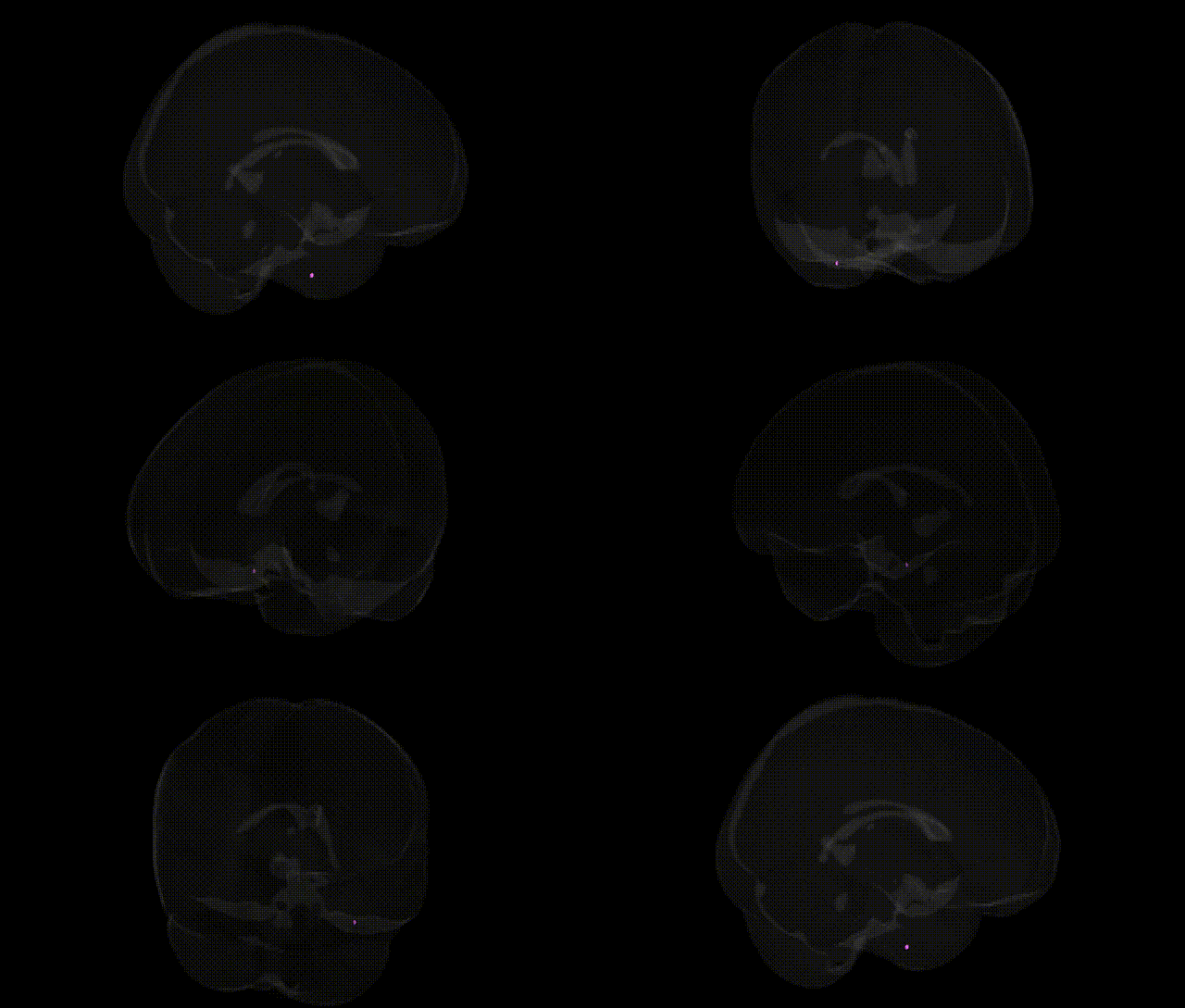
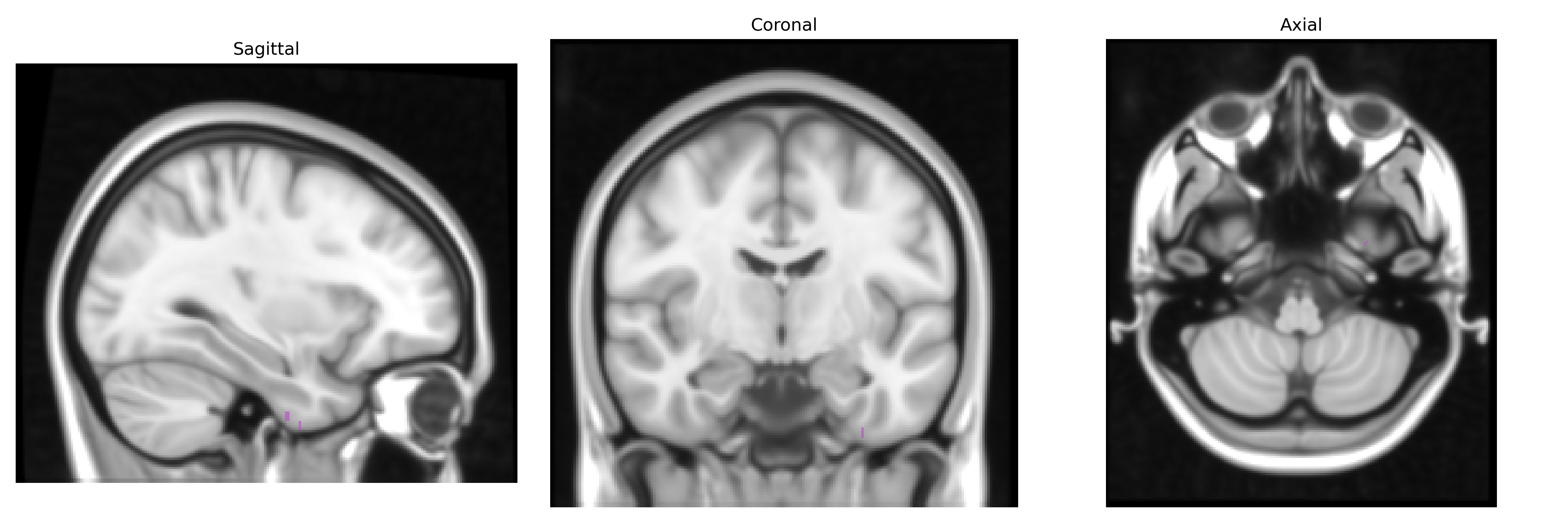
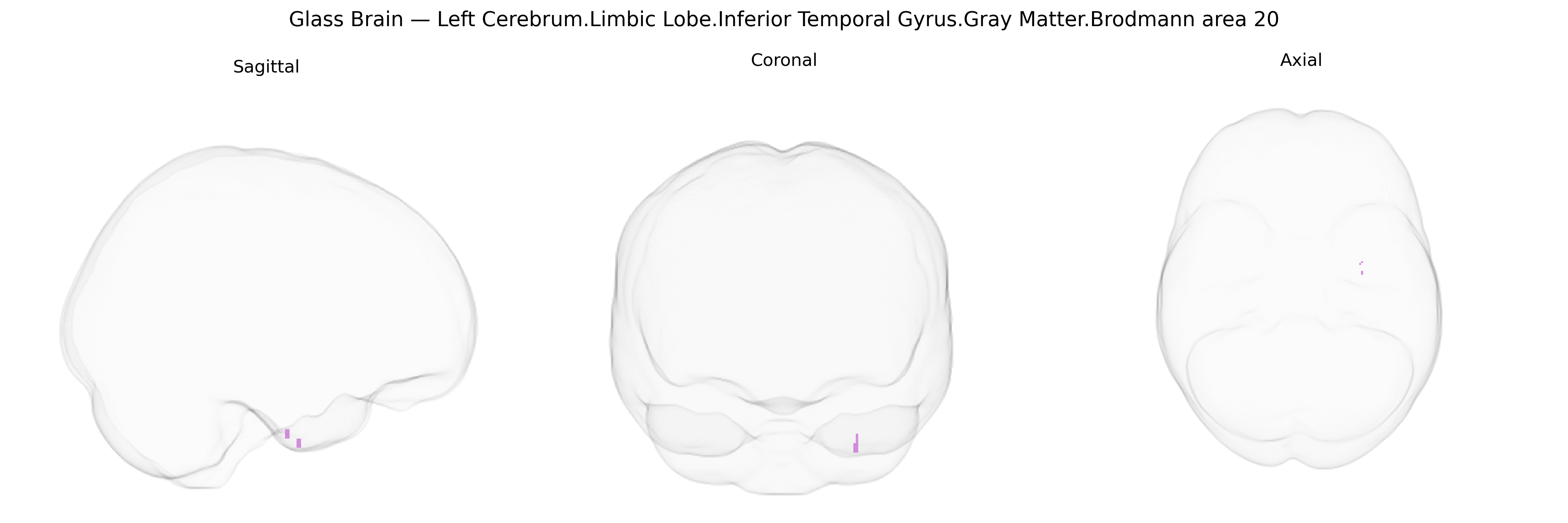
The bilateral Left Cerebrum Limbic Lobe Inferior Temporal Gyrus gray matter Brodmann area 20 corresponds to a ventral temporal cortical region involved primarily in high-level visual processing, especially the recognition and categorization of complex visual stimuli such as objects and faces. Situated on the inferior aspect of the temporal lobe, area 20 receives input from earlier visual areas and forms part of the ventral “what” pathway, contributing to visual-semantic integration and memory-related functions through interactions with limbic and medial temporal structures. Neuronal populations in this region support the transformation of detailed visual information into meaningful representations that can be linked with stored knowledge, emotion, and episodic memory. There is no direct link for Brodmann area 20; see the related structure: Inferior temporal gyrus.
The bilateral inferior temporal gyrus gray matter in Brodmann area 20, a ventral limbic–temporal region involved in high-level visual processing and semantic memory, has been implicated in several genetic and GWAS-based associations through imaging genetics and neuropsychiatric studies, though few findings are strictly BA20-specific. Common variants in genes related to synaptic function and neurodevelopment, such as BDNF, NRG1, and DISC1, have been associated with structural and functional alterations in the inferior temporal and adjacent fusiform regions in schizophrenia, bipolar disorder, and major depression. Large-scale GWAS of cortical thickness and surface area (e.g., ENIGMA consortium) have identified variants near genes involved in neurogenesis and neuronal migration (such as KIAA0586, DLG2, and others) that correlate with temporal lobe morphology, including inferior temporal cortex measures, and are partly shared with genetic risk for cognitive performance and educational attainment. Autism spectrum disorder and social cognition GWAS and imaging genetics studies have linked risk loci affecting synaptic and chromatin-remodeling pathways (e.g., genes like SHANK3, CHD8, ASD polygenic scores) to altered activation and gray matter in ventral temporal regions supporting face and object processing. Alzheimer’s disease and semantic variant frontotemporal dementia, which prominently affect inferolateral temporal cortex, show converging evidence that APOE ε4 and other GWAS-identified risk variants (in genes such as CLU, PICALM, and BIN1) are associated with atrophy and hypometabolism in temporal neocortex, including BA20 territory. Moreover, polygenic scores for general intelligence, reading ability, and language-related traits have been associated with structural variation in inferior temporal and nearby ventral temporal regions in several cohorts, suggesting that common genetic factors influencing semantic and visual processing partly act through this region’s development and maintenance.
Overview generated by GPT-4o (2026).
Region ID: 15
Hemisphere: bilateral
Atlas: Talairach labels 1mm
Full Quality Version: Download MP4
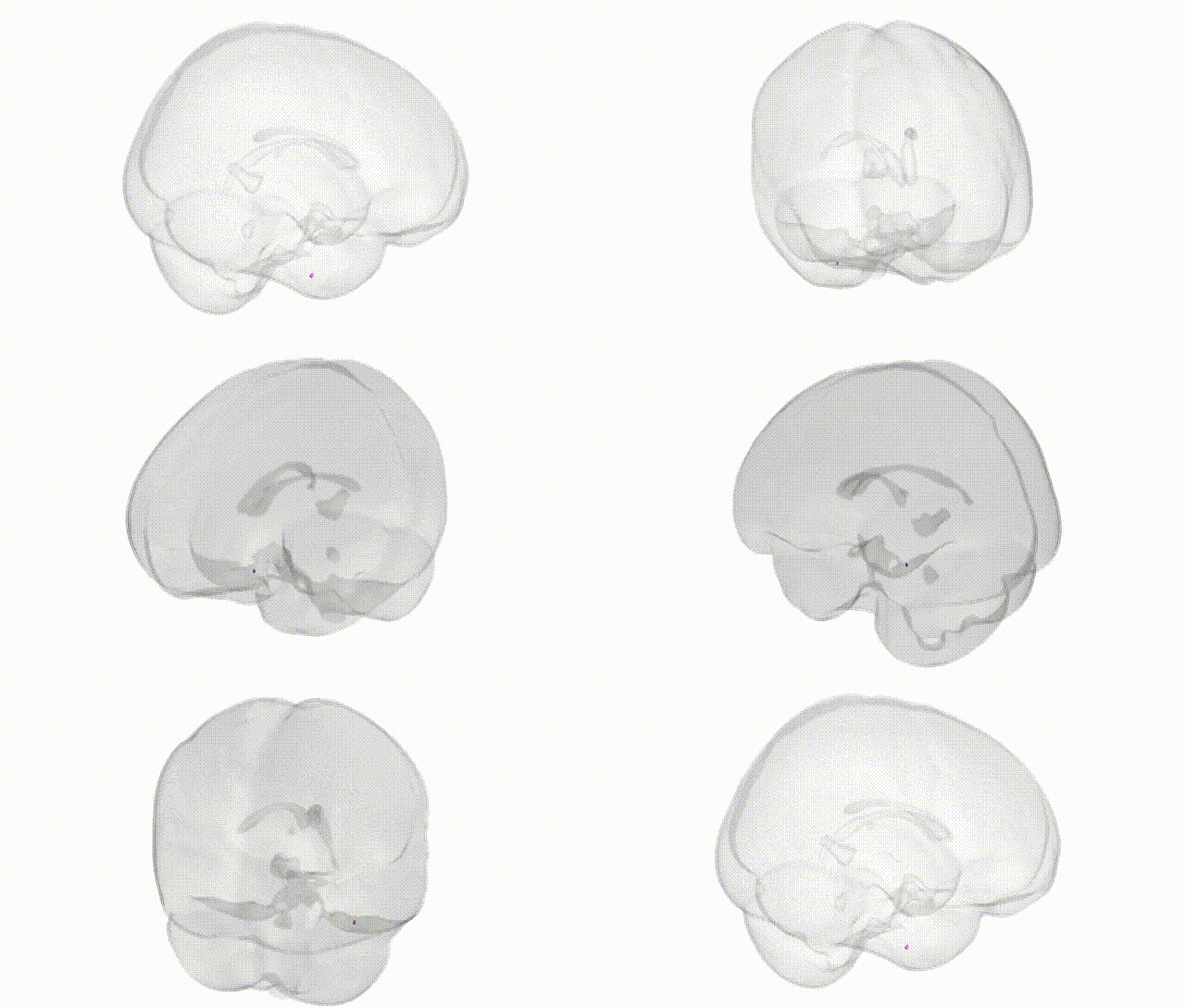
Full Quality Version: Download MP4
Wali Sidiqyar*, Gaurav Rudravaram*, Elyssa M. McMaster, Trent M. Schwartz, Adam M. Saunders, Kurt G. Schilling, Bennett A. Landman "Introducing SPINS: A Shared Public Visualization Library of Neuroanatomical Structures." Medical Imaging with Deep Learning- short paper
This resource is licensed under CC0 1.0 Universal (Public Domain).