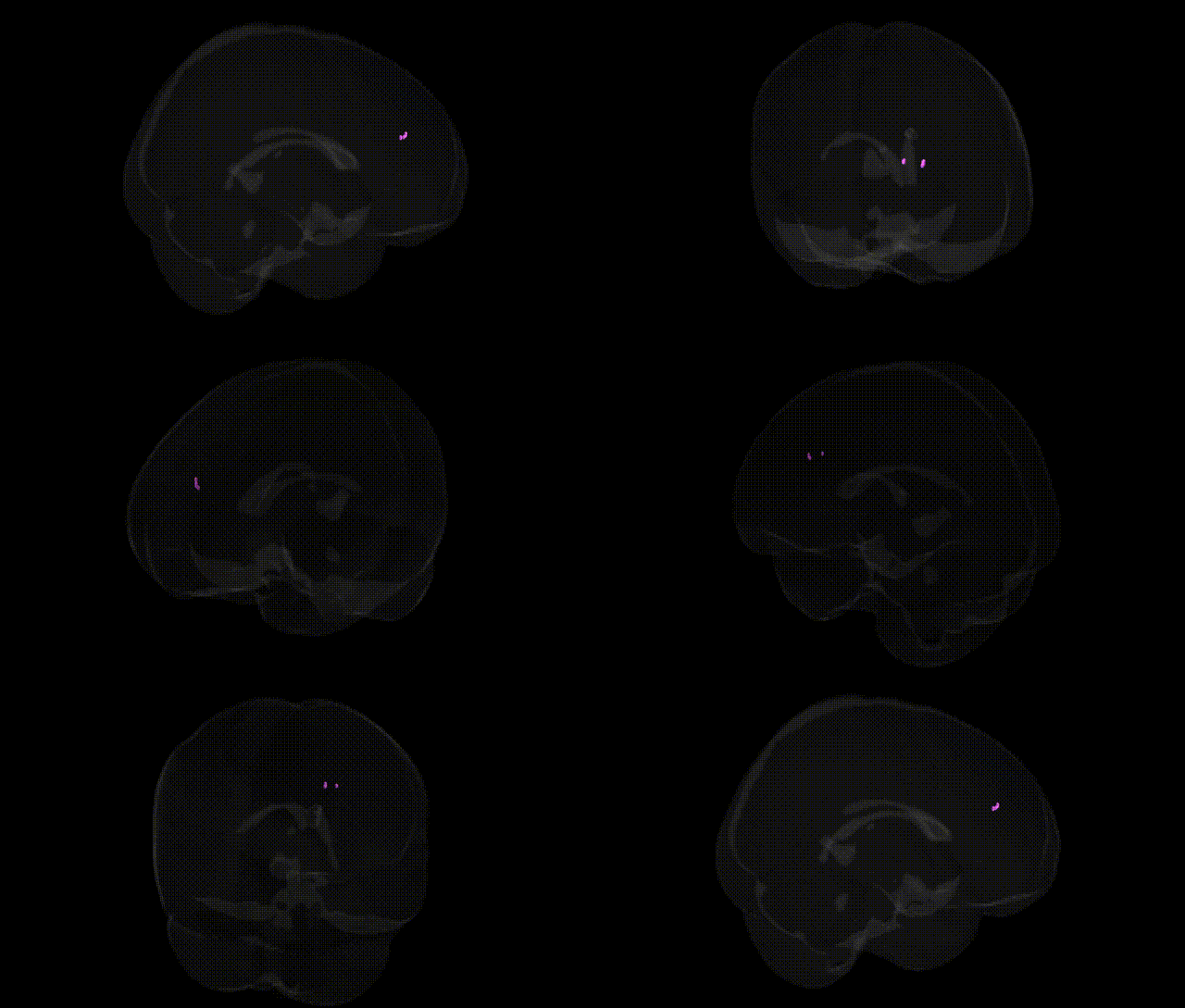
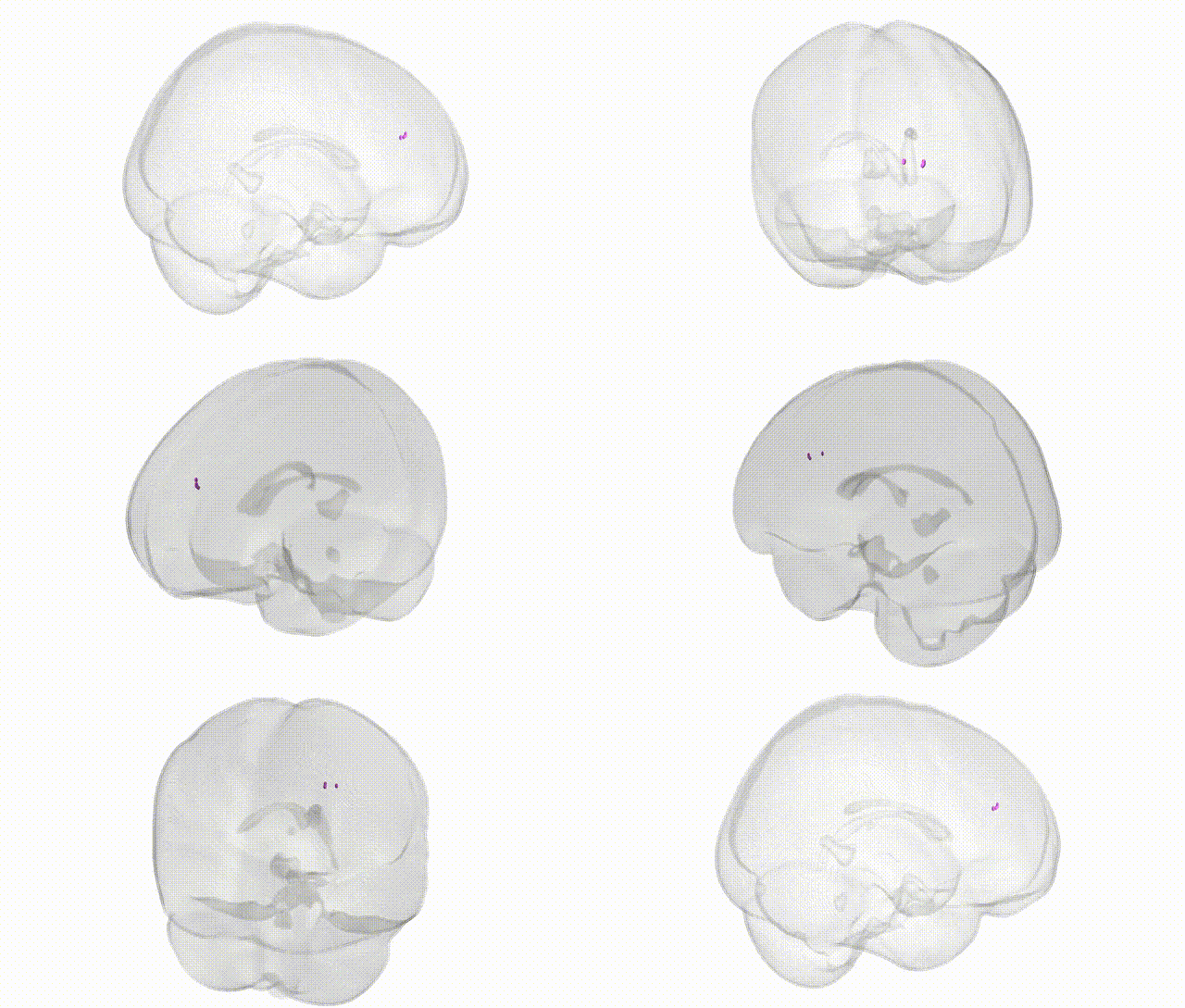
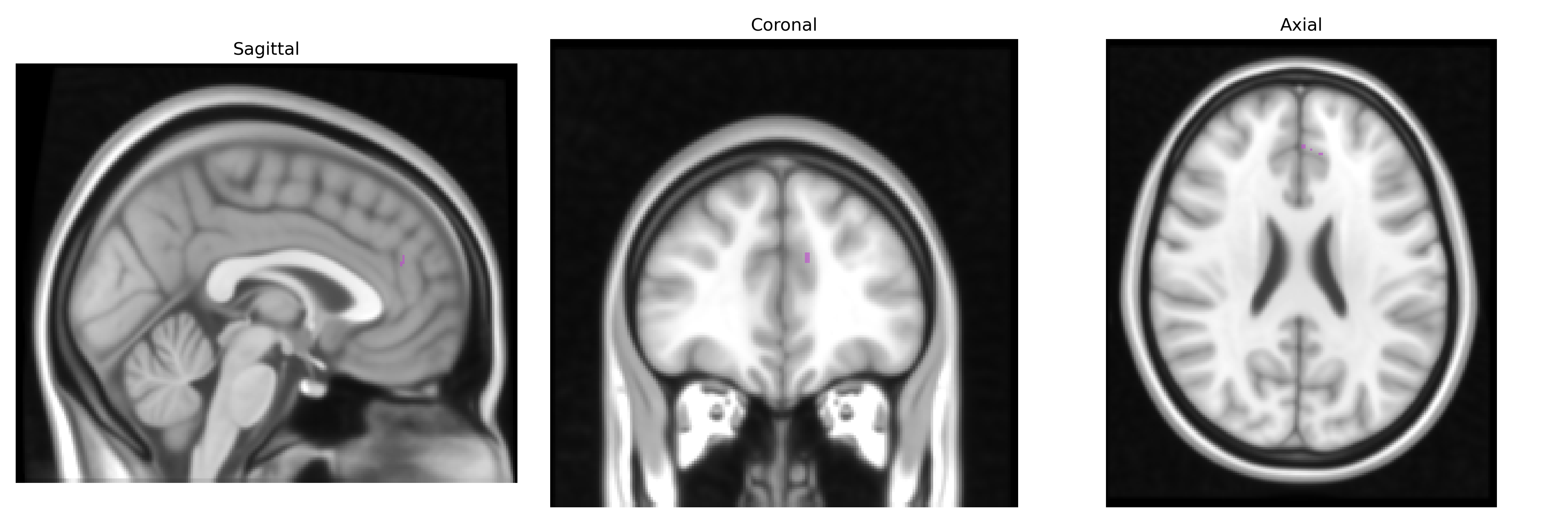
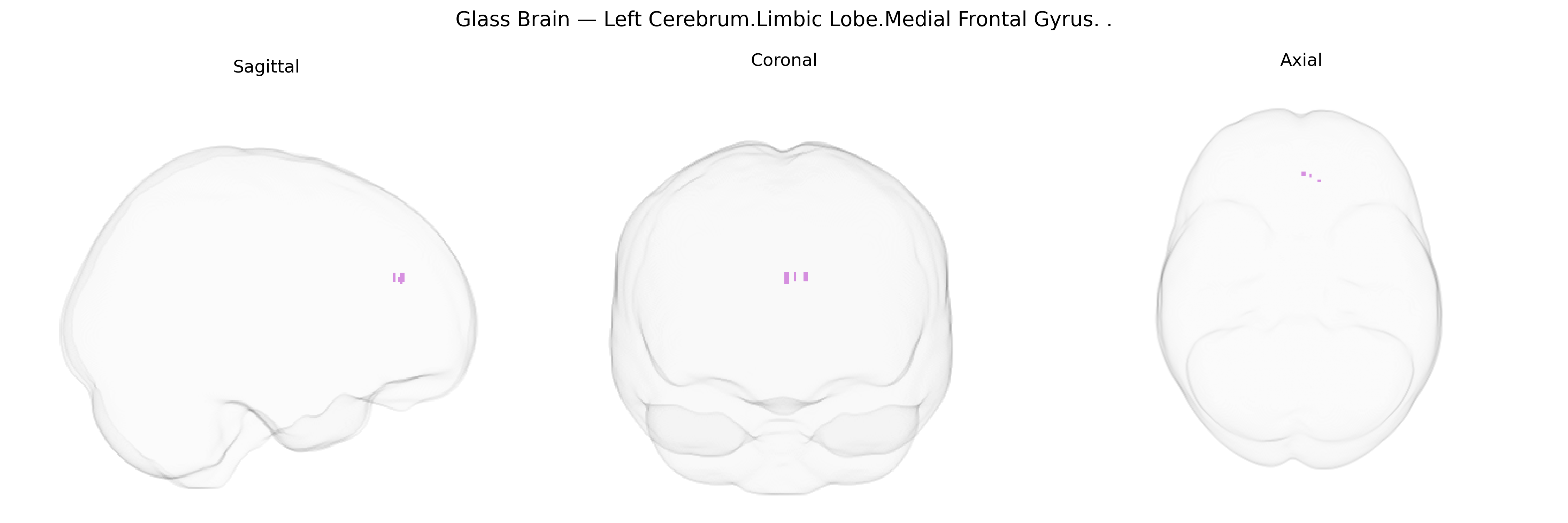
The bilateral Left Cerebrum.Limbic Lobe.Medial Frontal Gyrus corresponds primarily to the medial aspect of the superior frontal region along the interhemispheric fissure, encompassing cortex associated with components of the medial prefrontal and anterior cingulate networks. This area participates in high-order associative and limbic functions, including regulation of emotion, motivation, and aspects of self-referential and social cognition, as well as contributing to executive control and decision-making through its connections with other prefrontal, cingulate, and limbic structures such as the anterior cingulate cortex, orbitofrontal cortex, and amygdala. In the Talairach framework, it is considered part of the “limbic lobe” due to strong connectivity with limbic circuitry rather than primary sensorimotor functions. There is no direct link for this exact composite label; a related structure is the Medial prefrontal cortex.
The medial frontal gyrus portion of the limbic-associated left cerebrum is consistently implicated in genetic studies of higher-order cognition, affect regulation, and psychiatric vulnerability, with converging evidence from GWAS, imaging–genetics, and large-scale consortia (e.g., ENIGMA, UK Biobank). Variants in genes involved in synaptic plasticity, glutamatergic and GABAergic signaling, and neurodevelopmental pathways (including but not limited to BDNF, GRM3, CACNA1C, ZNF804A, and DISC1-related networks) have been associated with structural measures such as cortical thickness and surface area, as well as functional activation in medial frontal regions during tasks of cognitive control, error monitoring, and reward processing. Common risk loci for schizophrenia, bipolar disorder, and major depressive disorder show downstream effects on medial frontal morphology and connectivity, while polygenic risk scores for these disorders correlate with reduced gray matter or altered activation in this region. GWAS of personality and behavioral traits—such as neuroticism, educational attainment, and general cognitive ability—also report associations with medial prefrontal cortical phenotypes, suggesting shared genetic influences on limbic–frontal circuits. Moreover, loci linked to autism spectrum disorder, attention-deficit/hyperactivity disorder, and substance use phenotypes have been tied to medial frontal structural or functional variation, supporting a pleiotropic genetic architecture in which risk genes modulate limbic–frontal networks subserving emotion, motivation, and executive control.
Overview generated by GPT-4o (2026).
Region ID: 949
Hemisphere: bilateral
Atlas: Talairach labels 1mm
Full Quality Version: Download MP4
Full Quality Version: Download MP4
Wali Sidiqyar*, Gaurav Rudravaram*, Elyssa M. McMaster, Trent M. Schwartz, Adam M. Saunders, Kurt G. Schilling, Bennett A. Landman "Introducing SPINS: A Shared Public Visualization Library of Neuroanatomical Structures." Medical Imaging with Deep Learning- short paper
This resource is licensed under CC0 1.0 Universal (Public Domain).