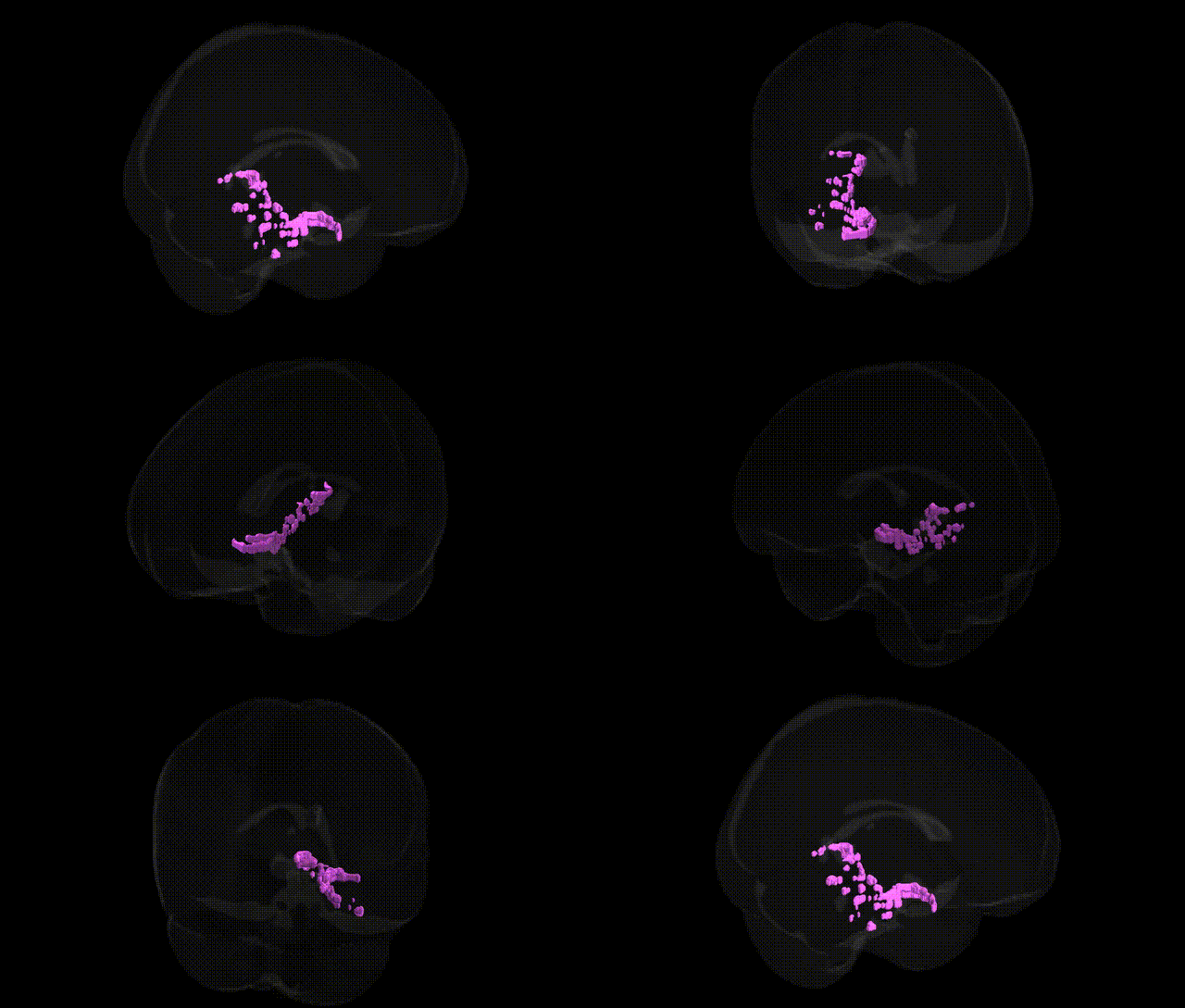
The bilateral Left Cerebrum Limbic Lobe Parahippocampal Gyrus is a cortical region of the medial temporal lobe that forms part of the limbic system and lies adjacent to the hippocampal formation, extending along the ventromedial surface of the temporal lobe from the entorhinal cortex posteriorly toward the isthmus of the cingulate gyrus. It is composed of archicortical and periallocortical areas that receive highly processed multimodal sensory input and project to the hippocampus, subiculum, and other limbic structures, supporting functions in episodic memory encoding and retrieval, spatial navigation, contextual association, and aspects of emotional processing. Vascular supply derives primarily from branches of the posterior cerebral and anterior choroidal arteries, and its white matter connections include the perforant path and reciprocal pathways with neocortical association areas, making it a critical interface between cortical sensory processing and hippocampal memory circuitry. Parahippocampal gyrus
The parahippocampal gyrus, a limbic structure in the medial temporal lobe, shows multiple genetic associations largely identified via imaging genetics and GWAS of brain structure and function. Variants in genes related to synaptic plasticity, tau and amyloid processing, and neurodevelopment—such as APOE, CLU, PICALM, BIN1, and MAPT—have been linked to parahippocampal volume, cortical thickness, or activation patterns, particularly in the context of Alzheimer’s disease and age-related memory decline. Large-scale neuroimaging GWAS (e.g., ENIGMA and UK Biobank–based studies) report heritability of parahippocampal morphology and implicate loci near genes involved in neuronal signaling and axonal guidance, including SLC39A8, DPP4, and others, although specific effects are often modest and distributed. Parahippocampal structure and function also show genetic correlations with schizophrenia, major depressive disorder, and bipolar disorder, with risk variants in CACNA1C, ZNF804A, and other psychiatric GWAS hits associated with altered medial temporal anatomy or connectivity. In addition, polymorphisms in BDNF (notably Val66Met) and COMT have been associated with memory performance and parahippocampal–hippocampal activation during episodic encoding and retrieval. Overall, genetic influences on the parahippocampal gyrus are polygenic and pleiotropic, overlapping with loci that confer risk for neurodegenerative and psychiatric disorders and shaping individual differences in memory-related circuitry.
Overview generated by GPT-4o (2026).
Region ID: 125
Hemisphere: bilateral
Atlas: Talairach labels 1mm
Full Quality Version: Download MP4
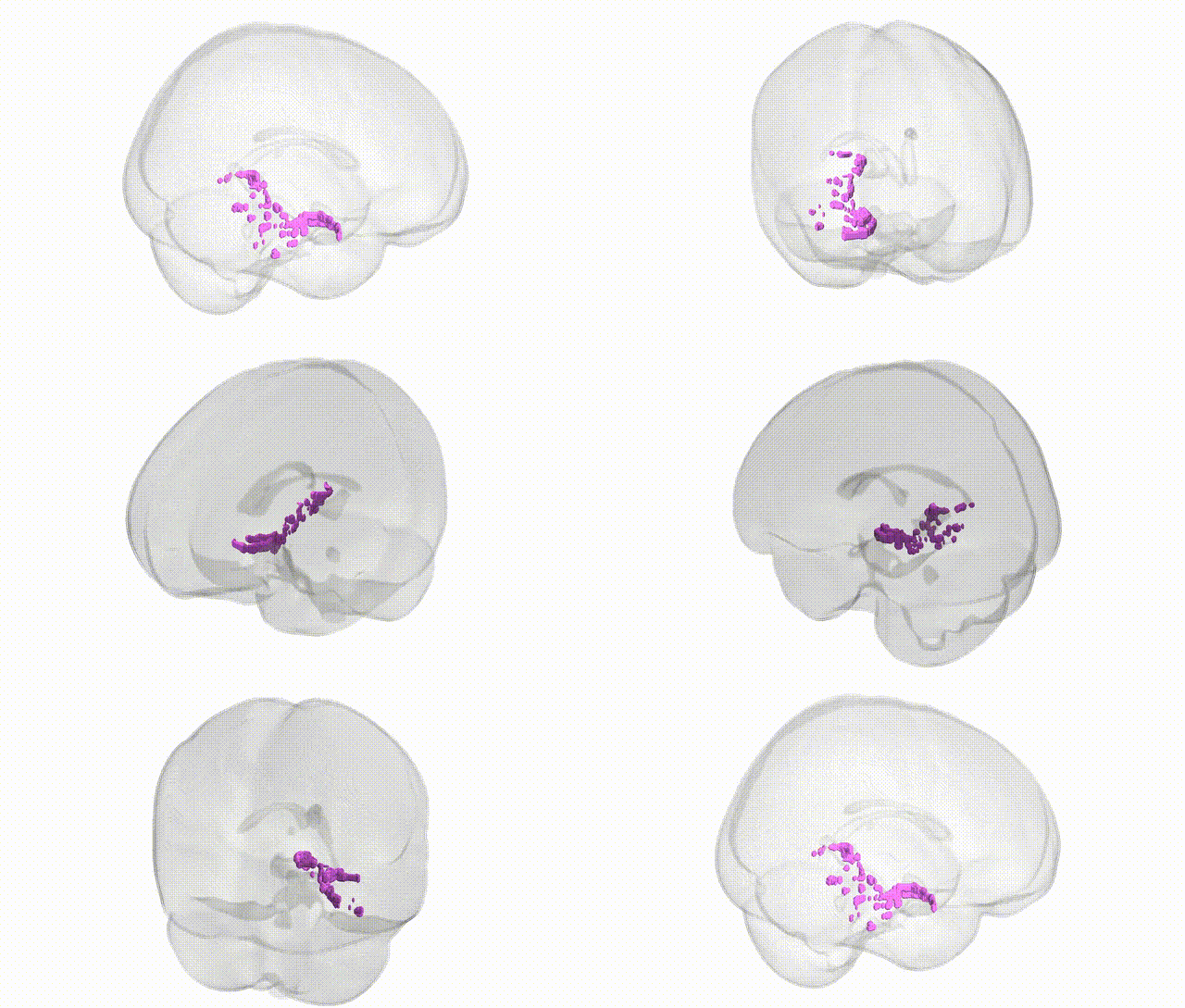
Full Quality Version: Download MP4
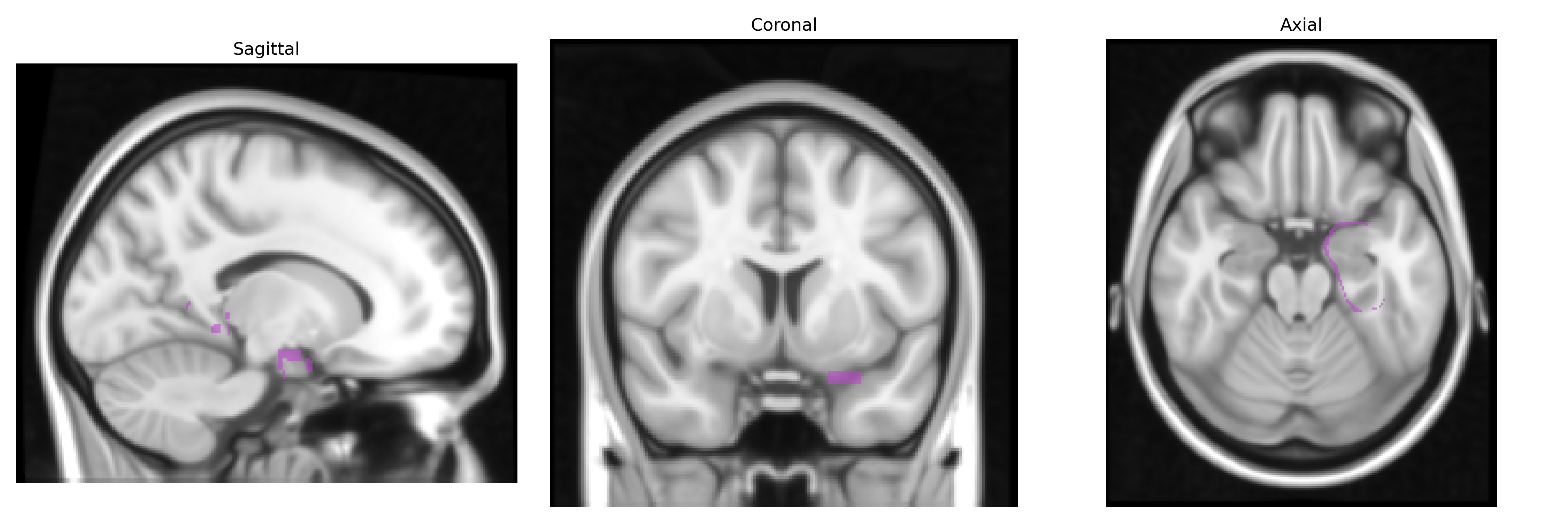
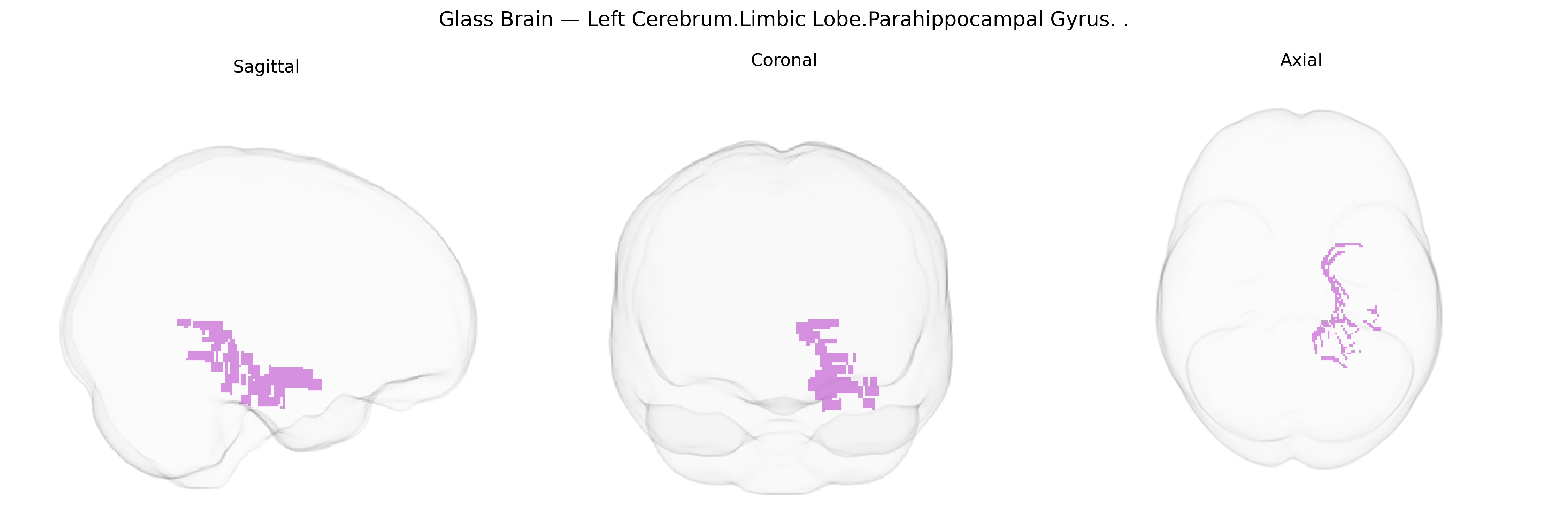
Wali Sidiqyar*, Gaurav Rudravaram*, Elyssa M. McMaster, Trent M. Schwartz, Adam M. Saunders, Kurt G. Schilling, Bennett A. Landman "Introducing SPINS: A Shared Public Visualization Library of Neuroanatomical Structures." Medical Imaging with Deep Learning- short paper
This resource is licensed under CC0 1.0 Universal (Public Domain).