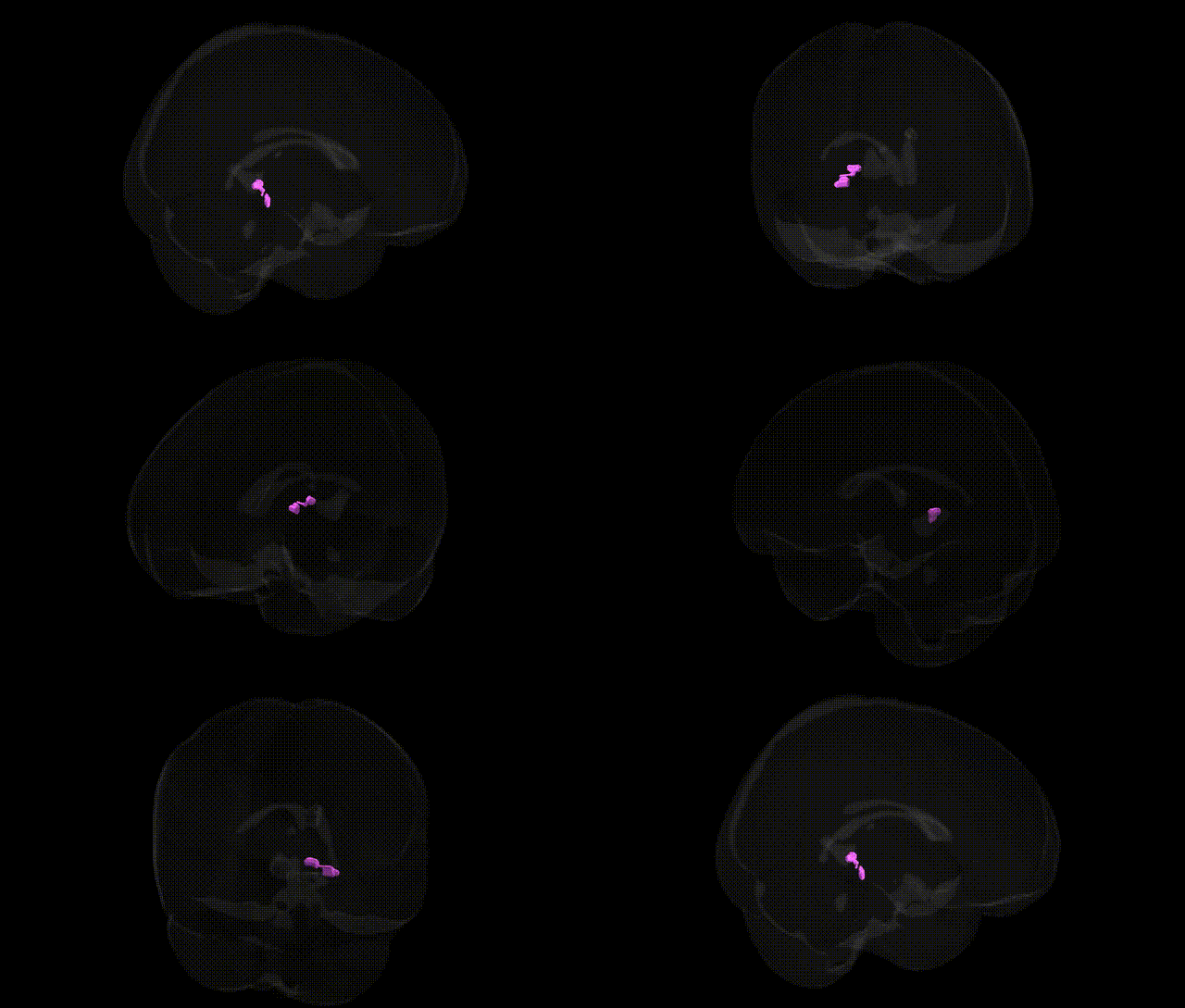
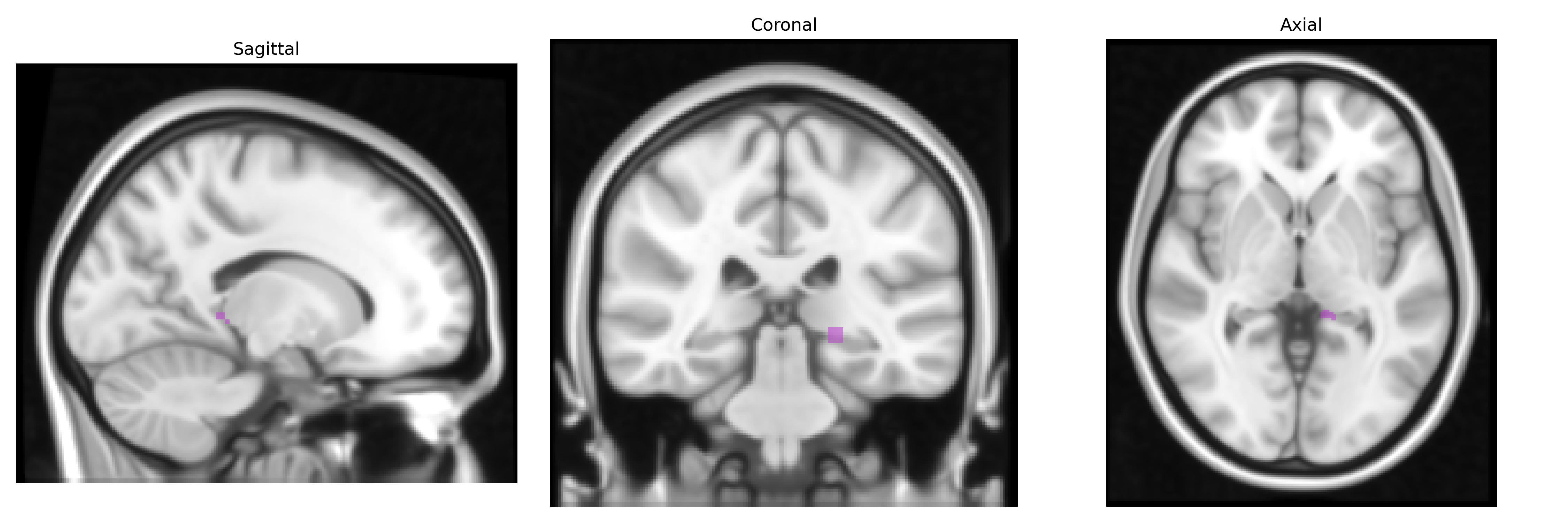
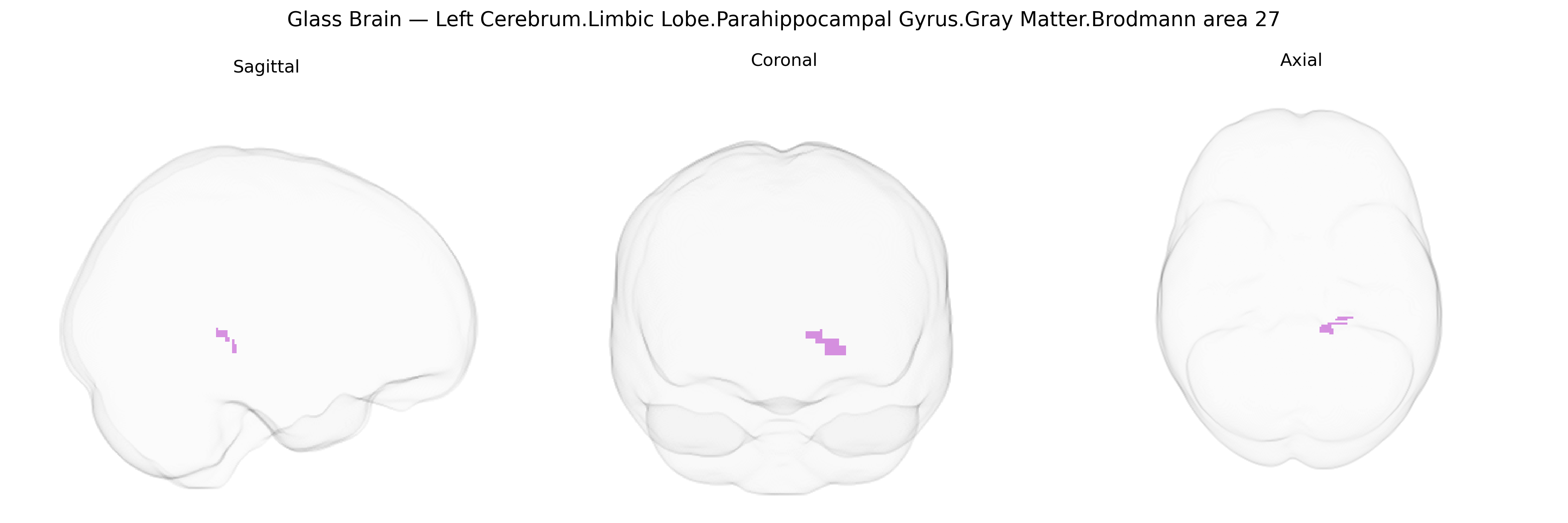
The bilateral Left Cerebrum.Limbic Lobe.Parahippocampal Gyrus.Gray Matter.Brodmann area 27 corresponds primarily to the presubiculum, a cytoarchitectonically defined cortical field located in the parahippocampal region of the medial temporal lobe, bordering the hippocampal formation and entorhinal cortex. This area is composed of densely packed small pyramidal neurons and is heavily interconnected with the hippocampus, entorhinal cortex, retrosplenial cortex, and other limbic structures, supporting roles in spatial navigation, head-direction signaling, and contextual memory processing. Functionally, BA27 contributes to the integration of spatial and mnemonic information and participates in the broader limbic network involved in episodic memory and environmental orientation. There is no direct Wikipedia article for Brodmann area 27; a related structure in which it is located is the Parahippocampal gyrus.
The bilateral parahippocampal gyrus (gray matter, Brodmann area 27) in the limbic lobe is consistently implicated in genetic studies of episodic memory, spatial navigation, and emotional processing, with GWAS and imaging genetics work highlighting associations between variation in genes involved in synaptic plasticity and neurodevelopment (e.g., BDNF, APOE, GRIN2B, DISC1, and COMT) and parahippocampal volume, activity, or connectivity. APOE ε4 and other Alzheimer’s disease–risk loci (such as CLU, CR1, and BIN1) have been linked to structural and functional alterations in this region, which is an early site of neurodegenerative change in Alzheimer’s and other dementias. Schizophrenia and major depressive disorder GWAS have identified risk variants that correlate with altered parahippocampal anatomy and function, especially in networks supporting memory and emotional regulation, while PTSD genetic studies have associated variants in stress-response genes (e.g., FKBP5) with changes in parahippocampal and hippocampal circuitry underlying fear conditioning and contextual memory. Large-scale GWAS of brain imaging phenotypes have also reported heritable variation in parahippocampal gyrus volume and cortical thickness, with polygenic scores for cognitive performance, educational attainment, and neuroticism showing associations to structural metrics in this region, underscoring its role as a genetically influenced hub in memory and affective networks rather than a site for a single, region-specific locus.
Overview generated by GPT-4o (2026).
Region ID: 432
Hemisphere: bilateral
Atlas: Talairach labels 1mm
Full Quality Version: Download MP4
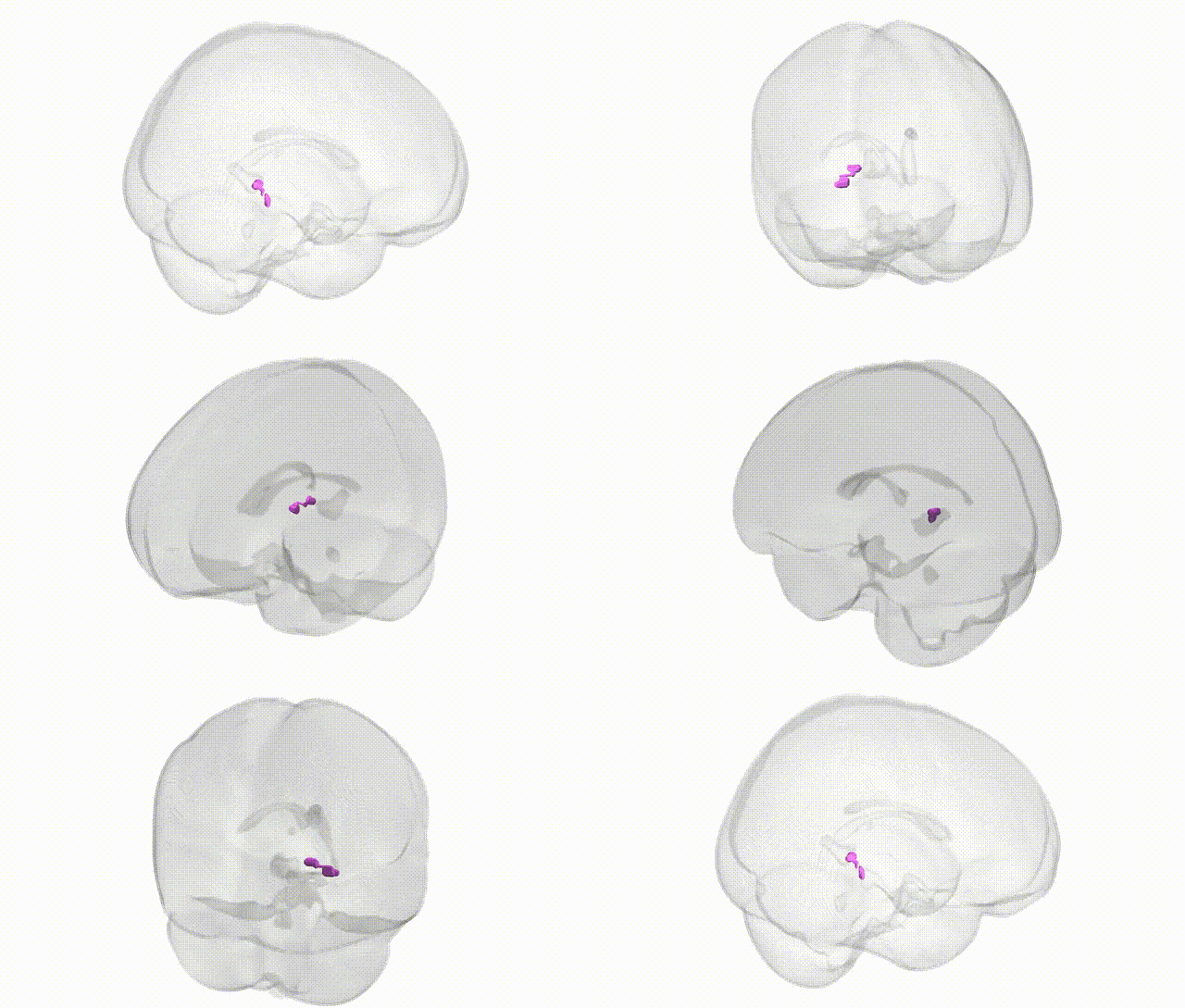
Full Quality Version: Download MP4
Wali Sidiqyar*, Gaurav Rudravaram*, Elyssa M. McMaster, Trent M. Schwartz, Adam M. Saunders, Kurt G. Schilling, Bennett A. Landman "Introducing SPINS: A Shared Public Visualization Library of Neuroanatomical Structures." Medical Imaging with Deep Learning- short paper
This resource is licensed under CC0 1.0 Universal (Public Domain).