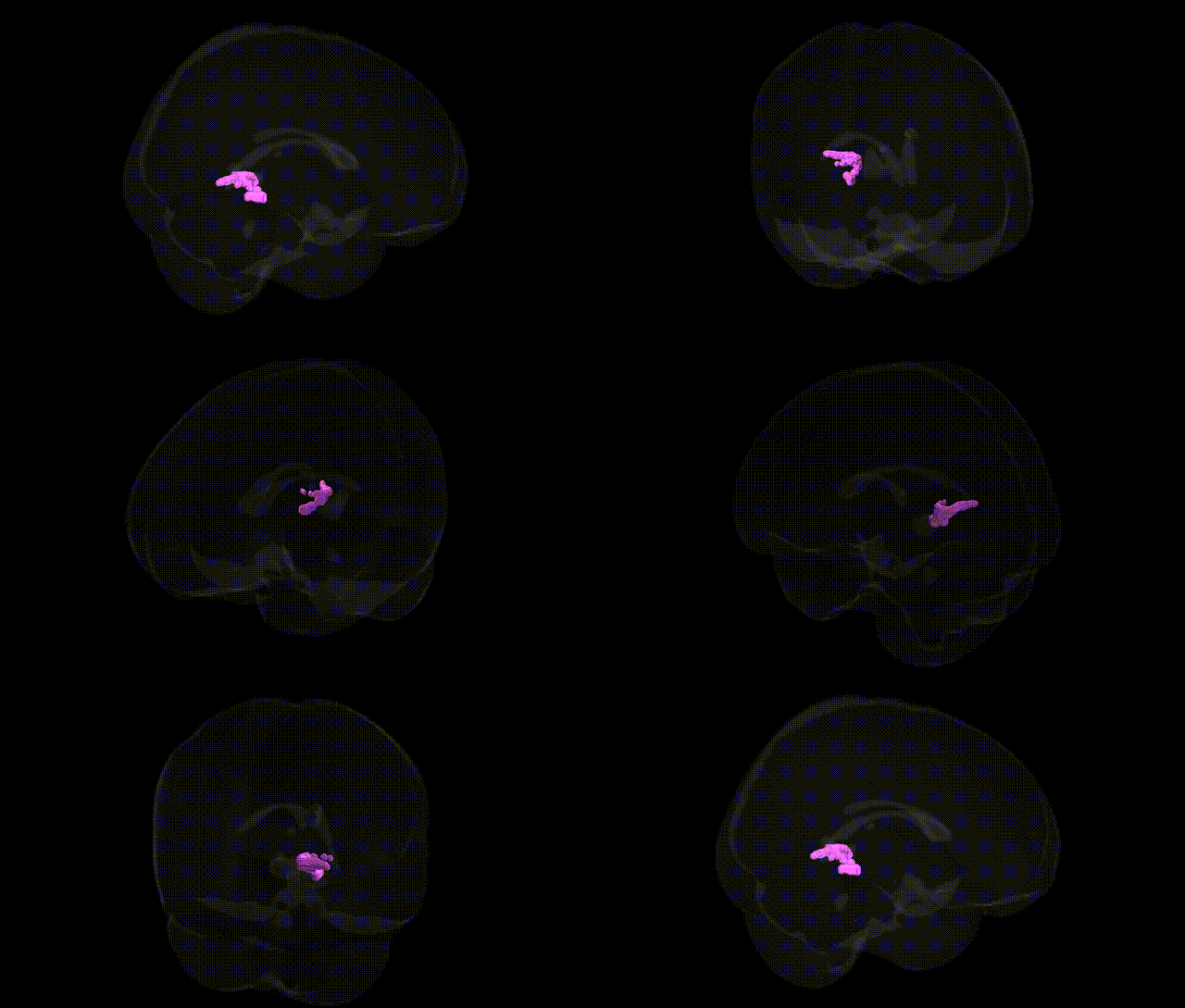
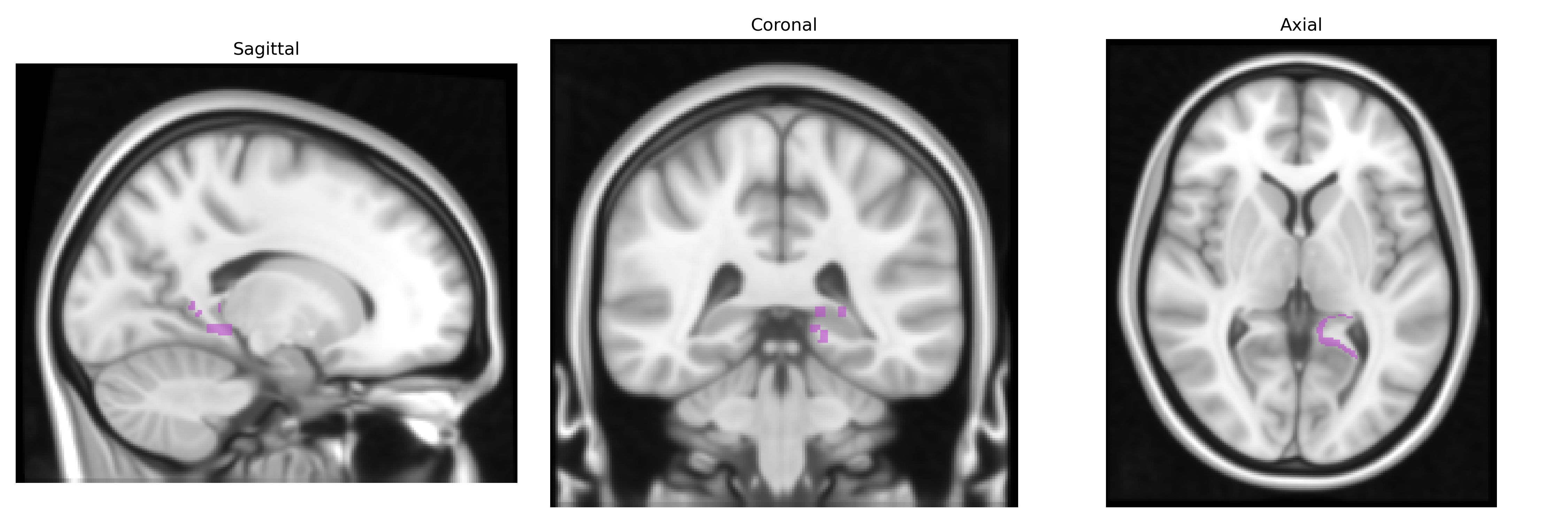
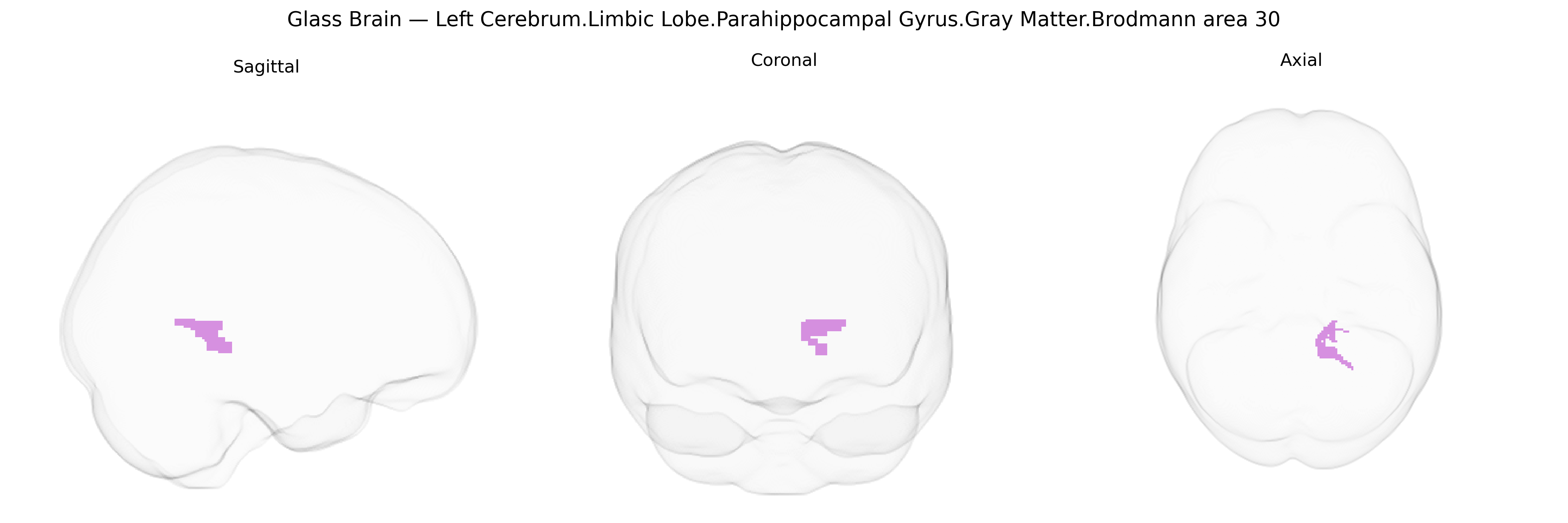
The bilateral Left Cerebrum Limbic Lobe Parahippocampal Gyrus Gray Matter Brodmann area 30 corresponds to a retrosplenial portion of the parahippocampal region located in the medial temporal lobe, bordering the posterior cingulate and presubiculum. Cytoarchitectonically, BA30 is characterized by transitional granular cortex features between limbic and neocortical areas, and it is heavily interconnected with the hippocampal formation, posterior cingulate cortex, and other nodes of the default mode and memory networks. Functionally, this region participates in episodic memory, spatial navigation, and scene processing, contributing to contextual associations and recollection of autobiographical information. Its bilateral representation reflects a role in integrative, high-level memory processes rather than strictly lateralized functions. There is no direct link for Brodmann area 30; a closely related structure is the Retrosplenial cortex.
The bilateral Left Cerebrum Limbic Lobe Parahippocampal Gyrus Gray Matter Brodmann area 30, a retrosplenial/parahippocampal region implicated in contextual memory and scene processing, has been linked indirectly to several genetic associations through imaging–genetics and GWAS of brain structure and function rather than region-specific GWAS alone; common variants in APOE (especially ε4) and TOMM40 associate with medial temporal and parahippocampal atrophy and altered activation, particularly in Alzheimer’s disease and age-related cognitive decline, while schizophrenia and bipolar disorder risk loci in genes such as ZNF804A, CACNA1C, and DISC1 have been associated with structural or functional alterations in medial temporal and parahippocampal circuits, including retrosplenial/BA30-adjacent cortex, in case–control and polygenic risk score studies. Large-scale GWAS of subcortical and cortical morphology (e.g., ENIGMA, UK Biobank) have identified multiple loci (e.g., in genes such as HMGA2, IGF1, and others involved in neurodevelopment, synaptic function, and myelination) that influence temporal lobe and parahippocampal volume, with some overlapping loci also associated with educational attainment, cognitive performance, and neuropsychiatric traits. Variants in genes related to tau and amyloid processing (e.g., MAPT region haplotypes, CLU, PICALM, CR1) show associations with medial temporal atrophy patterns that encompass BA30 in Alzheimer’s and other dementias, and imaging–genetics work has linked candidate genes involved in glutamatergic and GABAergic signaling (such as GRIN2B and GAD1) to altered activity and connectivity in parahippocampal/retrosplenial networks during memory tasks. Across studies of PTSD, depression, and anxiety, polygenic risk for these disorders correlates with structural and functional differences in parahippocampal and retrosplenial regions, consistent with this area’s role in contextual fear, autobiographical memory, and emotional processing, though specific locus–BA30 mappings remain relatively coarse and are typically inferred from broader medial temporal or posterior cingulate/retrosplenial ROIs rather than Talairach-defined BA30 alone.
Overview generated by GPT-4o (2026).
Region ID: 429
Hemisphere: bilateral
Atlas: Talairach labels 1mm
Full Quality Version: Download MP4
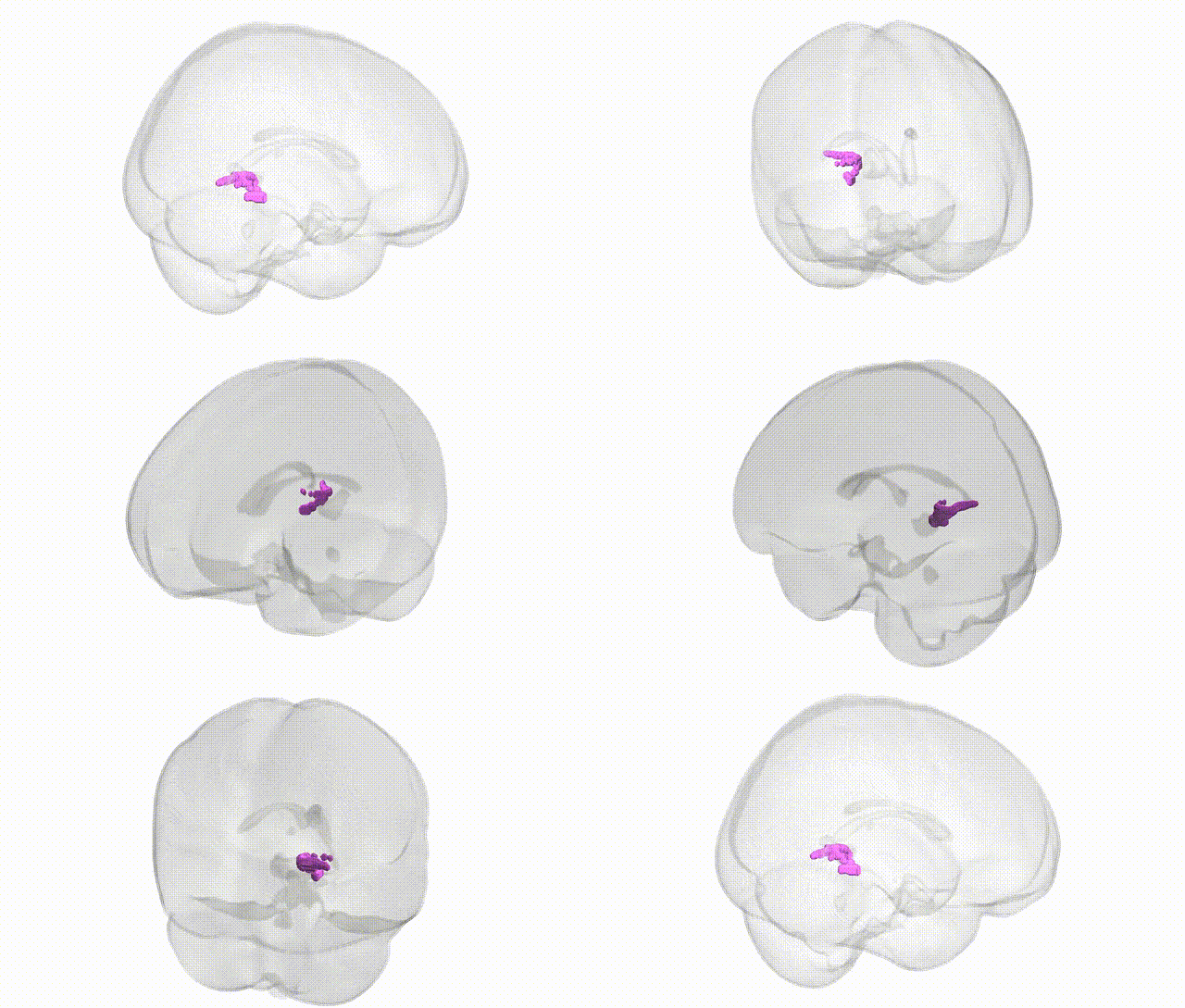
Full Quality Version: Download MP4
Wali Sidiqyar*, Gaurav Rudravaram*, Elyssa M. McMaster, Trent M. Schwartz, Adam M. Saunders, Kurt G. Schilling, Bennett A. Landman "Introducing SPINS: A Shared Public Visualization Library of Neuroanatomical Structures." Medical Imaging with Deep Learning- short paper
This resource is licensed under CC0 1.0 Universal (Public Domain).