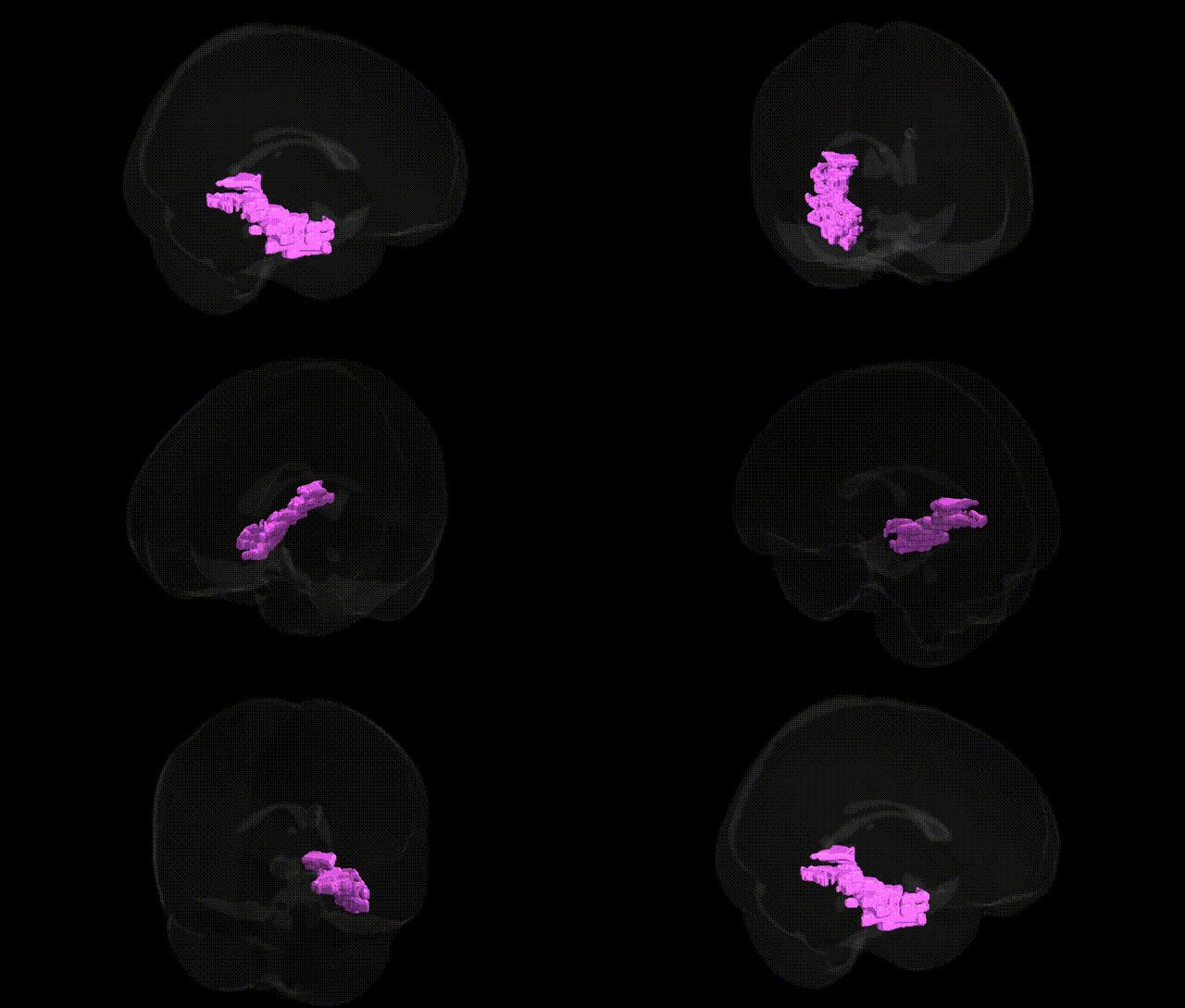
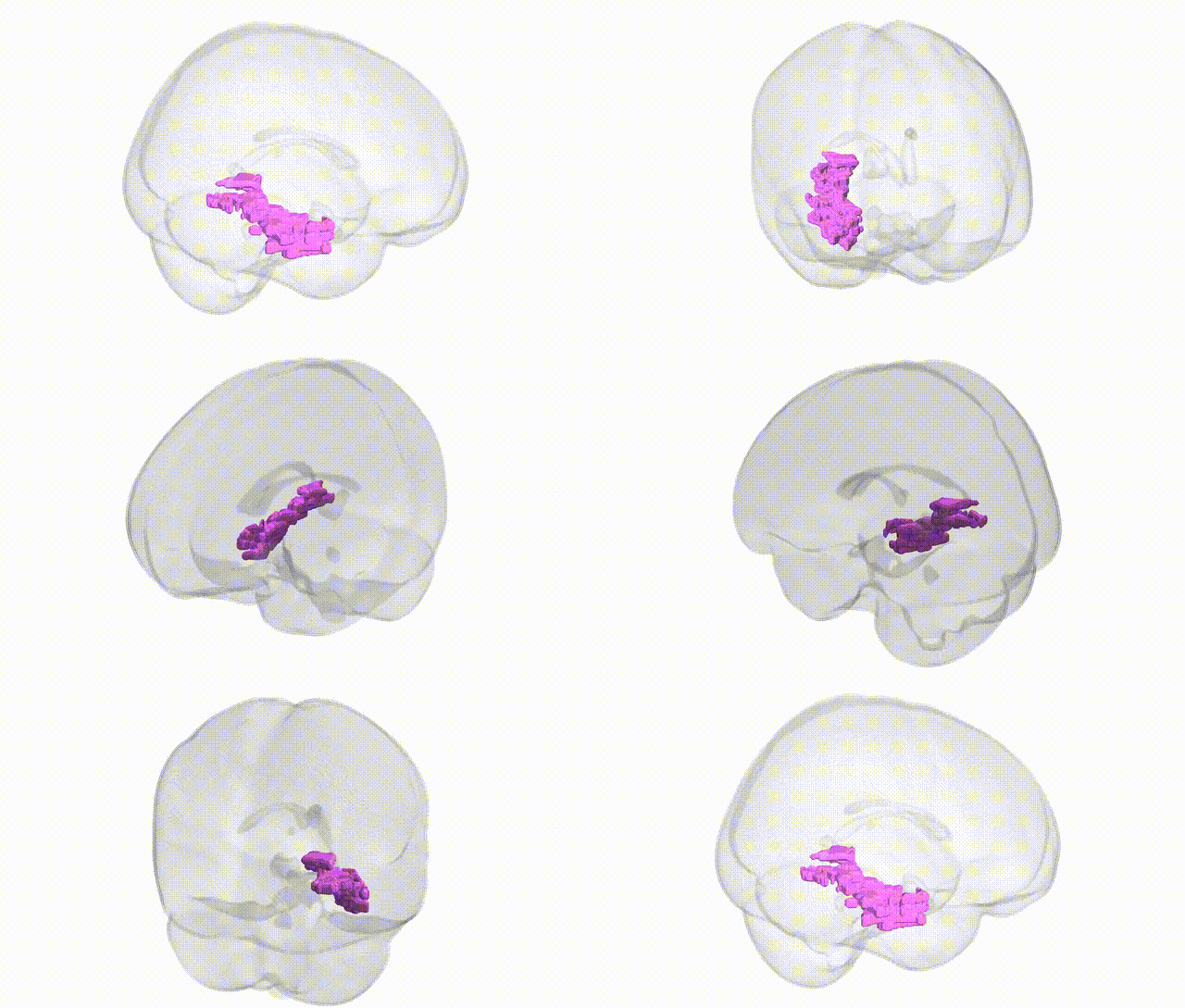
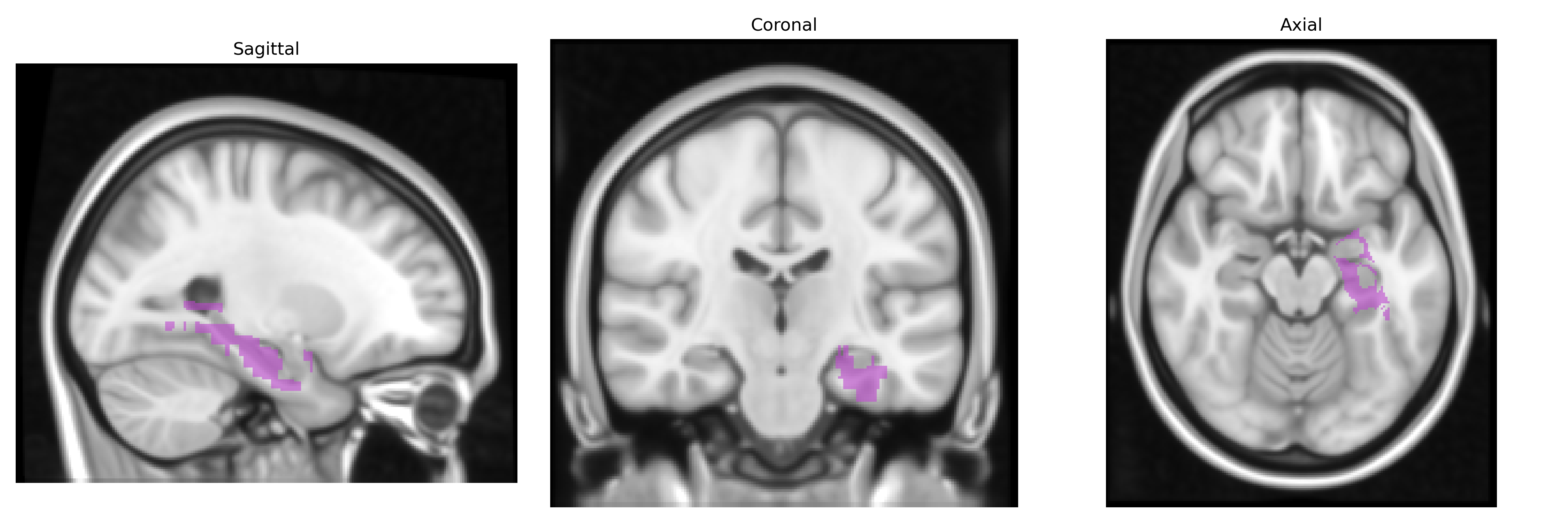
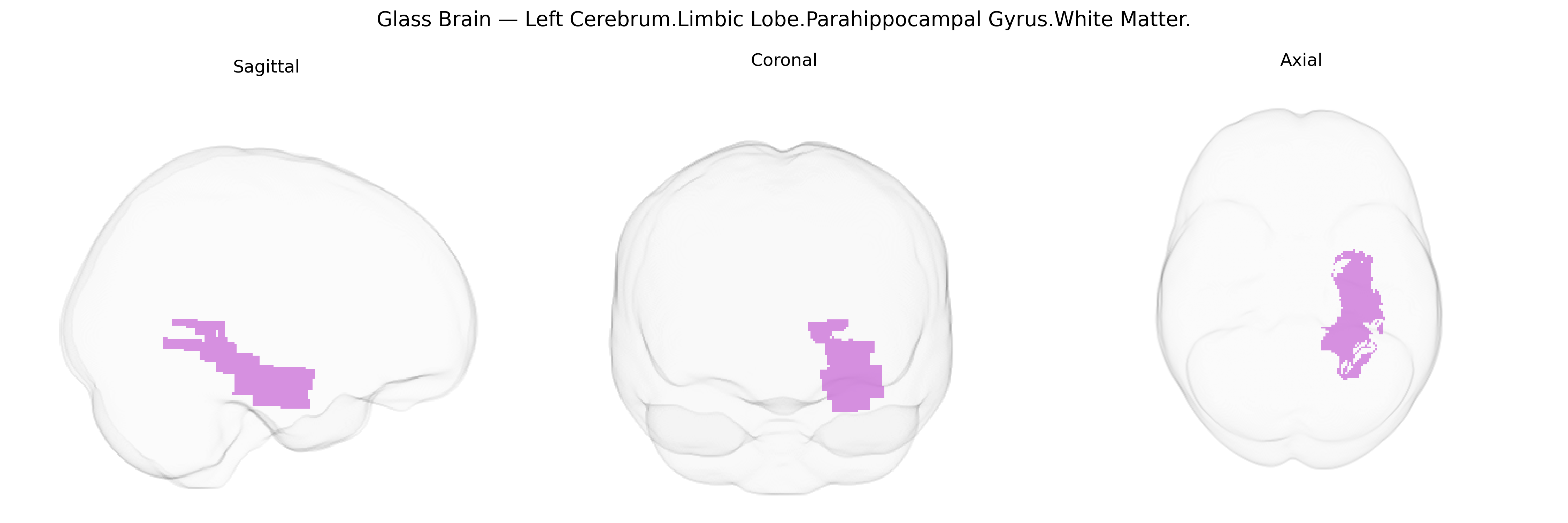
The bilateral left cerebrum limbic lobe parahippocampal gyrus white matter comprises the subcortical myelinated fiber bundles underlying the parahippocampal gyrus, a medial temporal lobe structure of the limbic system. These white matter tracts include association fibers connecting the parahippocampal cortex with the hippocampus, entorhinal cortex, amygdala, and other temporal and limbic regions, as well as projections to and from neocortical association areas. Functionally, these pathways participate in mediating communication within hippocampal–parahippocampal networks involved in episodic memory encoding and retrieval, spatial and contextual processing, and aspects of emotional and autobiographical memory. Damage or disconnection of this white matter can disrupt limbic circuitry and contribute to memory impairment, disorientation, and certain temporal lobe epilepsies. There is no direct link for this specific white matter designation; a closely related structure is the Parahippocampal gyrus.
The bilateral left parahippocampal gyrus white matter, as defined in the Talairach 1 mm atlas, has been indirectly implicated in genetic studies primarily through its role in hippocampal–parahippocampal circuitry, which is frequently examined using MRI-based endophenotypes in genome-wide association studies (GWAS). Common variants in genes related to synaptic plasticity and neurodevelopment—such as BDNF, genes within the major histocompatibility complex (e.g., complement component C4), and several polygenic risk loci for schizophrenia and major depressive disorder—have been associated with altered microstructure or volume in medial temporal and parahippocampal regions, often measured by diffusion tensor imaging or structural MRI. GWAS of hippocampal and adjacent temporal lobe white matter volumes and integrity have identified multiple loci (e.g., near genes such as DLG2, SORL1, and others involved in neurodevelopment, axonal guidance, and amyloid processing) that influence parahippocampal–hippocampal connectivity, with relevance to Alzheimer’s disease, cognitive decline, and memory performance. Additional associations arise from large imaging-genetics consortia (such as ENIGMA and UK Biobank analyses), where polygenic scores for schizophrenia, bipolar disorder, and neuroticism correlate with structural and microstructural variation in medial temporal white matter, including parahippocampal pathways, supporting a genetic contribution to vulnerability for psychotic, mood, and anxiety disorders through this limbic white matter hub, although precise locus-to-tract specificity for “Left Cerebrum.Limbic Lobe.Parahippocampal Gyrus.White Matter” as labeled in the Talairach atlas remains coarse and largely inferred rather than directly mapped.
Overview generated by GPT-4o (2026).
Region ID: 133
Hemisphere: bilateral
Atlas: Talairach labels 1mm
Full Quality Version: Download MP4
Full Quality Version: Download MP4
Wali Sidiqyar*, Gaurav Rudravaram*, Elyssa M. McMaster, Trent M. Schwartz, Adam M. Saunders, Kurt G. Schilling, Bennett A. Landman "Introducing SPINS: A Shared Public Visualization Library of Neuroanatomical Structures." Medical Imaging with Deep Learning- short paper
This resource is licensed under CC0 1.0 Universal (Public Domain).