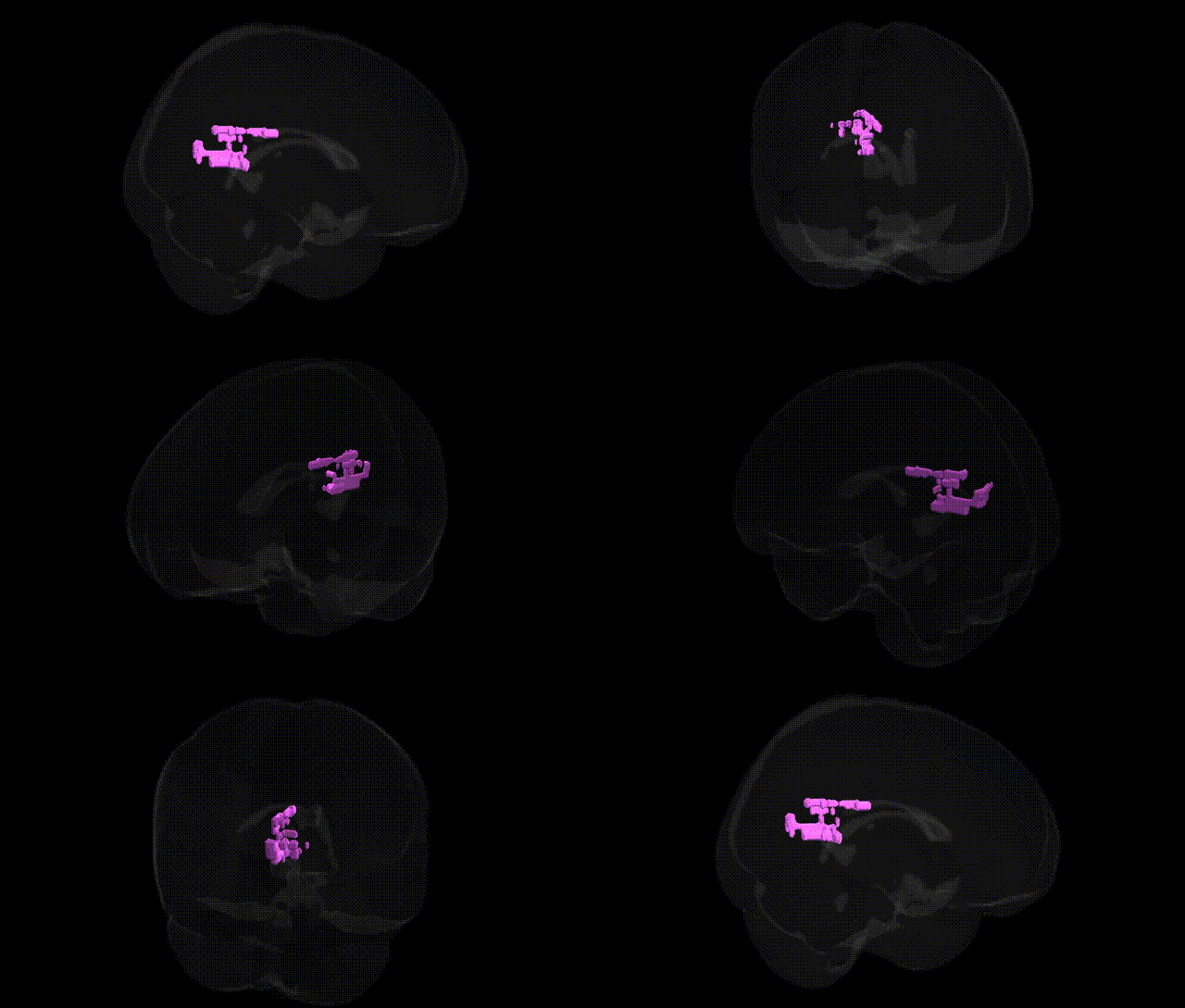
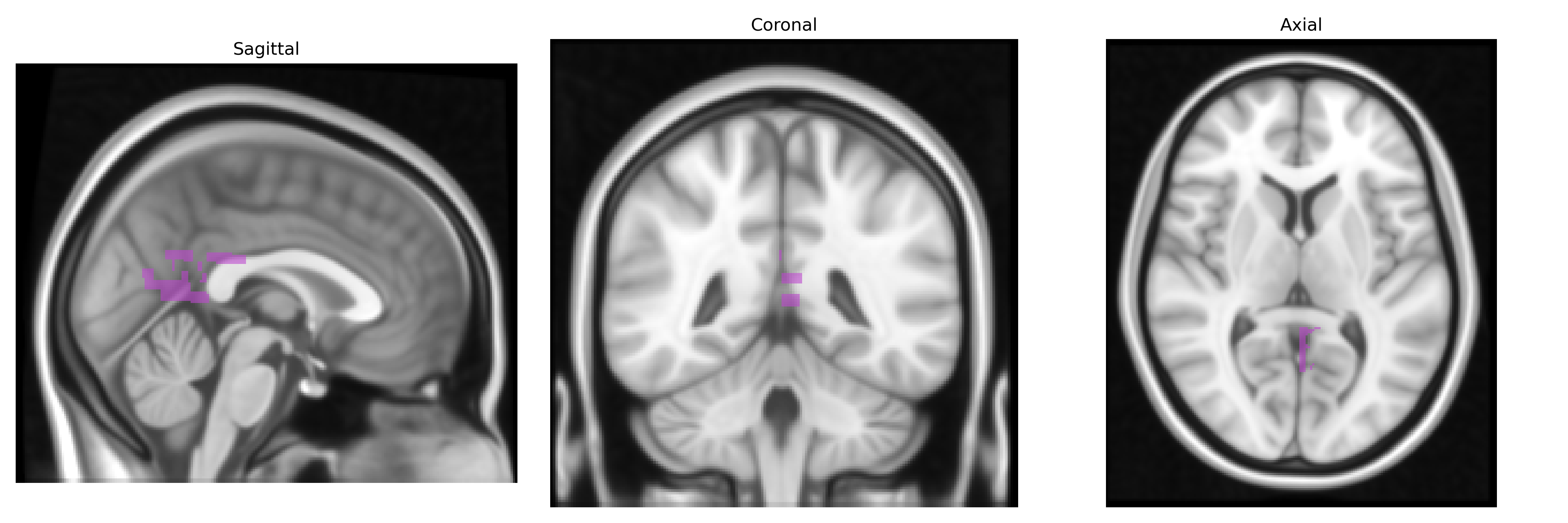
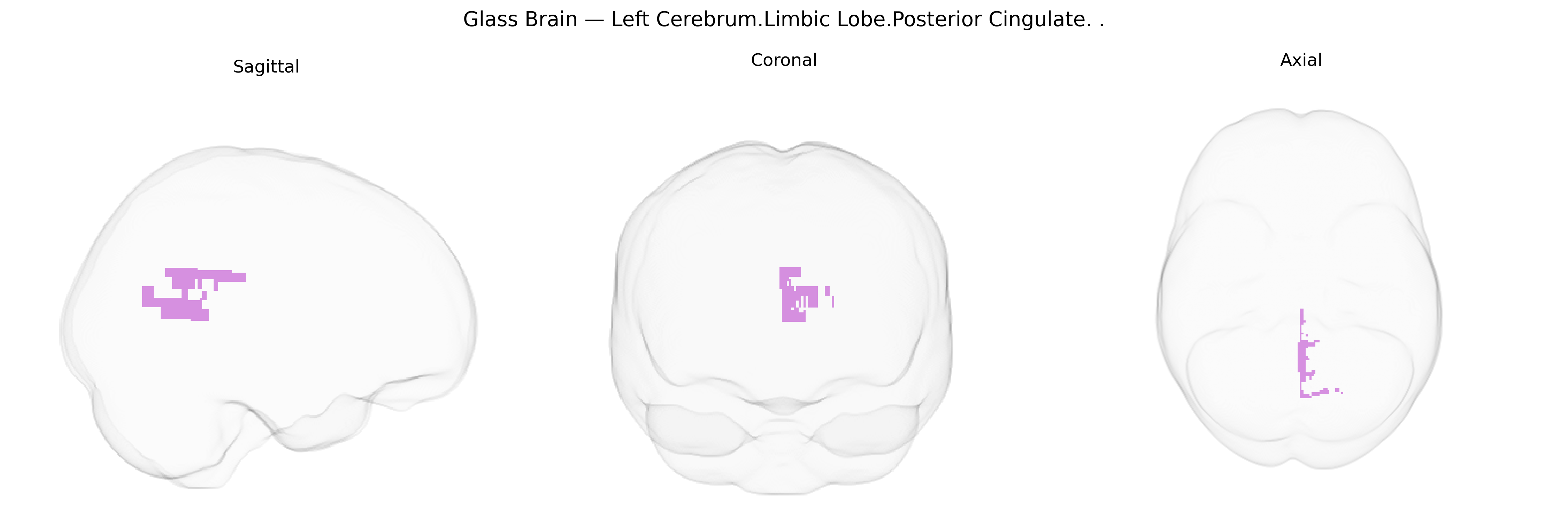
The bilateral Left Cerebrum.Limbic Lobe.Posterior Cingulate region corresponds to the posterior portion of the cingulate gyrus, a key component of the limbic system situated on the medial aspect of the cerebral hemisphere, just dorsal to the corpus callosum. This area is heavily interconnected with precuneus, medial prefrontal cortex, hippocampal formation, and thalamus, and is a central hub of the default mode network, showing high activity during rest, internally directed thought, autobiographical memory retrieval, and aspects of self-referential processing. Functionally, it contributes to visuospatial orientation, evaluation of emotional and motivational significance of stimuli, and integration of memory and attention, and it is implicated in various neuropsychiatric and neurodegenerative conditions, including Alzheimer’s disease, depression, and disorders of consciousness. Posterior cingulate cortex
The bilateral posterior cingulate cortex (PCC) in the limbic lobe—corresponding to the Left Cerebrum.Limbic Lobe.Posterior Cingulate region in the Talairach 1 mm atlas—shows consistent genetic associations through imaging-genetics and GWAS of brain structure, connectivity, and function, as well as psychiatric and neurodegenerative traits. SNP-based heritability studies and large consortia (e.g., ENIGMA, UK Biobank) indicate that PCC cortical thickness, surface area, and resting-state connectivity within the default mode network are moderately heritable and influenced by polygenic variation, including loci near genes involved in synaptic plasticity, neurodevelopment, and myelination (such as variants in or near genes like BDNF, GRIN2B, and multiple glutamatergic and GABAergic pathway genes, though effects are small and distributed). GWAS of Alzheimer’s disease and related endophenotypes implicate PCC metabolism and atrophy as downstream targets of risk loci including APOE (particularly ε4), CLU, PICALM, and CR1, with PCC hypometabolism and structural changes serving as genetically influenced biomarkers of AD risk. Polygenic risk for major depressive disorder, schizophrenia, bipolar disorder, and autism spectrum disorder has been associated with altered PCC functional connectivity and default mode network dynamics, suggesting that shared genetic liability for these disorders partly acts through circuits involving the posterior cingulate. Additional work links PCC structure and activation to polygenic scores for cognitive ability, educational attainment, and internalizing traits, indicating that this region is a convergent hub where diffuse genetic effects on cognition, self-referential processing, and affect regulation manifest, rather than a site dominated by a small number of large-effect variants.
Overview generated by GPT-4o (2026).
Region ID: 667
Hemisphere: bilateral
Atlas: Talairach labels 1mm
Full Quality Version: Download MP4
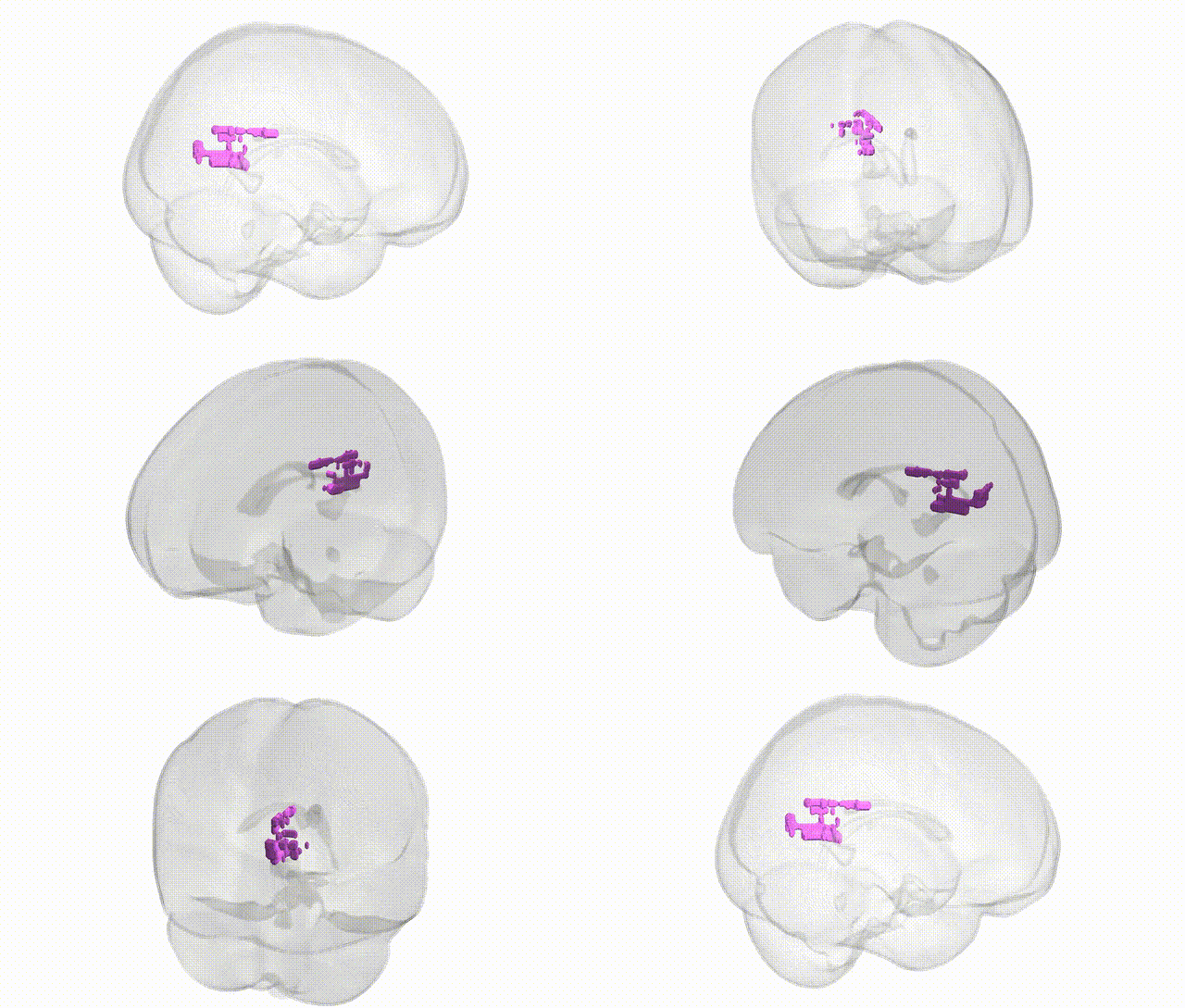
Full Quality Version: Download MP4
Wali Sidiqyar*, Gaurav Rudravaram*, Elyssa M. McMaster, Trent M. Schwartz, Adam M. Saunders, Kurt G. Schilling, Bennett A. Landman "Introducing SPINS: A Shared Public Visualization Library of Neuroanatomical Structures." Medical Imaging with Deep Learning- short paper
This resource is licensed under CC0 1.0 Universal (Public Domain).