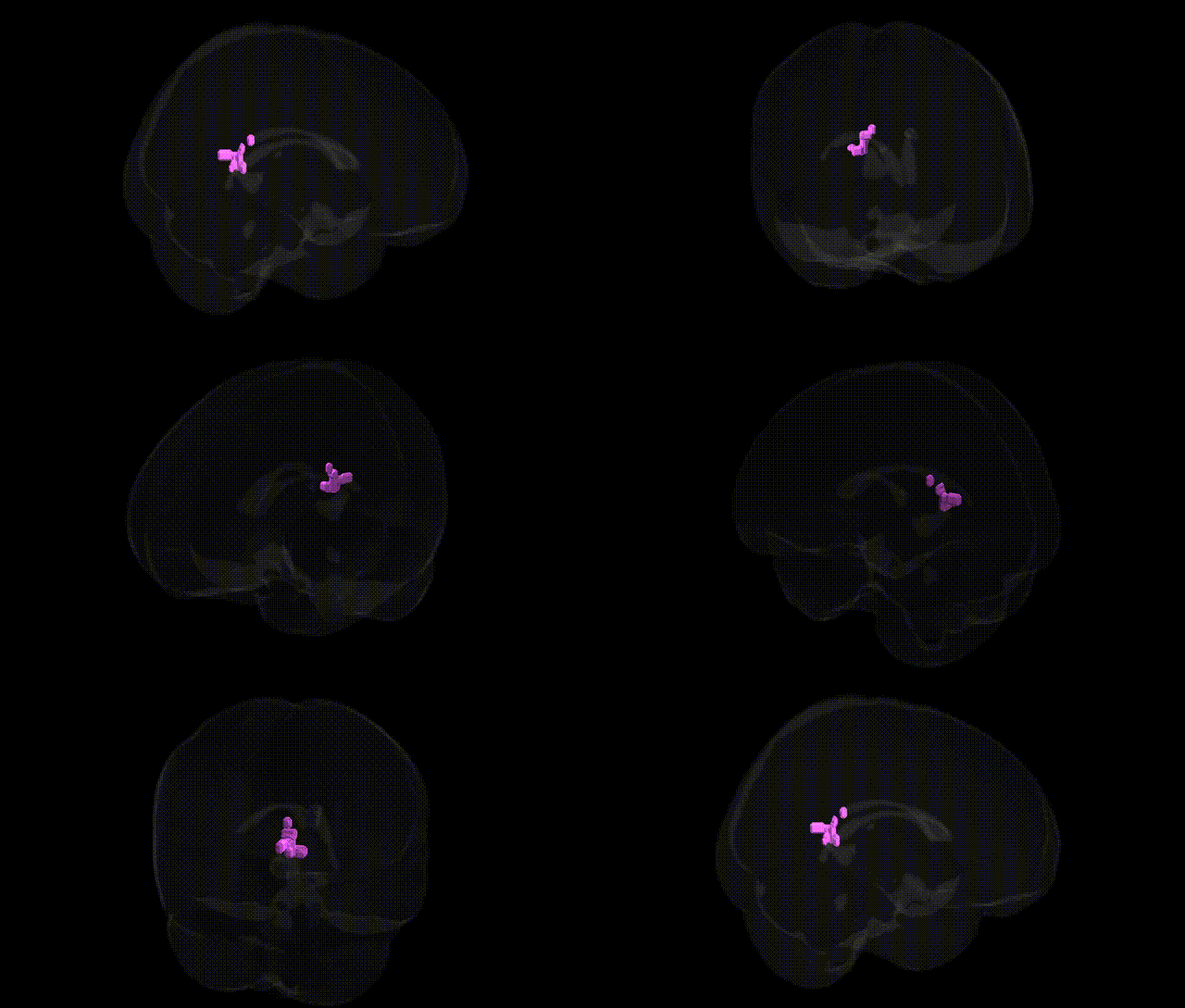
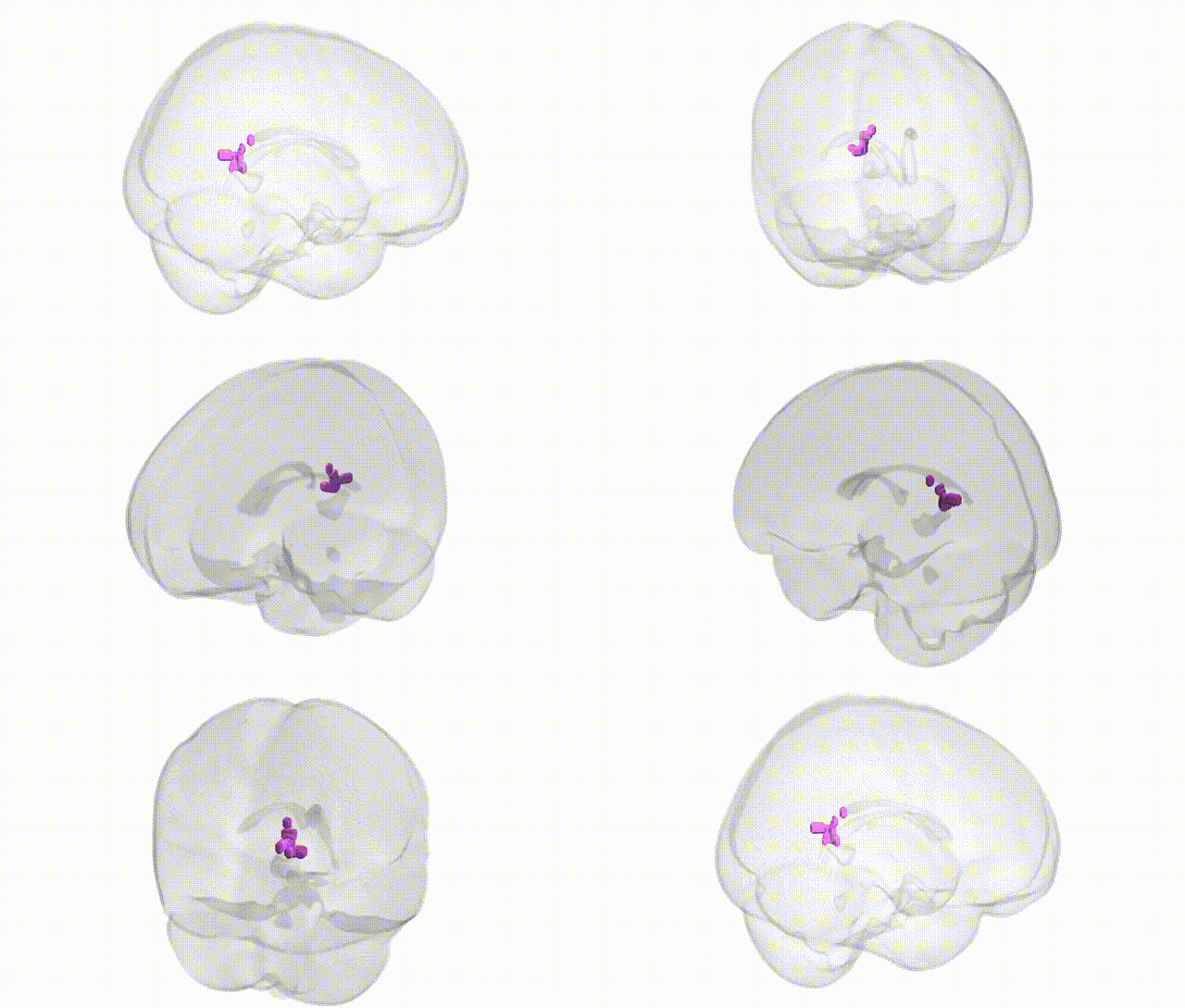
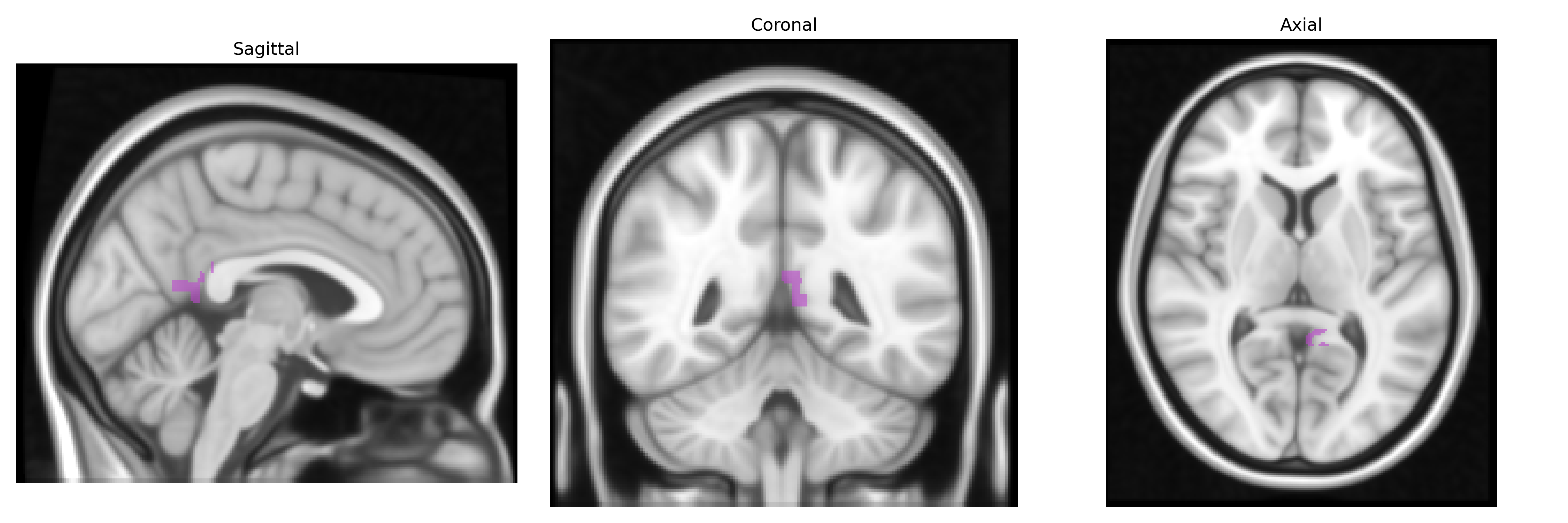
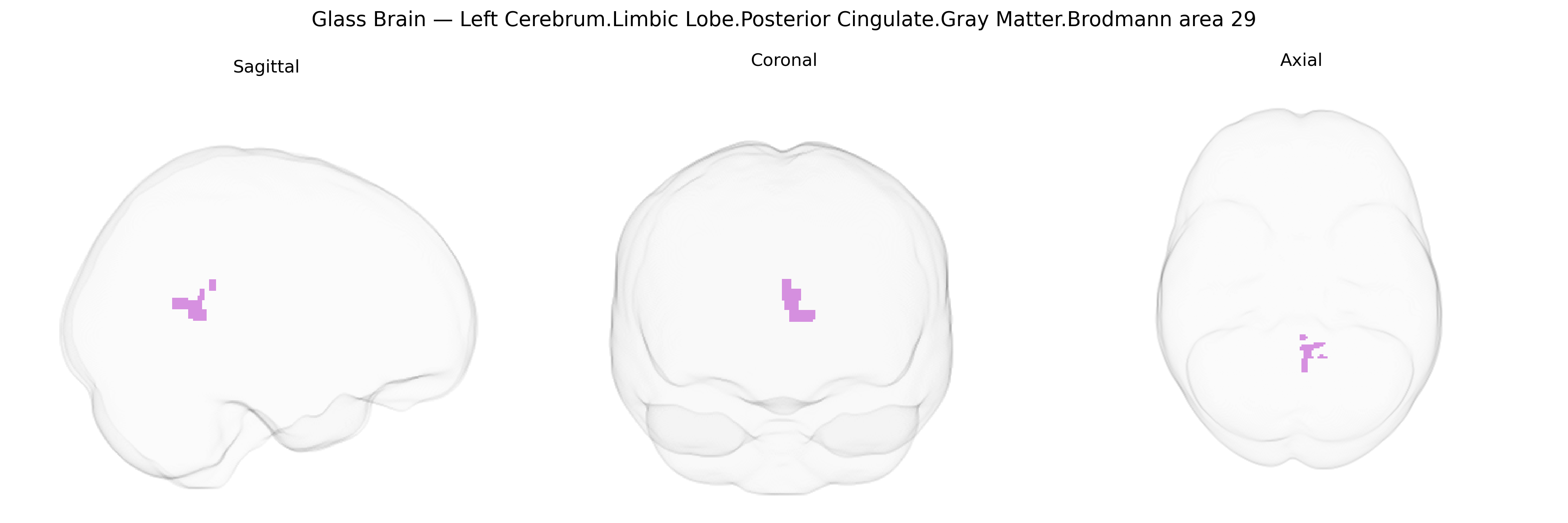
The bilateral Left Cerebrum.Limbic Lobe.Posterior Cingulate.Gray Matter.Brodmann area 29 corresponds to the retrosplenial cortex, a limbic-associated cortical region located in the posterior cingulate gyrus, adjacent to the splenium of the corpus callosum. Brodmann area 29 is characterized by a relatively thin, agranular to dysgranular cortical architecture and extensive connectivity with the hippocampal formation, parahippocampal cortex, anterior thalamic nuclei, and other cingulate and parietal association areas. Functionally, this region plays key roles in episodic memory, spatial navigation, contextual processing, and integrating internal states with environmental cues, and is often implicated in networks supporting autobiographical memory and orientation within familiar environments. Brodmann area 29
The posterior cingulate cortex (PCC), including Brodmann area 29 in the limbic lobe of the left cerebrum, has been implicated in multiple genetic and GWAS-based associations through its role in the default mode network, memory, and emotional processing, although most studies do not isolate BA29 specifically at 1 mm Talairach resolution. Large imaging–genetics consortia such as ENIGMA and UK Biobank have linked common variants in genes such as APOE (particularly ε4), CLU, PICALM, and CR1, as well as polygenic risk scores for Alzheimer’s disease and related dementias, to PCC gray matter volume, cortical thickness, and metabolic activity, consistent with this region’s early vulnerability to amyloid and tau pathology. GWAS of resting-state functional connectivity and default mode network integrity have identified loci in genes involved in synaptic function and neurodevelopment (e.g., GRIN2B, MAPT region–linked variants in some cohorts), with effects that often include connectivity changes centered on the PCC/precuneus hub. Schizophrenia, major depressive disorder, and autism spectrum disorder polygenic risk scores show associations with structural and functional alterations of the PCC in imaging-genetics analyses, suggesting shared genetic contributions to limbic–default mode network dysregulation. Additionally, GWAS of traits such as general cognitive ability, episodic memory, and mind-wandering or internal mentation report associations between polygenic scores and posterior cingulate morphology or activation patterns, indicating that genetically influenced variation in this region contributes to individual differences in cognition and self-referential processing, even though precise gene–BA29 mappings remain coarse and largely inferred from region-of-interest or network-level analyses rather than BA29-specific atlases.
Overview generated by GPT-4o (2026).
Region ID: 670
Hemisphere: bilateral
Atlas: Talairach labels 1mm
Full Quality Version: Download MP4
Full Quality Version: Download MP4
Wali Sidiqyar*, Gaurav Rudravaram*, Elyssa M. McMaster, Trent M. Schwartz, Adam M. Saunders, Kurt G. Schilling, Bennett A. Landman "Introducing SPINS: A Shared Public Visualization Library of Neuroanatomical Structures." Medical Imaging with Deep Learning- short paper
This resource is licensed under CC0 1.0 Universal (Public Domain).