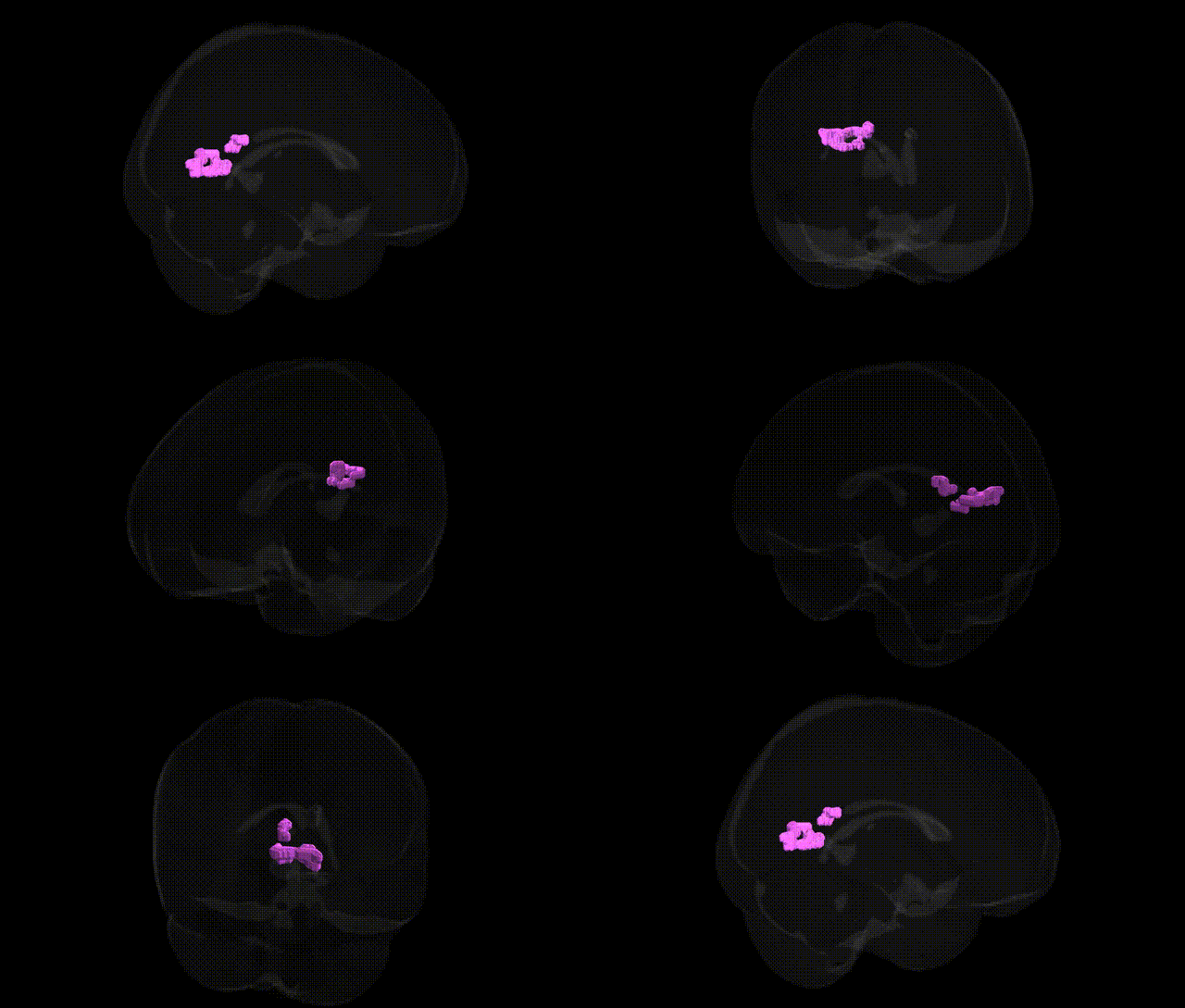
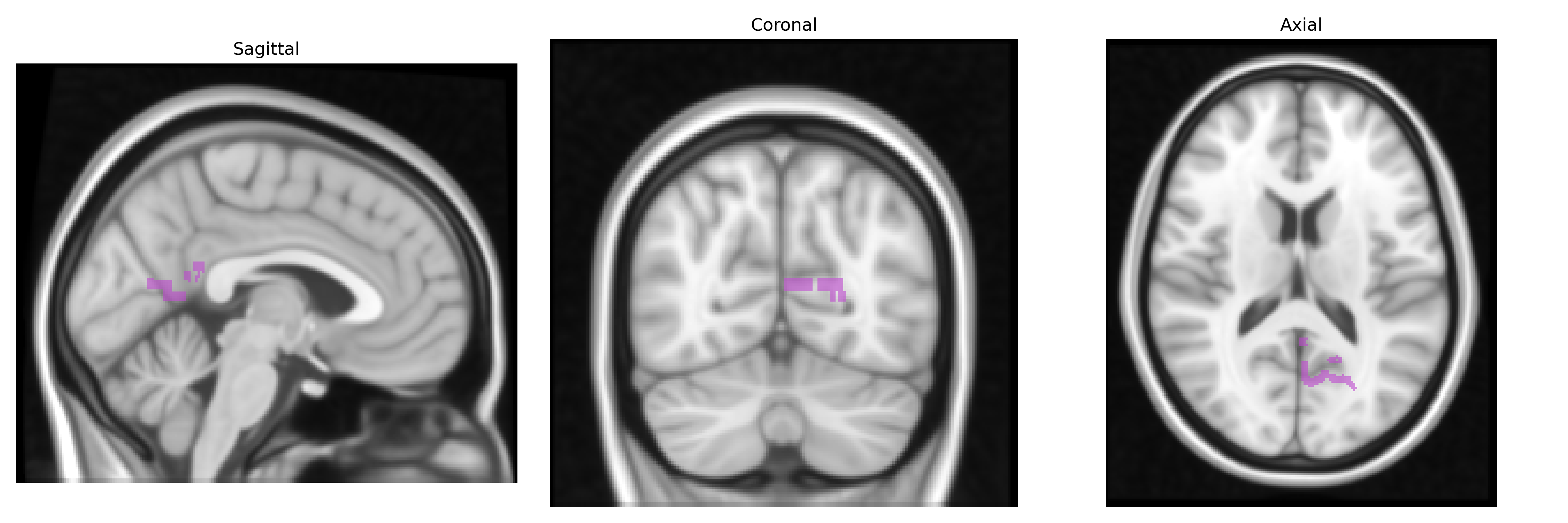
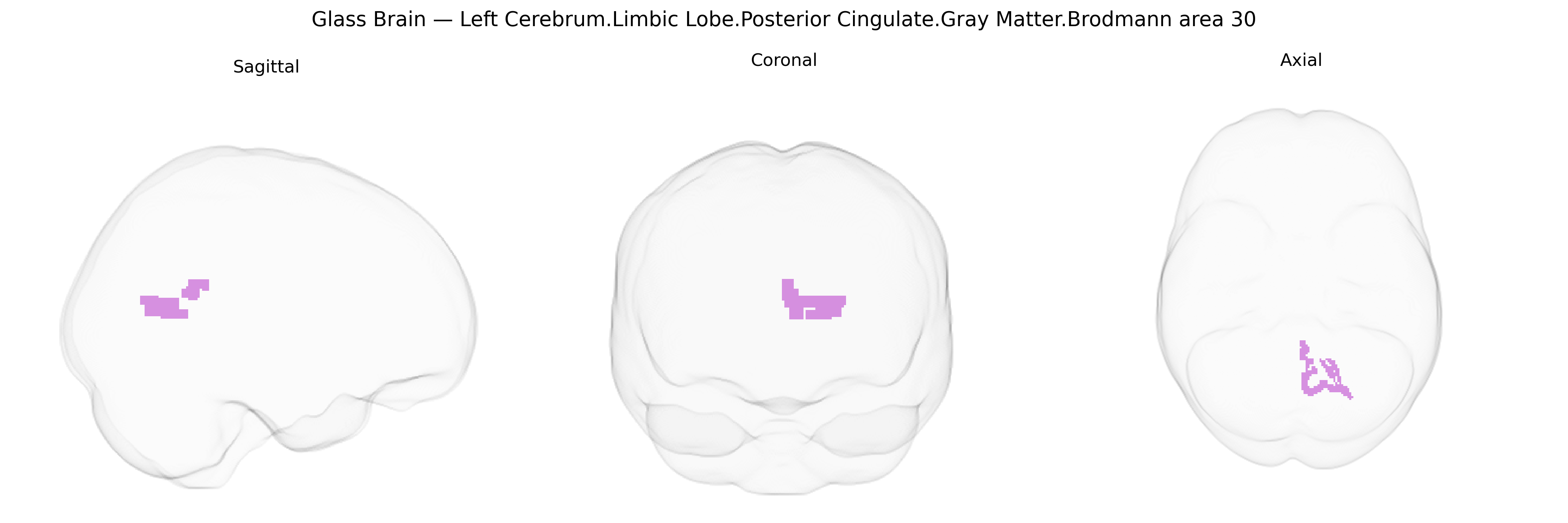
The bilateral Left Cerebrum.Limbic Lobe.Posterior Cingulate.Gray Matter.Brodmann area 30 corresponds to the retrosplenial cortex, a limbic-associated region located in the posterior cingulate gyrus bordering the splenium of the corpus callosum. Brodmann area 30 is characterized cytoarchitectonically as a transitional cortex between archicortex and neocortex and is involved in episodic memory, spatial navigation, and contextual processing, often acting as a hub connecting the medial temporal lobe, posterior cingulate, and precuneus. It participates in the default mode network and shows activity during internally directed cognition, autobiographical memory retrieval, and scene construction, with dysfunction implicated in disorders such as Alzheimer’s disease and other conditions affecting memory and self-referential processing. No direct link: Retrosplenial cortex
The posterior cingulate cortex (PCC), including Brodmann area 30 in the limbic lobe, has been implicated in multiple genetic and genome-wide association studies (GWAS) through its roles in memory, default mode network function, and vulnerability to neuropsychiatric and neurodegenerative disorders. Imaging genetics work shows that common variants in APOE (especially the ε4 allele) strongly influence PCC structure and metabolism, particularly in Alzheimer’s disease, where PCC hypometabolism and atrophy are early biomarkers; GWAS of cortical thickness and surface area also implicate loci near genes involved in synaptic function and neurodevelopment (e.g., MIR137, GRIN2B, and other glutamatergic and calcium-signaling genes) as contributing to interindividual variability in PCC gray matter. PCC volume and connectivity have been associated with polygenic risk for schizophrenia, major depression, and autism spectrum disorder, with specific signals reported for genes involved in default mode network regulation and excitatory–inhibitory balance (such as ZNF804A and COMT in candidate-gene and small GWAS samples), though many of these findings remain modest and not always replicated at genome-wide significance. Large consortia (e.g., ENIGMA) have identified heritable components of PCC morphology and linked them to broad neuropsychiatric risk loci rather than PCC-specific genes, suggesting highly polygenic influences. Additional associations include links between PCC structure/activity and genetic risk scores for attention-deficit/hyperactivity disorder, as well as traits such as intelligence, conscientiousness, and neuroticism, consistent with the PCC’s central role in internally directed cognition and self-referential processing, though individual gene-level effects for this precise Talairach-defined area remain diffuse and largely shared with neighboring default mode regions rather than uniquely localized to Brodmann area 30.
Overview generated by GPT-4o (2026).
Region ID: 663
Hemisphere: bilateral
Atlas: Talairach labels 1mm
Full Quality Version: Download MP4
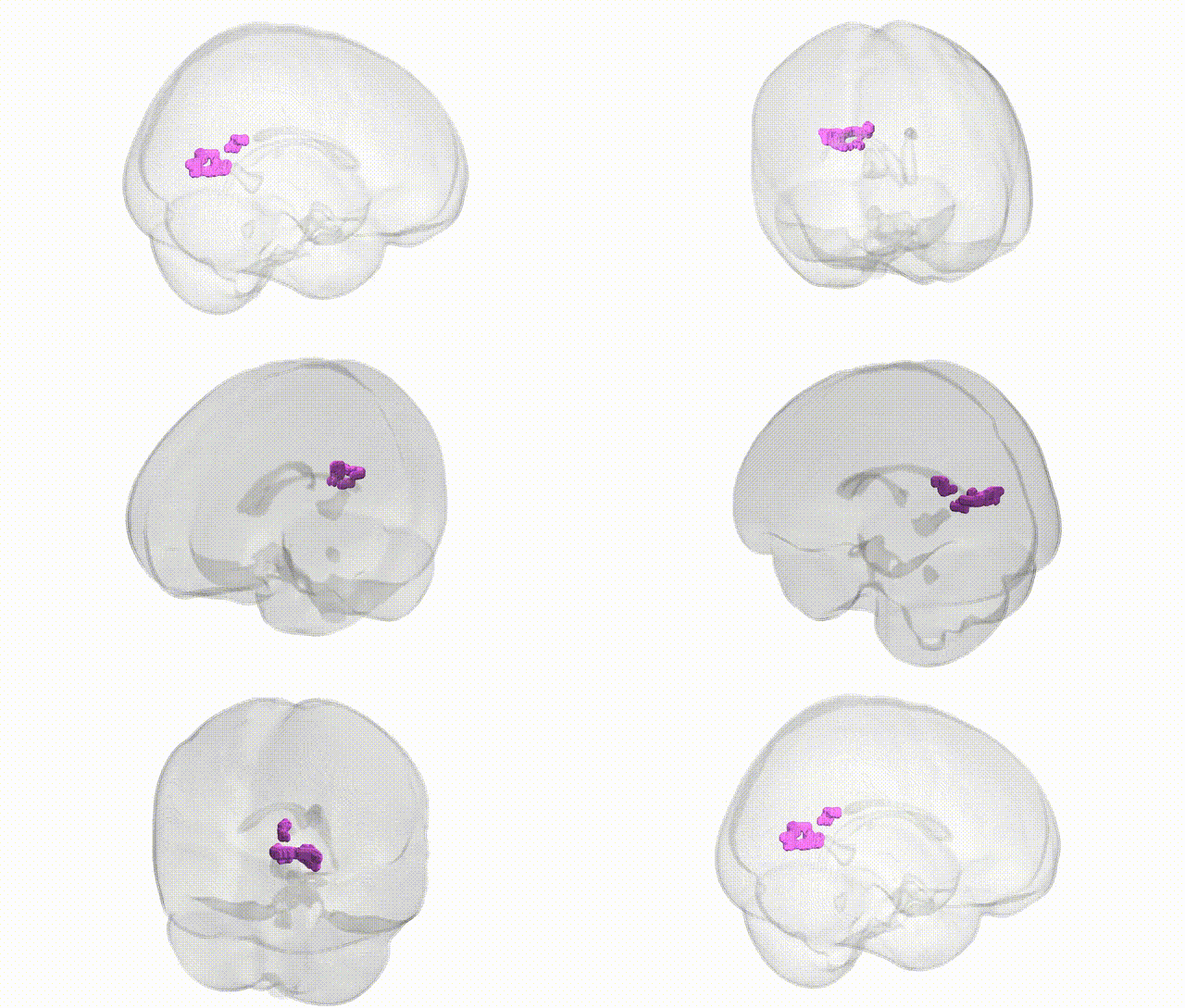
Full Quality Version: Download MP4
Wali Sidiqyar*, Gaurav Rudravaram*, Elyssa M. McMaster, Trent M. Schwartz, Adam M. Saunders, Kurt G. Schilling, Bennett A. Landman "Introducing SPINS: A Shared Public Visualization Library of Neuroanatomical Structures." Medical Imaging with Deep Learning- short paper
This resource is licensed under CC0 1.0 Universal (Public Domain).