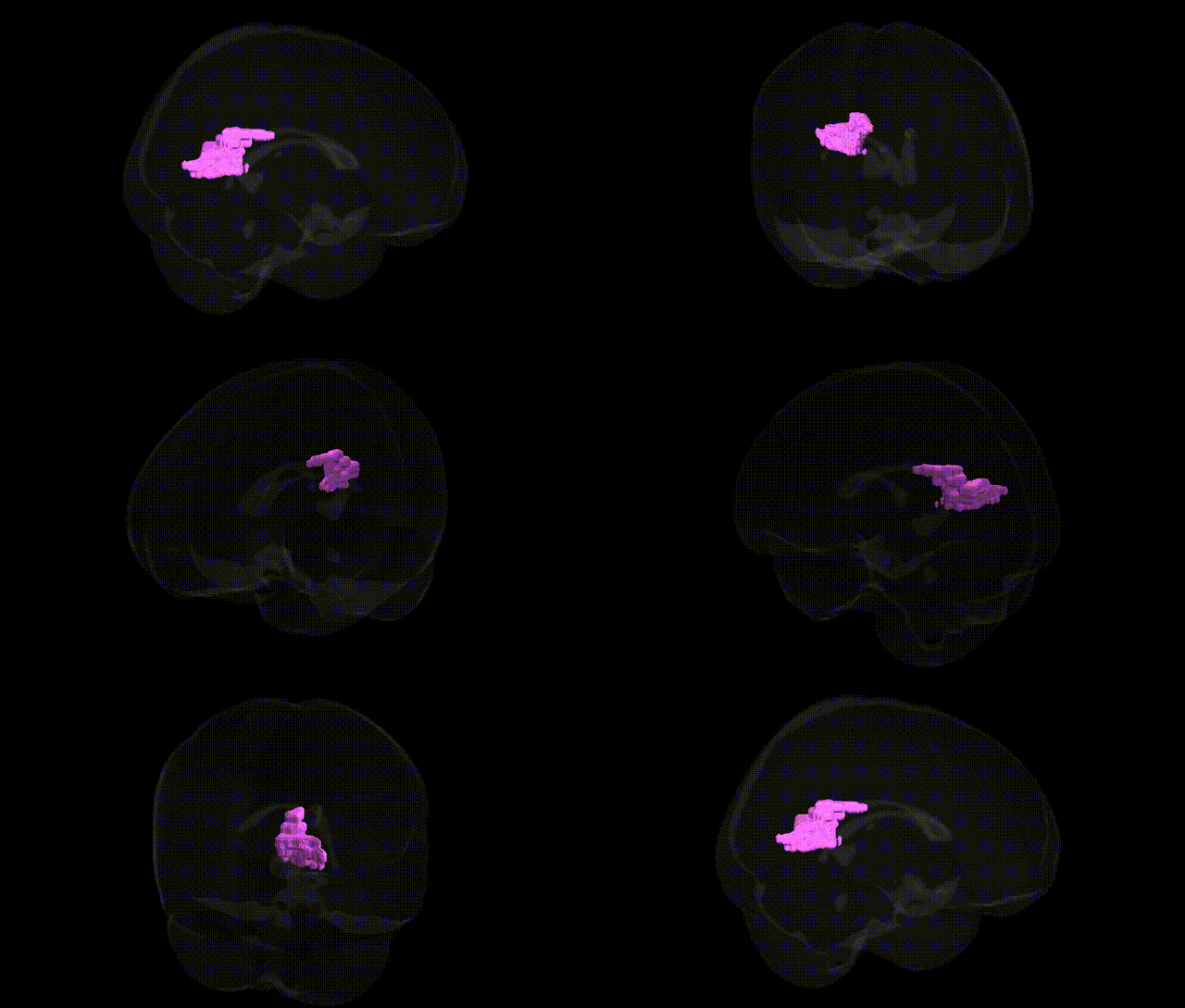
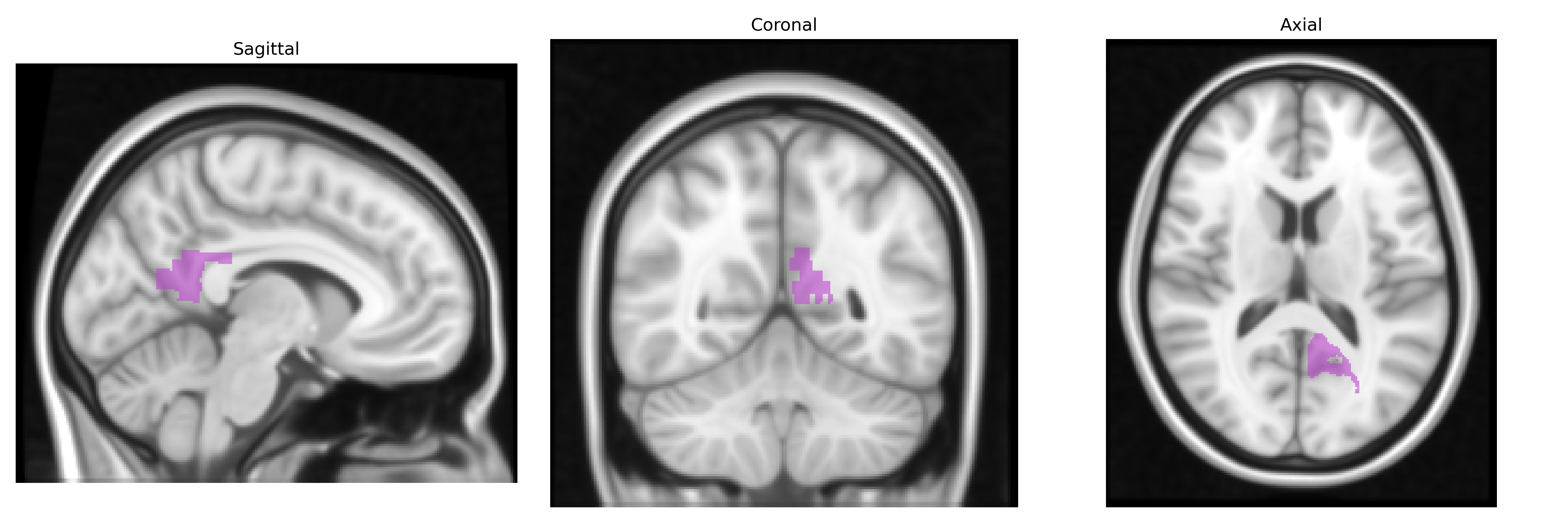
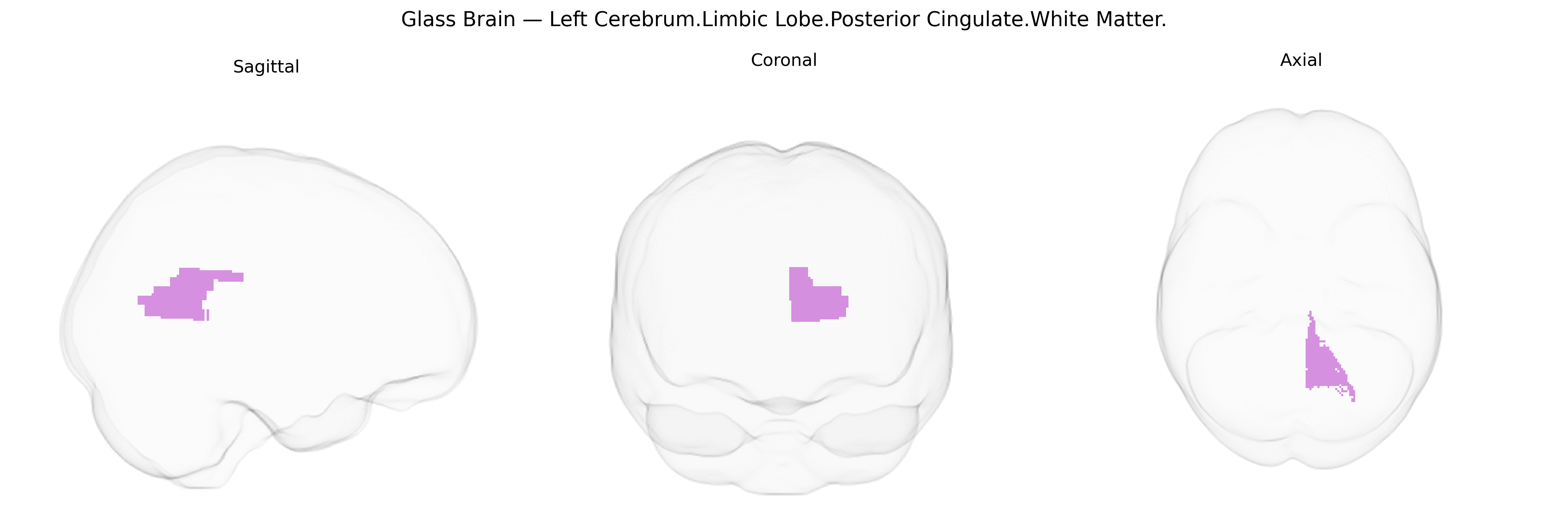
The bilateral Left Cerebrum.Limbic Lobe.Posterior Cingulate.White Matter corresponds to the deep myelinated fiber tracts underlying the posterior cingulate gyrus, a key hub of the limbic system located on the medial surface of the cerebral hemispheres just dorsal to the corpus callosum. These white matter pathways interconnect the posterior cingulate cortex with adjacent cingulate regions, medial parietal areas (including the precuneus), and other limbic and association cortices, supporting functions related to internally directed thought, autobiographical memory, visuospatial integration, and aspects of the default mode network. The posterior cingulate region is heavily involved in integrating emotional, cognitive, and sensory information, and its white matter integrity is critical for large-scale network communication; disruption is implicated in disorders such as Alzheimer’s disease, depression, and certain forms of dementia. No direct Wikipedia article exists for the posterior cingulate white matter, but it is closely related to the Posterior cingulate cortex.
The bilateral posterior cingulate white matter within the limbic lobe, as defined by the Talairach 1 mm atlas, has been implicated in several genetic and GWAS-based associations through its role in default mode network connectivity, myelination, and neurodegenerative vulnerability. Imaging–genetics studies and large consortia (e.g., ENIGMA) have reported that common variants in genes related to myelin structure and axonal integrity (such as those in oligodendrocyte and lipid-metabolism pathways) contribute to interindividual differences in posterior cingulate white matter volume, fractional anisotropy, and connectivity, though specific locus-level findings are often reported at coarser parcellations rather than Talairach-defined subregions. GWAS of Alzheimer’s disease and related traits (e.g., APOE, CLU, PICALM, BIN1 loci) have been associated with posterior cingulate degeneration and hypometabolism, reflecting this region’s early involvement in amyloid and tau pathology and white matter disconnection; polygenic risk scores for Alzheimer’s disease and general cognitive decline correlate with alterations in posterior cingulate white matter microstructure. Psychiatric disorder GWAS—particularly for major depressive disorder, schizophrenia, and bipolar disorder—have identified polygenic influences on default mode network connectivity and cingulum bundle integrity, with risk variants enriched in synaptic, calcium-signaling, and neurodevelopmental genes; these findings extend to altered structural and functional coupling of posterior cingulate white matter. Additionally, autism spectrum disorder, attention-deficit/hyperactivity disorder, and neuroticism-related GWAS highlight genes involved in cortical maturation and long-range connectivity that modulate posterior cingulate white matter organization, supporting a role for this tract system as a convergence point where diverse genetic risk architectures influence self-referential processing, memory, and internal mentation.
Overview generated by GPT-4o (2026).
Region ID: 662
Hemisphere: bilateral
Atlas: Talairach labels 1mm
Full Quality Version: Download MP4
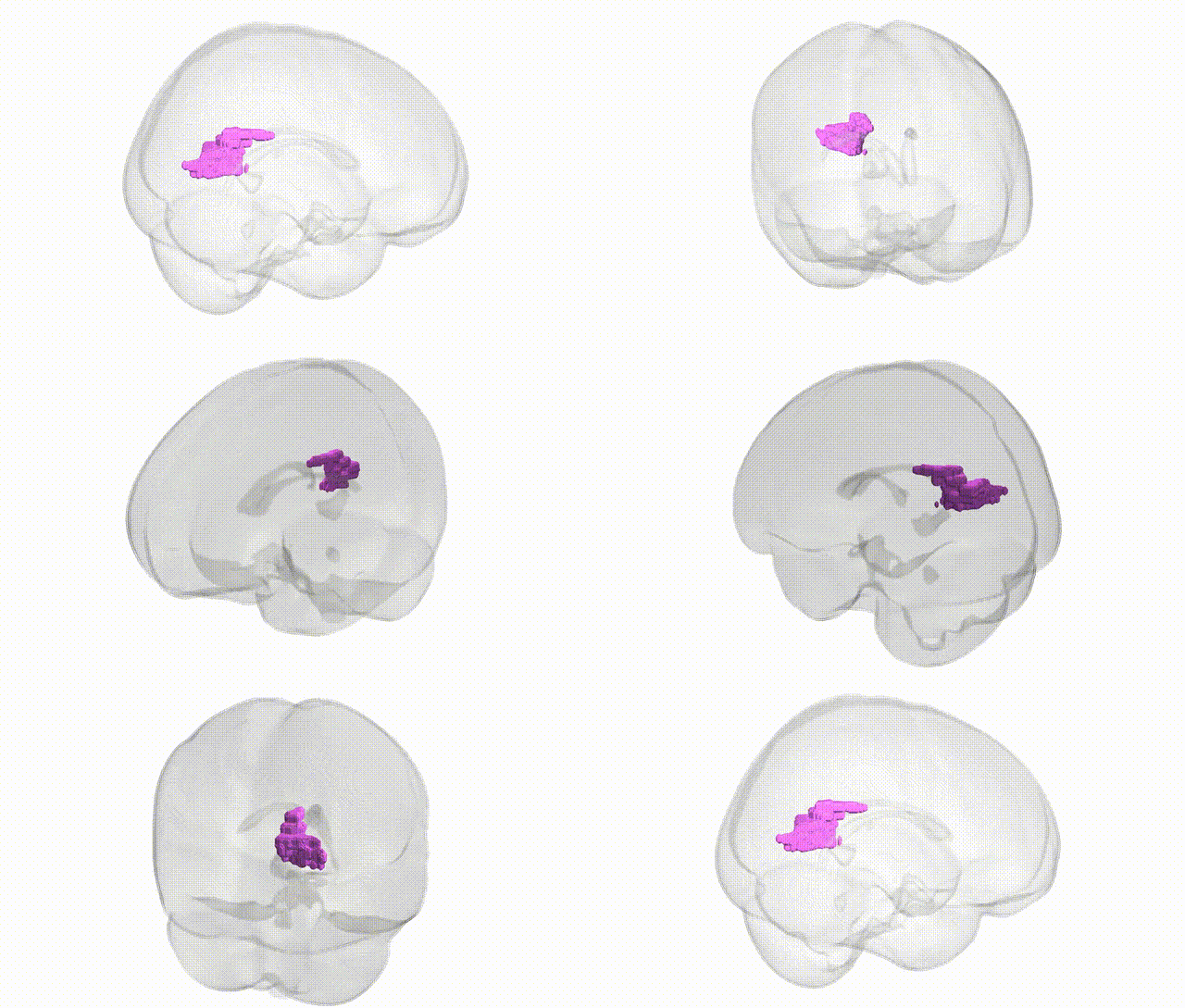
Full Quality Version: Download MP4
Wali Sidiqyar*, Gaurav Rudravaram*, Elyssa M. McMaster, Trent M. Schwartz, Adam M. Saunders, Kurt G. Schilling, Bennett A. Landman "Introducing SPINS: A Shared Public Visualization Library of Neuroanatomical Structures." Medical Imaging with Deep Learning- short paper
This resource is licensed under CC0 1.0 Universal (Public Domain).