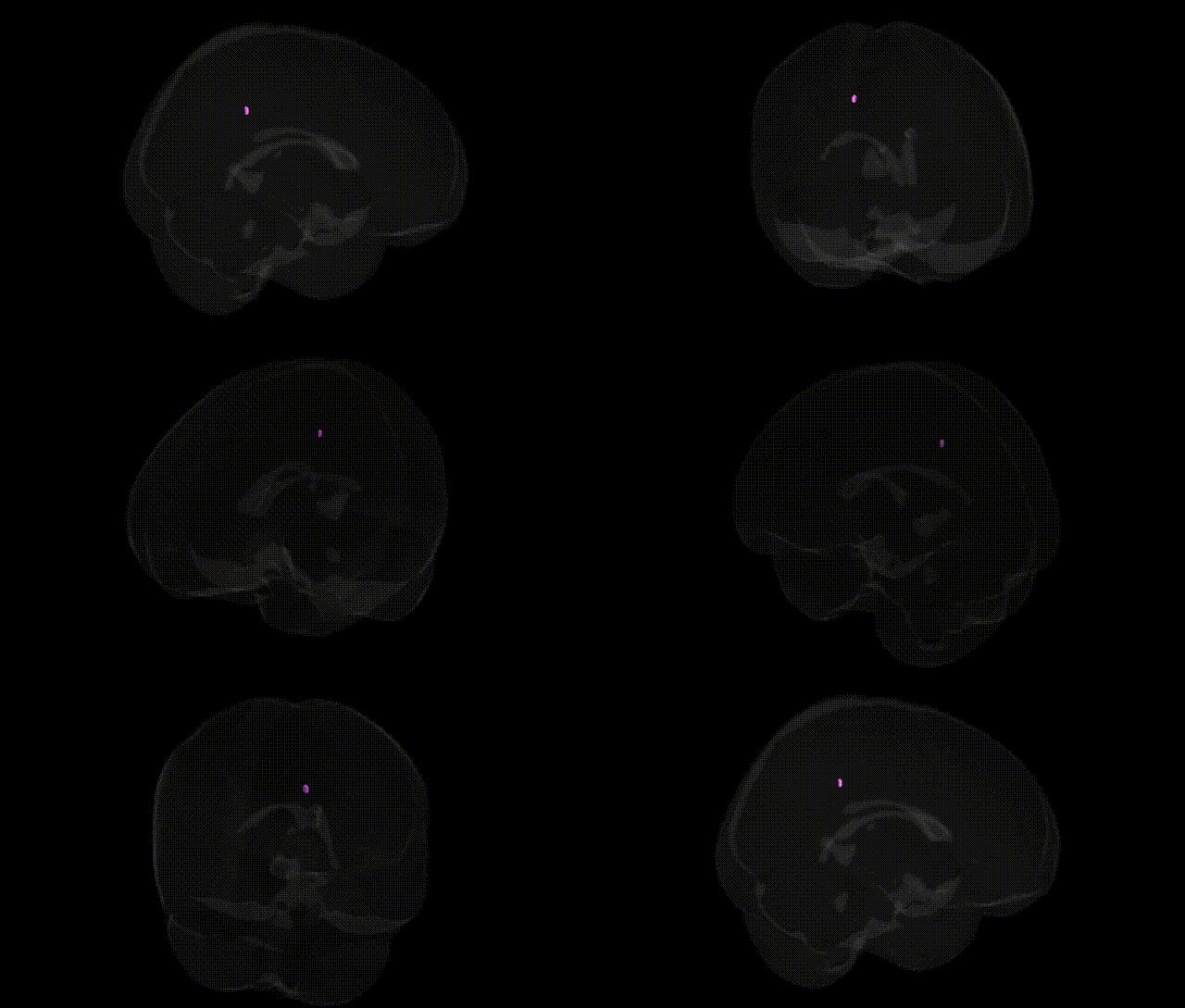
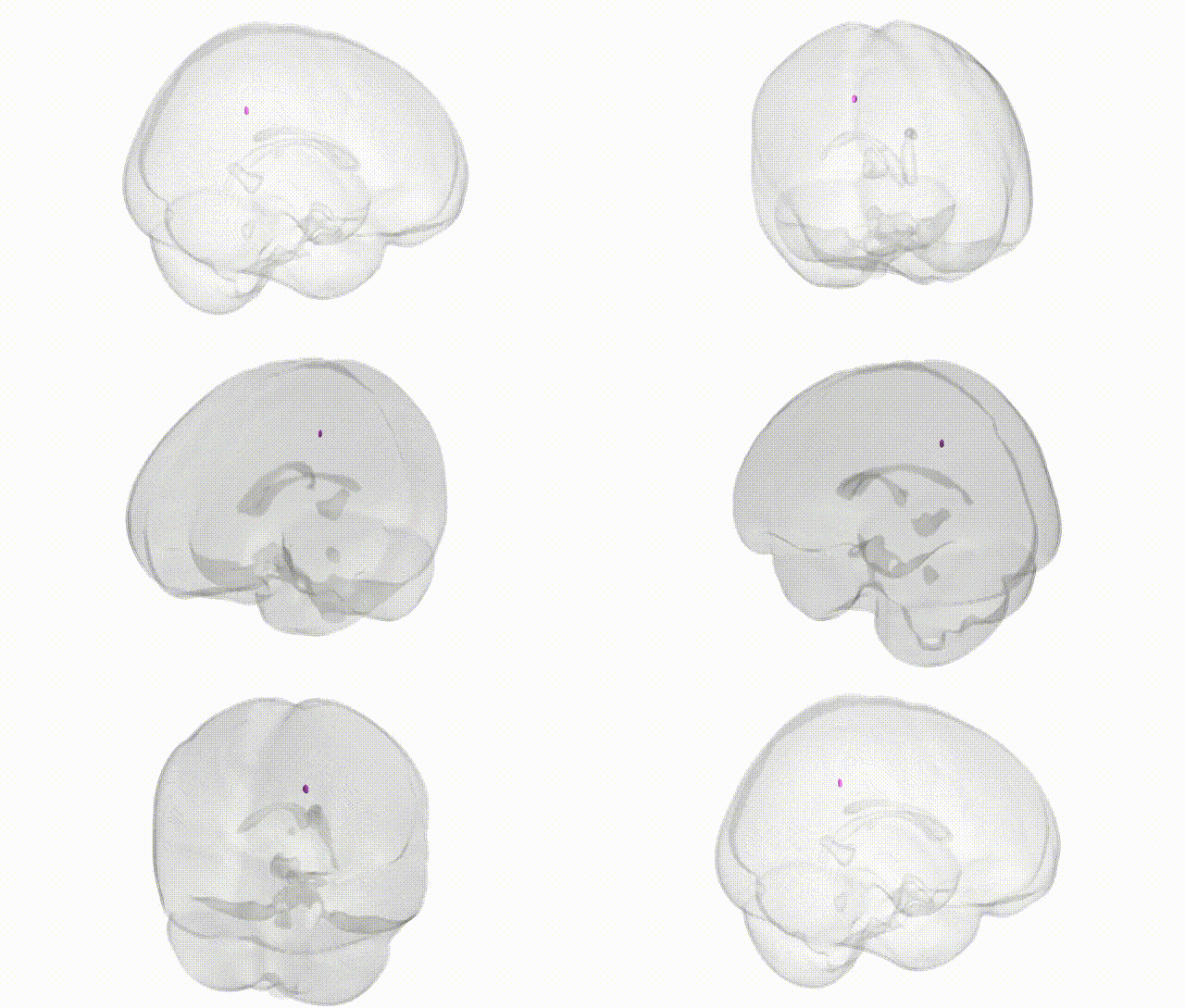
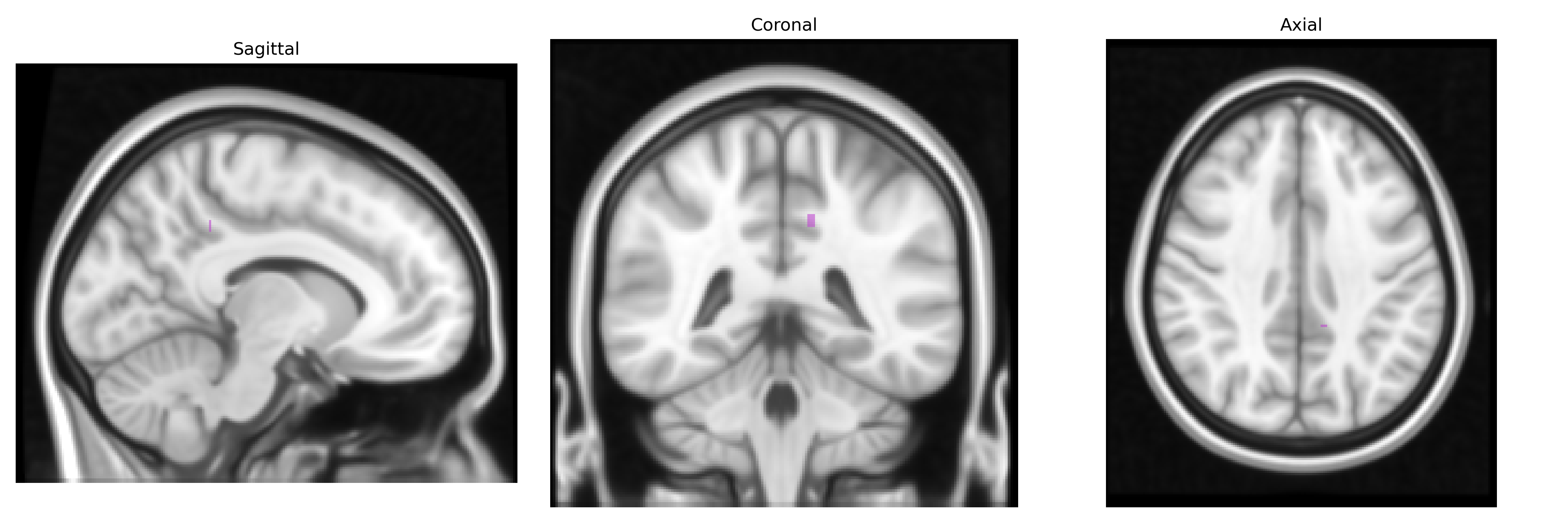
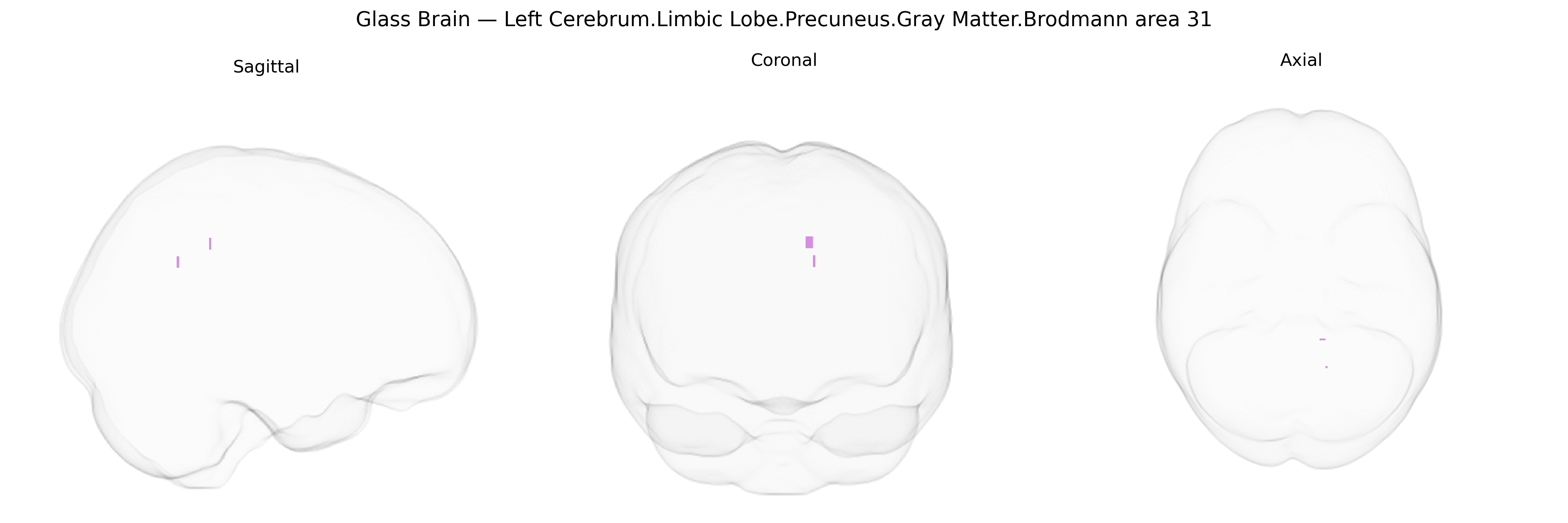
The bilateral Left Cerebrum.Limbic Lobe.Precuneus.Gray Matter.Brodmann area 31 corresponds to a posterior cingulate/medial parietal association cortex region situated along the dorsal bank of the cingulate sulcus and extending into the medial aspect of the precuneus, within the limbic-paralimbic network. Functionally, Brodmann area 31 is implicated in higher-order association processes, including episodic memory retrieval, self-referential and internally directed cognition, visuospatial imagery, and aspects of consciousness and default mode network activity. It integrates multimodal sensory and contextual information, contributing to evaluation of internally generated states, autobiographical memory, and emotional-cognitive integration. There is no direct link for “Brodmann area 31” itself; a closely related and overlapping structure is the posterior cingulate cortex: Posterior cingulate cortex.
The bilateral left precuneus (limbic/medial parietal cortex, often overlapping Brodmann area 31) has been implicated in multiple genetic and genome‑wide association studies through its structural and functional variation, particularly in relation to default mode network activity, episodic memory, self-referential processing, and internal mentation. Twin and heritability studies indicate moderate to high heritability of precuneus gray matter volume and cortical thickness, with contributions from polygenic architecture involving synaptic, neurodevelopmental, and myelination-related genes. GWAS of brain morphology and resting-state connectivity have linked common variants in genes such as APOE (notably ε4), which influence Alzheimer’s disease risk and are associated with reduced precuneus volume, hypometabolism, and altered connectivity; CLU, PICALM, and other AD risk loci have also been indirectly associated through imaging-genetics work showing structural and metabolic changes in this region. Large-scale imaging GWAS (e.g., ENIGMA, UK Biobank) have identified multiple loci affecting parietal/precuneus thickness and surface area, including genes involved in neurodevelopment (e.g., microtubule and axon guidance pathways) and glutamatergic/GABAergic signaling, although many effects are highly polygenic and nonspecific. Psychiatric genetics studies associate precuneus alterations with schizophrenia, major depression, autism spectrum disorder, and ADHD, often via polygenic risk scores and default mode network alterations, implicating genes related to synaptic plasticity (e.g., CACNA1C, GRIN family) and immune or neuroinflammatory pathways (e.g., MHC region) in modulating structure and connectivity in this territory. In sum, genetic findings linking this Brodmann area 31/precuneus region are mostly polygenic and pleiotropic, spanning risk loci for Alzheimer’s disease, neurodevelopmental and mood disorders, and complex traits such as cognitive performance and personality, with effects mediated through large-scale network organization rather than region-specific single-gene associations.
Overview generated by GPT-4o (2026).
Region ID: 920
Hemisphere: bilateral
Atlas: Talairach labels 1mm
Full Quality Version: Download MP4
Full Quality Version: Download MP4
Wali Sidiqyar*, Gaurav Rudravaram*, Elyssa M. McMaster, Trent M. Schwartz, Adam M. Saunders, Kurt G. Schilling, Bennett A. Landman "Introducing SPINS: A Shared Public Visualization Library of Neuroanatomical Structures." Medical Imaging with Deep Learning- short paper
This resource is licensed under CC0 1.0 Universal (Public Domain).