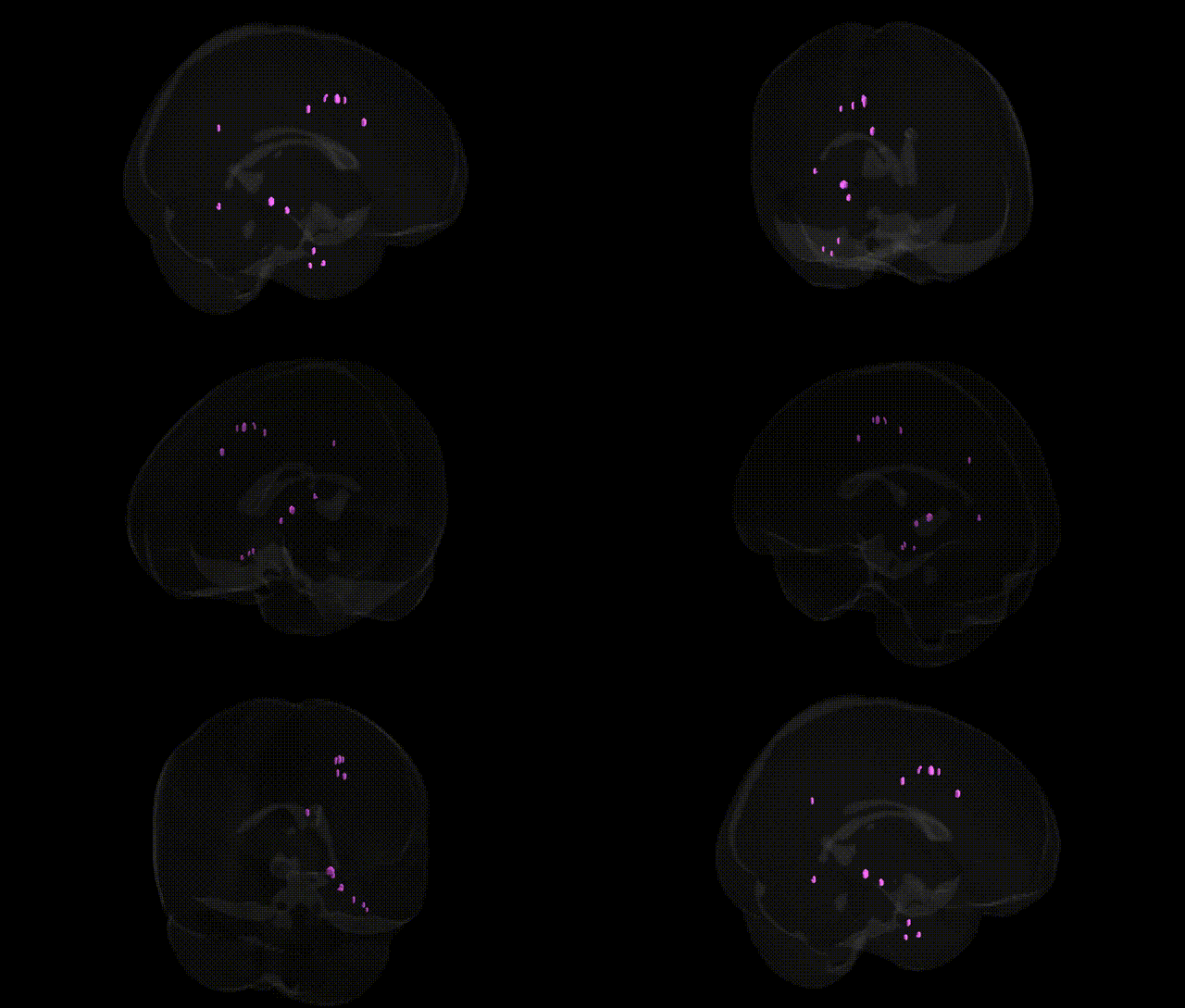
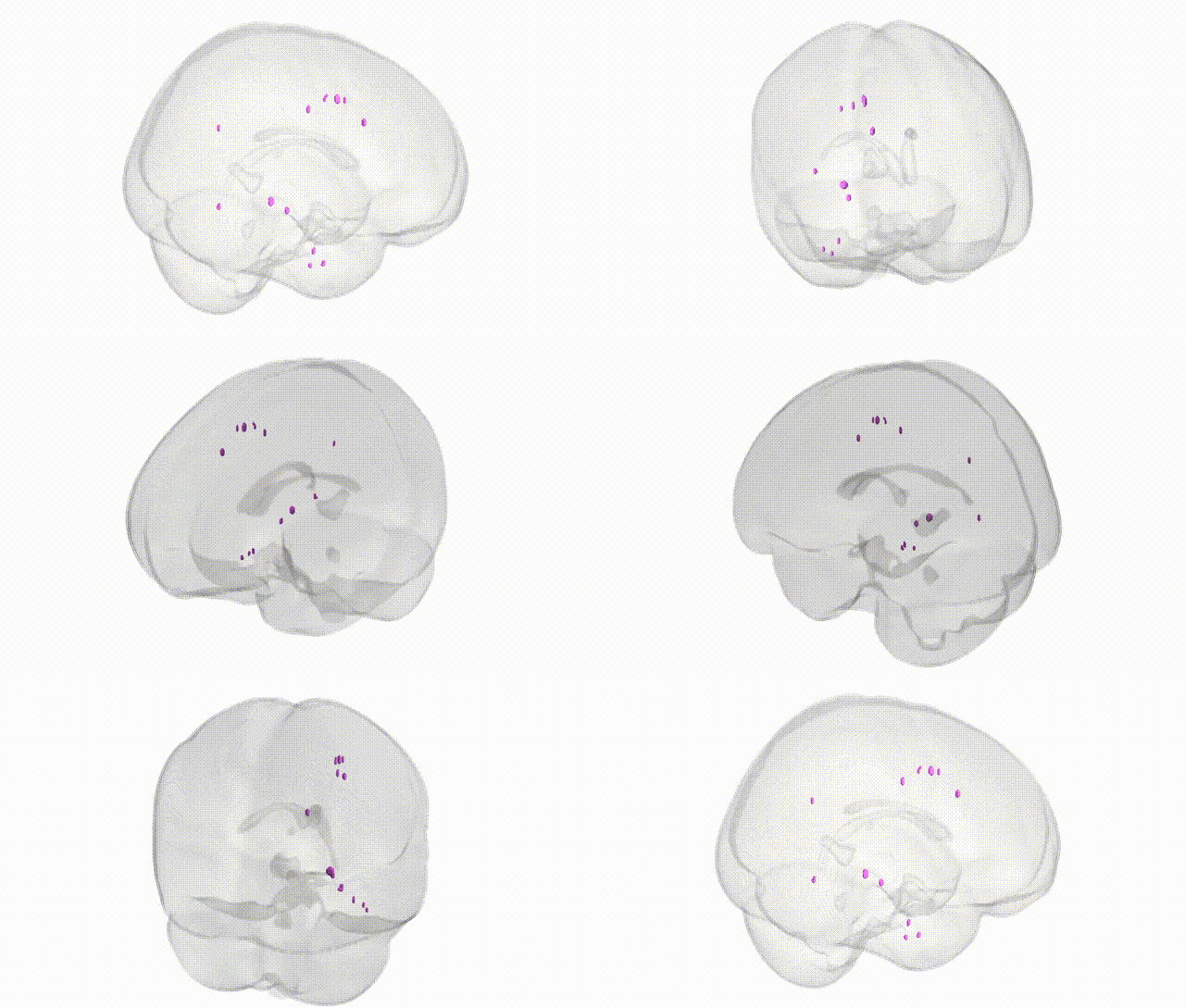
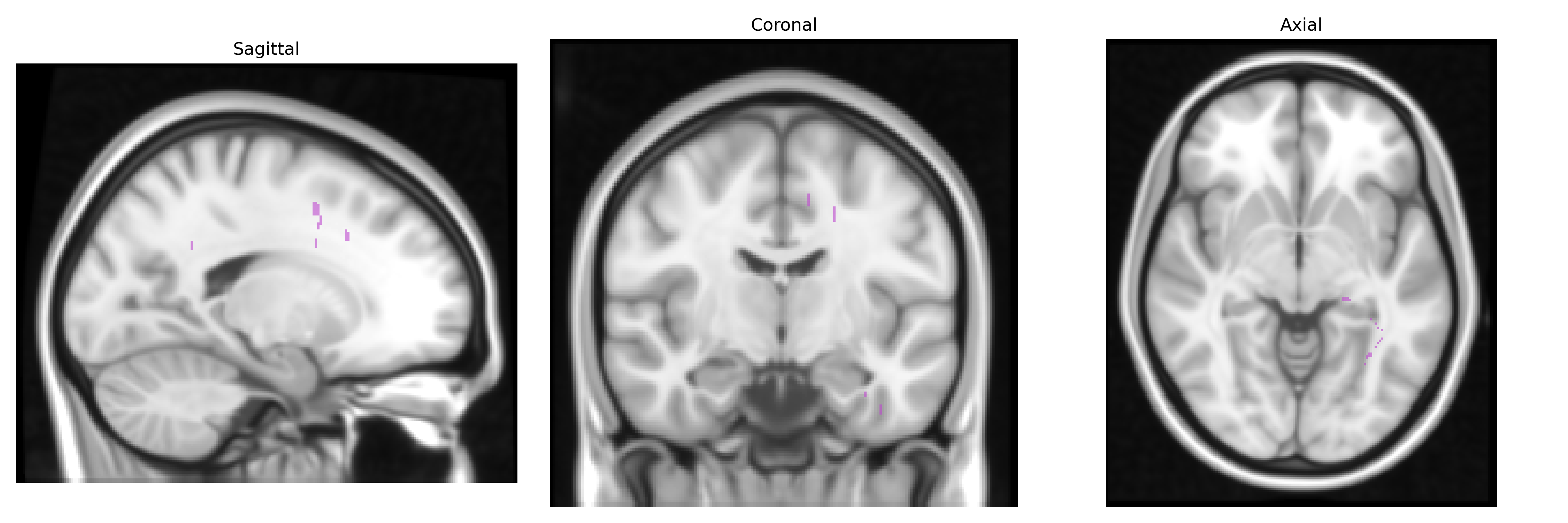
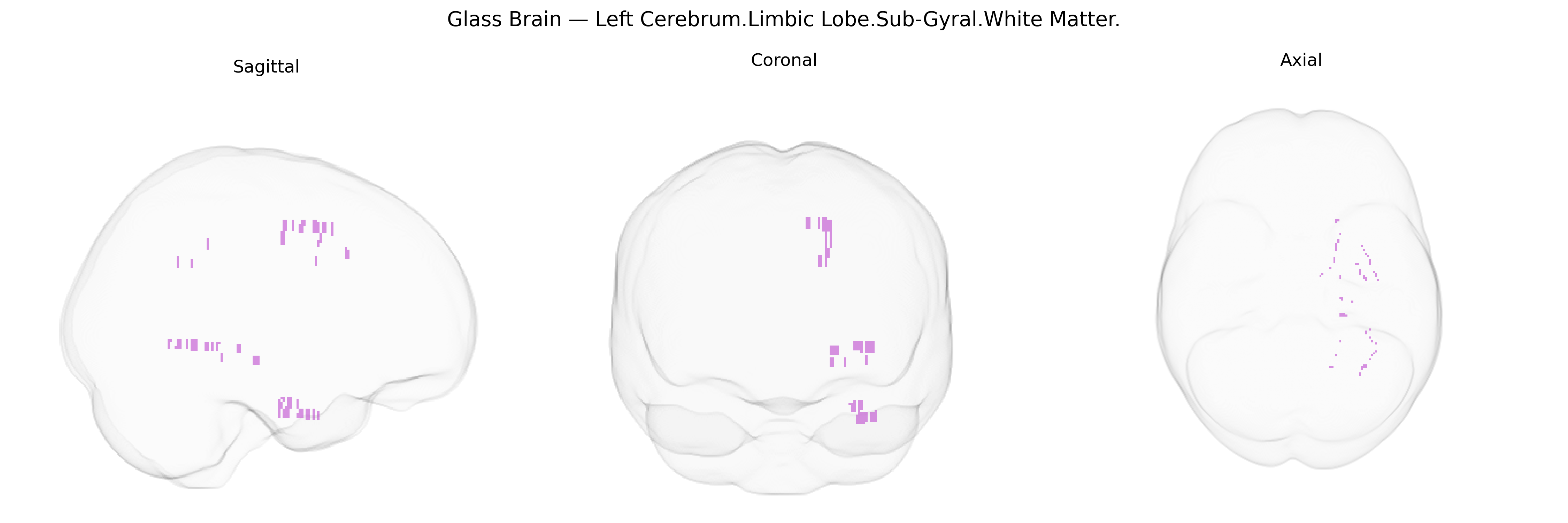
The bilateral Left Cerebrum.Limbic Lobe.Sub-Gyral.White Matter corresponds to deep white matter tracts located beneath the cortical gyri of the limbic lobe in the left hemisphere, including regions underlying structures such as the cingulate and parahippocampal gyri. These fibers form part of the limbic connectivity network, interlinking cortical and subcortical components involved in emotion, memory, motivation, and autonomic regulation. Functionally, these sub-gyral white matter pathways contribute to the integration and transmission of information between limbic cortical areas and key structures like the hippocampus, amygdala, and hypothalamus, supporting processes such as episodic memory formation, emotional processing, and behavioral responses. There is no direct link for “Limbic Lobe Sub-Gyral White Matter”; a related structure is the Limbic system.
Genetic associations specifically targeting the bilateral Left Cerebrum Limbic Lobe Sub-Gyral White Matter (as defined by the Talairach 1 mm atlas) are sparse, but converging GWAS and imaging-genetics studies implicate this limbic white matter territory—encompassing tracts such as cingulum and adjacent association fibers—in multiple neuropsychiatric and cognitive phenotypes. Large-scale ENIGMA and UK Biobank analyses have shown that common variants in genes involved in myelination, axon guidance, and synaptic plasticity (for example, NRG1, MAG, CNTNAP2, and various loci near genes regulating oligodendrocyte function) associate with microstructural measures like fractional anisotropy and mean diffusivity in limbic white matter, which in turn correlate with risk for schizophrenia, bipolar disorder, major depressive disorder, autism spectrum disorder, and Alzheimer’s disease. Polygenic risk scores for schizophrenia and depression have been linked to altered integrity of limbic white matter bundles, while APOE and other Alzheimer’s risk loci show associations with degeneration in medial temporal and limbic white matter pathways. In addition, GWAS of cognitive traits (processing speed, general intelligence) and emotional traits (neuroticism, anxiety) report associations with genetic variants whose effects partly manifest through limbic white matter structure, suggesting that this region functions as a genetically modulated hub for affective regulation, memory, and higher-order cognition rather than a locus of single, highly specific gene–region effects.
Overview generated by GPT-4o (2026).
Region ID: 96
Hemisphere: bilateral
Atlas: Talairach labels 1mm
Full Quality Version: Download MP4
Full Quality Version: Download MP4
Wali Sidiqyar*, Gaurav Rudravaram*, Elyssa M. McMaster, Trent M. Schwartz, Adam M. Saunders, Kurt G. Schilling, Bennett A. Landman "Introducing SPINS: A Shared Public Visualization Library of Neuroanatomical Structures." Medical Imaging with Deep Learning- short paper
This resource is licensed under CC0 1.0 Universal (Public Domain).