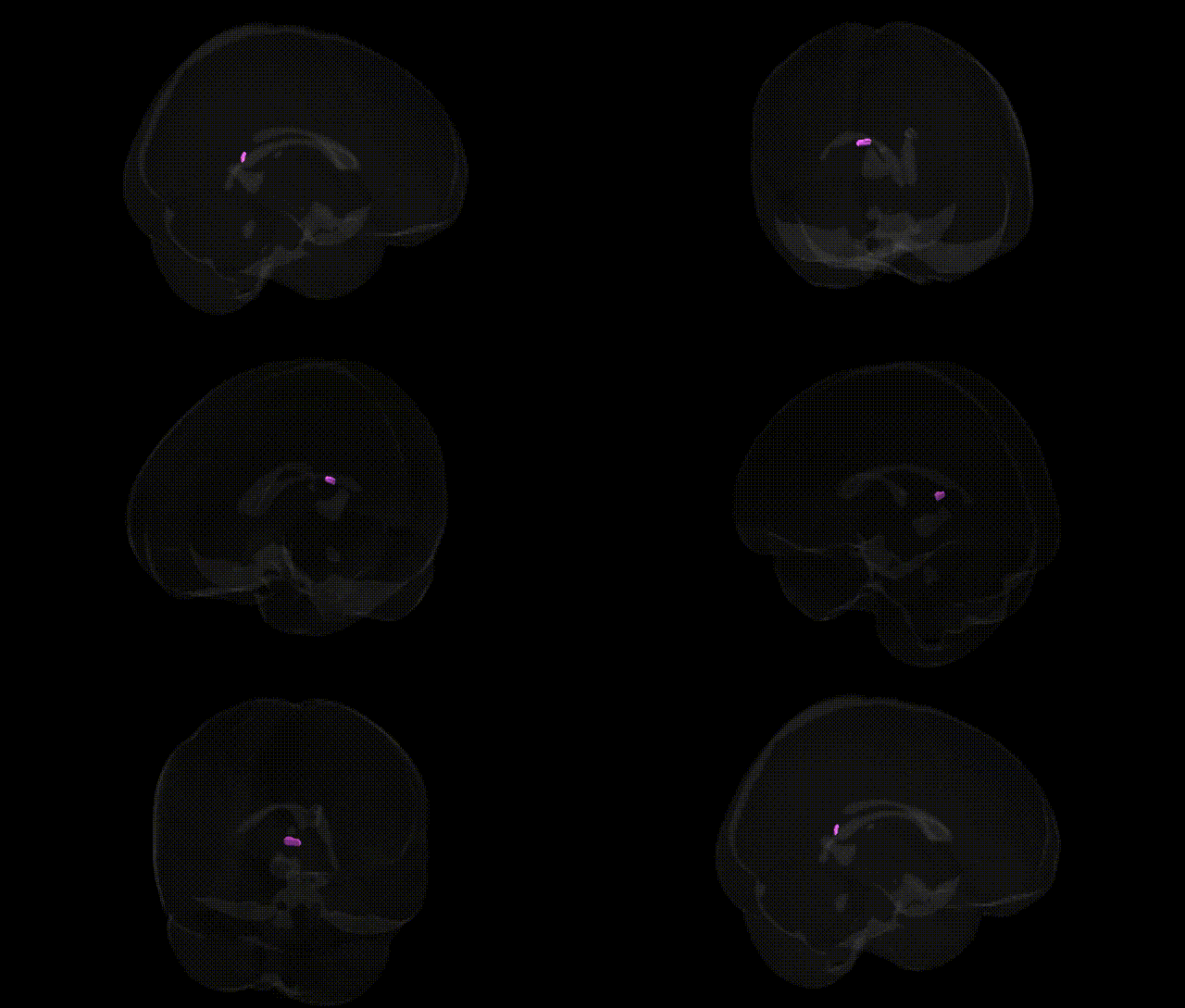
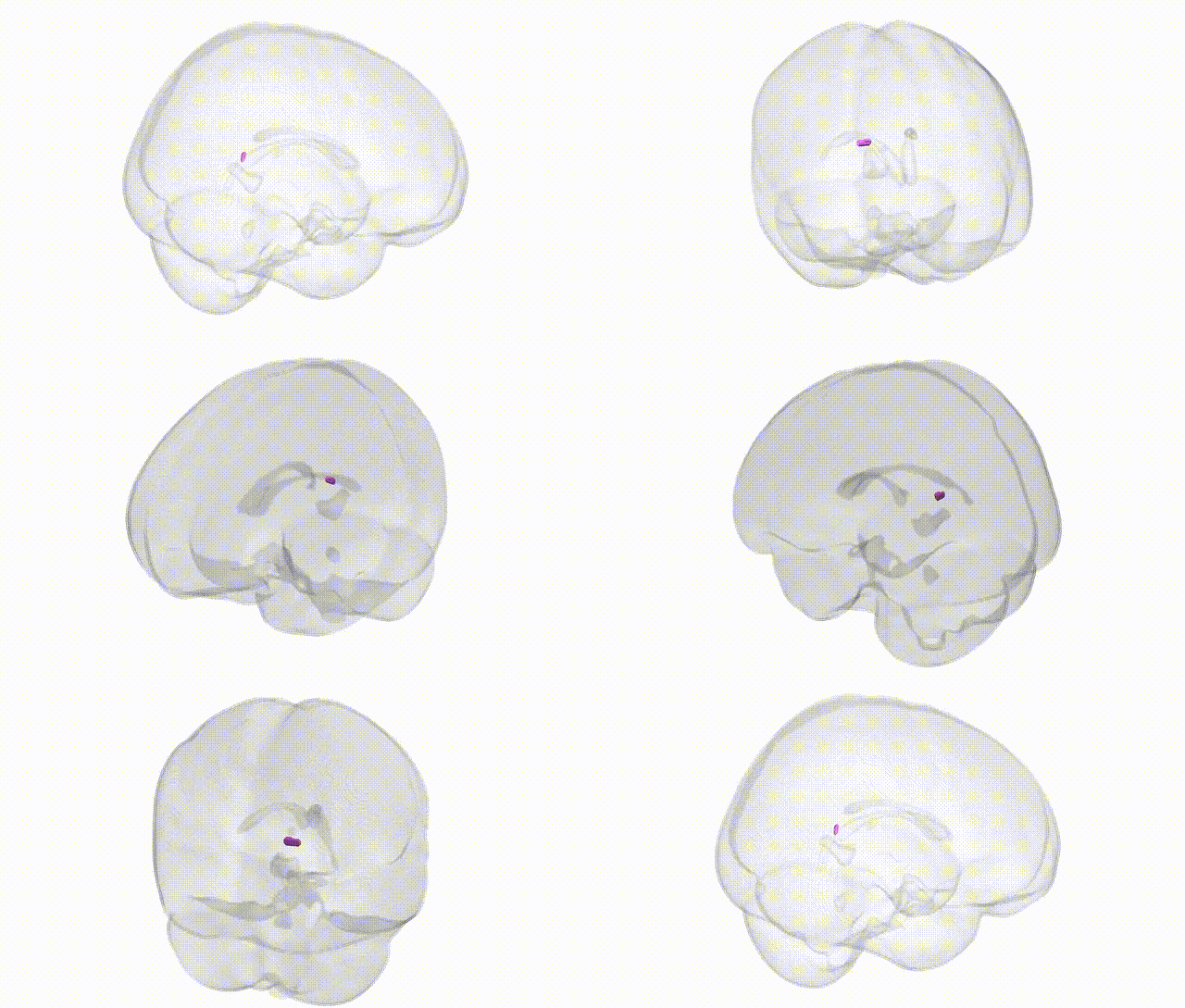
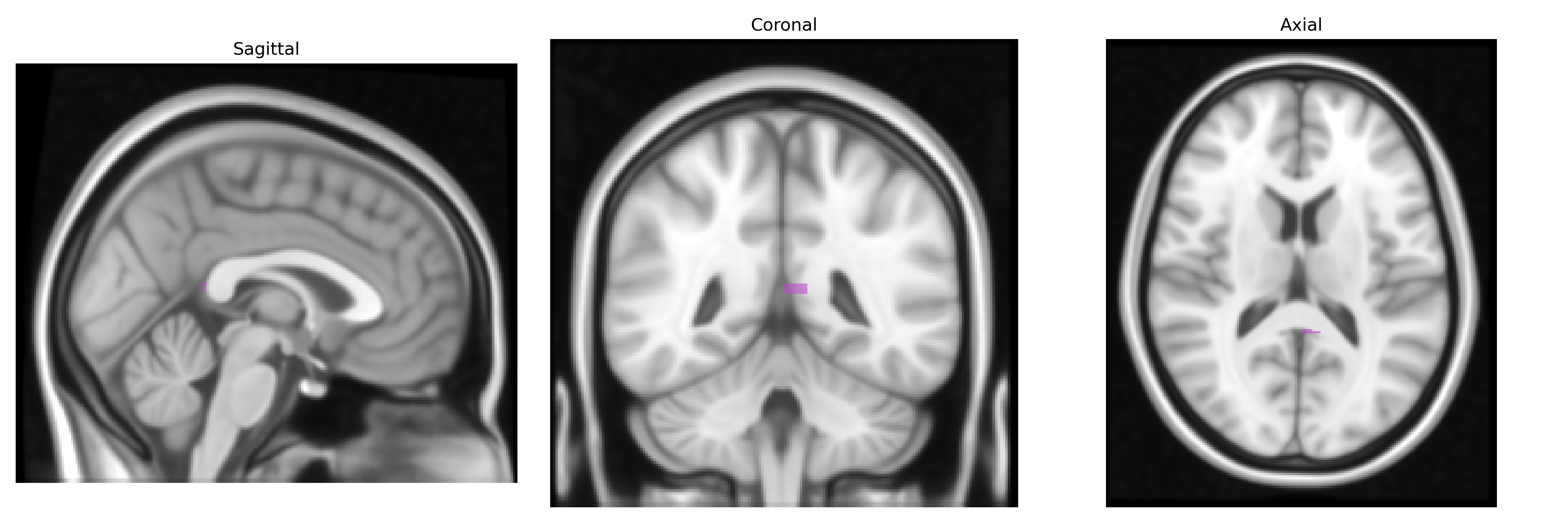
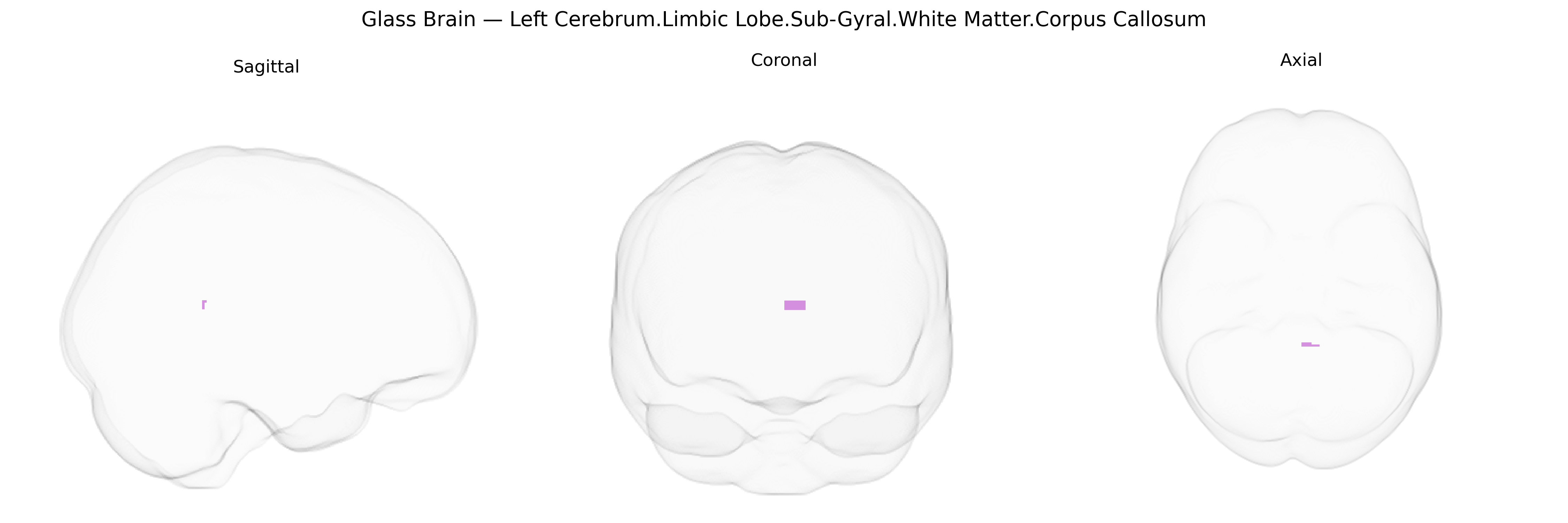
The bilateral Left Cerebrum.Limbic Lobe.Sub-Gyral.White Matter.Corpus Callosum region, as defined in the Talairach 1 mm atlas, corresponds to deep subcortical white matter within the limbic lobe that contributes to and surrounds the midline Corpus Callosum, the major commissural fiber tract connecting homologous areas of the left and right cerebral hemispheres. This region is composed primarily of heavily myelinated axons that facilitate rapid interhemispheric communication, especially between limbic and adjacent association cortices involved in emotion, memory, and integrative cognitive processing. Functionally, its integrity is critical for coordinated bilateral activity, including the transfer of sensory, cognitive, and affective information, while structurally it forms an essential component of the brain’s central white matter architecture and is highly susceptible to developmental, demyelinating, and traumatic pathologies.
Genetic associations with the bilateral Left Cerebrum Limbic Lobe Sub-Gyral White Matter/Corpus Callosum region, as defined in the Talairach 1 mm atlas, primarily emerge from imaging-genetics and GWAS studies of callosal microstructure (often indexed by diffusion metrics such as fractional anisotropy and mean diffusivity). Large consortia (e.g., ENIGMA, UK Biobank) have implicated common variants in genes involved in axon guidance, myelination, and cell-adhesion—such as NCAM1, CNTNAP2, LINGO1, NTRK1/2, and multiple oligodendrocyte- and myelin-related loci—as influencing corpus callosum volume and integrity. Polygenic overlap is observed between callosal measures and neurodevelopmental and psychiatric disorders including autism spectrum disorder, schizophrenia, bipolar disorder, and ADHD, consistent with frequent callosal abnormalities in these conditions; additional associations link this region’s microstructure with traits such as general cognitive ability, processing speed, handedness, and risk for major depressive disorder and anxiety. Rare-variant and CNV studies (e.g., 22q11.2 deletion, chromosomal anomalies affecting midline development) also connect disruptions in genes regulating commissural formation and neuronal migration to callosal dysgenesis and altered limbic white-matter architecture, highlighting this midline fiber system as a convergent anatomical target of diverse neurogenetic risk factors.
Overview generated by GPT-4o (2026).
Region ID: 713
Hemisphere: bilateral
Atlas: Talairach labels 1mm
Full Quality Version: Download MP4
Full Quality Version: Download MP4
Wali Sidiqyar*, Gaurav Rudravaram*, Elyssa M. McMaster, Trent M. Schwartz, Adam M. Saunders, Kurt G. Schilling, Bennett A. Landman "Introducing SPINS: A Shared Public Visualization Library of Neuroanatomical Structures." Medical Imaging with Deep Learning- short paper
This resource is licensed under CC0 1.0 Universal (Public Domain).