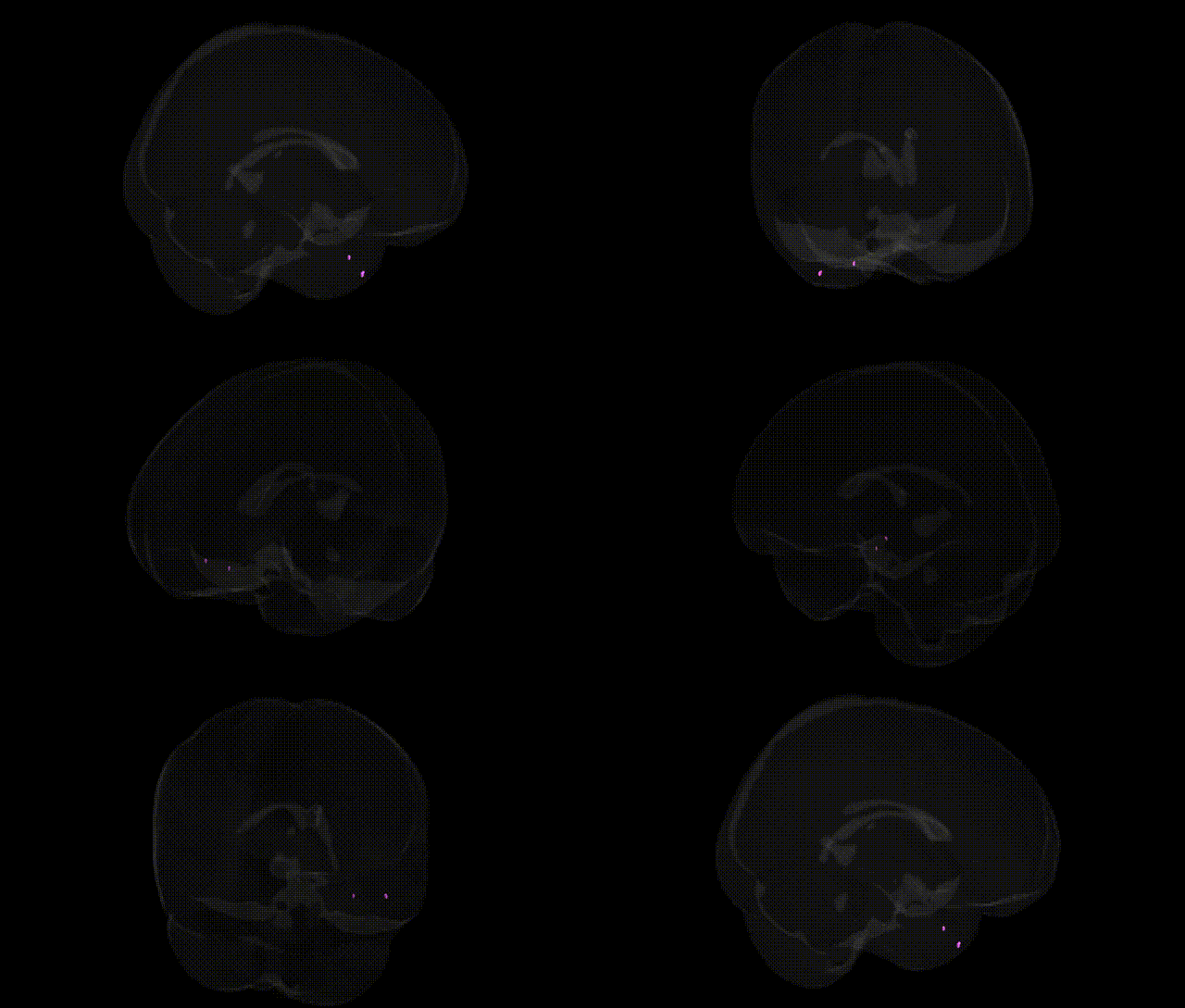
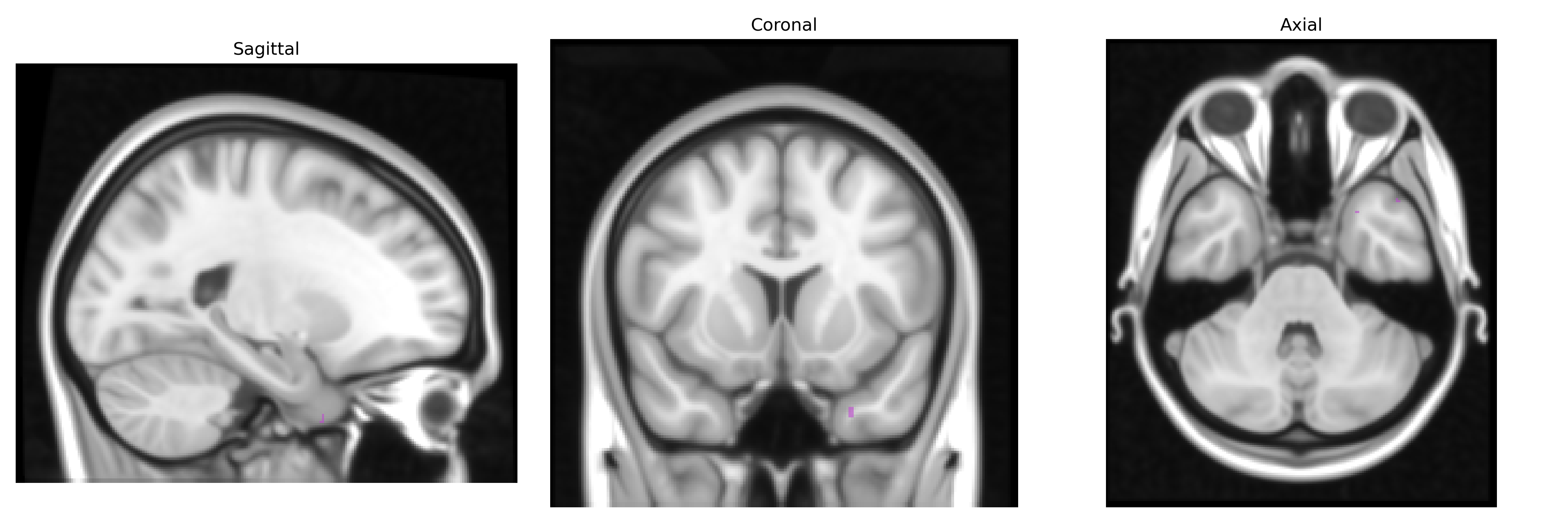
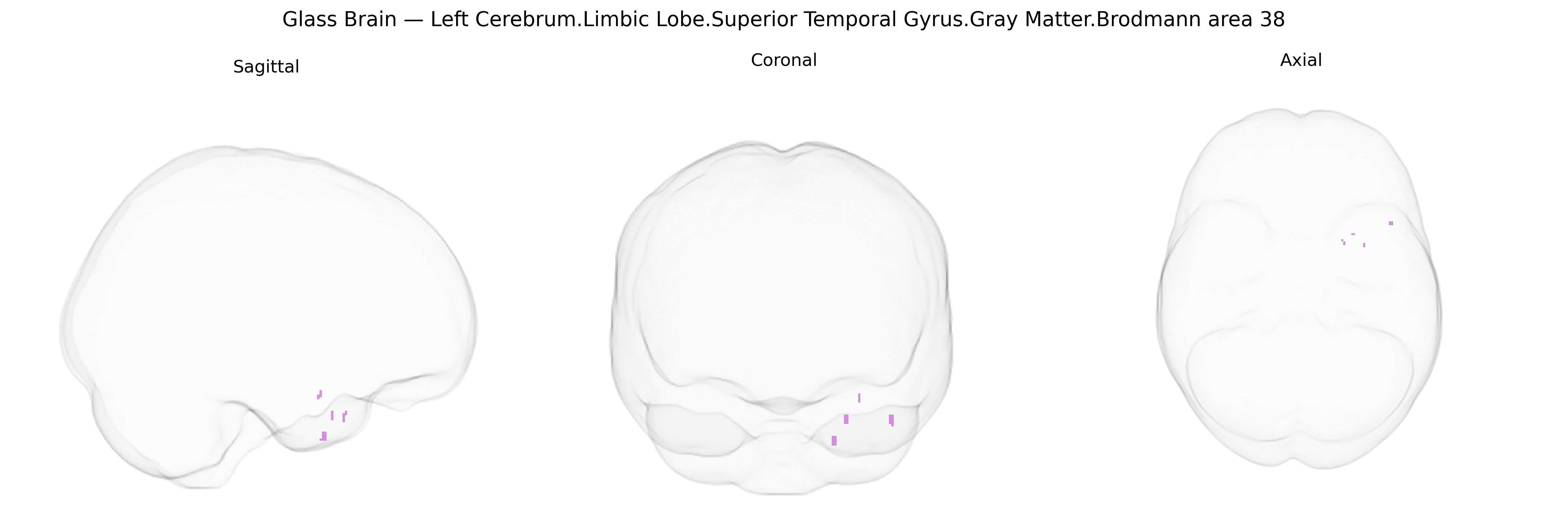
The bilateral Left Cerebrum.Limbic Lobe.Superior Temporal Gyrus.Gray Matter.Brodmann area 38 corresponds to the temporal pole, a cortical region at the anterior end of the superior temporal gyrus involved in high-level integration of emotional, social, and semantic information. Classified as part of the limbic lobe due to its dense connections with the amygdala, hippocampus, and orbitofrontal cortex, Brodmann area 38 participates in processing complex aspects of language (such as narrative and metaphor), social cognition (including theory of mind and face-related affect), and memory retrieval with strong emotional components. Its gray matter contains associative cortex that integrates multimodal sensory inputs—auditory, visual, and olfactory—into coherent representations relevant for person knowledge, autobiographical memory, and emotional evaluation of stimuli. There is no direct Wikipedia article for Brodmann area 38 specifically; a closely related and overlapping structure is the Temporal pole.
Brodmann area 38 (temporal pole, limbic/anterior superior temporal gyrus) has been implicated in multiple genetically influenced neuropsychiatric and neurodevelopmental traits, though few GWAS pinpoint it exclusively and most evidence comes from imaging genetics linking regional structure or function to specific variants. Common polymorphisms in genes affecting synaptic function and neurodevelopment (e.g., CACNA1C, GRIN2A, CNTNAP2, DISC1, and neurexin/neuroligin pathways) have been associated in neuroimaging studies with altered gray matter volume, cortical thickness, or connectivity in anterior temporal regions including BA38, especially in schizophrenia, bipolar disorder, and major depression. Rare variants and copy number changes affecting 22q11.2, 16p11.2, and 7q (FOXP2/CNTNAP2 region) have been linked to anterior temporal structural abnormalities relevant to language and social cognition, overlapping BA38. GWAS of temporal lobe and limbic cortical volumes (e.g., ENIGMA consortium) have identified loci near genes such as HMGA2, TESC, and others that modulate temporal cortical morphology, likely encompassing BA38 within broader superior/anterior temporal measures. BA38 involvement in semantic memory, social-emotional processing, and theory of mind aligns with genetic findings in autism spectrum disorder and frontotemporal dementia, where variants in genes such as MAPT, GRN, C9orf72, and TBK1 are associated with neurodegeneration or connectivity loss in anterior temporal regions including the temporal pole. Overall, genetic associations for this specific bilateral BA38 region are largely indirect, arising from broader temporal or limbic phenotypes in GWAS and imaging-genetic studies of psychiatric, neurodevelopmental, and neurodegenerative disorders.
Overview generated by GPT-4o (2026).
Region ID: 59
Hemisphere: bilateral
Atlas: Talairach labels 1mm
Full Quality Version: Download MP4
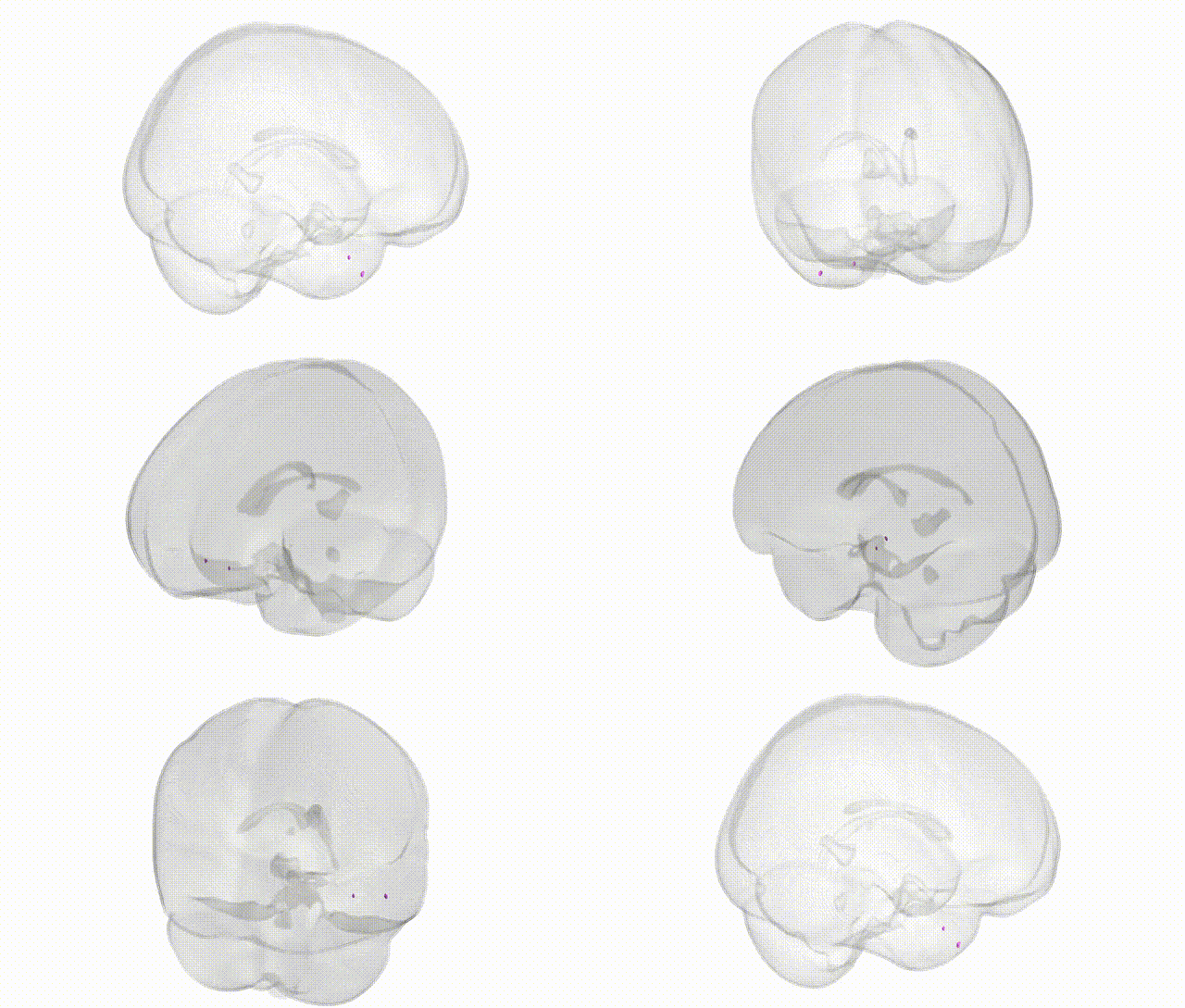
Full Quality Version: Download MP4
Wali Sidiqyar*, Gaurav Rudravaram*, Elyssa M. McMaster, Trent M. Schwartz, Adam M. Saunders, Kurt G. Schilling, Bennett A. Landman "Introducing SPINS: A Shared Public Visualization Library of Neuroanatomical Structures." Medical Imaging with Deep Learning- short paper
This resource is licensed under CC0 1.0 Universal (Public Domain).