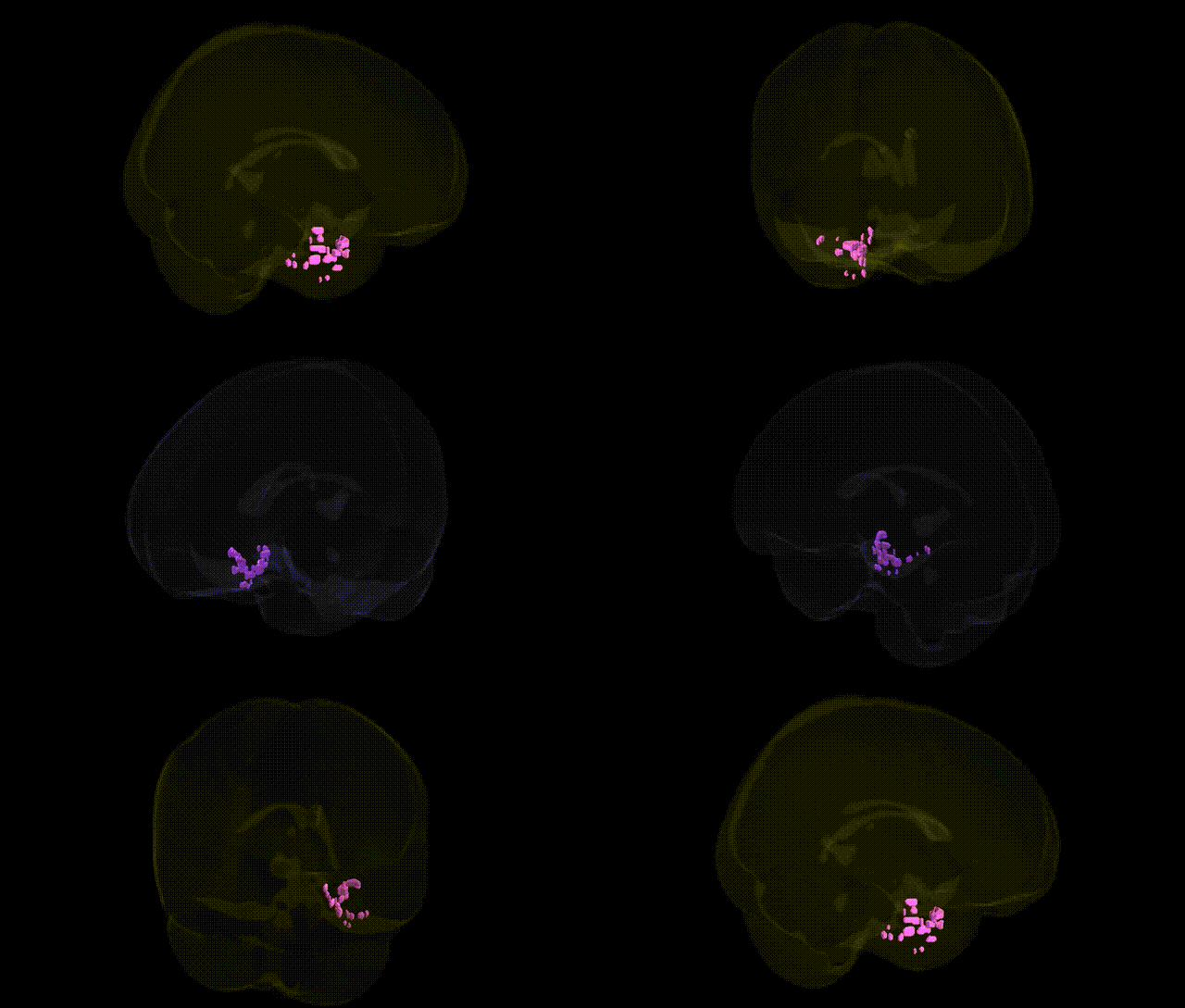
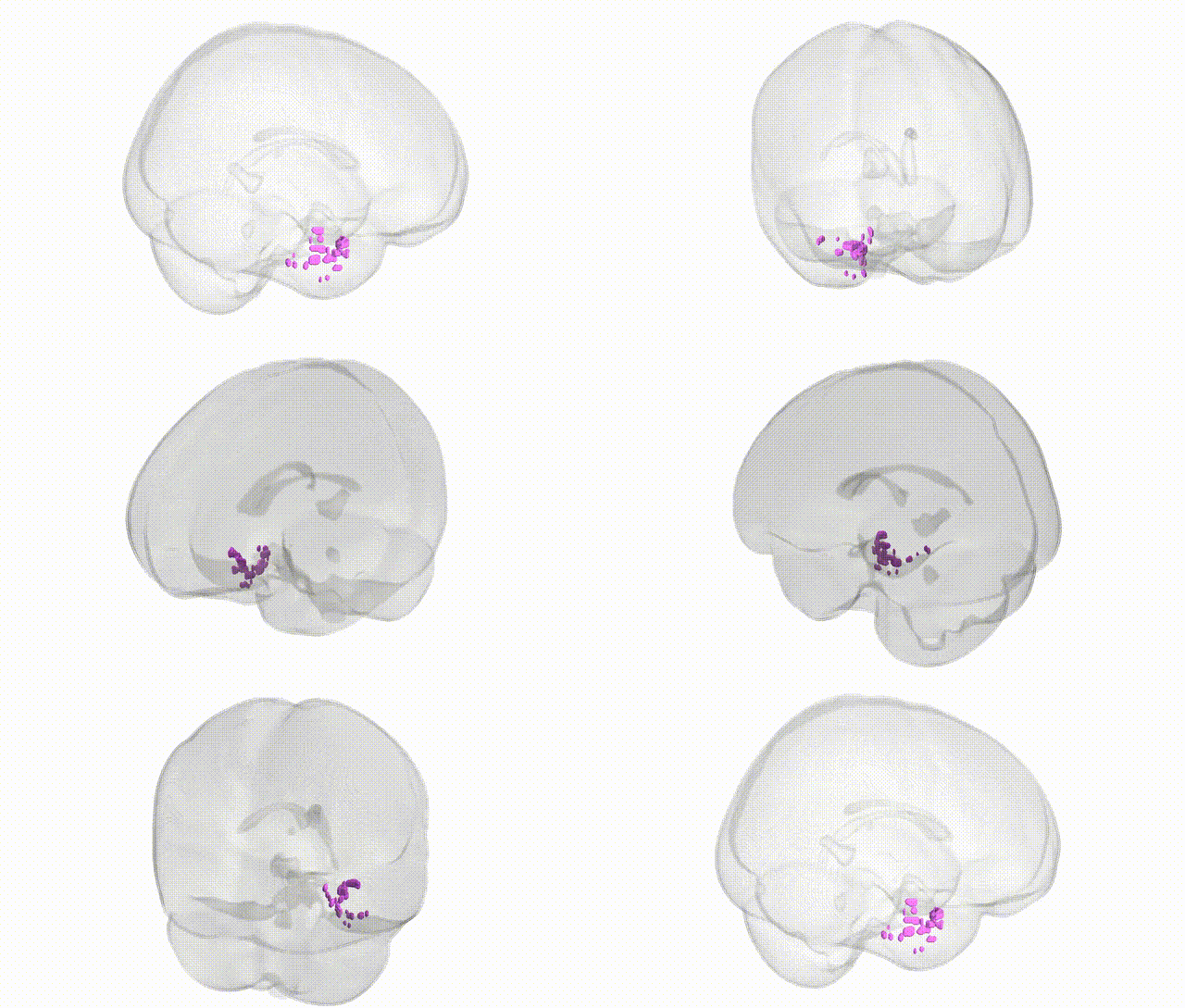
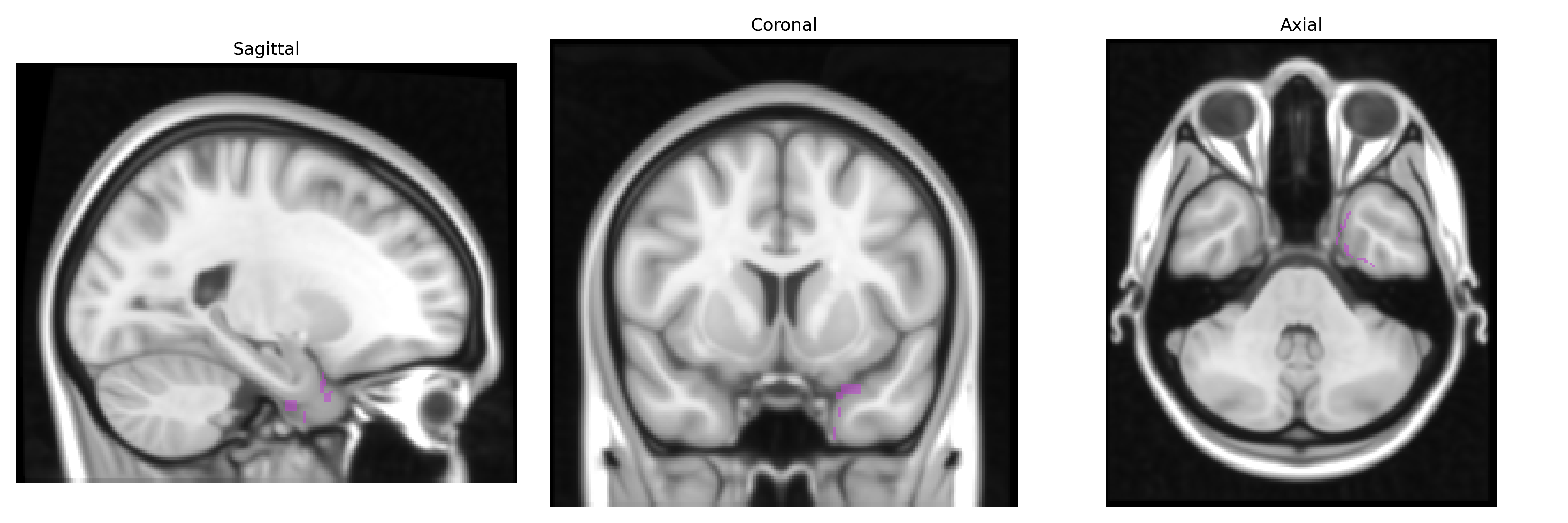
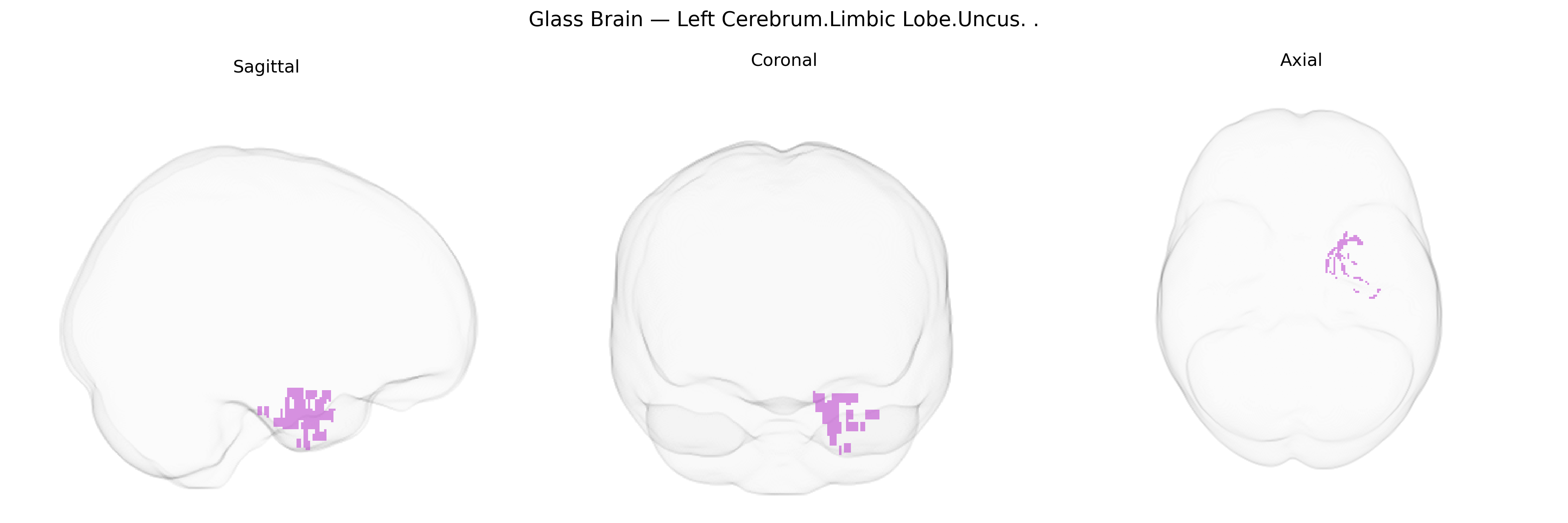
The bilateral Left Cerebrum.Limbic Lobe.Uncus corresponds to the medial, hook-shaped anterior portion of the parahippocampal gyrus located in the medial temporal lobe, curving around the anterior end of the hippocampal formation. It is part of the limbic system and is closely associated with olfactory processing, emotional behavior, and memory functions through its connections with the amygdala, hippocampus, and adjacent temporal structures. The uncus is clinically significant because it is a common site for epileptogenic foci in temporal lobe epilepsy and is the structure that can herniate through the tentorial notch in uncal herniation, potentially compressing the brainstem and cranial nerve III.
Uncus
The bilateral left cerebrum limbic uncus (parahippocampal–amygdalar region) has been implicated in genetic studies primarily through its roles in emotion, memory, and olfaction, with associations emerging from both structural and functional imaging genetics and GWAS of neuropsychiatric traits. Variants in genes related to glutamatergic and GABAergic signaling (e.g., GRIN2B, GAD1), synaptic plasticity (e.g., BDNF, NTRK2), and serotonin and dopamine pathways (e.g., SLC6A4, HTR2A, DRD2, COMT) have been linked to altered volume, activity, or connectivity of medial temporal–limbic regions encompassing the uncus in disorders such as major depressive disorder, anxiety disorders, post-traumatic stress disorder, and schizophrenia. Large-scale GWAS of brain morphology have identified loci influencing medial temporal/limbic volumes (for example, near genes such as MSRB3, HMGA2, and APOE) that often include the parahippocampal–uncal territory within broader hippocampal or amygdalar ROIs. Additional associations involve epilepsy (particularly mesial temporal lobe epilepsy, with genes such as SCN1A, LGI1, and DEPDC5), where structural and metabolic abnormalities frequently include the uncus, as well as olfactory function and olfactory hallucinations, which have been tied to genetic variation in olfactory receptor clusters that modulate activity in uncal–piriform cortex. While many findings are not specific to the Talairach-defined uncus but to wider medial temporal or limbic regions, convergent genetic evidence links this area to heritable liability for mood and anxiety disorders, psychosis, temporal lobe epilepsy, and variation in memory- and emotion-related traits.
Overview generated by GPT-4o (2026).
Region ID: 17
Hemisphere: bilateral
Atlas: Talairach labels 1mm
Full Quality Version: Download MP4
Full Quality Version: Download MP4
Wali Sidiqyar*, Gaurav Rudravaram*, Elyssa M. McMaster, Trent M. Schwartz, Adam M. Saunders, Kurt G. Schilling, Bennett A. Landman "Introducing SPINS: A Shared Public Visualization Library of Neuroanatomical Structures." Medical Imaging with Deep Learning- short paper
This resource is licensed under CC0 1.0 Universal (Public Domain).