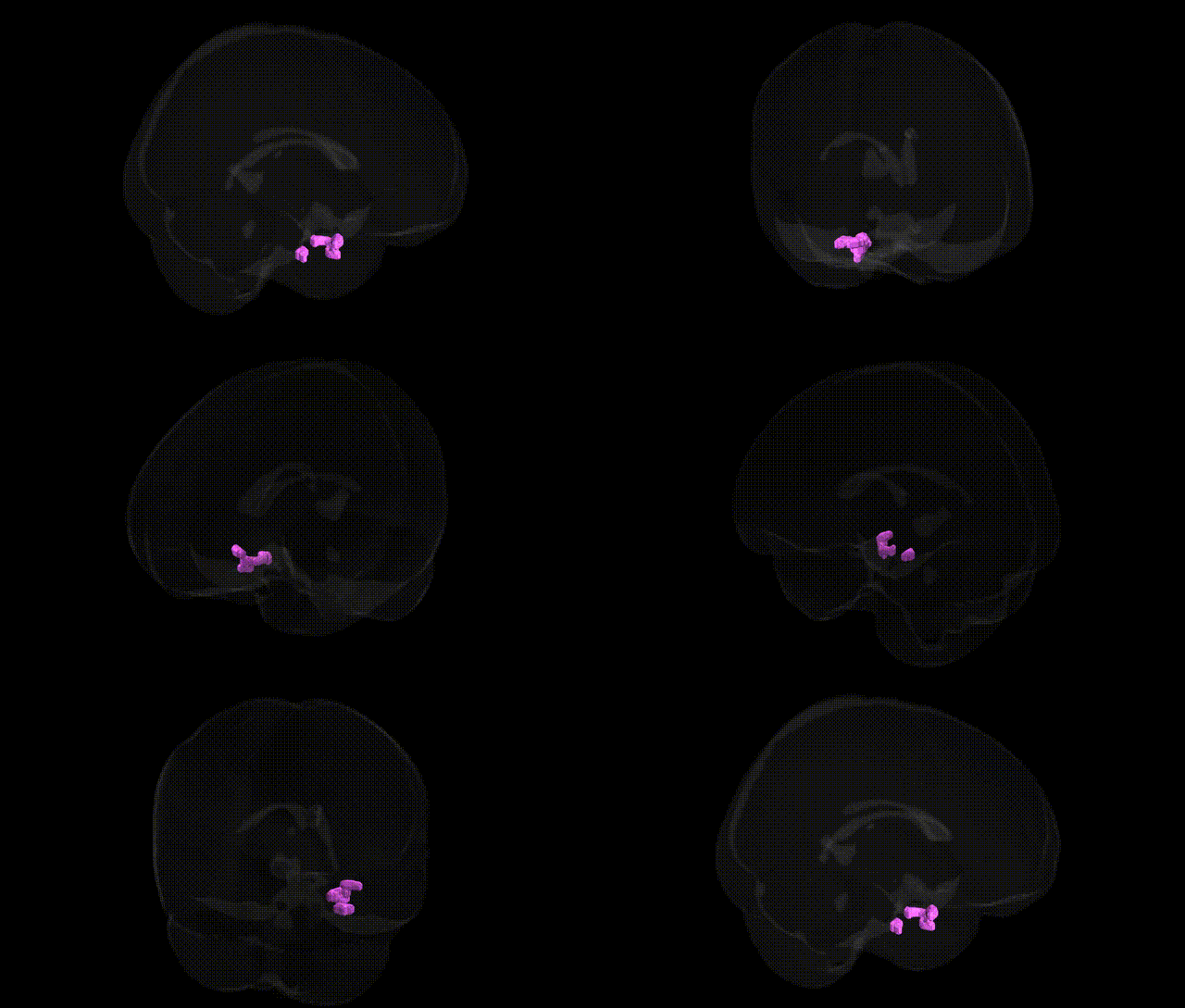
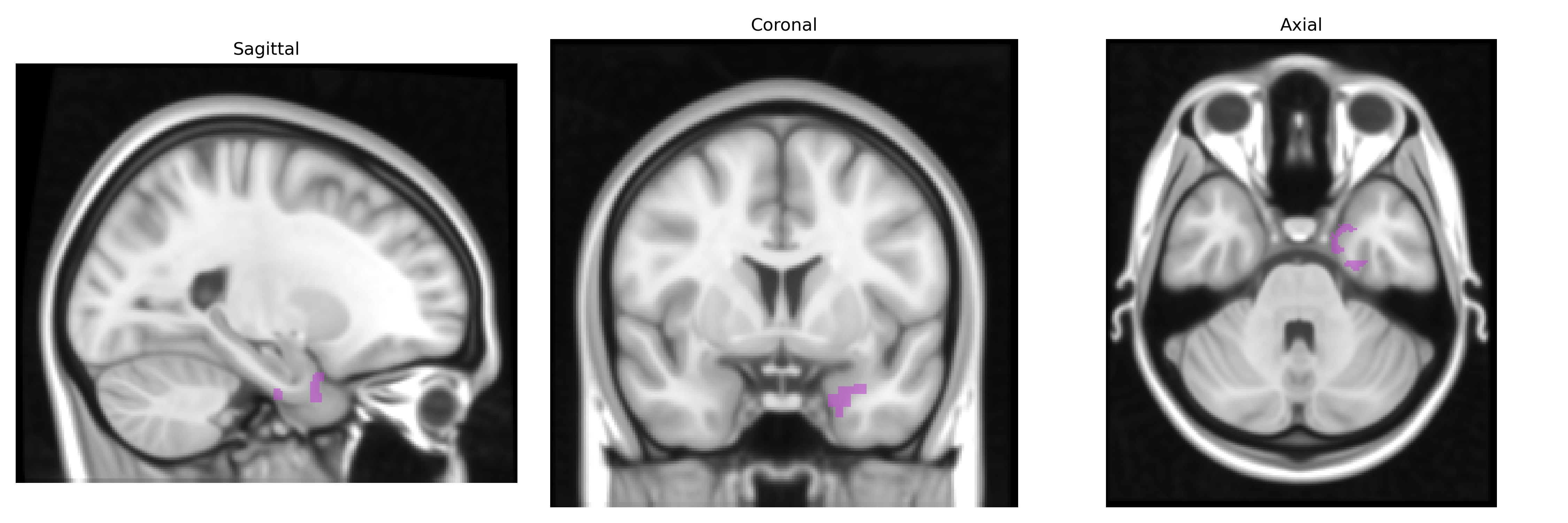
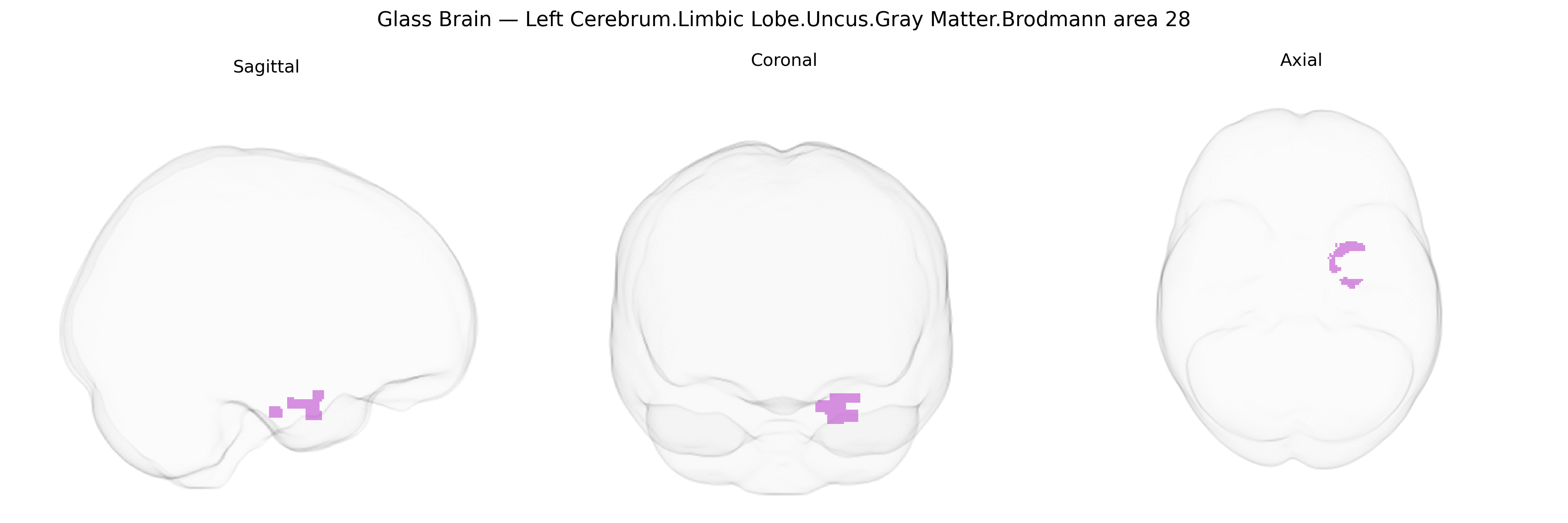
The bilateral Left Cerebrum.Limbic Lobe.Uncus.Gray Matter.Brodmann area 28 corresponds primarily to the entorhinal cortex located in the anterior medial temporal lobe, forming a key gateway between the hippocampal formation and widespread neocortical regions. As a limbic structure within the uncus, BA28 participates critically in declarative memory processing, spatial navigation, and associative learning by integrating multimodal sensory inputs and relaying them to hippocampal circuits. It is cytoarchitectonically characterized as a periallocortical (transitional) cortex, intermediate between three-layered archicortex and six-layered neocortex, and is highly vulnerable in early Alzheimer’s disease, where neurofibrillary pathology and neuron loss in this region contribute to episodic memory deficits. No direct link exists for “Brodmann area 28,” but it is contained within the Entorhinal cortex.
The left uncus of the limbic lobe (Brodmann area 28, entorhinal cortex) has been implicated in several genetic and genome-wide association studies primarily through its roles in memory, olfaction, and early neurodegenerative pathology. GWAS of Alzheimer’s disease and related endophenotypes consistently implicate APOE (especially ε4), as well as loci in CLU, PICALM, BIN1, and TREM2, which are associated with entorhinal/uncal atrophy and tau/amyloid burden that typically begin in this region. Variants in MAPT and other tau-related genes contribute to entorhinal and uncus vulnerability in frontotemporal dementia and related tauopathies, while GRN mutations and C9orf72 expansions have been linked to patterns of medial temporal and limbic degeneration involving this area. Imaging-genetics studies show that common polymorphisms in genes influencing synaptic plasticity and neurodevelopment (e.g., BDNF Val66Met, COMT, and genes in glutamatergic and GABAergic pathways) correlate with entorhinal/uncal gray-matter volume and functional activity during memory and emotional tasks. Schizophrenia, major depression, and anxiety-disorder GWAS implicating loci in synaptic and immune pathways have been associated with structural and functional alterations in medial temporal limbic regions that include the uncus, although effects are typically distributed across broader hippocampal–parahippocampal networks rather than being specific to this Brodmann area.
Overview generated by GPT-4o (2026).
Region ID: 94
Hemisphere: bilateral
Atlas: Talairach labels 1mm
Full Quality Version: Download MP4
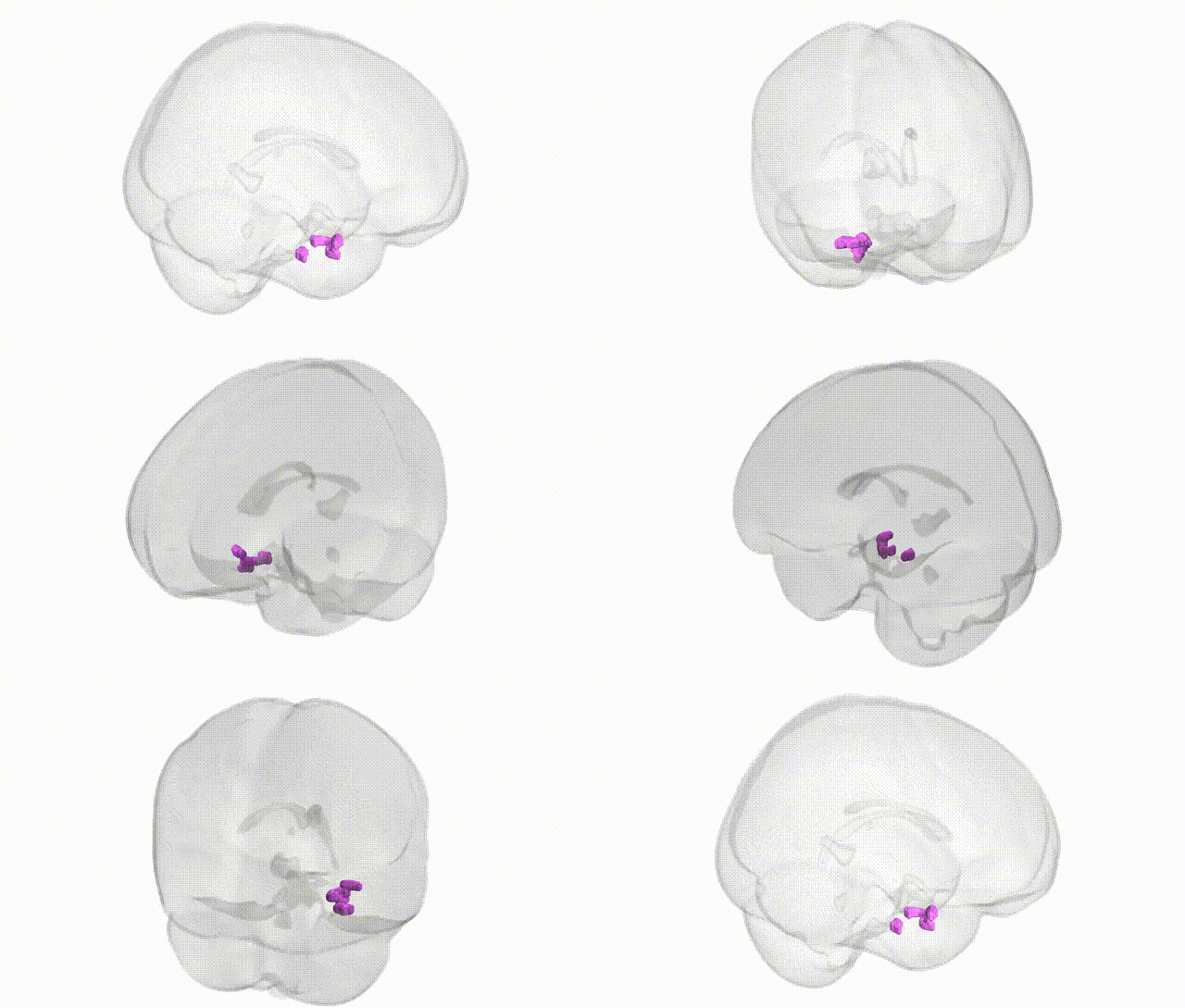
Full Quality Version: Download MP4
Wali Sidiqyar*, Gaurav Rudravaram*, Elyssa M. McMaster, Trent M. Schwartz, Adam M. Saunders, Kurt G. Schilling, Bennett A. Landman "Introducing SPINS: A Shared Public Visualization Library of Neuroanatomical Structures." Medical Imaging with Deep Learning- short paper
This resource is licensed under CC0 1.0 Universal (Public Domain).